What Happens If You Smoke Paper
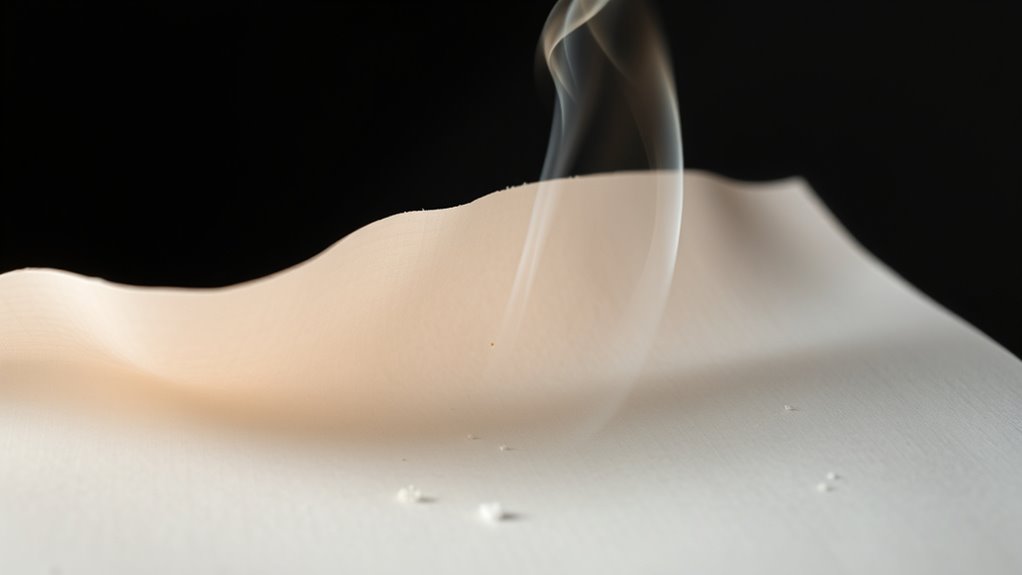
If you smoke paper, you’re inhaling harmful chemicals like carbon monoxide and formaldehyde that form when it burns. Burning paper releases toxic gases and fine particles that irritate your lungs, causing coughing or shortness of breath.
This isn’t just about the smoke—it’s about what’s in it.
Over time, inhaling these substances can lead to serious respiratory problems and increase your risk of infections. Many papers also contain additives or inks, which can make the dangers even worse.
So, it’s not just plain paper you’re breathing in—it’s a cocktail of harmful chemicals.
Keep reading to understand how these effects impact your health and to discover safer alternatives if you’re looking for ways to smoke without the risks. It’s always better to stay informed and make choices that protect your lungs and overall well-being.
Composition of Common Smoking Papers
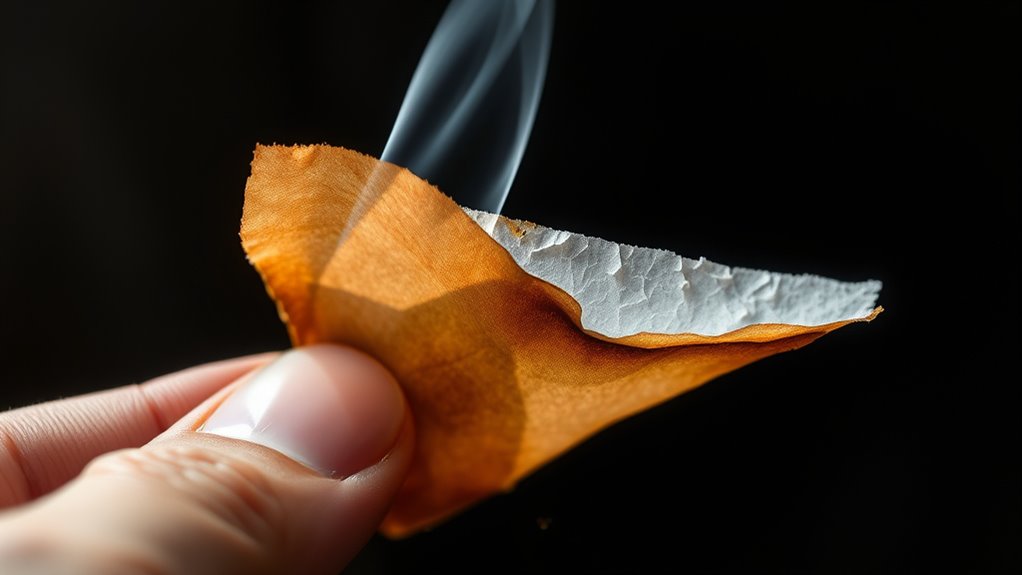
What exactly are smoking papers made of? You’ll find they’re primarily composed of plant fibers like hemp, rice, flax, or wood pulp. These materials are chosen because they burn slowly and evenly, which helps you control the burn rate.
Most smoking papers also include a thin layer of gum along one edge, often made from natural substances like acacia gum. This gum lets you seal the paper easily.
You won’t see added colors or heavy chemicals in quality papers, since those could affect taste and safety. Some papers are ultra-thin to provide a cleaner burn and less ash, while others are thicker for durability.
Understanding the composition helps you pick the right paper for your smoking experience without unexpected surprises. It’s all about knowing what you’re putting in your hand—and ultimately, your mouth.
Chemical Reactions When Paper Burns
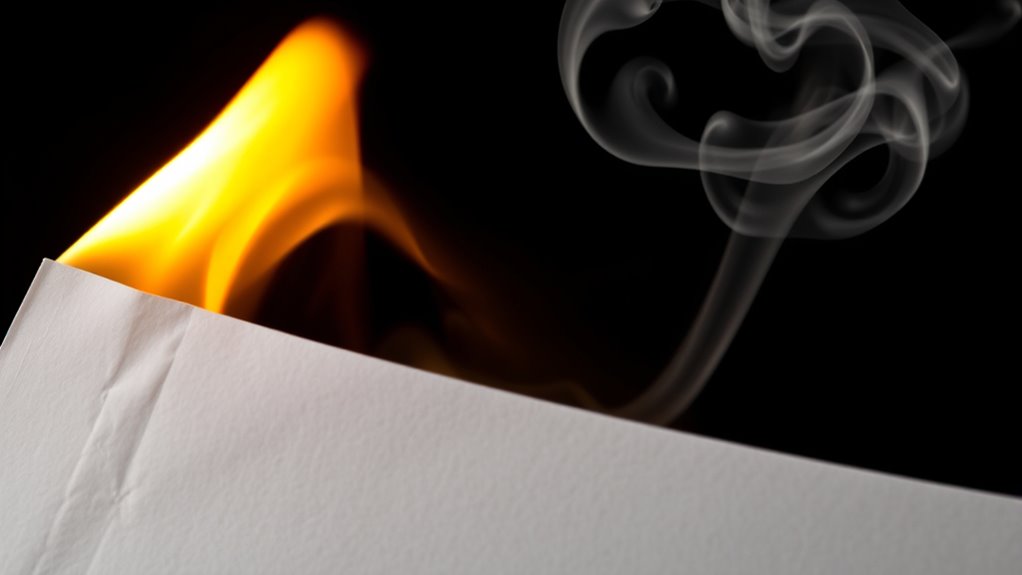
When you burn paper, it undergoes a combustion process where heat breaks down its fibers, releasing gases and ash. You should know this reaction produces toxic compounds like carbon monoxide and formaldehyde, which can be harmful when inhaled.
Understanding these chemical changes helps explain why smoking paper isn’t safe. So, it’s really important to be careful around burning paper and avoid inhaling the smoke.
Combustion Process Explained
Although you might not realize it, burning paper sets off a complex series of chemical reactions known as combustion. When you ignite paper, heat breaks down cellulose fibers, releasing volatile gases.
These gases react with oxygen in the air, producing flame and light. The main chemical reaction combines carbon from the paper with oxygen, forming carbon dioxide and water vapor.
You’ll also notice ash left behind—this is the inorganic residue that doesn’t burn. This entire process rapidly converts solid paper into gases and energy, sustaining the flame until the fuel is gone or oxygen supply is cut off.
Understanding this combustion helps you grasp why paper burns quickly and why you should be cautious with open flames around it. It’s pretty fascinating once you think about what’s really happening!
Toxic Compounds Released
Since paper contains various chemicals and additives, burning it releases more than just harmless gases. When you smoke paper, you’re inhaling toxic compounds formed by the chemical reactions during combustion.
These include carbon monoxide, formaldehyde, and benzene – all harmful to your lungs and overall health. The heat breaks down cellulose fibers and additives, producing these dangerous substances.
Here’s a quick look at some toxic compounds released:
| Compound | Effect |
|---|---|
| Carbon Monoxide | Reduces oxygen in blood |
| Formaldehyde | Irritates respiratory tract |
| Benzene | Carcinogenic, affects bone marrow |
| Acrolein | Causes eye and lung irritation |
| Polycyclic Aromatic Hydrocarbons (PAHs) | Linked to cancer risk |
Inhaling these compounds can cause immediate irritation and long-term health problems. So, it’s definitely not something to take lightly.
Inhalation Risks and Respiratory Effects
When you smoke paper, you’re inhaling toxic chemicals released during burning. These substances can irritate your lungs and damage your respiratory system over time.
It’s really important to understand these risks before you consider lighting up paper. Just something to think about!
Toxic Chemicals Released
As you burn paper and inhale the smoke, your lungs absorb a mix of harmful chemicals that pose serious health risks.
Paper contains substances like inks, dyes, and coatings that release toxic compounds when burned.
These chemicals can irritate your respiratory system and increase your risk of inflammation and other issues.
| Chemical Compound | Source in Paper |
|---|---|
| Carbon Monoxide | Incomplete combustion |
| Formaldehyde | Glues and coatings |
| Benzene | Ink solvents |
Each of these chemicals affects your body differently, but generally, they harm your respiratory tract and overall health.
Impact on Lung Health
Though you might not realize it, inhaling paper smoke can seriously damage your lungs. When you breathe in the toxic fumes from burning paper, harmful particles and chemicals irritate your respiratory tract, causing inflammation and reducing lung function.
This irritation can lead to coughing, wheezing, and shortness of breath, even after just a few puffs. Over time, repeated exposure increases your risk of developing chronic respiratory conditions like bronchitis or asthma.
The fine particles in the smoke can penetrate deep into your lungs, making it harder for your body to clear out toxins and increasing susceptibility to infections. Smoking paper is far from harmless; your lungs pay a steep price for inhaling those dangerous compounds.
Avoiding this practice protects your respiratory health. So, it’s really worth thinking twice before you light up paper.
Potential Toxic Substances Released
Because paper contains various chemicals and additives, burning it releases harmful substances into the air. When you smoke paper, you inhale toxins like carbon monoxide, formaldehyde, and benzene—each linked to serious health risks.
The ink and dyes on printed paper add heavy metals and other carcinogens to the mix. You also breathe in particulate matter that irritates your lungs and can lead to chronic respiratory problems.
Even seemingly harmless white paper often contains bleach and sizing agents that produce toxic fumes when burned. These substances don’t just vanish; they accumulate in your body, increasing the risk of long-term damage.
Psychological and Sensory Impact of Smoking Paper
When you smoke paper, your mind and senses react differently compared to smoking traditional substances. You might notice a harsh, unpleasant taste that irritates your throat and lungs.
The psychological effects are usually minimal since paper lacks psychoactive compounds, but the experience can be uncomfortable or stressful. Here’s what you can expect:
- A sharp, acrid smell that triggers coughing or throat irritation.
- Little to no euphoric or calming effects, unlike tobacco or cannabis.
- Possible dizziness or nausea due to inhaling harmful chemicals.
- Heightened awareness of discomfort, making the experience mentally unpleasant.
Safer Alternatives to Smoking Paper
If you’re looking to avoid the harmful effects of smoking paper, there are safer alternatives you can try. Instead of rolling substances in regular paper, consider using hemp or rice paper designed specifically for smoking. These options burn cleaner and produce fewer toxins.
To reduce harmful effects, use hemp or rice papers made for smoking—they burn cleaner and release fewer toxins.
You might also explore vaporizers, which heat the material without combustion, reducing harmful inhalants. Another choice is using pipes or bongs made from glass or metal, which allow for controlled burning and filtration.
If you still prefer rolling, opt for organic, additive-free papers to minimize exposure to chemicals. Taking these steps helps protect your lungs and overall health while still providing a satisfying experience.
Always prioritize your well-being by choosing methods that reduce harm and avoid unnecessary risks. It’s all about making smarter choices for your health.
Conclusion
If you smoke paper, you’re basically lighting a chemical cocktail that can irritate your lungs and release harmful toxins. It’s like playing with fire in a dark room—what seems small can quickly lead to bigger health problems.
Instead of risking your well-being, consider safer alternatives that won’t cloud your body or mind. Protect yourself by choosing options that respect your health and keep the smoke—and danger—at bay.
Smoking paper can cause serious harm, so it’s important to avoid it altogether. Your lungs deserve better, and there are plenty of safer choices out there that won’t expose you to toxic chemicals. Stay informed and protect your health by steering clear of smoking paper and its harmful effects.