Should You Recycle Shredded Paper Properly?
Yes, you should recycle shredded paper properly to avoid contamination and protect recycling machinery.
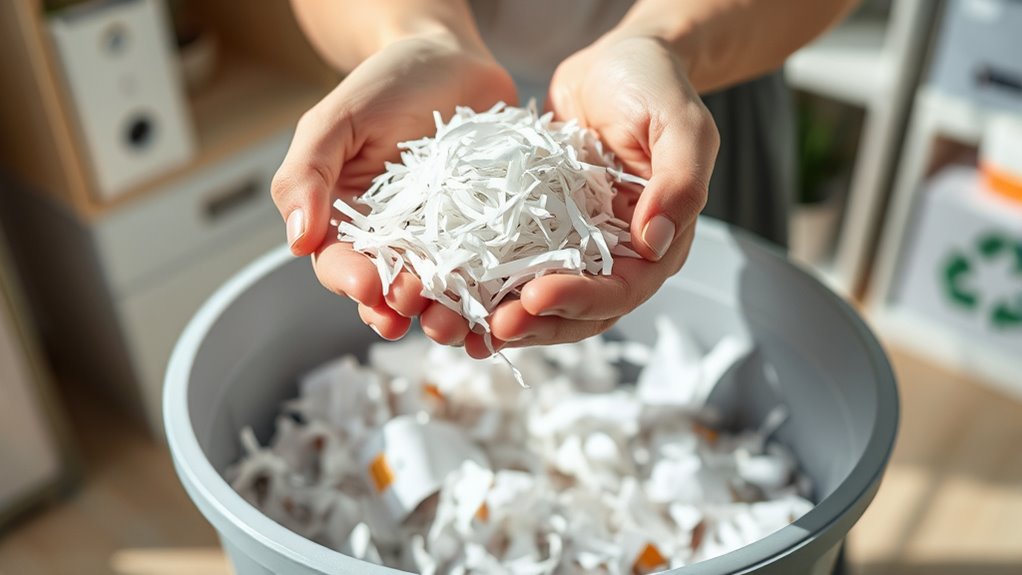
Loose bits can slip through sorting systems and cause issues, so bagging shredded paper in paper bags or boxes helps keep it contained.
Avoid plastic bags and make sure it’s clean and free of staples or labels.
Proper recycling saves resources and reduces waste.
If you want to discover easy ways to prepare shredded paper and explore alternatives, there’s plenty more to uncover.
Why Shredded Paper Requires Special Recycling Considerations
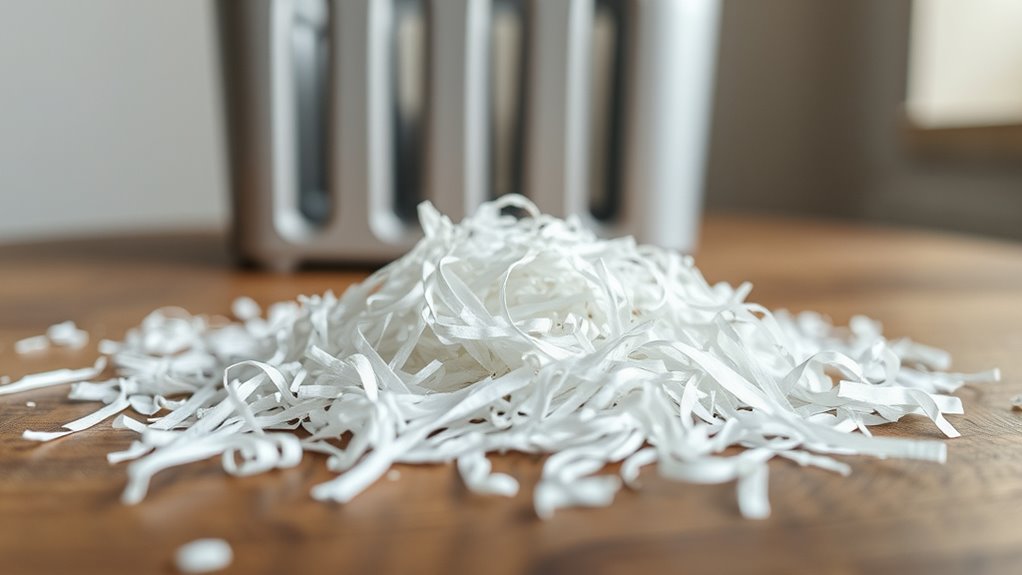
Because shredded paper is made up of tiny, loose pieces, it can be tricky to recycle through regular methods. You’ll find that these small bits often slip through sorting machines or get mixed with other materials, reducing the quality of recycled paper.
When you throw shredded paper into standard recycling bins, it can create contamination issues or clog machinery at recycling centers. Plus, shredded paper tends to have shorter fibers, which means it’s less valuable in the recycling process.
That’s why you need to handle it differently—either by bagging it separately or checking with your local recycling program for specific instructions. Taking these special considerations into account helps guarantee your shredded paper actually gets recycled efficiently and doesn’t end up as waste.
Common Challenges in Recycling Shredded Paper
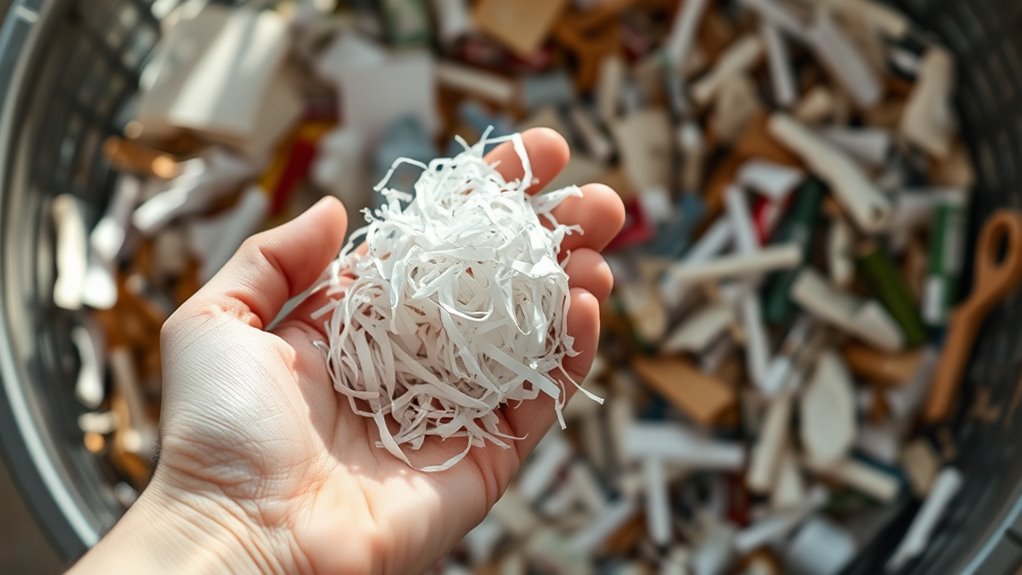
You might not realize it, but shredded paper can easily get contaminated, making recycling tricky.
It also causes problems during processing because the small pieces can slip through sorting machines.
Understanding these challenges helps you recycle shredded paper more effectively.
Contamination Risks
Why does shredded paper pose such a challenge for recycling centers? It’s mainly because shredded pieces easily mix with contaminants. When paper is shredded, small bits can trap food residue, adhesives, or plastic bits like staples and labels.
These contaminants degrade the quality of recycled pulp, making it harder to produce clean, usable paper products. You might think tossing shredded paper in the recycling bin is harmless, but it often ends up causing more harm than good.
If your shredded paper contains ink, plastic, or glue, it can contaminate entire recycling batches. To avoid this, you should keep shredded paper separate, clean, and free from non-paper materials.
Properly managing contamination helps recycling centers process shredded paper efficiently and keeps recycling streams uncontaminated. So, it’s really worth taking a little extra care with how you handle shredded paper.
Processing Difficulties
Although shredded paper seems like an easy material to recycle, it actually creates several processing difficulties at recycling facilities. The tiny pieces can clog machinery, reduce the quality of recycled pulp, and make sorting harder.
When you toss shredded paper in recycling bins, it often escapes during collection, leading to contamination or loss. Understanding these challenges helps you recycle shredded paper properly and avoid problems.
| Challenge | Impact on Recycling | What You Can Do |
|---|---|---|
| Machine Clogging | Stops or slows processing | Bag shredded paper separately |
| Reduced Pulp Quality | Lowers recycled paper value | Avoid mixing with other waste |
| Sorting Difficulty | Increases contamination risk | Use clear, labeled bags |
| Material Loss | Lost during collection | Deposit at designated centers |
How to Prepare Shredded Paper for Recycling
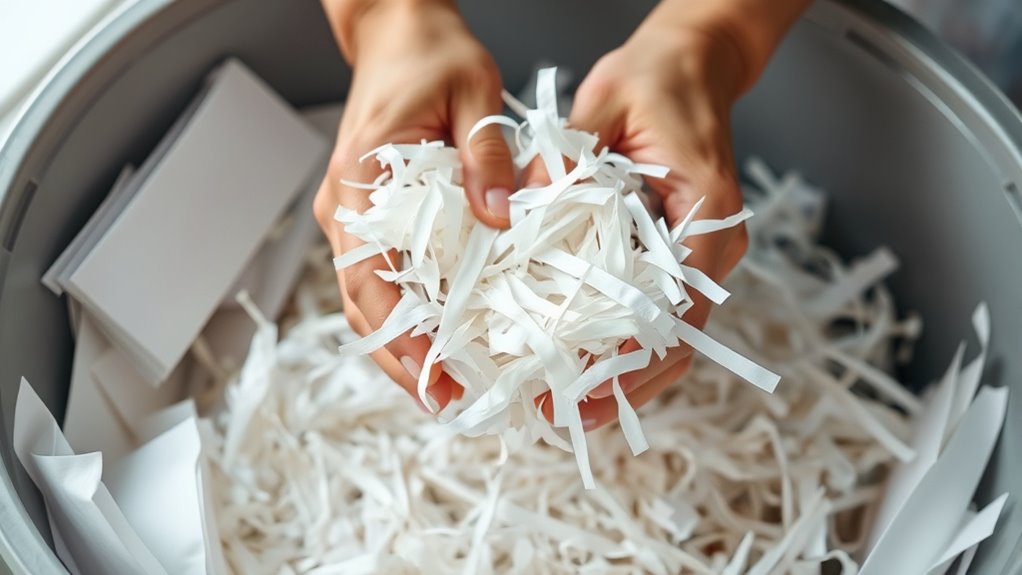
Since shredded paper can be tricky to recycle, you’ll need to take a few extra steps to prepare it properly. First, gather your shredded paper in a paper bag or a cardboard box instead of tossing it loose into the recycling bin.
This helps prevent it from slipping through sorting machines at recycling facilities. Avoid plastic bags—they’re generally not accepted and can contaminate the recycling stream.
Next, make sure the shredded paper is clean and free from food stains, plastic, or metal bits like staples. If you have a large amount, you can compress it gently to save space, but avoid compacting it too tightly.
Finally, check your local recycling guidelines to confirm they accept shredded paper and follow any specific instructions they provide. It’s always good to double-check so your recycling efforts don’t go to waste!
Alternatives to Recycling Shredded Paper
If you find that your local recycling program doesn’t accept shredded paper or you want to reduce waste further, you can explore several practical alternatives. Use shredded paper as compost material; it breaks down quickly and enriches your garden soil.
When recycling shredded paper isn’t an option, composting it enriches your garden soil naturally and effectively.
You can also repurpose it as packing material for fragile items, saving money on bubble wrap. Another option is to use shredded paper for pet bedding, especially for small animals like hamsters or guinea pigs.
Craft projects are another creative avenue—shredded paper can become papier-mâché or decorative filler for gift baskets. By choosing these alternatives, you reduce landfill waste and give shredded paper a second life in your home.
Just make sure the paper is free of plastic or ink that could cause harm in compost or pet bedding. That way, you keep things safe and eco-friendly!
Environmental Impact of Improperly Disposed Shredded Paper
When you toss shredded paper into the trash instead of recycling or repurposing it, you contribute to increased landfill waste and environmental strain. Shredded paper takes up space in landfills and decomposes slowly, releasing methane—a potent greenhouse gas that accelerates climate change.
Plus, when mixed with other trash, shredded paper complicates waste sorting and recycling processes, reducing overall recycling efficiency. It’s kind of like throwing a wrench in the recycling machine.
Improper disposal also wastes valuable resources since paper can be recycled into new products, saving trees, water, and energy. So, by not managing shredded paper properly, you indirectly increase pollution and resource depletion.
Understanding these impacts really highlights why it’s important to handle shredded paper responsibly. Doing so helps you reduce your environmental footprint and supports a more sustainable waste management system.
Tips for Reducing Shredded Paper Waste
Although shredded paper can be tricky to recycle, you can take simple steps to reduce the amount you generate. First, consider going digital whenever possible to cut down on paper use. Opt for electronic statements, bills, and notes to avoid unnecessary printing.
When you do need to shred, only do so with sensitive documents, minimizing waste. You can also reuse shredded paper as packing material or compost it if it’s free from ink and chemicals.
Another tip is to use shredders that produce larger strips rather than tiny confetti, which are easier to recycle. By being mindful of what you shred and exploring creative reuse options, you’ll markedly reduce shredded paper waste and lessen your environmental impact.
Conclusion
Don’t let shredded paper slip through the cracks of your recycling efforts. Treat it like tiny puzzle pieces that need the right place to fit, or they’ll scatter and cause more harm than good.
By preparing it properly or finding smart alternatives, you’re not just tossing scraps—you’re weaving a cleaner, greener future. So, take a moment to handle shredded paper with care; your planet will thank you with a gust of fresh air.
Recycling shredded paper properly is key to reducing waste and protecting the environment. When shredded paper is recycled correctly, it helps conserve resources and cuts down on landfill overflow. So, next time you have shredded paper, remember to bundle it or check your local recycling guidelines to make sure it’s accepted. Proper recycling practices can make a big difference in promoting sustainability and keeping our planet healthy.