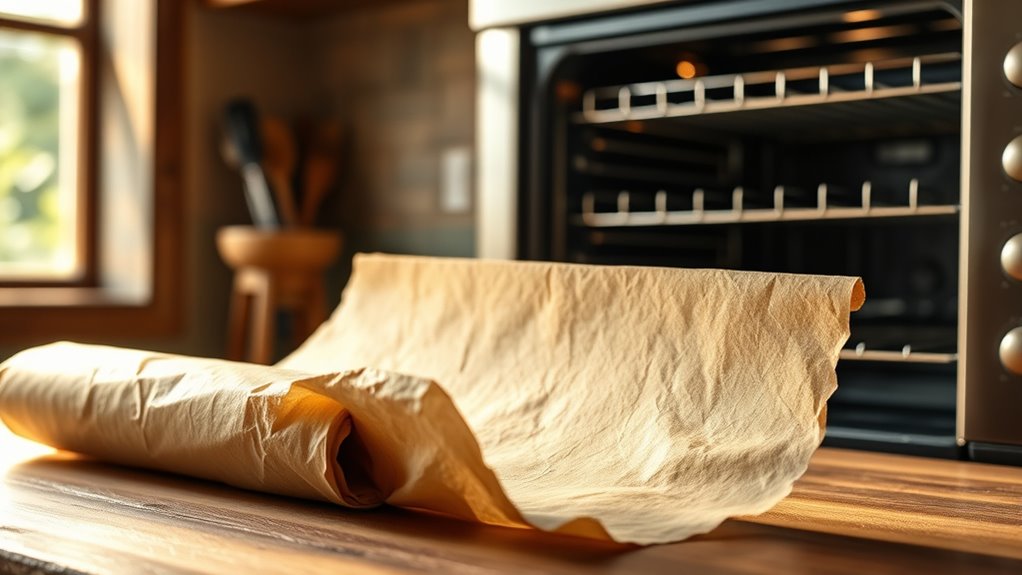
Can Butcher Paper Go in the Oven?
You can use butcher paper in the oven, but you need to keep the temperature below about 220°F (104°C) to avoid burning or damage.
Butcher paper is made from strong kraft pulp but isn’t coated like parchment, so it can char or catch fire if too hot.
It’s great for low-heat cooking methods like smoking or gentle roasting.
If you want to get the most out of butcher paper safely, there’s more to think about regarding its ideal uses and handling.
Just remember, high heat isn’t its friend, so keep things cool and slow for the best results.
What Is Butcher Paper Made Of?
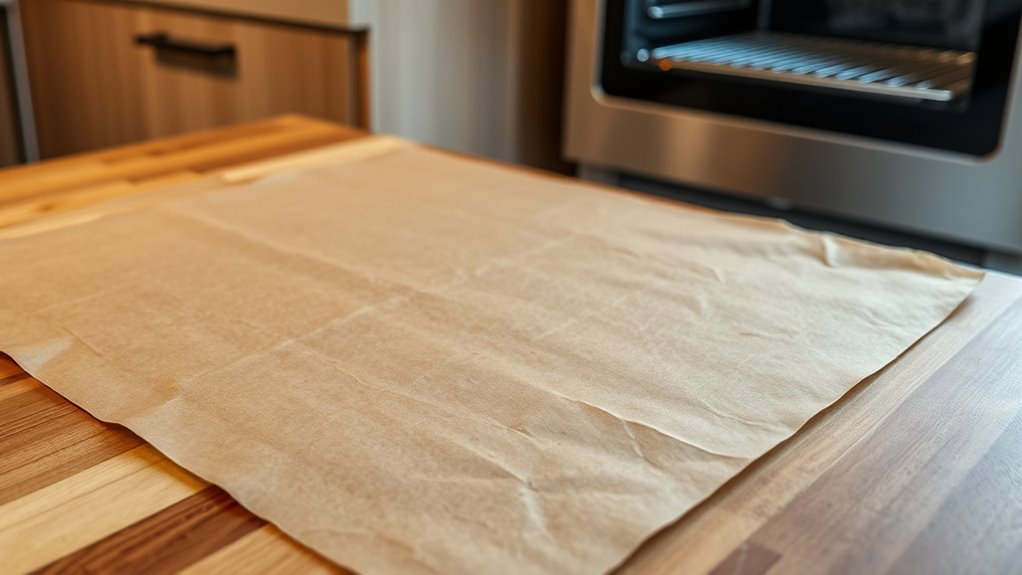
Butcher paper is made from kraft pulp, which is processed wood fibers. When you look at it, you’ll notice its sturdy texture comes from the long fibers that provide strength and durability.
This pulp undergoes a chemical process called the kraft process, which removes impurities and enhances its resistance to tearing. Unlike regular paper, butcher paper has a denser, more fibrous structure, making it ideal for wrapping meat and other foods.
The kraft process strengthens the dense, fibrous structure of butcher paper, perfect for wrapping meats and foods.
You’ll also find that it’s typically uncoated and porous, allowing it to absorb moisture while still offering a protective barrier. While it’s not waterproof, its natural composition helps it hold up well during handling and storage.
This makes butcher paper a practical choice in kitchens and butcher shops alike.
Heat Resistance of Butcher Paper
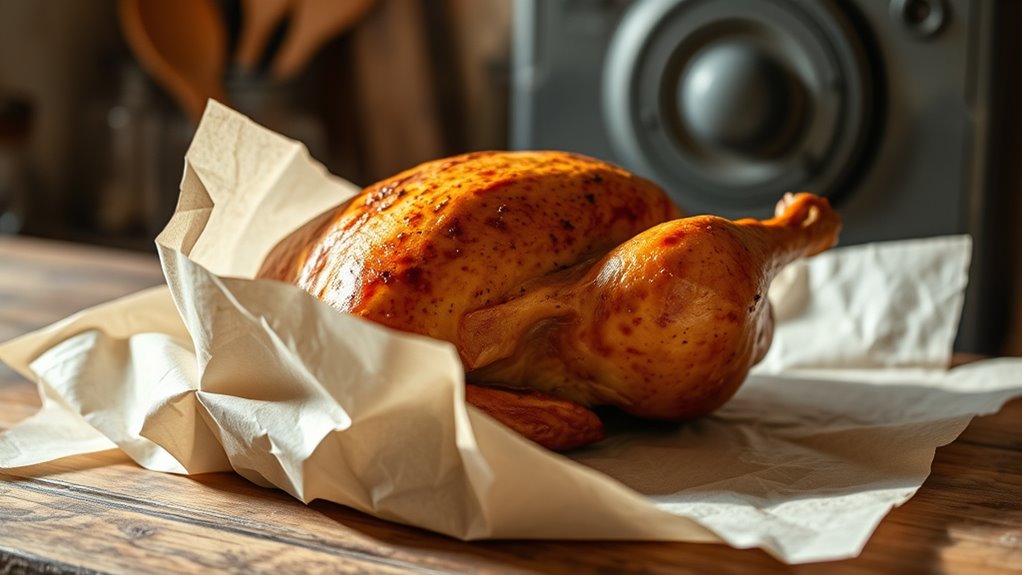
Although it may seem convenient to use butcher paper in the oven, you should understand its heat resistance limits before doing so. Butcher paper typically withstands moderate heat but isn’t designed for high-temperature cooking.
Here’s what you need to know:
- Temperature Threshold: Butcher paper can usually handle up to 220°F (104°C) safely. Going beyond this risks burning or charring.
- Duration Impact: Prolonged exposure to heat, even below the threshold, may weaken the paper, causing it to tear or ignite.
- Direct Heat Exposure: Avoid placing butcher paper directly on heating elements or flames, as it can catch fire quickly.
Knowing these limits helps you avoid kitchen mishaps and ensures you use butcher paper safely in your cooking or smoking projects.
Comparing Butcher Paper to Parchment and Foil
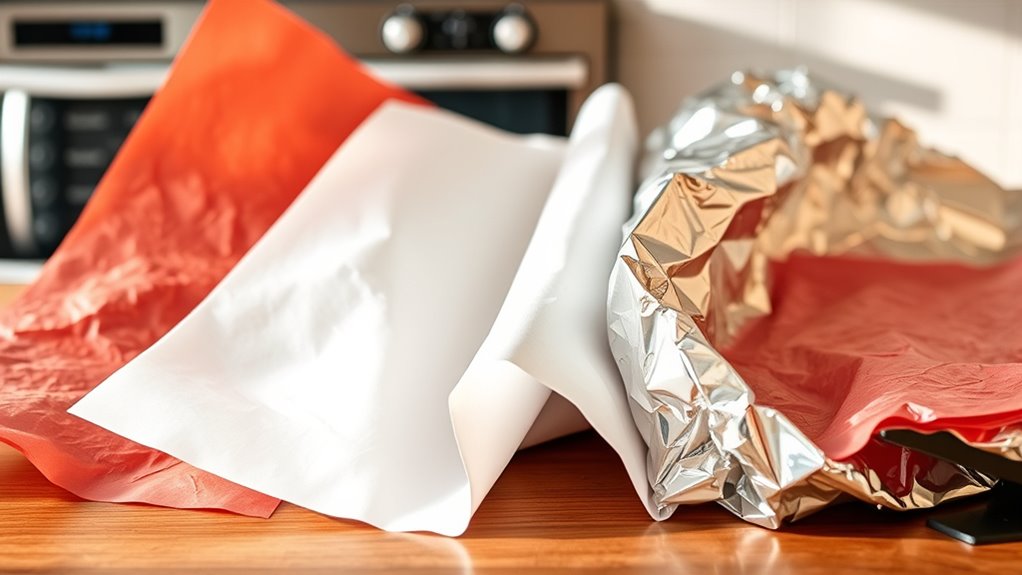
When choosing materials for cooking or wrapping food, understanding how they handle heat makes a big difference in your results. Butcher paper, parchment paper, and foil each have unique heat tolerances and purposes.
Butcher paper is porous and breathable, great for smoking meats but not designed for high oven temperatures. Parchment paper is coated to resist heat up to about 420°F, making it perfect for baking and preventing sticking.
Foil withstands much higher temperatures and provides a tight seal, locking in moisture and heat efficiently. You wouldn’t want to use butcher paper when you need a non-stick surface or a tight wrap, and foil isn’t breathable like butcher paper.
Choosing the right material means matching its properties to your cooking method for the best outcome. So, picking the right one really comes down to what you’re cooking and how you want it to turn out.
Safe Oven Temperatures for Butcher Paper
You need to know the maximum heat butcher paper can handle before it risks burning or catching fire. Unlike parchment, which can tolerate higher temperatures, butcher paper has a lower heat limit.
Understanding these differences helps you avoid overheating and keeps your cooking safe. So, it’s definitely worth paying attention to what your paper can handle in the oven.
Maximum Heat Tolerance
Before placing butcher paper in your oven, you should know its maximum heat tolerance to avoid damage or fire hazards. Typically, butcher paper can handle temperatures up to around 220°F (104°C). Going beyond this risks scorching or ignition.
Keep these points in mind:
- 220°F Limit: This is the general maximum temperature to safely use butcher paper without burning.
- Short Duration: Even under 220°F, avoid prolonged exposure to prevent weakening or discoloration.
- Oven Hot Spots: Uneven heat can cause localized burning, so monitor the paper closely.
If your cooking requires higher temperatures, butcher paper isn’t the best choice. Knowing these limits helps you cook safely and keep your meals delicious without risking accidents.
Comparison With Parchment
Although both butcher paper and parchment serve as cooking aids, their safe oven temperature ranges differ substantially, affecting how you use them. Parchment paper is specially coated to withstand temperatures up to about 420°F (215°C), making it ideal for baking and roasting.
Butcher paper, however, is uncoated and designed primarily for wrapping, with a safe oven temperature closer to 250°F (120°C). If you try to use butcher paper at higher temperatures, it risks charring or even catching fire.
So, when you’re cooking at typical baking temperatures, parchment is your go-to choice. Butcher paper works better for low-and-slow cooking or wrapping smoked meats after cooking.
Knowing these limits helps you avoid accidents and get the best results from each paper type. It’s all about using the right tool for the job!
Risks of Overheating
When butcher paper exceeds its safe oven temperature of around 250°F (120°C), it can quickly begin to char and release unpleasant odors.
If you push beyond this limit, you risk:
- Charring – the paper darkens and weakens, potentially contaminating your food with burnt particles.
- Smoke Production – overheating produces smoke, which can trigger alarms and leave your kitchen smelling acrid.
- Fire Hazard – intense heat may ignite the paper, causing a dangerous kitchen fire.
To keep your cooking safe, always monitor oven temperatures and avoid prolonged exposure above 250°F. Using butcher paper within its temperature limits ensures your food stays flavorful and your kitchen stays hazard-free.
If you need higher heat, consider switching to parchment paper, which handles higher temperatures better. It’s a simple swap that can save you a lot of trouble!
Best Uses of Butcher Paper in Cooking and Baking
How can butcher paper elevate your cooking and baking experience? You can use it to wrap meats for smoking or slow roasting, locking in moisture while allowing the food to breathe. It’s perfect for creating a beautiful bark on brisket or ribs without trapping sogginess.
Butcher paper also works well as a non-stick surface for rolling dough or resting baked goods. When baking, you can line trays to catch drips or prevent sticking without the waxy feel of parchment. Plus, it’s sturdy enough to serve as a disposable platter for BBQ or sandwiches, making cleanup easier.
Just remember, butcher paper isn’t a substitute for parchment in recipes that require non-stick and heat resistance beyond moderate oven temperatures. Use it where its breathability and durability matter most. It’s all about picking the right tool for the job!
Tips for Using Butcher Paper Safely in the Oven
Using butcher paper in your cooking offers many benefits, but managing it properly in the oven guarantees safety and the best results.
To use butcher paper safely, keep these tips in mind:
- Check the Temperature Limit: Most butcher paper is safe up to around 220°F (104°C). Avoid exposing it to higher heat to prevent burning or smoking.
- Avoid Direct Flame Contact: Don’t let the paper touch heating elements or open flames. It can easily catch fire, so be careful with placement.
- Use Food-Grade, Uncoated Paper: Only use butcher paper designed for cooking. Coated or colored paper may release harmful chemicals, so stick to food-grade options.
Conclusion
So, can butcher paper go in the oven? While it’s tougher than parchment, it’s not invincible—think of it as the middle ground between foil and parchment, handling moderate heat but not extreme temperatures.
Use it wisely, and it’ll wrap your food like a cozy blanket, locking in flavor without burning. Remember, knowing its limits means you’ll cook smarter, not harder—
because sometimes, the right paper makes all the difference. Butcher paper is great for moderate oven use, but avoid high heat to prevent burning or smoke. When used properly, butcher paper can enhance your cooking by keeping moisture in and flavors intact. So, go ahead and use butcher paper in the oven—but just keep an eye on the temperature and cooking time for the best results.