5 Reasons to Use Cloth or Paper Towels When Cleaning Up Blood
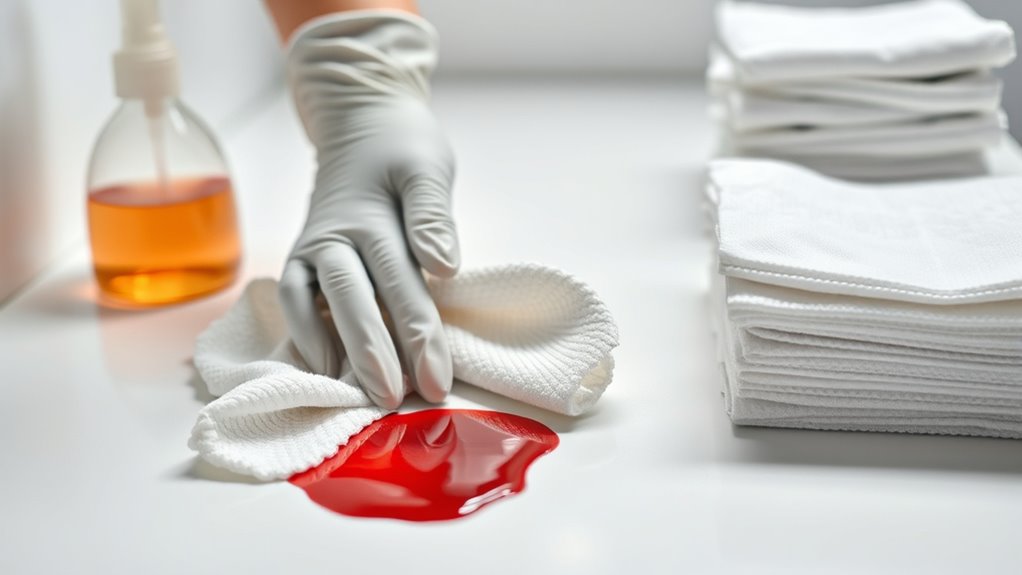
You’ll want to use cloth or paper towels when cleaning up blood because they absorb it quickly, helping to remove it effectively.
Using cloth or paper towels is essential for blood cleanup since they trap blood and reduce the risk of contamination. They reduce the spread of contaminants by trapping blood and preventing splatters.
Disposable paper towels cut down cross-contamination risks since you can toss them right away, while cloth towels offer durability for tougher jobs.
They’re usually easy to find when you need them fast. Keep going if you want to discover the full benefits and best cleanup tips.
Enhanced Absorption for Effective Cleanup
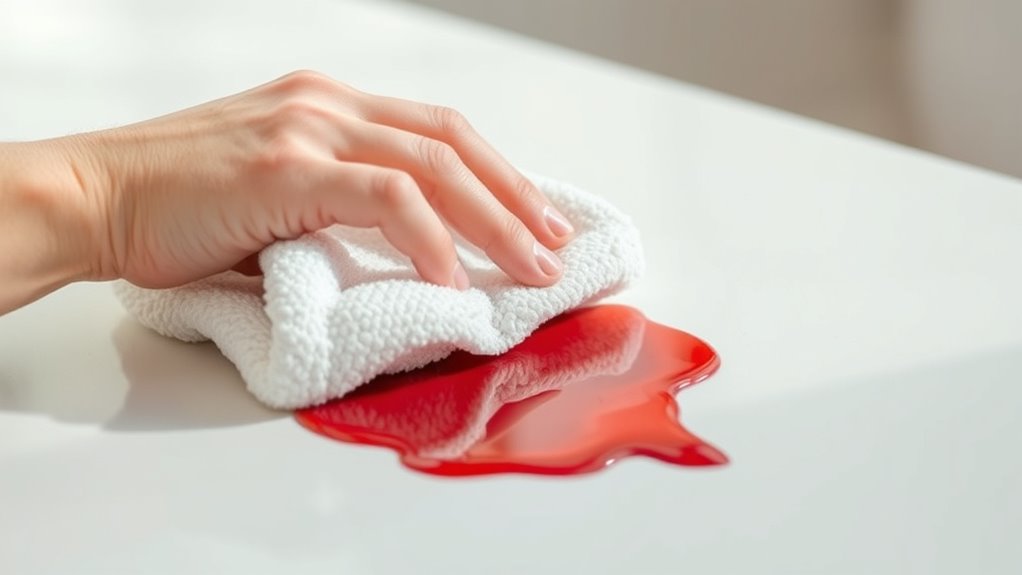
Because blood can soak into surfaces quickly, using cloth or paper towels helps you absorb it more effectively. When you blot the blood with these materials, they pull the liquid away from the surface before it can spread or settle deeper.
You’ll find that paper towels offer quick absorption and can be disposed of immediately, which is super handy for fresh spills. Cloth towels, on the other hand, provide strong absorbency and can handle larger amounts of blood.
Minimizing the Spread of Contaminants
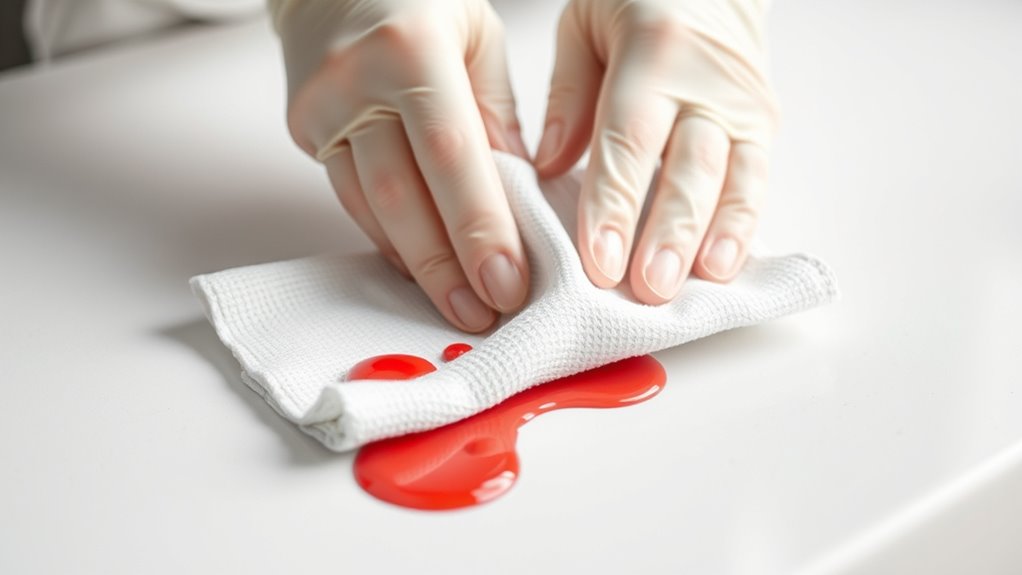
When you clean up blood, you need to be careful not to spread contaminants to other areas. Using cloth or paper towels helps you control the cleanup process more precisely.
Cloth towels, especially if dampened, can trap blood effectively. This reduces the chance of splattering during wiping. Paper towels, being disposable, allow you to absorb blood quickly without repeatedly touching the same surface, which minimizes cross-contamination.
You should always start wiping from the outside of the spill toward the center to contain contaminants. Also, avoid pressing too hard because this can push blood into cracks or spread it further.
Ease of Disposal and Reduced Cross-Contamination
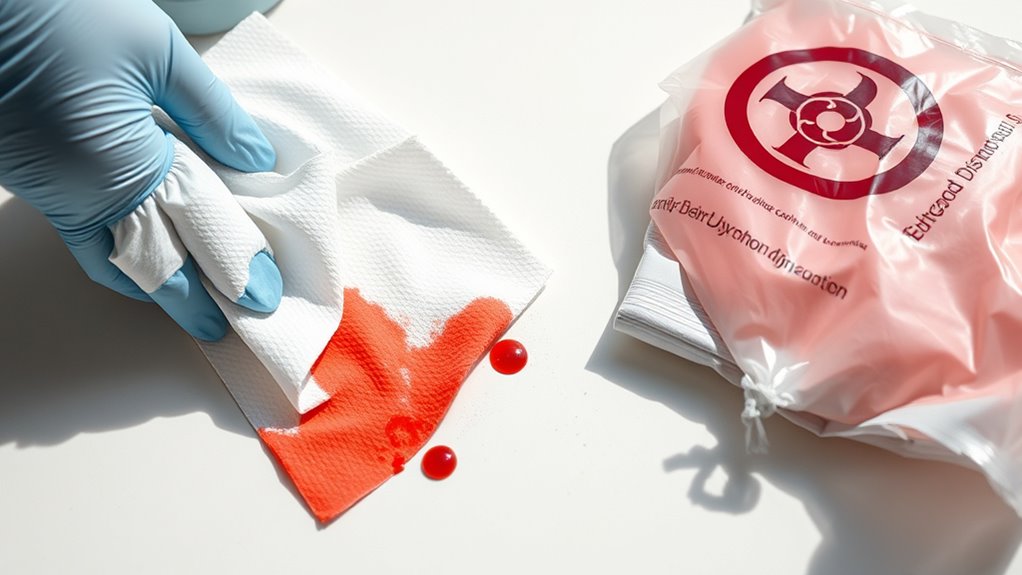
Controlling how you handle blood spills doesn’t stop at wiping—it extends to how you dispose of the materials used. When you use paper towels, you can easily toss them away after a single use, cutting down the risk of cross-contamination.
You don’t have to worry about cleaning or laundering, which means you reduce chances of spreading bloodborne pathogens. Cloth towels, on the other hand, require proper handling after use to avoid contaminating other surfaces or your hands.
If you choose cloth, you must immediately place them in sealed bags or containers to contain any biological hazards. By prioritizing easy disposal with paper towels or securely managing cloth towels, you protect yourself and others from accidental exposure and keep your cleanup process safer and more hygienic.
Durability and Strength for Handling Blood
Although both cloth and paper towels can clean up blood, you’ll find that durability and strength vary markedly between the two. Cloth towels typically hold up better when soaked, preventing tearing and allowing you to scrub effectively.
Cloth towels outperform paper ones in durability and strength, especially when soaked with blood.
Paper towels, while convenient, often break apart when saturated, which can make cleanup messier and less efficient. When handling blood, you want materials that won’t fall apart or leave residues behind.
Consider these factors: Cloth towels resist tearing, even when wet with blood. Paper towels can disintegrate quickly under moisture.
Strong materials reduce the risk of spreading contaminants. Durable towels enable thorough cleaning without frequent replacements.
Strength impacts your confidence during critical cleanup tasks. Choosing the right material helps you manage blood spills safely and effectively.
Availability and Convenience in Emergencies
How quickly can you access the materials you need during an emergency? When blood spills, every second counts. Paper towels are often more readily available in public spaces, kitchens, and first aid kits, making them a convenient choice for immediate cleanup.
You won’t need to search far or waste precious time. Cloth towels, while reusable, might not be as accessible, especially outside your home. However, if you keep clean cloths stocked and within reach, they become just as convenient.
Both options serve well, but your choice depends on where you are and how fast you can act. Being prepared with the right materials nearby guarantees you can contain and clean blood safely and efficiently when it matters most.
Conclusion
You might think using cloth or paper towels to clean blood is old-fashioned, but it’s actually the smart move. Not only do they soak up the mess better, but they also help keep germs from throwing a party all over your place.
Plus, tossing them out is way easier than scrubbing forever. So next time you’re faced with a bloody situation, don’t reach for anything fancy—grab that trusty towel and save yourself some trouble.
Using cloth or paper towels when cleaning blood not only improves absorption but also reduces the spread of bacteria and germs. They make cleanup quicker and more hygienic since you can dispose of them immediately, avoiding cross-contamination. This simple step protects your home from potential infections and keeps your cleaning routine efficient. So, for a safer, cleaner environment, always keep cloth or paper towels handy when dealing with blood spills.