How to Make Paper From Trees in 3 Simple Steps
You start by selecting mature trees, cutting them down, and removing their bark to prepare the wood. This is the first important step in making paper from trees. It sets the foundation for the quality of the paper you’ll produce.
Next, you convert the wood into pulp by grinding or using chemicals to break down the fibers. This pulp is what eventually turns into paper. Breaking down the fibers properly is key to getting the right texture and strength.
Finally, you spread the pulp to form sheets, drain the water, press them, and dry the sheets to make paper. Each of these steps helps shape the final product. If you want to understand the details behind these steps and how each affects paper quality, there’s more to explore.
Harvesting and Preparing the Wood
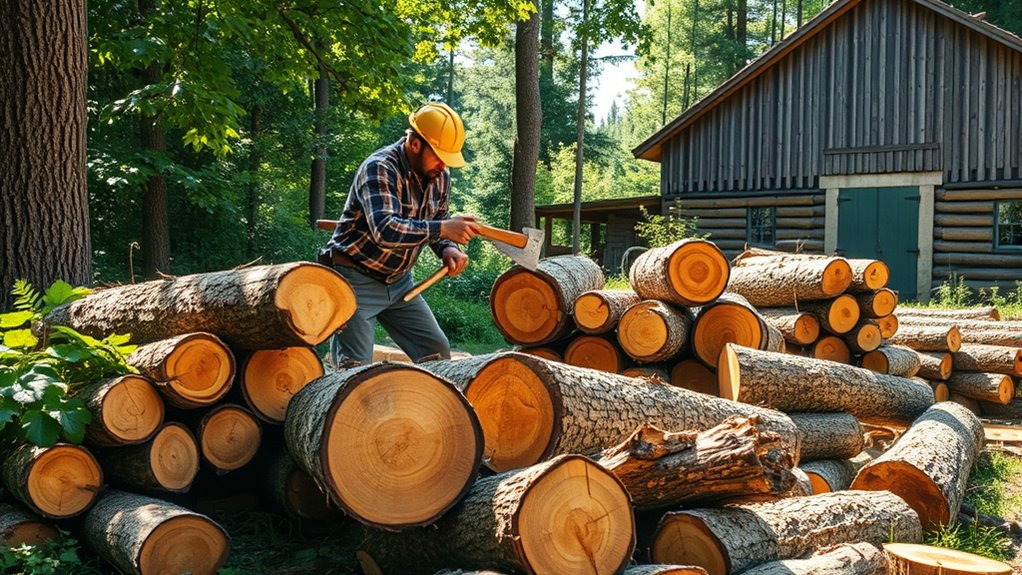
Before you can turn trees into paper, you need to harvest and prepare the wood carefully. You start by selecting mature trees, usually softwoods like pine or fir, because their fibers are great for making strong paper.
After felling the trees, you strip off the branches and cut the trunks into manageable logs. Next, you transport these logs to a processing site where you remove the bark. Bark contains impurities that can affect the paper’s quality, so you use machines called debarkers to peel it off efficiently.
Once the bark is removed, you cut the wood into small chips. These wood chips are easier to handle and prepare for the next step in papermaking. This meticulous preparation ensures you get clean, usable wood ready for pulping.
Turning Wood Into Pulp
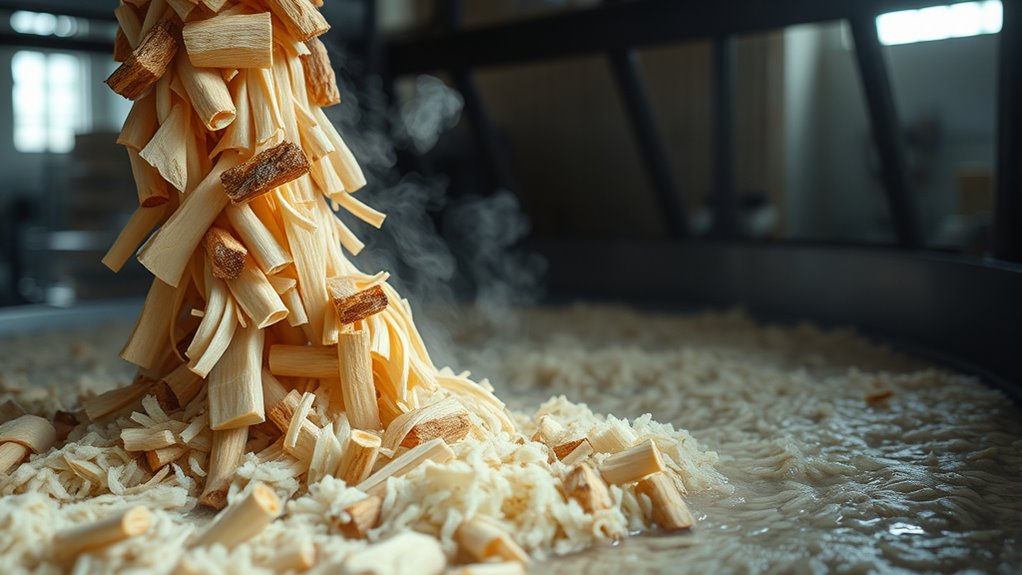
Once the wood chips are ready, you’ll transform them into pulp—a fibrous material that forms the base of paper. You do this by breaking down the chips either mechanically or chemically.
Mechanical pulping grinds the wood into fibers using machines, while chemical pulping uses chemicals to dissolve lignin, leaving stronger fibers.
Here’s a quick comparison:
| Pulping Method | Process | Result |
|---|---|---|
| Mechanical | Grinding wood chips | Short fibers, weaker |
| Chemical | Using chemicals to remove lignin | Stronger, longer fibers |
| Semi-Chemical | Combination of both | Balanced strength |
Choosing the right method depends on your paper’s final use. Both create pulp ready for the next step—forming sheets.
Forming and Drying the Paper Sheets
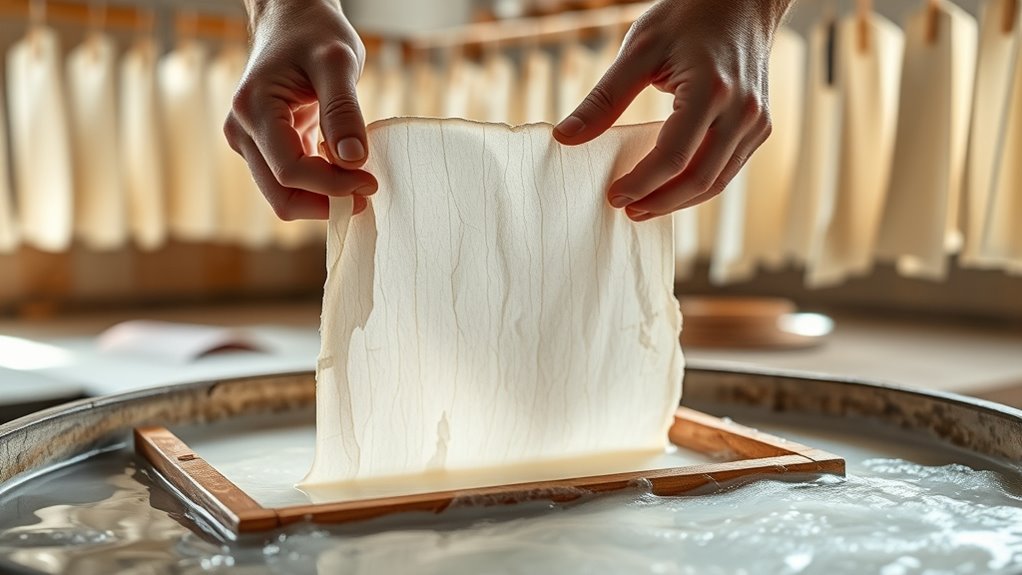
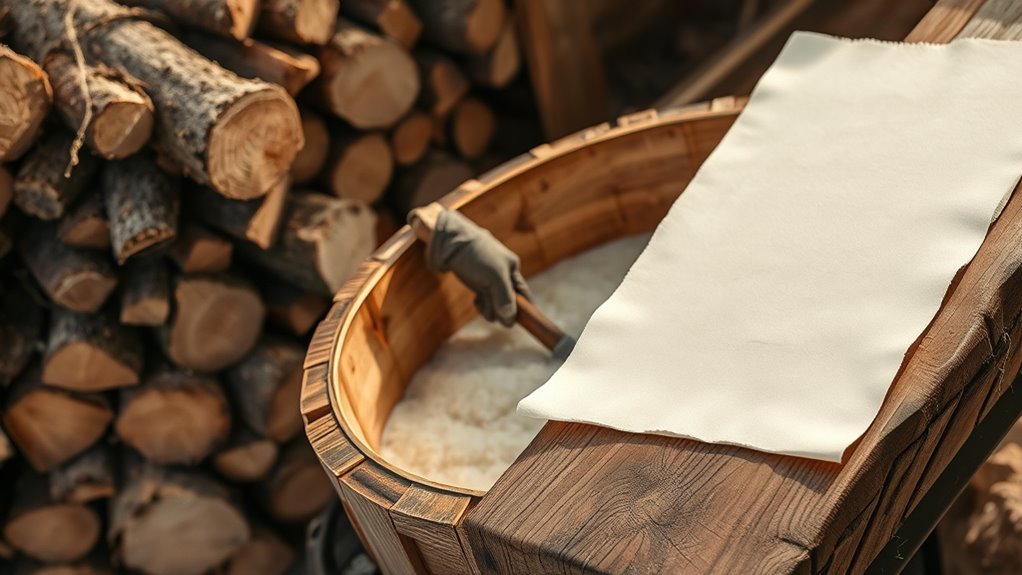
As you move forward, you’ll spread the pulp onto a moving screen to form thin, wet sheets of paper. The water drains away, leaving behind a mat of fibers.
Next, the sheet goes through presses and dryers to remove excess moisture and bond the fibers.
Here’s what you’ll do:
- Spread the pulp evenly on the screen to guarantee uniform thickness.
- Remove water by draining and pressing to start forming the sheet.
- Pass the sheet through heated rollers or drying machines to evaporate moisture.
- Smooth and finish the sheet by calendaring, enhancing its texture and strength.
Conclusion
Now that you’ve mastered these three simple steps, making paper from trees feels like wielding the power of a forest in your hands! Imagine turning raw wood into smooth sheets faster than a lightning strike—it’s almost magical.
With just a bit of effort, you’re not just creating paper; you’re crafting a masterpiece from nature itself. So go ahead, release your inner paper-making wizard and watch the magic unfold!
Making paper from trees is easier than you think, and with these steps, you can transform wood into beautiful, usable paper right at home. It’s a fun, creative process that connects you to nature and sustainability. So grab some tree pulp, follow the steps, and enjoy the rewarding experience of making your own paper from trees!