How You Can Bake Safely Using Parchment Paper
To bake safely with parchment paper, start by choosing a heat-resistant, food-grade kind rated to at least 420°F (215°C). Avoid waxed paper since it can melt or even catch fire in the oven.
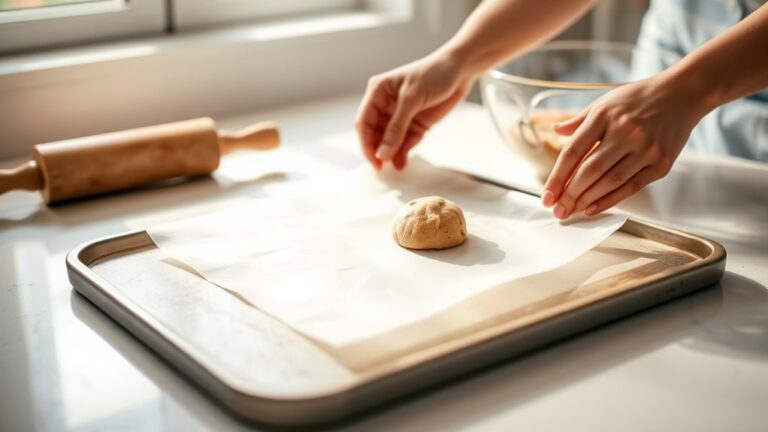
Next, lay the parchment paper flat on your baking sheet. Make sure it doesn’t hang over the edges, as this can cause burning. Then, place your pan on the middle oven rack to keep it away from the heating elements.
Keep an eye on your oven temperature and trim any excess paper before baking. Watch closely for any signs of burning during baking, too.
Using parchment paper properly not only keeps your food safe but also helps extend the paper’s life.
Stick around for more helpful tips that’ll boost your baking safety and success. You’re on your way to baking like a pro with parchment paper!
Understanding Parchment Paper and Its Heat Limits
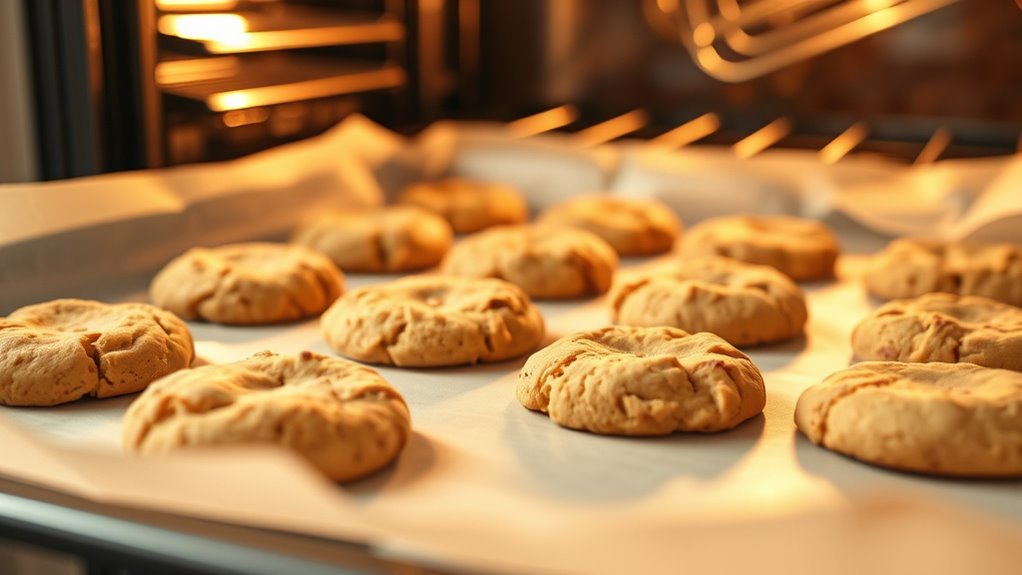
When you bake with parchment paper, knowing its heat limits is essential to avoid burning or smoke. Most parchment papers handle temperatures up to 420°F (215°C).
If you go beyond this, the paper might scorch, releasing unpleasant odors and potentially harmful fumes. You’ll want to check the packaging since some brands offer parchment papers rated for higher temperatures, but it’s best not to push the limits.
Also, avoid direct contact with heating elements or open flames, as parchment paper isn’t fireproof. If you’re roasting or baking at very high temperatures, consider alternatives like silicone baking mats or greased metal pans.
Choosing the Right Parchment Paper for Your Baking Needs
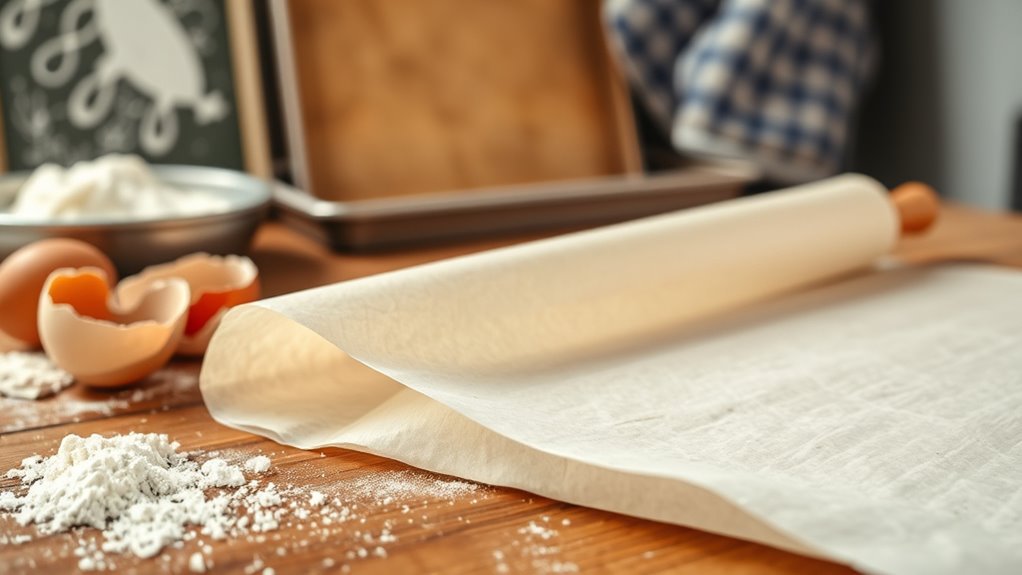
Although all parchment papers might look similar, choosing the right one can make a big difference in your baking results. Look for parchment paper that’s specifically labeled as food-grade and heat-resistant up to at least 420°F (215°C).
Choosing food-grade parchment paper heat-resistant to 420°F enhances your baking results significantly.
If you bake at higher temperatures, opt for silicone-coated parchment paper, which offers better heat tolerance and non-stick properties. Avoid waxed paper, as it can melt or catch fire under heat.
Consider the paper’s thickness too—thicker sheets resist tearing and can handle heavier or stickier items better. If you bake frequently, investing in a roll or pre-cut sheets from reputable brands ensures consistent quality.
Choosing the right parchment paper means you’ll prevent sticking, burning, and messes, making your baking experience safer and smoother. It really pays off to pick the right kind!
Proper Placement of Parchment Paper in the Oven
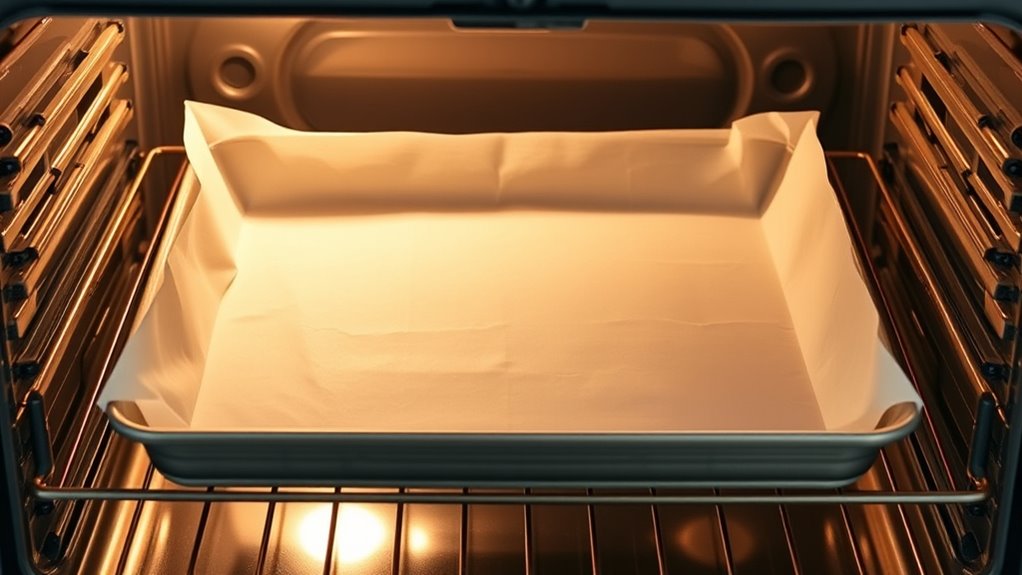
Selecting the right parchment paper sets the stage for a successful bake, but how you place it in the oven plays an equally important role. You want to lay the parchment flat on your baking sheet or pan, ensuring it covers the surface evenly without wrinkles.
Avoid folding or bunching it, as creases can cause uneven heat distribution and affect your bake’s texture. Make sure the edges don’t hang over the sides of the pan to prevent burning or smoking.
When placing the pan in the oven, position it on the middle rack to allow for ideal air circulation and even cooking. By properly placing your parchment paper, you’ll promote consistent results and protect your bakeware from sticking or damage.
Avoiding Direct Contact With Oven Heating Elements
Make sure your parchment paper never touches the oven’s heating elements to prevent burning or fire hazards. Position your baking pan properly so the paper stays flat and secure inside the oven.
Keep an eye on the paper’s placement throughout baking to avoid any accidental contact with hot surfaces. It’s a simple step but really important to keep things safe and your food tasty.
Keep Paper Off Elements
When you bake with parchment paper, you’ll want to keep it away from the oven’s heating elements to prevent burning or fire hazards. Direct contact can cause the paper to ignite or char, ruining your baked goods and risking safety.
Always make sure the paper lies flat on your baking tray or pan. Never let it touch the oven walls or heating coils.
| Do | Don’t | Why |
|---|---|---|
| Place parchment on pans | Let paper hang over edges | Avoids contact with heat |
| Use parchment cut to size | Use oversized sheets | Prevents curling |
| Check placement before baking | Ignore paper position | Reduces fire risk |
| Replace burnt paper | Reuse charred parchment | Ensures safety and quality |
Use Proper Pan Placement
Although it’s tempting to place your pan wherever it fits, you should position it carefully to keep parchment paper from touching the oven’s heating elements.
Place your baking sheet or pan in the center of the oven rack to ensure even heat distribution and prevent the parchment from drifting toward the top or bottom elements.
Avoid sliding the pan too close to the oven walls or heating coils, as direct contact with these hot surfaces can cause the paper to scorch or ignite.
If your oven racks have multiple positions, choose the middle setting to maintain proper clearance. Taking these simple steps helps you bake safely while protecting your parchment paper, preventing flare-ups, and ensuring your baked goods cook evenly every time.
Monitor Paper Positioning
Since parchment paper is flammable, you need to keep a close eye on its position during baking to prevent it from touching the oven’s heating elements. Make sure the paper lies flat on your baking tray and doesn’t extend beyond its edges.
If it curls or flaps, it might brush against the oven’s top or bottom heating elements, which can cause it to ignite. Trim any excess paper before placing your tray in the oven.
Also, avoid lining racks directly with parchment paper—always use a baking sheet underneath to support it. If you’re baking something tall or uneven, check midway through baking to ensure the paper hasn’t shifted.
Tips for Preventing Parchment Paper From Burning
To prevent parchment paper from burning, you’ll want to keep a close eye on your oven temperature and placement. Parchment paper can typically handle temperatures up to 420°F (215°C), so avoid exceeding this limit.
Also, make sure the paper doesn’t touch any heating elements or open flames, as direct contact can cause scorching or fire.
Here are three essential tips to keep parchment paper safe during baking:
- Trim Excess Paper: Cut parchment to fit your pan precisely. This prevents edges from curling and touching oven walls or heating elements.
- Use Lower Oven Racks: Position your baking sheet on a middle or lower rack. That way, it stays farther from the top heating element.
- Avoid Broiling: Never use parchment paper under a broiler. The temperatures are too high and uneven there.
Following these tips will help you bake safely without burning your parchment paper. It’s all about keeping things at the right temperature and distance!
Safe Disposal and Reuse Guidelines for Parchment Paper
When your parchment paper is no longer usable, make sure to dispose of it properly to avoid environmental harm. You can often reuse parchment paper for multiple baking sessions if it’s not overly soiled or burnt.
Let’s explore some easy tips to help you get the most out of your parchment paper while keeping disposal safe. It’s all about being mindful and getting the best use before tossing it out.
Proper Disposal Methods
Although parchment paper is designed for single use, you can often extend its life by carefully cleaning and reusing it for similar baking tasks. When it’s time to dispose of it, follow proper methods to minimize environmental impact.
- Check for Compostability: Confirm if your parchment paper is labeled compostable; if so, tear it into small pieces and add it to your compost bin. Composting is a great way to reduce waste, so keep an eye out for that label.
- Avoid Recycling Bins: Since most parchment paper has a silicone coating, it’s not recyclable and should not go into regular recycling. Tossing it in the recycling bin can actually cause problems at recycling facilities.
- Dispose of Greasy Paper Properly: If the paper is heavily soiled with grease or food residue, discard it in the trash to prevent contamination. It might not be ideal, but it’s better than spoiling other recyclables or compost.
Reusing Parchment Paper Tips
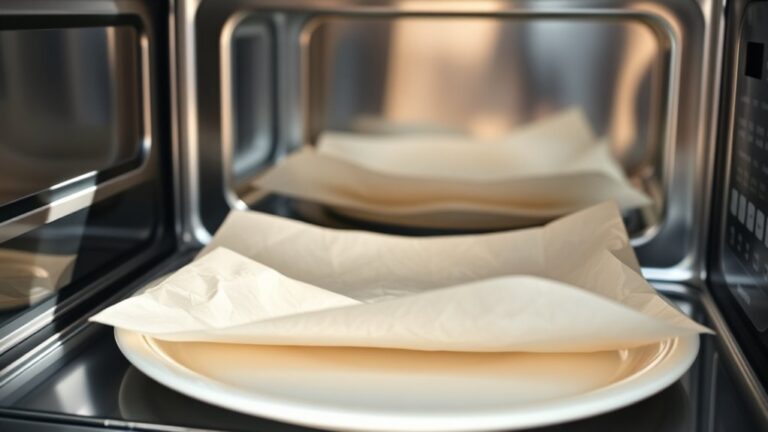
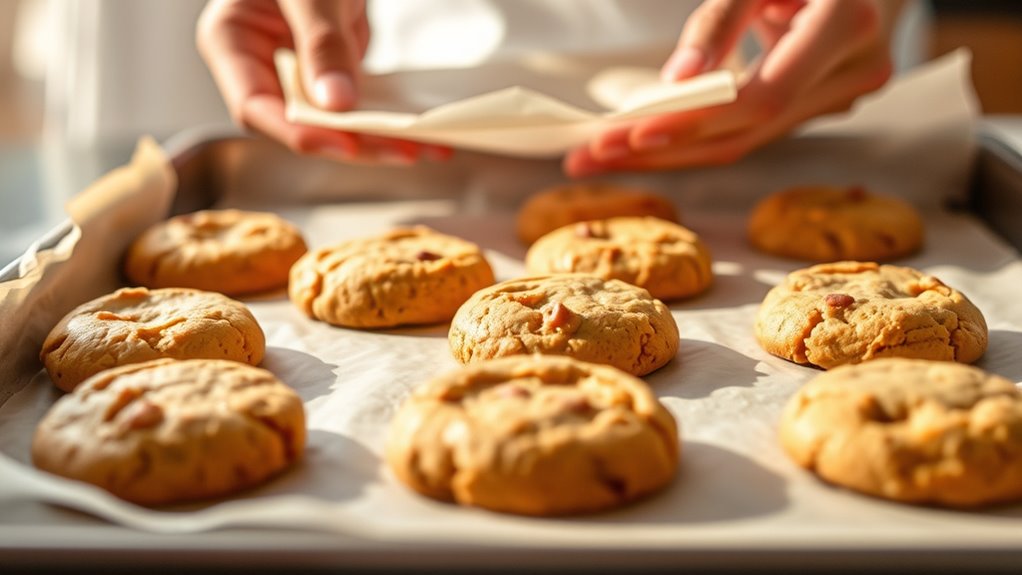
Since parchment paper can withstand gentle use, you can often reuse it for similar baking tasks if you handle it carefully. After baking, let the paper cool completely and inspect it for grease stains or burnt spots.
If it’s mostly clean and intact, simply wipe off crumbs or residue with a dry cloth. Avoid reusing parchment paper that’s heavily soiled or charred, as it may affect the taste of your next batch and could pose a fire risk.
Store your reusable sheets flat in a dry place to prevent creases. Remember, reuse works best for low- to moderate-temperature baking.
If you do need to dispose of parchment paper, tear it into smaller pieces and compost if it’s uncoated. Otherwise, put it in the trash if coated or heavily soiled.
Conclusion
When you think parchment paper just makes cleanup easier, you’ll be surprised how much safer and smarter your baking can get by using it right. By choosing the right type, placing it properly, and keeping it away from heating elements, you not only protect your food but also avoid kitchen fires.
So next time you grab that parchment, remember—it’s not just convenience; it’s your secret safety tool baking coincidentally hands you every time. Using parchment paper correctly helps ensure your baked goods come out perfect without any risk of burning or sticking. It’s a simple step that makes your kitchen safer and your baking experience much more enjoyable.