How to Use Baking Paper Without Catching Fire
To use baking paper without catching fire, it’s important to choose paper that can handle your oven’s temperature—usually up to 220°C (428°F). Always check the packaging for temperature ratings before you start baking.
Next, place the baking paper flat on the tray and trim any edges that hang over. This way, the paper won’t touch the oven walls or heating elements, which can be a fire risk.
Keep your oven temperature below the paper’s maximum limit and avoid letting the paper come into direct contact with flames or broilers.
Keep an eye out for any signs like discoloration or smoke while baking, and lower the heat if you notice anything unusual.
There’s plenty more to learn about safely using baking paper and some great alternatives that can make your baking easier and safer. Want to avoid accidents? A little care goes a long way!
Understanding the Heat Resistance of Baking Paper
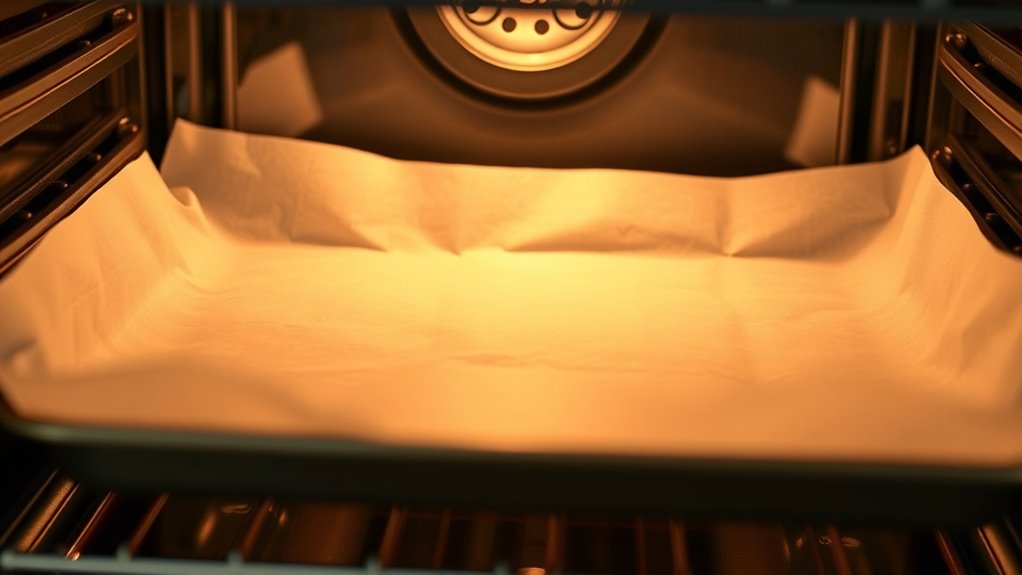
Although baking paper is a handy kitchen tool, you need to understand its heat resistance to use it safely. Most baking papers withstand temperatures up to around 220°C (428°F), but this can vary by brand.
Exceeding this limit risks burning the paper or even starting a fire. When you place baking paper in the oven, keep it flat and avoid letting it touch heating elements or open flames.
Also, don’t use baking paper under a grill or broiler, as these expose it to direct and intense heat. Always check the packaging for the maximum temperature rating before use.
Choosing the Right Type of Baking Paper for Your Oven
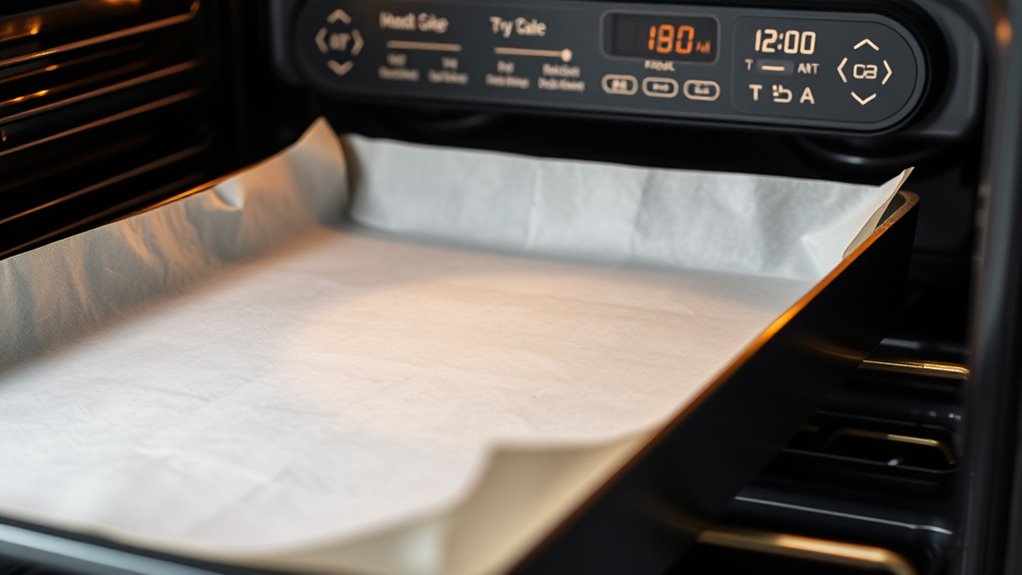
When selecting baking paper for your oven, you’ll want to take into account its heat tolerance and intended use carefully to guarantee safety and the best baking results. Not all baking papers are created equal—some are coated with silicone, making them more heat-resistant and non-stick, which is ideal for most baking tasks.
Choosing baking paper with the right heat tolerance ensures safety and optimal baking every time.
Others might be untreated or lightly treated, suitable only for lower temperatures. Always check the packaging for the maximum temperature rating, and choose a paper that withstands your oven’s heat.
For high-temperature roasting or broiling, opt for heavy-duty or silicone-coated baking paper to prevent burning. Avoid waxed paper in the oven; it’s not designed for heat and can catch fire.
Picking the right type helps you bake safely and get perfect results every time. So, it’s definitely worth taking a moment to choose wisely!
Proper Placement of Baking Paper in the Baking Tray
Choosing the right baking paper sets you up for success, but placing it correctly in the baking tray guarantees your food cooks evenly and prevents messes. Start by cutting the paper slightly larger than the tray’s base, allowing it to cover the entire surface and sides.
Gently press the paper into the corners and edges without forcing it, so it fits snugly without tearing. Avoid overlapping sheets to prevent uneven cooking or burning.
If your baking tray has raised edges, make sure the paper extends just enough to line them without excessive overhang. This ensures juices or batter stay contained.
Proper placement not only helps your food bake uniformly but also simplifies cleanup, making your baking experience smoother and safer.
Avoiding Contact Between Baking Paper and Oven Walls or Heating Elements
To prevent fires or damage, you should keep baking paper away from oven walls and heating elements. Direct contact can cause the paper to scorch or ignite.
Always place the paper flat on your baking tray, ensuring it doesn’t extend beyond the edges. If it curls, smooth it down or trim the excess.
Remember, heating elements get extremely hot, so even a slight touch can be dangerous.
| Common Mistakes | What You Should Do |
|---|---|
| Paper touching walls | Keep paper centered |
| Overlapping edges | Trim excess paper |
| Paper near elements | Maintain safe distance |
| Curling edges | Flatten or clip edges |
| Loose paper | Secure under tray edges |
Stay mindful of placement to bake safely and efficiently.
Monitoring Oven Temperature to Prevent Paper Ignition
Keeping baking paper away from oven walls and heating elements helps reduce the risk of ignition. But you also need to watch the oven temperature closely.
Keep baking paper clear of oven walls and heating elements to minimize fire risks and monitor temperature carefully.
Baking paper generally withstands temperatures up to about 220°C (428°F). If your recipe requires higher heat, you risk the paper catching fire.
Always check your oven’s temperature settings and avoid exceeding the recommended limit for your baking paper. Use an oven thermometer if your oven’s gauge isn’t accurate.
When preheating, don’t leave the paper inside unattended, as temperatures can spike quickly. If you notice any browning or smoking of the paper, reduce the heat immediately and remove the paper if necessary.
Staying vigilant with temperature control keeps your baking safe and prevents any fire hazards. It’s always better to be cautious than to have an accident.
Safe Alternatives to Baking Paper for High-Temperature Baking
While baking paper works well for moderate temperatures, it can’t handle the highest heat without risking damage or fire. When you need to bake at very high temperatures, consider using alternatives like silicone baking mats.
They’re heat-resistant, reusable, and provide a non-stick surface perfect for roasting or baking. Another option is aluminum foil, which can tolerate high heat, but be sure to grease it lightly to prevent sticking.
You can also grease your baking trays directly or use oven-safe glass or ceramic dishes to avoid any fire hazards. These alternatives keep your cooking safe and effective, especially when temperatures soar above baking paper’s limits.
Always pick the right tool for the job to keep your kitchen safe and your food delicious.
Conclusion
Using baking paper is like having a trusted sidekick in the kitchen—as long as you treat it right. Keep it away from direct heat and oven walls, and choose the right kind of baking paper for your recipe.
Also, watch your oven temperature carefully. This helps you avoid any fiery mishaps and bake safely every time. A little care goes a long way in turning your baking paper from a potential spark into your baking’s best friend.
So, when using baking paper, always remember to keep it away from open flames and heating elements. Use parchment paper designed for oven use, and don’t exceed the recommended temperature. By following these simple tips, you can safely use baking paper without catching fire and enjoy your delicious baked goods worry-free.