Can Wrapping Paper Be Recycled?
You can recycle plain wrapping paper if it’s free of glitter, foil, or plastic coatings. Look for matte, thin paper that crumples easily—these are usually accepted in recycling programs. Be sure to remove tape, ribbons, and any non-paper elements before tossing it in.
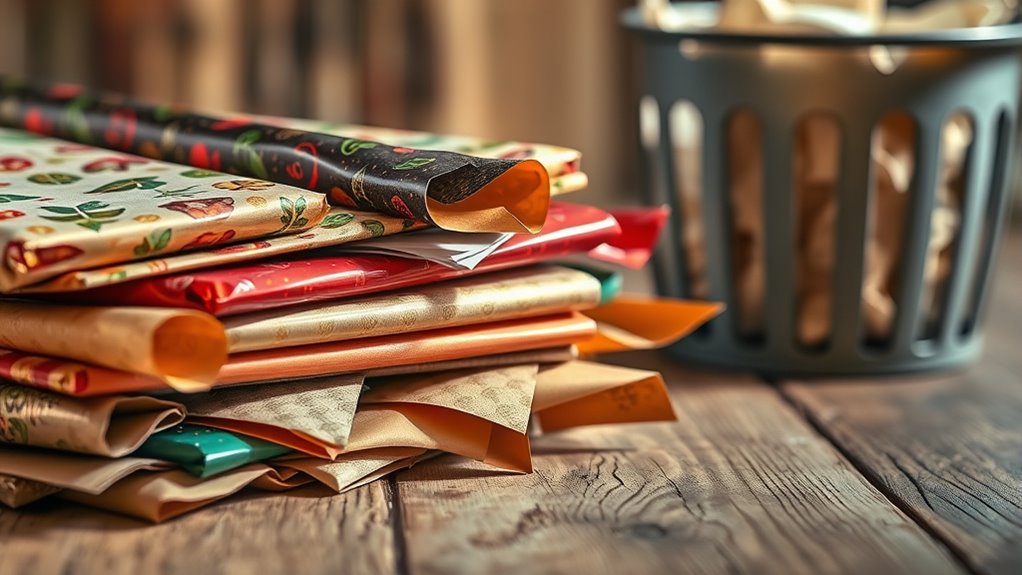
Avoid glossy, metallic, or heavily decorated sheets since they contaminate recycling streams. These materials don’t break down well and can mess up the whole batch. So, it’s best to keep those out of your recycling bin.
If you want to get the most from your wrapping choices and disposal, there are smarter ways to handle paper waste.
Plus, there are plenty of eco-friendly ideas to consider that can help reduce waste and make gift-giving greener.
Types of Wrapping Paper and Their Recyclability
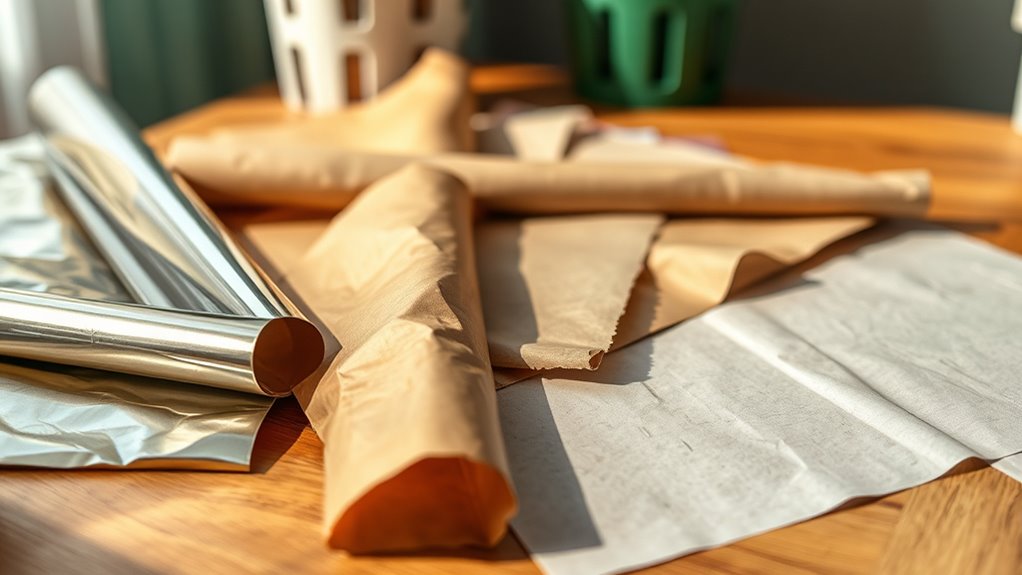
When you choose wrapping paper, it’s important to know which types can be recycled. Plain paper wrapping, like brown kraft or simple patterned paper, usually breaks down easily and fits well in your recycling bin.
However, papers with glossy finishes, metallic coatings, or glitter often can’t be recycled because they contaminate the paper fibers. Tissue paper, while lightweight, is generally recyclable if it’s free of dyes or additives.
Avoid wrapping paper with plastic elements, such as shiny ribbons or plastic windows, as these don’t break down. Also, thick laminated papers won’t recycle well.
How to Identify Recyclable Wrapping Paper
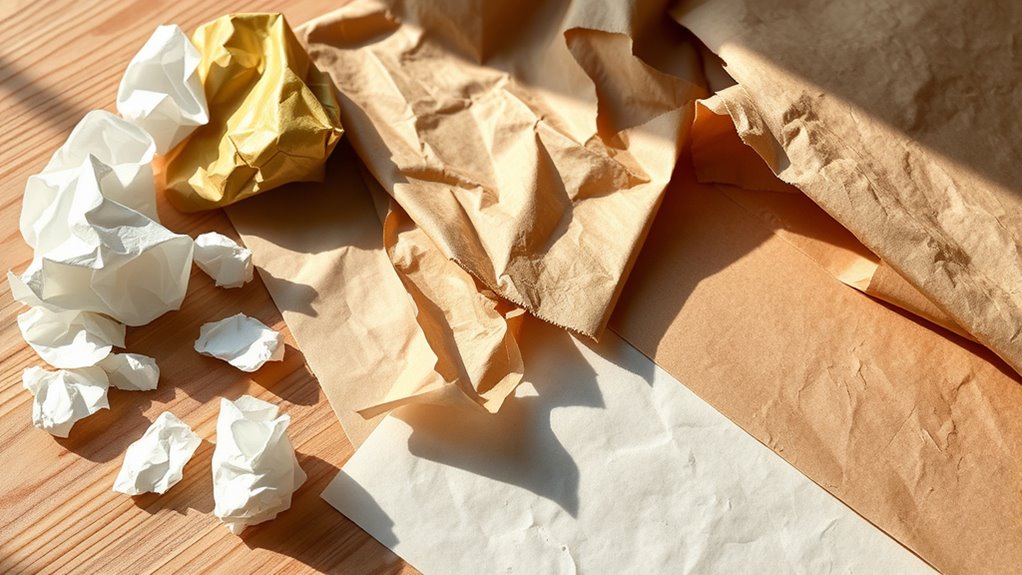
How can you quickly tell if wrapping paper is recyclable? First, check the texture and appearance. Recyclable wrapping paper is usually thin, matte, and doesn’t contain glitter, foil, or plastic coatings.
Avoid shiny, metallic, or heavily laminated paper, as these often can’t be processed by standard recycling plants. You can also do a simple test: crumple a small piece—if it stays crumpled, it’s more likely recyclable; if it springs back, it might have plastic or foil elements.
Look for recycling symbols or labels on the packaging, which can guide you. Remember, wrapping paper without added decorations or adhesives is your safest bet.
Common Wrapping Paper Materials to Avoid
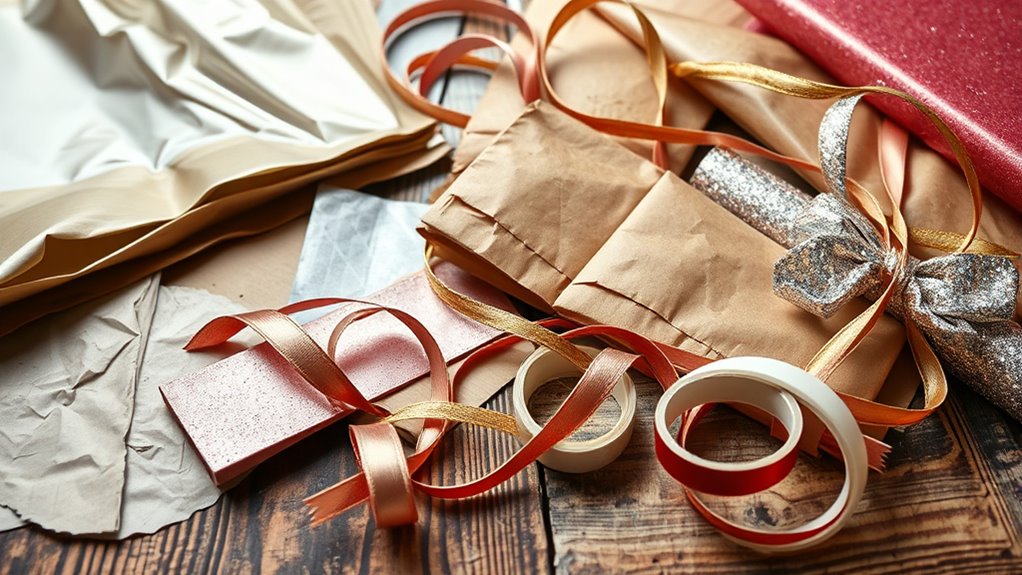
Knowing which wrapping papers are recyclable helps you avoid common materials that cause problems in recycling facilities. Avoid wrapping paper with metallic finishes, glitter, or foil, as these contain non-paper additives that contaminate the recycling process.
Avoid metallic, glittery, or foil wrapping paper to prevent contamination in recycling facilities.
Papers with plastic coatings or laminated surfaces also can’t be recycled because they don’t break down like regular paper fibers. You should steer clear of glossy, heavily dyed, or textured papers that often have synthetic components.
Additionally, gift bags and tissue paper usually aren’t accepted since they blend different materials or have low-quality fibers. When you spot these types, it’s best to dispose of them in the trash rather than recycling.
Being mindful of these materials guarantees you don’t inadvertently harm recycling efforts or cause facility malfunctions. So, keep an eye out and recycle smart!
Tips for Recycling Wrapping Paper Correctly
You can recycle wrapping paper, but only if it’s the right type. Look for paper that’s plain and free of glitter, foil, or plastic coatings.
Before tossing it in the bin, make sure to remove tape and flatten the paper for easy processing. It helps the recycling center handle it better, trust me!
Identifying Recyclable Materials
Although wrapping paper often looks festive and fun, not all of it can be recycled. You need to know which types are accepted by most recycling programs to avoid contamination.
Generally, plain paper, tissue, and paper without glitter, foil, or plastic coatings are recyclable. However, shiny, laminated, or heavily dyed papers usually aren’t.
Here’s a quick guide to help you identify recyclable wrapping paper:
| Wrapping Paper Type | Recyclable? | Notes |
|---|---|---|
| Plain paper | Yes | Uncoated and free of dyes |
| Tissue paper | Yes | Thin and uncoated |
| Foil or metallic | No | Contains plastic or metal |
| Glittery paper | No | Glitter contaminates recycling |
| Laminated paper | No | Plastic coating prevents recycling |
Preparing Wrapping Paper Properly
Once you’ve sorted out which wrapping papers can be recycled, the next step is to prepare them properly to guarantee they’re accepted by your local recycling program.
Start by removing any non-paper elements like ribbons, bows, tape, or stickers. These can contaminate the recycling process, so it’s important to get rid of them first.
Flatten the wrapping paper to save space and make handling easier for recycling facilities. If the paper is crumpled or torn, try to smooth it out since clean, flat paper is preferred.
Avoid including glossy, metallic, or heavily dyed papers unless your program explicitly accepts them.
Finally, bundle your wrapping paper with other recyclable paper products if required by your local guidelines. By following these simple steps, you’ll help ensure your wrapping paper actually gets recycled and doesn’t end up in the landfill.
Eco-Friendly Alternatives to Traditional Wrapping Paper
When searching for eco-friendly alternatives to traditional wrapping paper, consider materials that you can easily recycle, reuse, or compost. You might choose kraft paper, which is sturdy, recyclable, and biodegradable. It also offers a rustic, charming look that you can personalize with stamps or drawings.
Fabric wraps, like furoshiki cloths, are another great option—they’re reusable and add a unique touch to your gifts. Recycled newspaper or magazine pages can also serve as creative and sustainable wrapping, especially if you want a vintage or eclectic vibe.
For a biodegradable choice, try wrapping gifts in brown paper bags decorated with natural twine and dried flowers. By opting for these alternatives, you reduce waste and make your gift-giving more environmentally friendly without sacrificing style.
What to Do With Non-Recyclable Wrapping Paper
Since non-recyclable wrapping paper can’t go in your curbside bin, you’ll need to find other ways to handle it responsibly. Consider reusing it for crafts or gift tags, or repurpose it as packing material.
Avoid burning it, as it may release toxins. If disposal is necessary, place it in the trash to prevent contamination of recyclable materials.
| Option | Description |
|---|---|
| Reuse | Create cards, gift tags, or collages |
| Compost (if safe) | Use only non-glitter, non-metallic types |
| Donate | Schools or art centers for projects |
| Packaging | Cushion fragile items when shipping |
| Trash | Last resort if no reuse options exist |
Conclusion
Did you know that only about 15% of wrapping paper gets recycled each year? By choosing recyclable wrapping paper and sorting it correctly, you can help reduce waste considerably.
Remember to avoid shiny, glittery, or foil papers, as they usually can’t be recycled. Instead, opt for eco-friendly alternatives like plain kraft paper or reusable fabric wraps.
Taking these simple steps makes a big difference for the planet—and your holiday cleanup will be much easier too! Using recyclable wrapping paper not only supports recycling efforts but also minimizes landfill waste. So next time you shop for wrapping paper, think green and choose options that can be recycled or reused. It’s a small change that helps protect our environment and keeps the festive spirit sustainable.