Is Rice Paper Fattening or Not?
You won’t gain weight from rice paper because it’s a low-calorie, low-fat option that fits well into your balanced diet. Each sheet has about 30-40 calories, mostly carbs, with minimal fat and protein.
Unlike heavier, oil-based wrappers, rice paper stays light and doesn’t soak up much oil, making it great for weight control.
Pair it with veggies and lean proteins to keep meals nutritious and satisfying. Keep exploring to find smart ways to use rice paper healthfully.
It’s a great choice if you’re wondering, “Is rice paper fattening or not?” Because the answer is pretty clear—it’s a light, healthy option perfect for mindful eating.
Nutritional Profile of Rice Paper
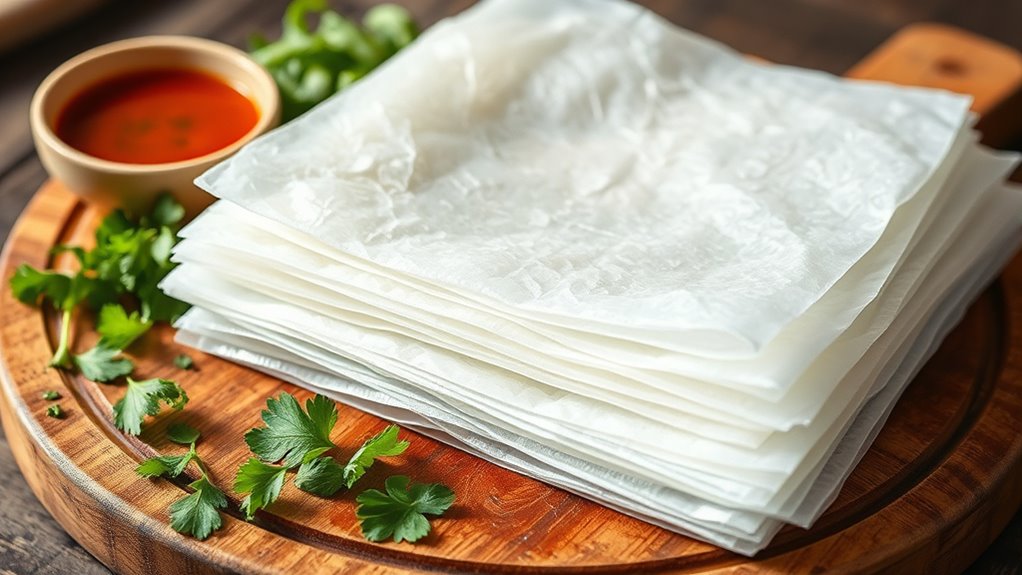
Although rice paper is often associated with spring rolls and other tasty snacks, its nutritional profile is surprisingly simple. When you look at rice paper, you’ll find it’s mainly made from rice flour, water, and sometimes tapioca starch.
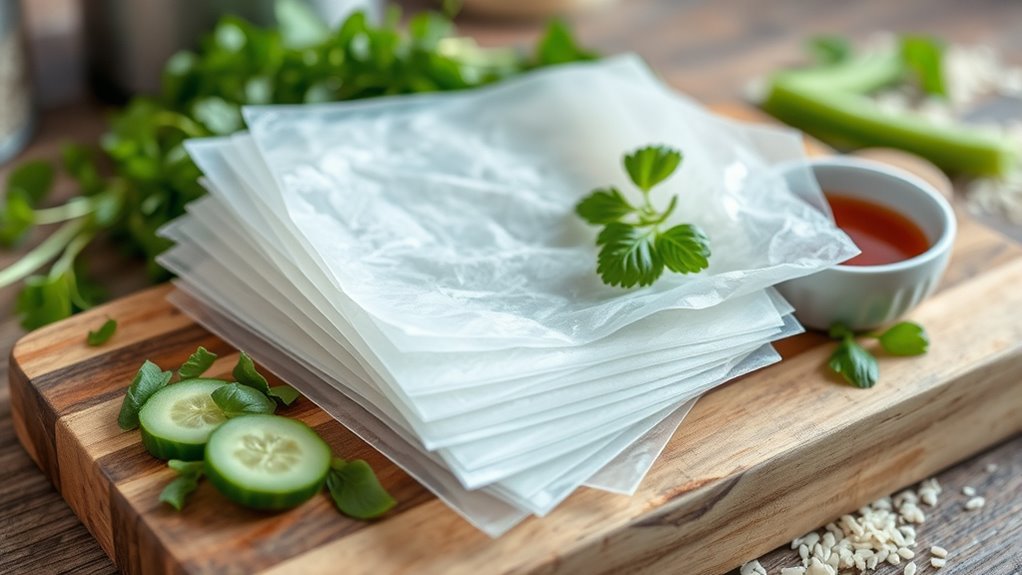
Rice paper’s simple ingredients—rice flour, water, and tapioca starch—make it a light, versatile snack wrap.
This means it’s low in calories—usually around 30 to 40 calories per sheet. It contains minimal fat and protein, so it’s mostly a source of carbohydrates.
You won’t get much fiber or sugar from it either. Because of its thin, lightweight nature, rice paper doesn’t contribute a lot nutritionally, but it can serve as a low-calorie wrapper for your fillings.
If you’re watching your calorie intake, rice paper is a smart choice that won’t add unnecessary fats or sugars to your meal. It’s simple, light, and does the job without weighing you down.
Comparing Rice Paper to Other Wrappers
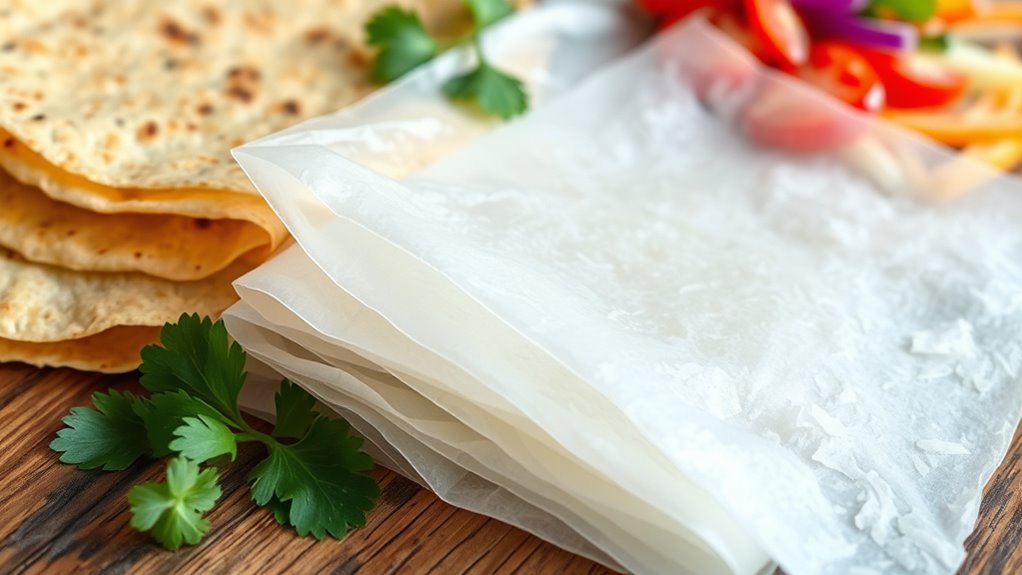
When choosing a wrapper for your rolls or snacks, you’ll find rice paper stands out for its lightness and low calorie content compared to alternatives like flour tortillas or wheat-based wraps. Rice paper typically contains fewer calories and less fat, making it a leaner choice.
Unlike flour tortillas that often include oils and preservatives, rice paper is usually just made from rice flour and water, keeping it simple and clean. If you’re watching your calorie intake, rice paper gives you more freedom to fill your rolls with nutrient-rich ingredients without worrying about excess calories from the wrapper itself.
While whole wheat or corn tortillas offer more fiber, rice paper’s minimal ingredients make it a versatile, low-calorie option that fits well into lighter meal plans. It’s a great choice when you want something that won’t weigh you down but still tastes great.
How Rice Paper Affects Weight Management
Choosing rice paper as your wrapper can play a significant role in managing your weight. Rice paper is low in calories and fat, making it a smart choice if you want to enjoy tasty meals without piling on extra calories.
When you use rice paper instead of heavier, oil-based wrappers, you cut down on unnecessary fats that can sabotage your weight goals. Plus, rice paper is thin and light, helping you control portion sizes naturally.
Since it doesn’t add much to your calorie intake, you can fill your rolls with nutrient-dense veggies and lean proteins to create satisfying, balanced meals. By opting for rice paper, you make it easier to stick to a calorie-controlled diet, which supports steady and healthy weight management.
Common Myths About Rice Paper and Fat
You might think rice paper is packed with calories or carbs, but that’s not always true.
Some believe it soaks up fat during cooking, making it unhealthy, but that’s a myth.
Let’s clear up these common misunderstandings about rice paper and fat.
Rice Paper Calorie Facts
Rice paper often gets a bad rap for being fattening, but the truth is far from that. When you look at the calorie content, rice paper is surprisingly low in calories.
Each sheet typically contains around 30-40 calories, making it a light option for wraps or rolls. This low calorie count helps you enjoy your meals without worrying about excessive calorie intake.
| Portion Size | Calories | Fat (g) |
|---|---|---|
| 1 sheet (16g) | 35 | 0.1 |
| 3 sheets (48g) | 105 | 0.3 |
| 5 sheets (80g) | 175 | 0.5 |
Understanding these facts helps you make smarter food choices without falling for calorie-related myths. So next time you reach for rice paper, feel good about your choice!
Carb Content Misconceptions
Although many believe that the carb content in rice paper makes it fattening, this common myth doesn’t hold up under scrutiny.
You might think carbs automatically lead to weight gain, but it’s not that simple. Rice paper contains a moderate amount of carbohydrates, mostly from rice starch, which your body uses as a quick energy source.
Unlike highly processed carbs, rice paper’s carbs aren’t excessive or inherently fattening. The key is portion control and overall diet balance.
If you incorporate rice paper in reasonable amounts within a healthy meal, it won’t cause fat gain. So, don’t avoid rice paper just because of its carb content; focus more on how it fits into your total daily nutrition rather than fearing carbs in isolation.
Fat Absorption Myths
While many assume that rice paper soaks up fat like a sponge, this isn’t true. Rice paper is thin, made mostly from rice flour and water, and doesn’t absorb or retain much oil during cooking.
You might think frying it adds tons of fat, but if you use minimal oil or opt for steaming, fat absorption stays low. Don’t let myths steer you away from enjoying rice paper dishes.
| Myth | Reality | Tip |
|---|---|---|
| Rice paper absorbs oil | Absorbs very little oil | Use light brushing of oil |
| Frying makes it greasy | Can be crispy without excess fat | Try baking or steaming |
| More oil = more fat | Excess oil can be drained off | Pat dry with paper towels |
Understanding these facts helps you make balanced food choices.
Incorporating Rice Paper Into a Balanced Diet
If you want to enjoy rice paper without worrying about its impact on your waistline, you need to focus on how you incorporate it into your overall meals. Rice paper is low in calories and carbs, so it’s a great base for light, nutritious dishes.
Combine it with plenty of fresh vegetables, lean proteins like shrimp or tofu, and healthy fats such as avocado or nuts. This balance helps you stay full longer and supports steady energy levels.
Avoid piling on high-calorie sauces or fried fillings, which can add unnecessary calories. By integrating rice paper thoughtfully, you can enjoy tasty, satisfying meals without overdoing it.
Tips for Choosing and Using Rice Paper Healthily
When selecting rice paper, you’ll want to look for varieties that contain minimal additives and no artificial preservatives to keep your meals as healthy as possible. Choose plain rice paper without added sugars or sodium.
When preparing, avoid deep frying; instead, opt for steaming or fresh rolls to maintain low calories. Pair rice paper with plenty of fresh vegetables, lean proteins, and herbs to boost nutrition and satiety.
Also, watch portion sizes—using too many sheets can add unnecessary carbs. Store rice paper in a cool, dry place to prevent spoilage.
Finally, be mindful of dipping sauces; choose low-sodium, low-sugar options or make your own to control ingredients. These simple tips help you enjoy rice paper without compromising your health goals.
Conclusion
You don’t have to worry about rice paper being fattening—it’s low in calories and fat, making it a smart choice for wraps or spring rolls.
For example, imagine Sarah, who swapped bread for rice paper in her lunches and still lost weight while enjoying her meals.
By choosing rice paper and filling it with veggies and lean proteins, you can easily keep your diet balanced and tasty without extra guilt.
So, if you’re wondering if rice paper is fattening, the answer is no. It’s a great low-calorie option that helps keep your meals light and satisfying. Incorporating rice paper into your diet is a delicious way to enjoy wraps and spring rolls without worrying about extra calories or fat. Stick to fresh veggies and lean proteins, and you’ve got a healthy, guilt-free meal that supports your weight goals.