
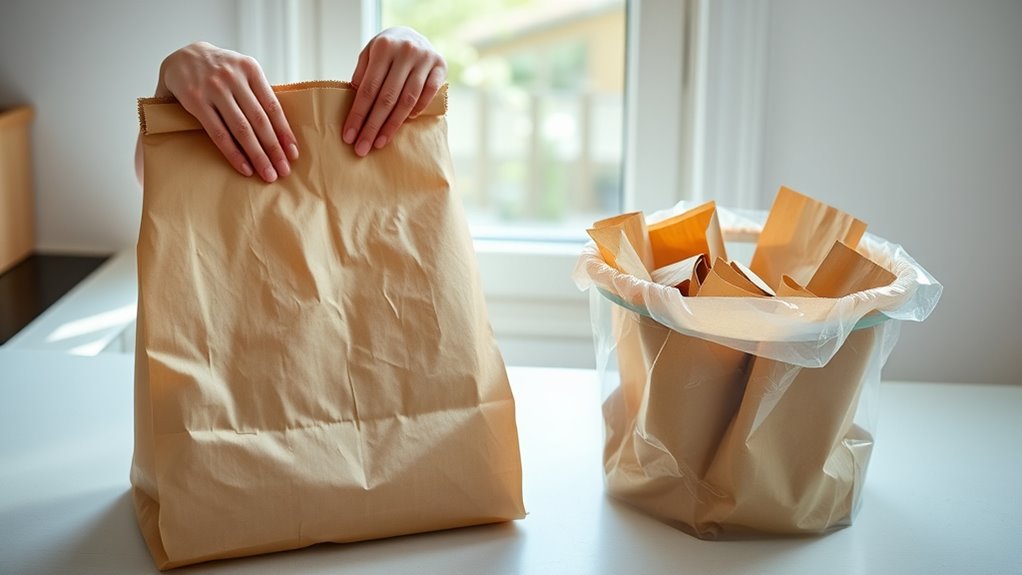
How to Recycle Paper Grocery Bags Properly
To recycle paper grocery bags properly, start by removing any plastic handles, stickers, or tape. It’s important to make sure your bags are clean, dry, and free from grease or food stains. This keeps the recycling process smooth and effective.
Next, flatten your bags to save space and help keep recycling efficient.
Then, drop them off at your local recycling center, curbside bin, or store collection point that accepts paper bags.
Following these simple steps not only reduces waste but also supports eco-friendly practices.
Want to get the most from your efforts? Keep reading for more helpful info on recycling paper grocery bags and making a positive impact on the environment!
Understanding Paper Grocery Bags and Their Recycling Potential
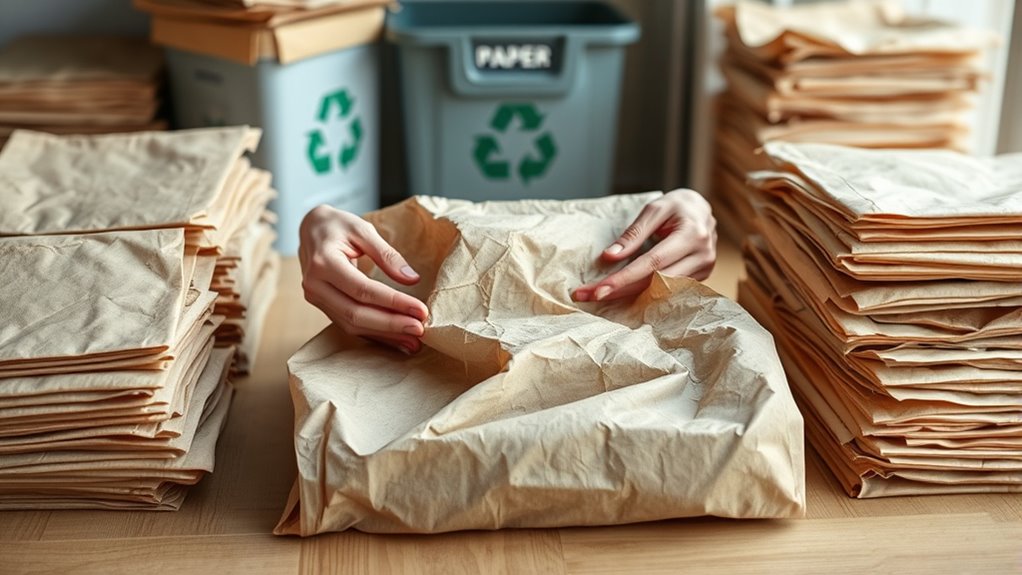
Although paper grocery bags seem simple, they have unique properties that affect how you can recycle them. You’ll find they’re made from kraft paper, which is durable but also biodegradable.
This means they break down more easily than plastic, making them a better choice environmentally. However, their recycling potential depends on their condition.
If the bags are clean and dry, you can recycle them with other paper products. But if they’re wet, greasy, or torn, recycling facilities may reject them because such damage can contaminate the recycling process.
Understanding these factors helps you decide when and how to recycle your paper bags responsibly. That way, you can make sure they’re transformed into new products rather than ending up in a landfill.
Preparing Paper Bags for Recycling: What to Remove
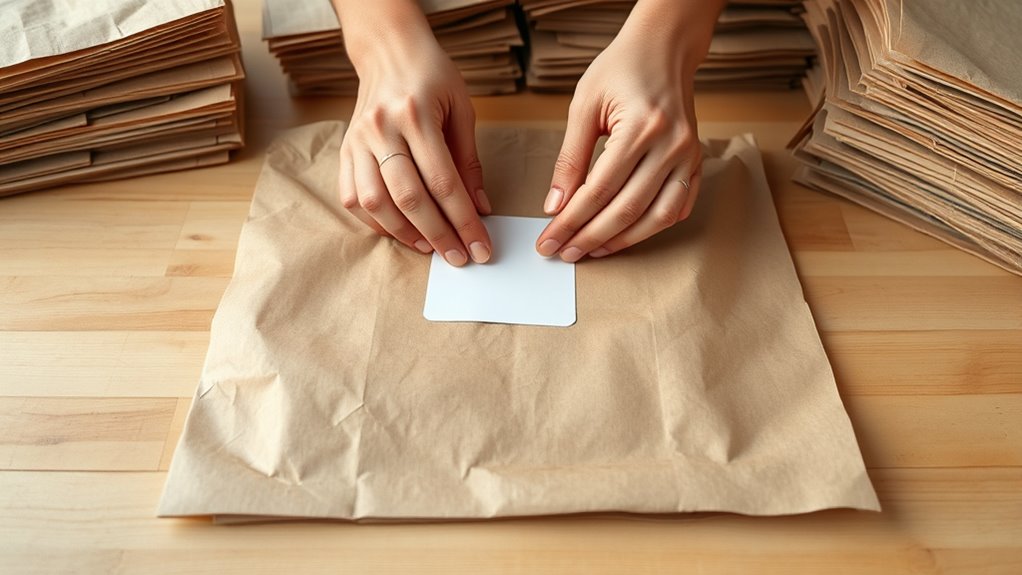
Before recycling your paper grocery bags, you need to remove any non-paper elements like handles, stickers, or tape. These materials can contaminate the recycling process and reduce the quality of the recycled paper.
If your bag has plastic or fabric handles, gently pull them off or cut them away with scissors. Peel off any adhesive labels or price tags to ensure only paper remains.
Tape, especially glossy or colored types, should be carefully removed as it doesn’t break down during recycling. By stripping your bags down to just plain paper, you help recycling facilities process the material more efficiently and produce better-quality recycled products.
Taking a few minutes to prepare your bags properly makes a big difference in supporting effective recycling. It’s a small step that really counts!
Handling Contaminated or Damaged Paper Grocery Bags
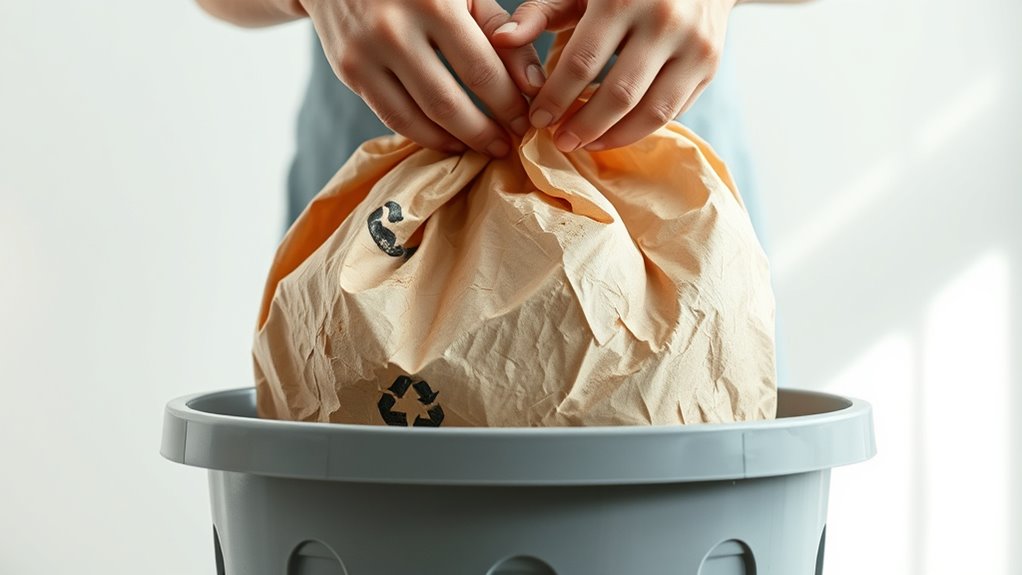
Once you’ve removed non-paper elements from your grocery bags, you might still face issues with bags that are dirty, greasy, or torn. If your bags are lightly soiled, try wiping off any dirt or crumbs before recycling.
However, greasy or heavily stained bags can contaminate the recycling process, so it’s best to avoid placing them in your paper recycling bin. For torn bags, flatten them out as much as possible to make handling easier.
But if the damage is severe, consider composting if your local program accepts paper waste or repurposing them for crafts or storage. Remember, recycling centers prefer clean, intact paper products to ensure quality material. So, handling contaminated or damaged bags carefully helps keep the recycling stream efficient and effective.
Where to Recycle Paper Grocery Bags Locally
You can recycle paper grocery bags at local recycling centers that accept paper products. Many grocery stores also offer drop-off bins specifically for paper bag recycling.
Check with your community and nearby stores to find the most convenient option for you. It’s pretty easy once you know where to go!
Local Recycling Centers
Although many communities offer curbside recycling, local recycling centers provide an easy and reliable way to recycle your paper grocery bags if curbside options aren’t available or convenient for you. You can drop off your bags at these centers where staff often help sort materials properly, ensuring your bags get recycled efficiently.
Before you go, check the center’s guidelines to remove any non-paper items like plastic handles or receipts. Here’s a quick look at what you might find at your local recycling center:
| Feature | Description |
|---|---|
| Location | Usually near community hubs |
| Accepted Items | Paper bags, cardboard, mixed paper |
| Operating Hours | Weekdays and some weekends |
Visiting a local center guarantees your paper bags contribute to new products instead of landfill waste. It’s a simple step that makes a big difference!
Store Drop-Off Options
Wondering where you can drop off your paper grocery bags for recycling near you? Many grocery stores and large retailers offer convenient drop-off bins specifically for paper bag recycling.
Before heading out, check your favorite store’s website or call to confirm they accept paper bags. Some stores even partner with local recycling programs, making it easy to recycle while you shop.
Just make sure your bags are clean and free of food residue. If you’re unsure, ask a store employee for guidance. Using these drop-off options not only helps reduce waste but also supports community recycling efforts.
Common Mistakes to Avoid When Recycling Paper Bags
When you recycle paper grocery bags, make certain to remove any non-paper materials like plastic handles or receipts.
Don’t let food stains or moisture contaminate the bags, as this can ruin the recycling process.
Avoiding these common mistakes helps ensure your bags get properly recycled.
Removing Non-Paper Materials
Since paper grocery bags often come with handles, labels, or stickers made from plastic or metal, you need to remove these non-paper materials before recycling. Leaving them on can damage recycling equipment or contaminate the paper batch.
Start by carefully peeling off any plastic handles or metal fasteners. If you spot stickers or labels, gently scrape or peel them away without tearing the paper. Avoid using water or chemicals, as they can weaken the bag’s fibers.
Once all non-paper parts are removed, flatten the bag to save space in your recycling bin. Taking these simple steps ensures your paper grocery bags are properly prepared, making the recycling process smoother and more efficient.
Avoiding Contamination Risks
Although paper grocery bags are recyclable, you can easily contaminate them if you’re not careful. Contamination happens when non-recyclable materials or food residues get mixed with the paper, making it harder to recycle.
So, to avoid this, follow these key tips:
- Remove all food residues – Grease, sauces, or crumbs can ruin the recycling process, so make sure your bags are clean and dry.
- Separate non-paper items – Take out any plastic handles, receipts, or stickers before recycling.
- Don’t recycle wet or soiled bags – Damp or heavily stained bags lose their structural integrity and can’t be processed properly.
Benefits of Recycling Paper Grocery Bags Properly
Recycling paper grocery bags properly helps you reduce waste and conserve natural resources. When you recycle correctly, you decrease the demand for new paper, saving trees and water.
Plus, recycling cuts down on landfill overflow and lowers greenhouse gas emissions. By taking a moment to recycle properly, you contribute to a healthier environment and support sustainable practices.
Here’s a quick look at key benefits:
| Benefit | Impact |
|---|---|
| Saves Trees | Reduces deforestation |
| Conserves Water | Lowers water usage in production |
| Cuts Landfill Waste | Decreases pollution and space use |
Conclusion
You might think tossing paper grocery bags into any bin is enough, but recycling them properly actually makes a bigger difference than you’d expect. By removing contaminants and checking local recycling rules, you help keep resources in use and reduce waste.
Coincidentally, the small effort you put into preparing those bags can spark a bigger change in your community’s sustainability. So next time, take a moment—it’s easier and more impactful than you think!
Recycling paper grocery bags properly not only conserves resources but also supports local recycling programs effectively. By following simple steps like emptying and flattening bags and avoiding plastic liners, you contribute to a cleaner environment. Remember, your careful recycling habits can inspire others and promote a greener future for everyone.