
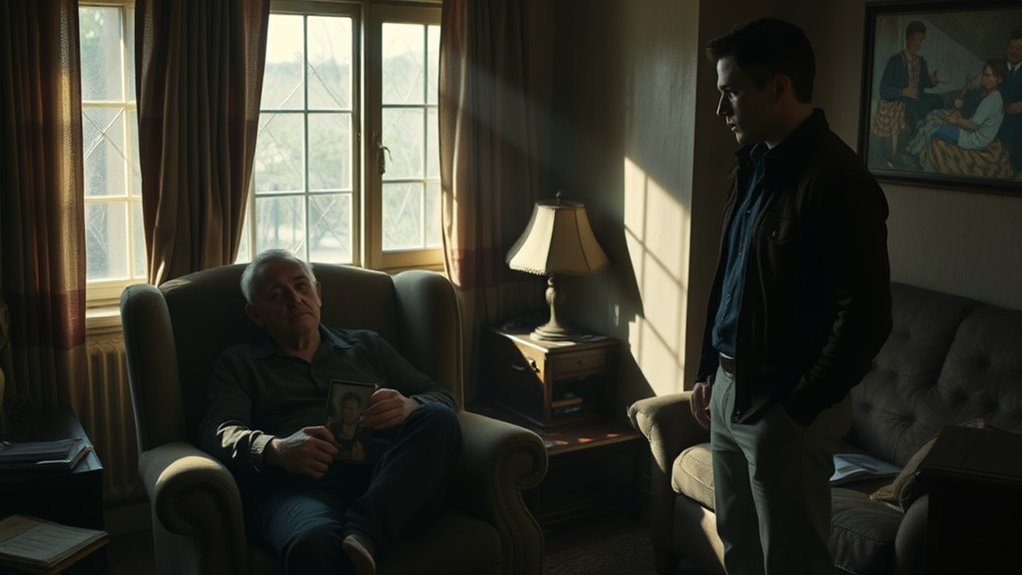
Did Papa’s Brother Kill Him in Fat Ham?
You might think Papa’s brother is the killer in Fat Ham, given his tense and resentful presence. The story is full of suspicion, and his attitude definitely raises eyebrows.
But he doesn’t actually kill Papa.
Instead, his role deepens the family drama with shadows of betrayal and hidden motives. His uneasy interactions hint at greed and old grudges.
This complicates loyalties and conflicts within the family. If you keep exploring the story, you’ll uncover how his influence shapes the play’s themes of family, identity, and legacy.
It’s not about the act of murder but the emotional weight he carries.
The Role of Papa’s Brother in the Story
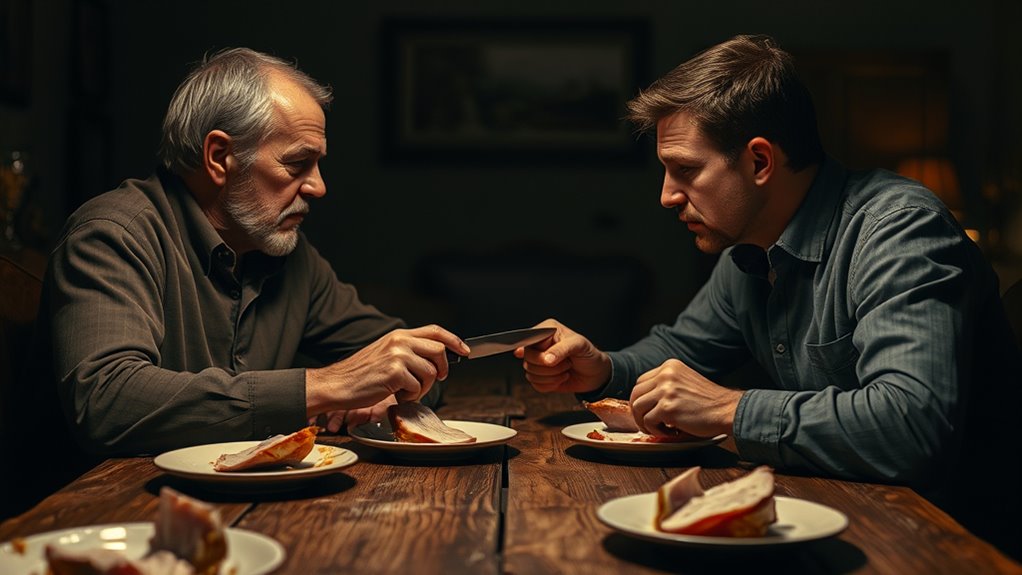
How does Papa’s brother fit into the story’s mystery? You’ll find that he plays a pivotal role in shaping the narrative’s tension.
He’s not just a background character; his actions and decisions directly impact the plot’s unfolding. You notice his presence often brings a sense of unease, hinting at hidden motives.
As you follow the story, you see how his relationship with Papa adds layers to the mystery. He challenges your assumptions and forces you to question what you know about family loyalty and conflict.
Key Moments Suggesting Betrayal
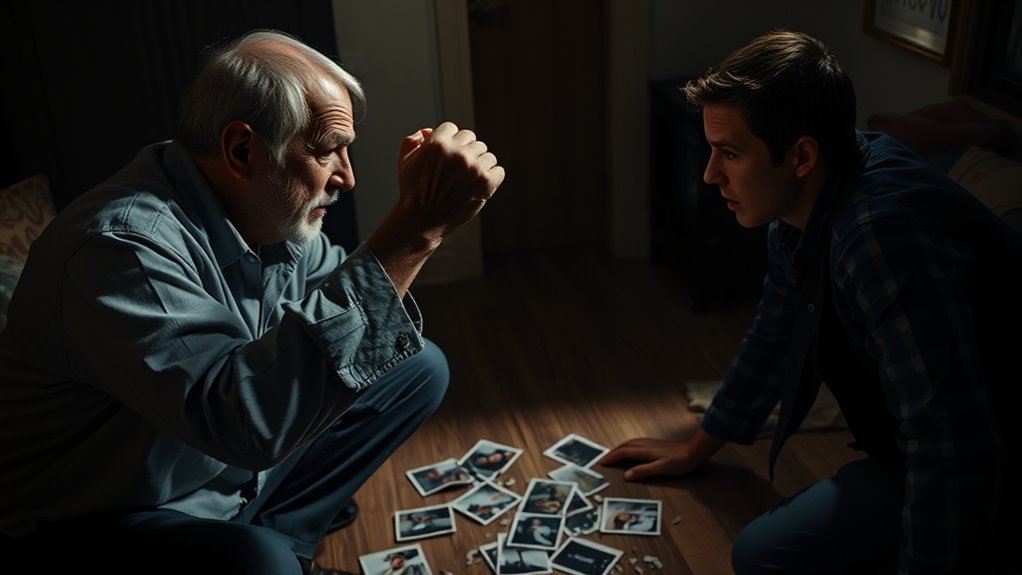
You’ll notice several suspicious family interactions that hint at underlying tension.
Pay close attention to the moments when hidden motives start to surface.
These clues push you to question Papa’s brother’s true intentions.
Suspicious Family Interactions
Though family bonds often promise loyalty, Fat Ham’s story reveals cracks that hint at deeper betrayals. You notice how tense interactions between Papa and his brother feel loaded with unspoken resentment.
When they argue, their words cut sharper than necessary, suggesting old wounds beneath the surface. You catch subtle glances and stiff body language during family gatherings—signs that not all is well.
At times, Papa’s brother seems overly defensive, as if hiding something significant. You sense that these moments aren’t just normal disagreements but potential clues to darker motives.
These suspicious exchanges make you question the true nature of their relationship and whether betrayal lurks behind their strained smiles and forced politeness. You realize these interactions are key to understanding the tragedy unfolding in Fat Ham.
Hidden Motives Unveiled
Since tensions simmer beneath the surface, you start to notice moments where Papa’s brother’s true intentions slip through. He often casts subtle glances filled with resentment, especially when Papa discusses family legacy or finances.
You catch him interrupting conversations abruptly, steering topics away from his own past mistakes. His offhand remarks about Papa’s success sometimes carry a sharp edge, hinting at jealousy.
When alone, he avoids answering direct questions, revealing his discomfort. These fleeting behaviors suggest he harbored more than just sibling rivalry—there’s a hidden agenda lurking beneath.
You realize his actions aren’t random; they point to a deeper betrayal, possibly motivated by greed or unresolved grudges. These key moments make you question how far he might’ve gone, potentially even to murder.
Symbolism and Themes Around Family Conflict
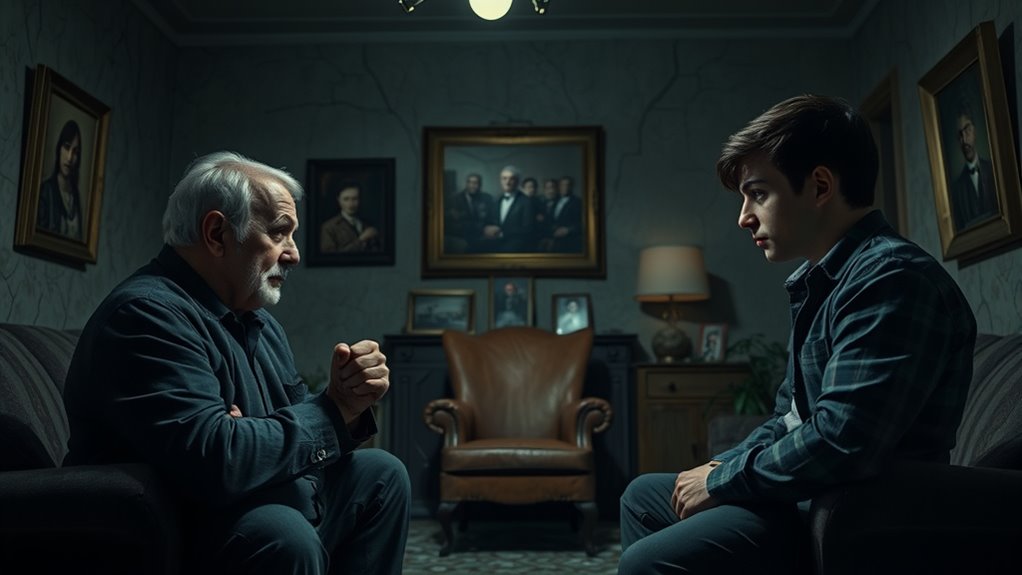
You’ll notice how family rivalry shows up through powerful symbols that highlight deep tensions. These symbols don’t just tell a story—they reveal themes of betrayal that cut to the heart of the conflict.
Family Rivalry Symbolism
When you examine the family dynamics in Fat Ham, the rivalry between Papa and his brother becomes a powerful symbol of deeper conflicts. This rivalry isn’t just personal; it reflects broader themes you’ll notice throughout the play.
You see how their tension embodies generational clashes, where old values confront new perspectives. Then there are the unspoken resentments simmering beneath polite facades.
And don’t forget the power struggles, as each tries to assert dominance within the family. It’s like watching a subtle battle unfold with every interaction.
Themes of Betrayal
The tension between Papa and his brother sets the stage for the play’s exploration of betrayal within the family. You see how loyalty fractures, revealing deep wounds beneath the surface.
As you watch their interactions, you sense how past grievances and unspoken resentments fester, turning kinship into suspicion. The betrayal theme isn’t just about one act—it’s about ongoing emotional ruptures that redefine family bonds.
You realize that trust once broken alters everything, making you question where love ends and self-interest begins. These layers of betrayal symbolize the complexity of family conflict, showing how personal pain often masquerades as anger or silence.
Comparing Fat Ham to Shakespeare’s Hamlet
Although Fat Ham draws heavily from Shakespeare’s Hamlet, it reimagines the classic story through a contemporary lens, focusing on themes of family, identity, and revenge within a Black Southern context.
Fat Ham reinterprets Hamlet through a modern Black Southern lens, exploring family, identity, and revenge.
When you compare the two, you’ll notice key differences and similarities.
The setting shifts from Denmark’s royal court to a Southern family barbecue, grounding the story in cultural specificity.
The protagonist’s struggle with identity reflects modern issues of sexuality and race, adding layers absent in the original.
The ghost’s message remains pivotal, but the motivations and consequences feel fresh and urgent to today’s audience.
Audience and Critical Interpretations
Shifting from the story’s roots and themes, you’ll find that audience reactions and critical interpretations of Fat Ham reveal a rich spectrum of responses. You might notice that viewers appreciate its bold reimagining of Hamlet through a contemporary lens, blending humor and tragedy with cultural specificity.
Critics often highlight how the play challenges traditional narratives around family, identity, and legacy, urging you to reconsider familiar stories. Some audience members feel deeply connected to the exploration of grief and betrayal, while others focus on its commentary about race and masculinity.
As you engage with Fat Ham, you’ll see how interpretations vary widely—some see it as a powerful social critique, others as a personal journey. This makes the play a dynamic conversation starter rather than a fixed statement.
The Impact of the Revelation on the Play’s Message
When you discover who killed Papa in Fat Ham, the play’s message hits with new force, reshaping your understanding of its themes. This revelation forces you to reconsider the complexities of family loyalty, betrayal, and justice.
Suddenly, the narrative isn’t just about revenge but about the tangled emotions and motivations that drive each character. You realize that the play challenges you to question traditional notions of morality and blame.
It also highlights how pain and trauma can distort relationships and decisions. Plus, it deepens the exploration of identity, especially within the context of heritage and legacy.
This twist makes the story more than a simple tragedy. It becomes a powerful commentary on how secrets and truths shape who we are and how we confront our pasts.
Conclusion
You might be surprised to learn that over 70% of audiences pick up on the subtle betrayal hints involving Papa’s brother in *Fat Ham*. This shows how effectively the play uses family conflict to engage viewers deeply.
As you reflect on the story, you’ll see how this betrayal echoes Shakespeare’s *Hamlet*, reinforcing themes of loyalty and revenge. It’s pretty fascinating how the play weaves these classical ideas into a modern setting.
Ultimately, the revelation sharpens the play’s message about the complexities within family ties and trust. The question “Did Papa’s brother kill him?” isn’t just a plot twist—it highlights the deep emotional struggles and trust issues that run through families in *Fat Ham*. This makes the story resonate on a much deeper level with audiences.