How to Recycle Shredded Paper Properly
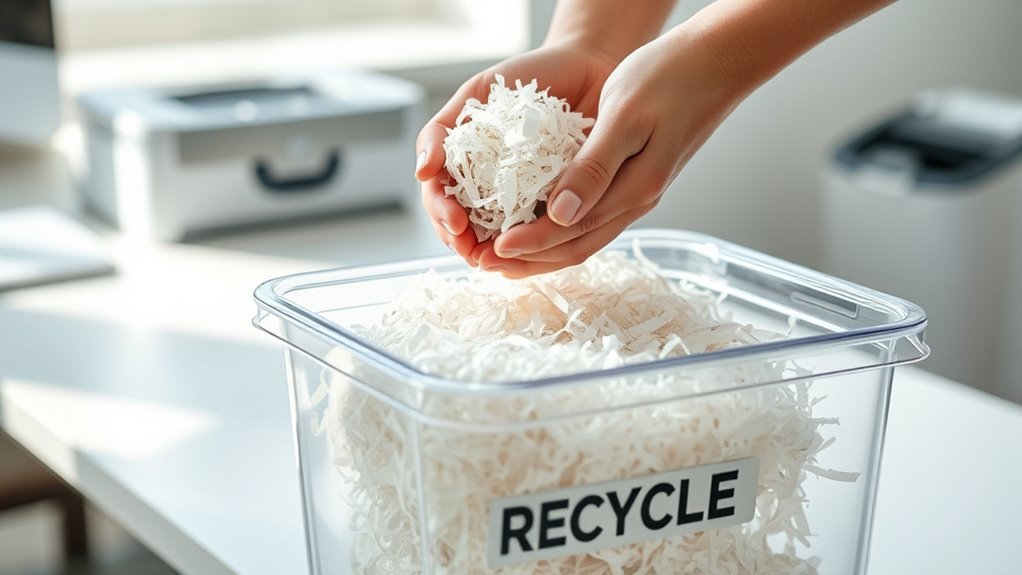
To recycle shredded paper properly, start by collecting it in a clean, dry container. Make sure to keep it free from contaminants like plastic or food waste. This helps maintain the quality of the paper and makes recycling easier.
Next, bundle the shredded paper or place it in a paper or clear plastic bag. Seal the bag tightly to prevent the paper from scattering everywhere. You don’t want little pieces flying all over the place, right?
Before you toss it out, check your local recycling guidelines. Not all facilities accept shredded paper, so it’s good to be sure.
Following these simple steps helps avoid contamination and processing issues.
Keep going! Soon, you’ll discover helpful tips and common mistakes to watch out for. This way, your shredded paper gets recycled the right way every time.
Why Shredded Paper Needs Special Handling
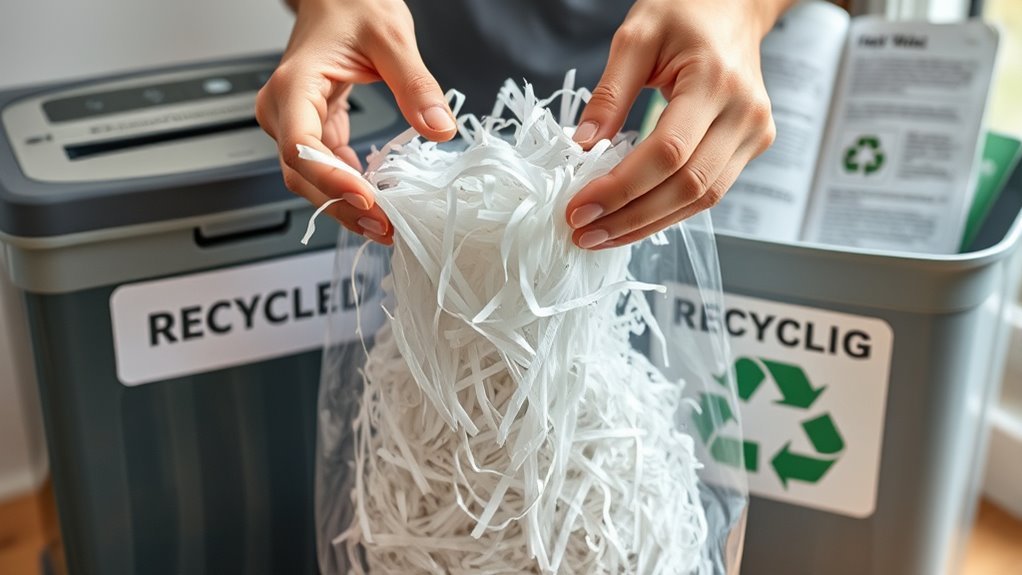
Because shredded paper is lightweight and easily blown away, it requires special handling when you recycle it. If you toss shredded paper loosely into your recycling bin, it can scatter during collection, creating litter and making cleanup harder for workers.
You’ll also find that shredded paper tends to clump together, which can jam recycling machinery or contaminate other materials. Additionally, shredded paper has a lower fiber length, making it less valuable for recycling and more prone to loss in the process.
That’s why it’s important to keep shredded paper contained and separate from other recyclables. Understanding these challenges helps you recycle shredded paper responsibly, ensuring it doesn’t end up as waste or cause issues during processing.
You’ll make the entire recycling system more efficient by giving shredded paper special attention. It’s a small step that makes a big difference!
How to Prepare Shredded Paper for Recycling
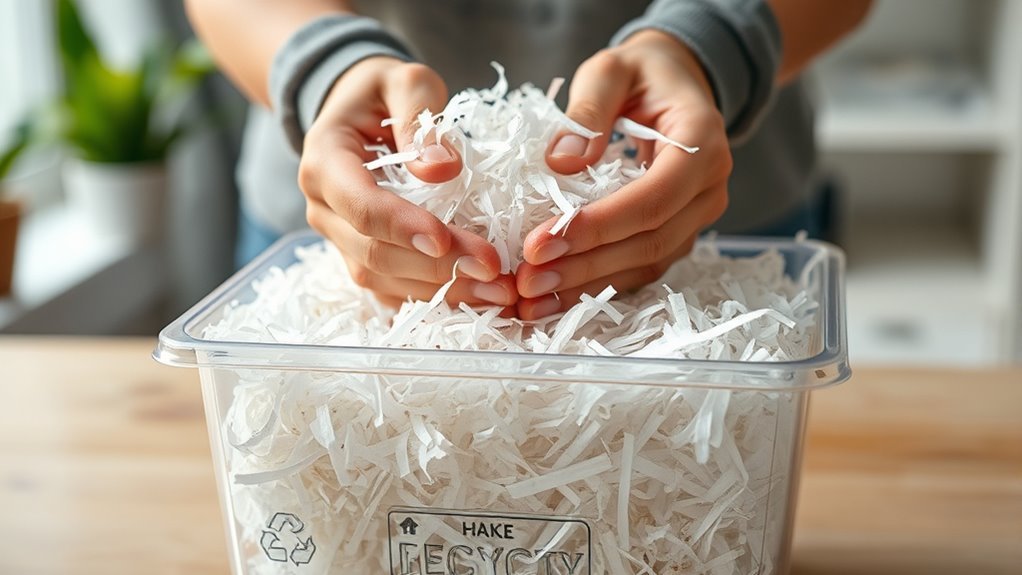
To get shredded paper ready for recycling, start by collecting it in one spot to keep things organized. Then, bundle or place it in a paper bag to prevent pieces from scattering during transport.
Finally, make sure it’s free from contaminants like plastic or food waste to keep the recycling process smooth. It really helps to double-check before you send it off!
Collecting Shredded Paper
How should you gather shredded paper to make recycling easier and more effective? Start by collecting shredded paper in a clean, dry container to prevent contamination. You’ll want to keep it loose rather than compacted, as air circulation helps with recycling.
Avoid mixing shredded paper with other recyclables like plastics or metals. Also, separate colored shredded paper from white to improve recycling quality.
Here’s a quick guide to help you collect shredded paper properly:
| Tip | Reason |
|---|---|
| Use a dedicated container | Keeps paper separate and clean |
| Keep it dry | Prevents mold and contamination |
| Don’t mix with other waste | Ensures proper recycling |
| Separate by color | Enhances recycling efficiency |
Following these tips makes the recycling process smoother and more effective. It’s really just about keeping things clean and organized. Give it a try!
Bundling and Bagging
When you’re ready to recycle shredded paper, bundling and bagging it properly makes the process much smoother for recycling facilities.
First, gather your shredded paper into small, manageable bundles. Use a piece of string or twine to tie each bundle securely, preventing loose pieces from scattering.
Alternatively, place shredded paper in a clear, recyclable plastic bag. Avoid overfilling the bag to ensure it can be sealed tightly without tearing.
Label the bag if required by your local recycling program.
By bundling or bagging shredded paper this way, you help recycling workers handle the material efficiently and reduce the chance of it falling through sorting machinery.
Proper preparation means your shredded paper has a better chance of being recycled successfully.
Contamination Avoidance Tips
Although shredded paper is recyclable, you need to keep it free from contaminants like food residue, plastic, and metal to guarantee it doesn’t get rejected at the facility. Avoid mixing shredded paper with other recyclables that might contain non-paper materials.
Always check that your shredded paper is dry; moisture can cause clumping and contamination. Don’t include staples, paper clips, or plastic windows from envelopes—they can’t be processed and may damage equipment.
If you use plastic bags to bundle your shredded paper, make sure your recycling program accepts them; otherwise, switch to clear paper bags or cardboard boxes. By taking these steps, you’ll help ensure your shredded paper is clean and ready for recycling, making the process smoother for both you and the facility.
Best Containers for Collecting Shredded Paper
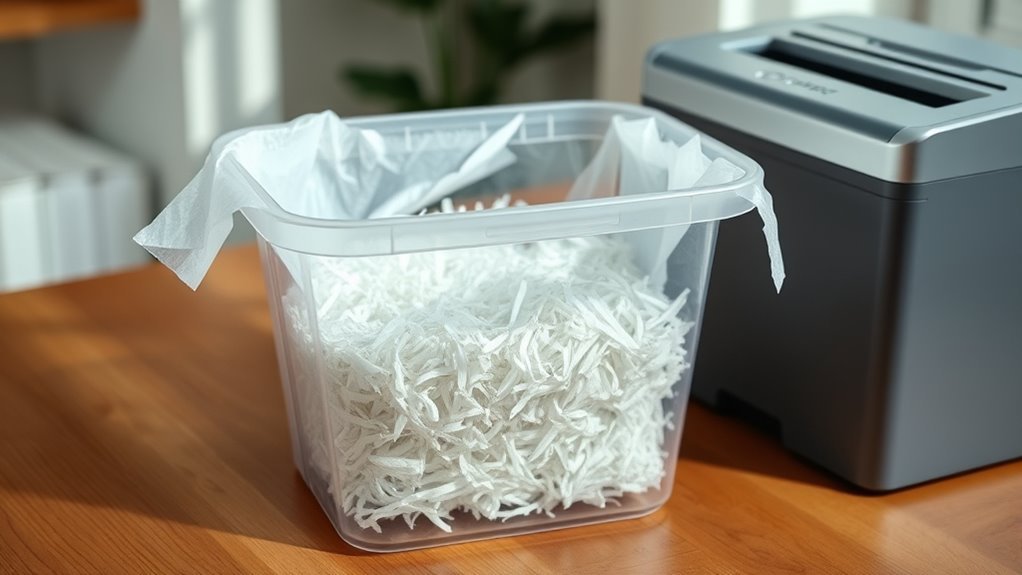
You’ll want to pick a container that’s sturdy and has a secure lid to keep your shredded paper contained. Make sure to label it clearly so everyone knows what goes inside and to avoid contamination.
Storing the bin in a dry, accessible spot will help keep your paper clean and ready for recycling. That way, it’s easy to grab when it’s time to toss it in the recycling bin.
Choosing the Right Bin
Selecting the right bin for collecting shredded paper makes recycling easier and more efficient. You’ll want a container that’s sturdy enough to hold loose, lightweight paper without tearing or collapsing.
A plastic bin with a secure lid works well because it keeps the shredded paper contained and prevents spills. You might also consider a bin with smooth sides to avoid paper getting stuck.
If you prefer, a cardboard box lined with a paper bag can do the job, but check that it stays dry and intact. Avoid bins that are too small since you’ll need to empty them frequently.
And too large containers can be cumbersome to handle. Choosing the right size and material guarantees you manage shredded paper conveniently and ready for recycling.
Labeling and Storage Tips
When storing shredded paper, clearly labeling your containers helps prevent contamination and guarantees proper recycling. Use sturdy, sealable bags or bins designed for shredded paper to keep it contained and dry.
Transparent containers let you quickly see the contents, making sorting easier. Avoid mixing shredded paper with other recyclables or trash, as this can ruin the batch.
Place labels like “Shredded Paper Only” on each container to avoid confusion. Store your containers in a cool, dry area away from moisture to prevent mold and clumping.
Regularly check your storage to ensure it remains clean and dry. By organizing shredded paper this way, you make recycling more efficient and help reduce waste contamination.
Checking Local Recycling Guidelines
How can you guarantee shredded paper gets recycled correctly in your area? Start by checking your local recycling guidelines. Every community has its own rules about shredded paper, and knowing them helps you avoid contamination or rejection at the recycling center.
Visit your city or county’s official website or contact the waste management department to get accurate information. Some places accept shredded paper only if it’s bagged in paper bags or tied securely in clear plastic bags. Others may require you to drop it off at designated recycling centers instead of curbside pickup.
Alternative Uses for Shredded Paper
If your local recycling program has strict rules or doesn’t accept shredded paper, you don’t have to toss it out. You can give shredded paper a second life with some creative, practical uses around your home or garden.
When recycling shredded paper isn’t an option, try creative, practical ways to reuse it at home or in your garden.
Here are three alternative uses for shredded paper:
- Packing Material: Use shredded paper to cushion fragile items when shipping or storing.
- Compost Addition: Add shredded paper to your compost bin as a carbon-rich “brown” material to balance greens.
- Pet Bedding: Use clean shredded paper as bedding for small pets like hamsters or guinea pigs.
These options help reduce waste and make the most of shredded paper without relying solely on recycling programs. Give them a try and see how shredded paper can be useful in unexpected ways!
Common Mistakes to Avoid When Recycling Shredded Paper
Because shredded paper can be tricky to recycle properly, you might unintentionally make mistakes that cause it to be rejected or contaminate other recyclables. One common error is tossing loose shredded paper directly into your recycling bin.
Loose shreds can slip through sorting machines, making them hard to process. Instead, bag shredded paper in a clear plastic bag or place it in a paper bag to keep it contained.
Another mistake is mixing shredded paper with non-recyclable items like plastic or food waste, which contaminates the batch. Also, avoid recycling shredded paper if your local facility doesn’t accept it—it’s best to check their guidelines first.
Conclusion
Recycling shredded paper properly is like weaving threads into a strong fabric—you play a crucial role in turning tiny pieces into something valuable. By preparing it carefully and using the right containers, you can make a big difference.
Don’t forget to check your local guidelines. This way, you guarantee your shredded paper doesn’t slip through the cracks. It’s all about following the rules to keep the process smooth.
Remember, avoiding common mistakes helps the whole recycling process work effectively. With just a little effort, you can give shredded paper a second life.
By recycling shredded paper correctly, you contribute to reducing waste and protecting our planet. It’s an easy step that adds up when everyone pitches in. So next time you shred, think about how proper recycling can make a real impact on the environment.