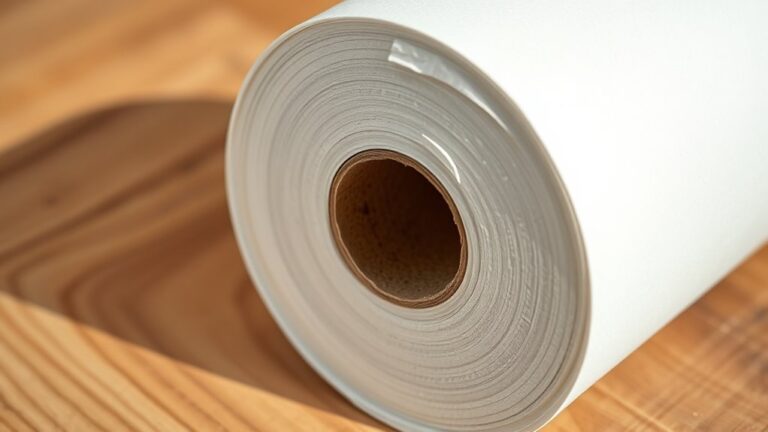
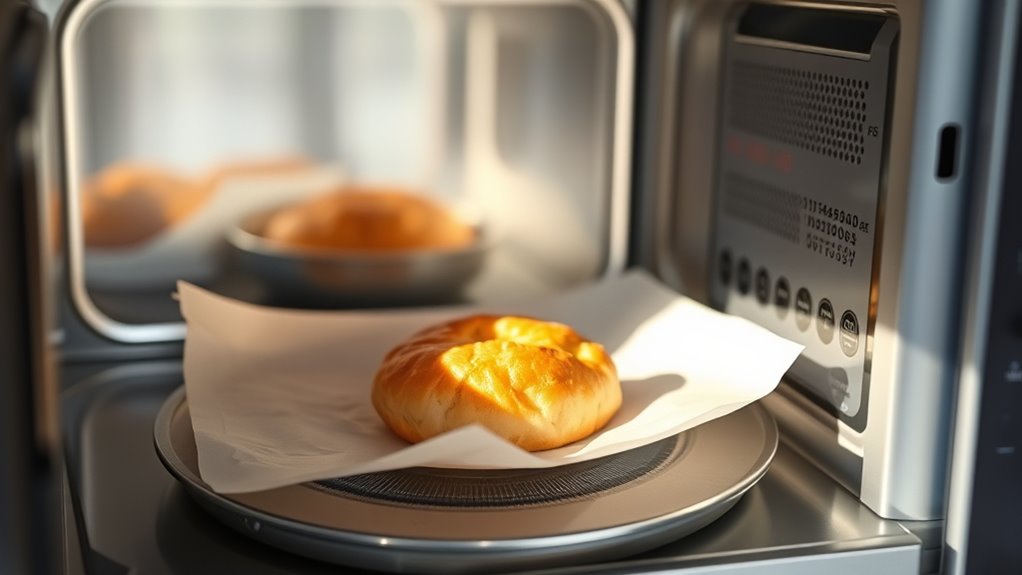
Can You Microwave Parchment Paper?
You can microwave parchment paper if it’s labeled microwave-safe and you use it properly. It’s made from treated cellulose and coated with silicone, so it resists heat and won’t melt or catch fire under normal microwave use.
Just avoid contact with microwave walls or heating elements and don’t overheat to prevent burning or sparking.
Use it as a non-stick liner for easy cleanup. Keep going to uncover tips and common mistakes to avoid with parchment in the microwave.
What Is Parchment Paper Made Of?
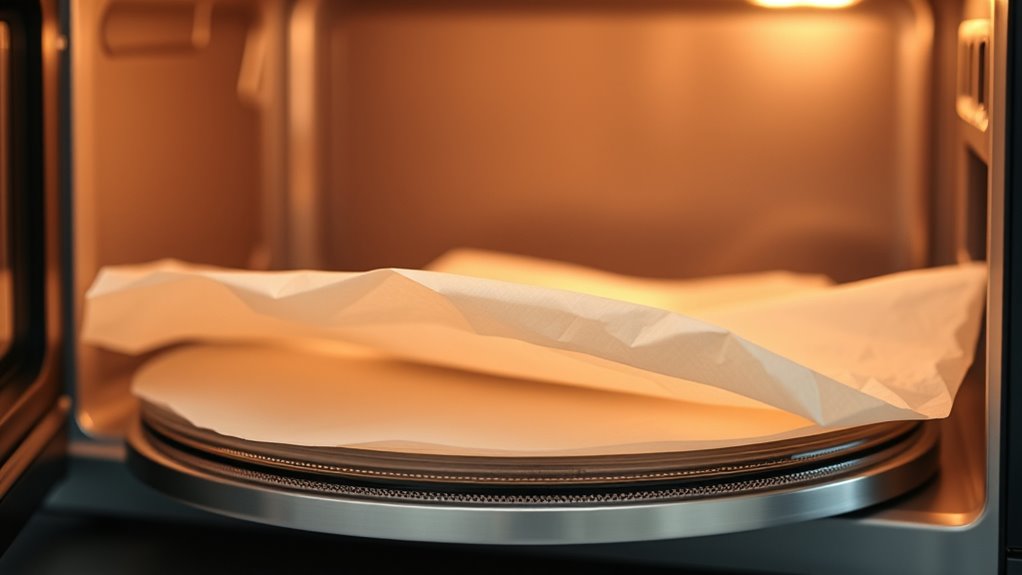
Although it might seem simple, parchment paper is specially treated to withstand heat and prevent sticking. You’ll find it’s made from cellulose fibers, usually derived from wood pulp.
During manufacturing, these fibers undergo a process called “parchmentizing,” where they’re soaked in acid, which changes their structure. This treatment makes the paper stronger and more heat-resistant.
Afterward, manufacturers coat the parchment paper with a thin layer of silicone, giving it a non-stick surface that helps food release easily. This silicone layer is key because it allows the paper to handle high temperatures without burning or sticking to your food.
Is Parchment Paper Safe to Use in the Microwave?
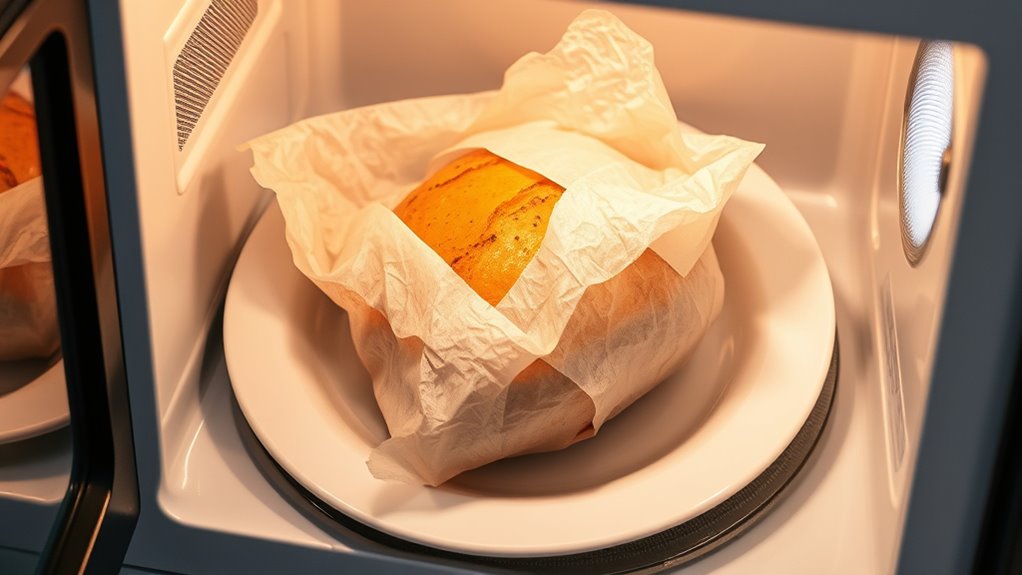
Understanding how parchment paper resists heat and prevents sticking helps clarify why many wonder if it’s safe to use in the microwave. The good news is that parchment paper is generally microwave-safe because it’s designed to withstand high temperatures without burning or melting.
Parchment paper safely withstands high microwave temperatures without burning or melting, making it generally microwave-safe.
However, you should keep a few things in mind to ensure safety:
- Use only parchment paper labeled microwave-safe.
- Avoid using wax paper as it’s not microwave-safe.
- Don’t let parchment paper touch the microwave’s heating elements.
- Avoid prolonged microwave times to prevent scorching.
- Never use parchment paper with metal or foil backing.
How Does Parchment Paper React to Microwave Heat?
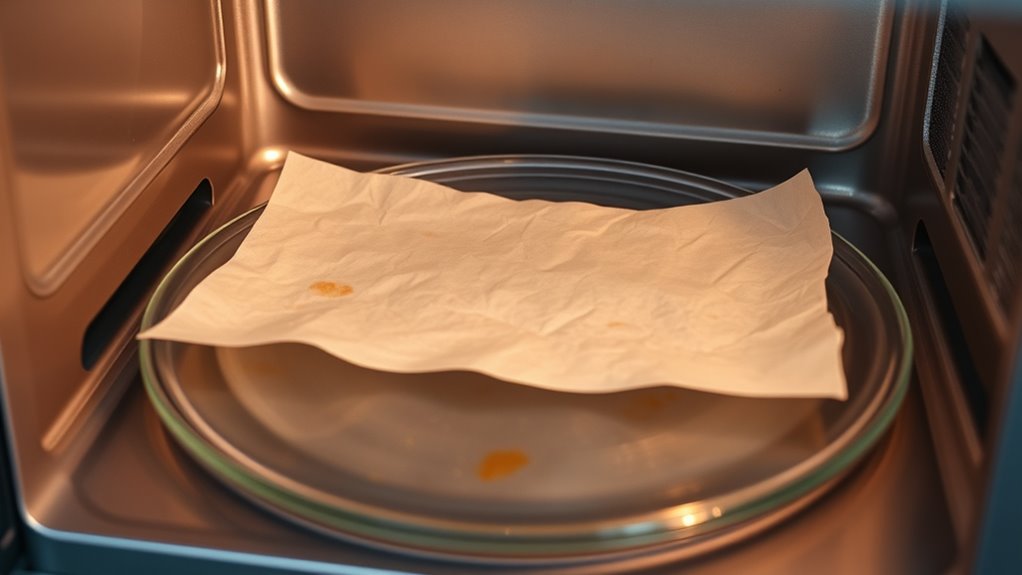
When you microwave parchment paper, it’s designed to handle the heat without burning or melting thanks to its heat-resistant properties.
However, you should still be aware of microwave safety basics to avoid any unexpected risks like scorching or smoke. Understanding how parchment paper reacts helps you use it confidently and safely every time.
Microwave Safety Basics
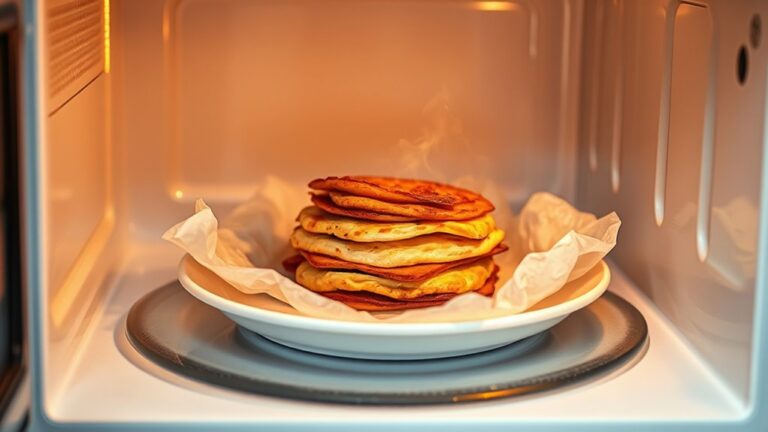
Because parchment paper is designed to withstand high temperatures, it holds up well in the microwave without melting or catching fire. When you use parchment paper in your microwave, it acts as a safe barrier that helps prevent food from sticking and keeps moisture in.
However, you should always follow some basic safety rules to avoid any issues.
Here are key microwave safety tips for using parchment paper:
- Avoid direct contact with microwave walls or heating elements.
- Don’t use parchment paper if it’s coated with foil or metal.
- Cut parchment paper to fit your dish, preventing overlap.
- Never use parchment paper with greasy or oily foods for extended heating.
- Always monitor your food while microwaving to catch any sparks or smoke early.
Following these guidelines keeps you and your microwave safe. Just a little care goes a long way!
Heat Resistance Properties
Although parchment paper can handle high heat in ovens, it behaves differently in the microwave because of how microwaves heat food.
Microwaves work by exciting water molecules, which causes steam and moisture buildup. This affects parchment paper in a unique way.
You’ll find that parchment paper is generally heat-resistant up to about 420°F (215°C), but microwave heating isn’t just about temperature. Instead, the paper might absorb some moisture or heat unevenly.
Since parchment paper is designed to withstand dry heat, it stays stable in the microwave as long as it doesn’t touch high-moisture, super-hot spots or metal directly.
When used properly, it won’t melt or catch fire. So, it’s actually a pretty practical choice for steaming or covering dishes during microwave cooking.
Potential Risks and Effects
Even if parchment paper handles dry heat well, it can react differently in the microwave due to moisture and uneven heating. When you microwave parchment paper, there are some potential risks you should watch out for. It might become brittle or scorch if exposed to hot spots.
Also, trapped steam can cause the paper to wrinkle or tear. If your parchment paper has any metallic coating, it could spark and damage your microwave. Finally, overheating can cause the paper to emit an unpleasant smell or even smoke.
- Scorching or browning in hot spots
- Becoming brittle and fragile
- Wrinkling or tearing from steam buildup
- Risk of sparking if metallic elements are present
- Emitting smoke or odor if overheated
Use caution and monitor your cooking closely. Better safe than sorry, right?
Best Practices for Using Parchment Paper in the Microwave
When using parchment paper in the microwave, you need to follow safety guidelines to avoid overheating or fire risks. Make sure the paper doesn’t touch the microwave walls and avoid using it with high-fat foods that can reach extreme temperatures.
Using parchment paper properly also helps prevent your food from sticking, making cleanup much easier. So, it’s a simple trick that can save you time and hassle in the kitchen!
Microwave Safety Guidelines
Since microwaving with parchment paper requires caution, you should always verify the paper is labeled microwave-safe to prevent sparks or fires. Never use parchment paper that has a plastic or metallic coating, as these can ignite or melt.
Keep the parchment paper away from the microwave’s heating elements or walls. Avoid overheating by following recommended cooking times and power levels. Confirm the paper doesn’t touch the microwave’s interior surface during use.
Here are key safety tips for using parchment paper in your microwave:
- Confirm the parchment paper is microwave-safe before use.
- Avoid parchment paper with metallic prints or coatings.
- Cut parchment to fit food, preventing contact with microwave walls.
- Use recommended cooking times to prevent overheating.
- Never reuse parchment paper that’s burnt or damaged.
Preventing Food Sticking
A simple way to prevent food from sticking during microwaving is to properly use parchment paper as a non-stick barrier. You’ll want to cut a piece slightly larger than your food, then place it under or around the item.
This creates a protective layer that stops food from adhering to the plate or container. Just avoid folding or crumpling the paper, since that can cause uneven heating.
Here’s a quick guide to help you:
| Step | Tip |
|---|---|
| Cut Size | Slightly larger than food |
| Placement | Under or wrapped loosely around food |
| Avoid | Folding or crumpling parchment paper |
Following these tips keeps your microwave cleanup easy and your food intact. Give it a try next time you heat something up!
Alternatives to Parchment Paper for Microwave Cooking
If you don’t have parchment paper on hand, you can still safely cover and cook your food in the microwave using other materials. These alternatives help retain moisture, prevent splatters, and keep your microwave clean without risking fire hazards.
Consider these microwave-safe options:
- Microwave-safe plastic wrap: Loosely cover food to trap steam, but avoid tight seals.
- Microwave-safe lids: Designed specifically for microwaving, they allow steam to vent.
- Wax paper: Similar to parchment but less heat-resistant; good for short heating.
- Paper towels: Absorb moisture and prevent splatters on low-moisture foods.
- Silicone microwave covers: Reusable and heat-resistant, great for covering dishes.
Each alternative offers convenience and safety, so you can keep cooking without parchment paper worries. Just pick whichever works best for you and your meal!
Common Mistakes When Microwaving With Parchment Paper
While alternatives to parchment paper can be handy, using parchment itself in the microwave comes with its own set of challenges. One common mistake is using parchment paper with metallic prints or clips, which can spark fires.
Another is overheating it beyond recommended times, causing it to burn or curl. People also often forget to check if the paper is microwave-safe, leading to melting or smoke.
Lastly, wrapping food too tightly restricts steam escape, resulting in soggy dishes.
| Mistake | Result | Tip |
|---|---|---|
| Using metallic prints | Sparks/fire hazard | Use plain parchment |
| Overheating | Burning/curling | Follow time guidelines |
| Not microwave-safe | Melting/smoke | Verify packaging info |
| Tight wrapping | Soggy food | Leave space for steam escape |
| Reusing paper | Reduced effectiveness | Use fresh sheets each time |
Conclusion
So, you’re wondering if you can microwave parchment paper? Turns out, you can! It’s made to handle heat without melting or catching fire—just like that time you accidentally left a paper towel in the microwave and learned your lesson.
Just remember to avoid any metal or foil coatings. Using parchment paper wisely in the microwave keeps your food safe and your clean-up easy—coincidence? Maybe, but it’s definitely worth the convenience!
In conclusion, microwaving parchment paper is safe and practical as long as you steer clear of any metallic elements. This heat-resistant paper can withstand microwave temperatures without burning or releasing harmful chemicals. So next time you need a quick, mess-free cooking hack, reach for parchment paper in the microwave. It’s a simple way to protect your food and make clean-up a breeze, proving that microwave-safe parchment paper is a convenient kitchen essential.