How Much Does a Ream of Paper Weigh?
A standard ream of paper, which contains 500 sheets, typically weighs about 5 pounds if it’s regular office paper. Knowing how much a ream of paper weighs can help you understand shipping costs and storage needs.
Different paper types change that weight—glossy or coated paper adds heft, while lighter bond paper weighs less.
Paper size, thickness, and finish also impact the total weight, so not all reams weigh the same.
If you want to figure out the best paper for your needs or understand how coatings affect weight and shipping, there’s plenty more to uncover. It’s pretty interesting once you start digging into the details!
Understanding the Standard Weight of a Ream
Although it might seem straightforward, understanding the standard weight of a ream is essential if you want to choose the right paper for your needs. A ream typically contains 500 sheets, but the weight you see on packaging usually refers to the weight of 500 sheets before they’re cut to size.
This weight, measured in pounds, is called the basis weight. For common office paper, the standard basis weight is often 20 pounds, meaning 500 sheets weigh 20 pounds in their original uncut form.
Knowing this helps you compare different papers accurately. When you pick a ream, remember that the listed weight isn’t just about heaviness; it reflects the density and thickness of the paper, guiding you to the perfect choice.
How Paper Type Affects Ream Weight
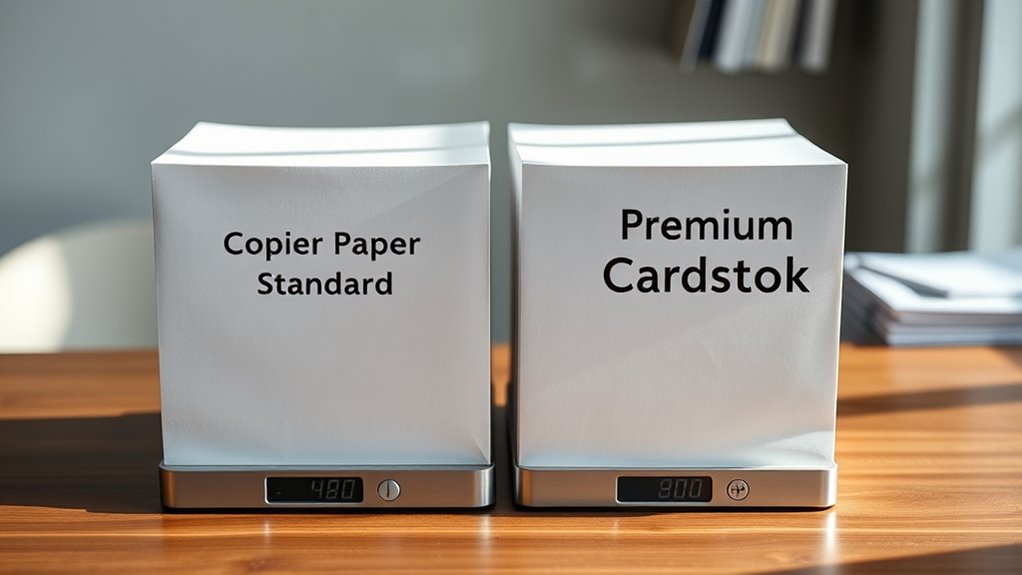
Because different paper types serve various purposes, their weights can vary considerably, even if they come in the same ream size. When you choose glossy paper for photos, it’s denser and heavier than standard office paper.
Conversely, lightweight bond paper feels thinner and won’t weigh as much. Cardstock, designed for durability, adds significant heft to a ream compared to typical printer paper.
You’ll also notice recycled paper sometimes weighs differently due to its fiber composition. So, when you pick a ream, consider the paper type because it directly impacts the total weight.
This matters if you’re shipping or storing large quantities, or if your printer has specific paper handling capabilities. Understanding these differences helps you make the right choice for your needs.
Measuring Paper Weight: GSM Explained
You’ll often see paper weight expressed as GSM, which stands for grams per square meter. This measurement tells you how dense and thick the paper is. It directly affects its quality and feel.
Understanding GSM helps you choose the right paper for your needs. Whether it’s for printing, crafting, or professional documents, knowing the GSM can make a big difference.
GSM Measurement Basics
When you want to understand how much a ream of paper weighs, grasping the concept of GSM is key. GSM stands for grams per square meter and measures the paper’s density.
The higher the GSM, the heavier and thicker the paper feels. You calculate it by weighing a one-square-meter sheet of paper. This measurement helps you compare different paper types easily.
Here’s a quick look at common GSM values:
| Paper Type | GSM Range | Typical Use |
|---|---|---|
| Lightweight | 50-90 | Newsprint, flyers |
| Standard | 90-120 | Office printer paper |
| Heavyweight | 120-200 | Brochures, cards |
| Cardstock | 200-300 | Business cards |
| Cover Stock | 300+ | Book covers |
Knowing GSM helps you pick the right paper weight for your needs. It’s a handy way to make sure you get the paper that feels just right for whatever project you have in mind.
Impact on Paper Quality
Although GSM primarily measures paper weight, it also directly influences paper quality by affecting texture, durability, and print performance. When you select paper, understanding GSM helps you predict how it will feel and perform in your projects.
Here’s how GSM impacts paper quality:
- Texture: Higher GSM usually means a thicker, smoother surface, giving a premium feel and better ink absorption.
- Durability: Papers with greater GSM are more resistant to tearing and creasing. That makes them ideal for important documents.
- Print Performance: Heavier paper holds ink better, reducing bleed-through and improving color vibrancy. So, your images come out sharper and more vivid.
Weight Differences in Common Paper Sizes
You’ll notice that a ream’s weight changes depending on the paper size you choose. Standard sizes like A4 or letter have typical weights, but different paper types can cause variations.
Understanding these differences helps you pick the right paper for your needs. It’s not just about size, but also about the paper type and its thickness. This way, you get exactly what you want without any surprises.
Standard Paper Weights
How much does the weight of a ream of paper really vary between different sizes? When you pick up a ream, the weight depends on the paper’s standard weight, measured in pounds (lbs) or grams per square meter (gsm).
Here are three common standards you’ll encounter:
- 20 lb bond (75 gsm): Typical for office printing; a ream weighs about 5 pounds.
- 24 lb bond (90 gsm): Slightly thicker, often used for resumes; a ream can weigh around 6 pounds.
- 28 lb bond (105 gsm): Heavier, used for high-quality documents; expect a ream to weigh near 7 pounds.
Knowing these standards helps you estimate shipping costs, storage needs, or even how much paper to buy for your projects. It’s pretty handy once you get the hang of it!
Variations by Paper Type
Why do different types of paper feel heavier or lighter even when they’re the same size? It comes down to the paper’s weight and thickness. For example, standard copy paper usually weighs around 20 pounds per ream, but cardstock or photo paper can weigh considerably more because they’re denser and thicker.
If you grab a ream of glossy paper, you’ll notice it feels heavier than plain printer paper, even if both have the same number of sheets. This difference is due to variations in fiber composition, coatings, and finish. So, when you choose paper for printing or crafting, keep in mind that the type directly affects the weight.
That can impact handling, shipping costs, and printer compatibility. It’s pretty handy to know this so you can pick the right paper for your needs without surprises.
Impact of Coating and Finish on Paper Weight
Although the base weight of paper depends on its thickness and fiber content, the coating and finish can considerably affect the overall weight of a ream. When you choose coated paper, the additional layers of clay or polymer increase the weight beyond the base fibers.
Finishes like gloss, matte, or satin also add subtle weight variations due to the chemicals and materials used. Here’s how coating and finish impact the weight:
- Coated papers typically weigh 10-20% more per ream than uncoated ones of the same thickness.
- Glossy finishes add more weight compared to matte finishes because of extra resin layers.
- Specialty finishes, like soft-touch or metallic, can add even more weight due to additional surface treatments.
Knowing this helps you anticipate shipping costs and storage needs accurately. It’s always good to keep these factors in mind when selecting paper for your project.
Practical Tips for Handling and Shipping Reams of Paper
When you handle and ship reams of paper, understanding their weight and fragility can save you time and prevent damage. Always lift reams with both hands to distribute weight evenly and avoid dropping them.
Handle reams carefully by lifting with both hands to evenly distribute weight and prevent damage.
Use a sturdy, flat surface when stacking reams to keep them stable and prevent bending. For shipping, wrap reams in protective packaging like bubble wrap or cardboard to shield against moisture and impacts.
Label packages clearly with weight and handling instructions so carriers treat them appropriately. If you’re shipping multiple reams, consider palletizing to simplify transport and reduce damage risk.
Finally, store reams in a dry, cool area to maintain paper quality before shipping. Following these tips helps you handle and ship paper efficiently and safely.
Conclusion
You might think all reams weigh the same, but that’s not the case. The truth is, a ream’s weight varies based on paper type, size, and finish.
Understanding GSM and how coatings add weight helps you handle and ship paper more efficiently. It’s not just about the number of sheets.
So next time you pick up a ream, remember—it’s more than just 500 sheets; it’s a carefully measured product tailored to your needs. Knowing how much a ream of paper weighs can make a big difference in storage, shipping costs, and your overall workflow.