How You Can Microwave Paper Plates Safely
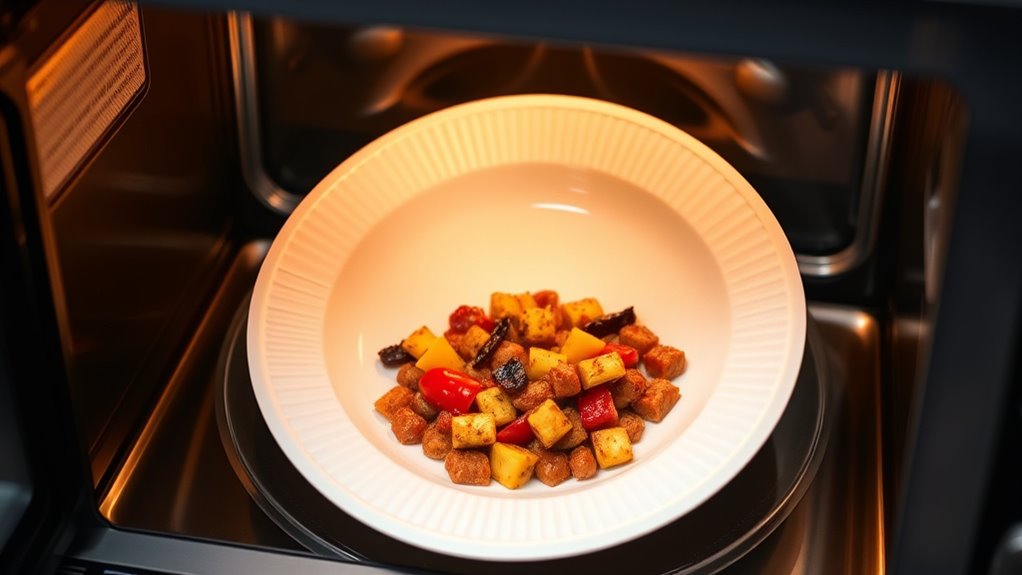
You can microwave paper plates safely by choosing ones labeled microwave-safe. Avoid any plates with plastic or metallic coatings, as these can cause sparks or fires.
Use medium or low power settings and keep heating times short. Keep an eye on the plate for any signs of overheating to prevent fire hazards.
Always let the plate cool before handling it. If the plate is damaged or shows signs of burning, dispose of it properly to stay safe.
If you want to know more about selecting the right plates, adjusting microwave settings, and exploring alternatives, you’ll find useful tips ahead.
Let’s make sure your microwave use is both safe and convenient!
Identifying Microwave-Safe Paper Plates
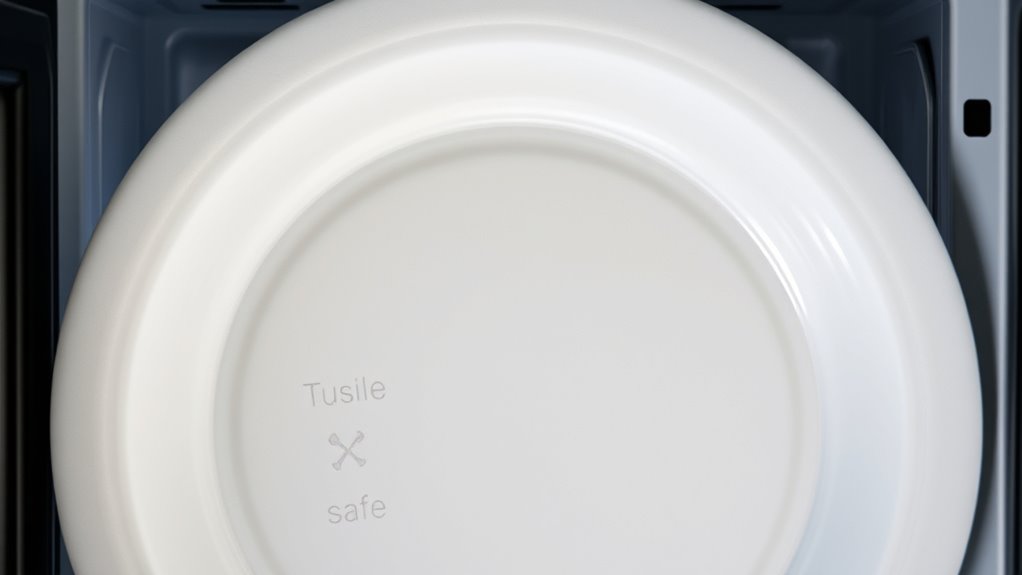
Although many paper plates seem convenient, not all are safe for microwaving. You need to look for specific indicators that confirm a plate’s microwave safety.
First, check the packaging or the plate itself for a microwave-safe label or symbol. If you don’t see one, it’s best to avoid using that plate in the microwave.
Some paper plates contain materials like plastic or metal coatings, which can cause sparks or release harmful chemicals when heated. You’ll also want to choose plain, uncoated paper plates, as these are generally safer.
Avoid paper plates with plastic or metal coatings to prevent sparks and harmful chemical release when microwaving.
When in doubt, test plates with a short heating time while closely monitoring them. By identifying microwave-safe paper plates, you ensure your food heats safely without damaging your microwave or risking your health.
Checking for Heat Resistance and Coatings
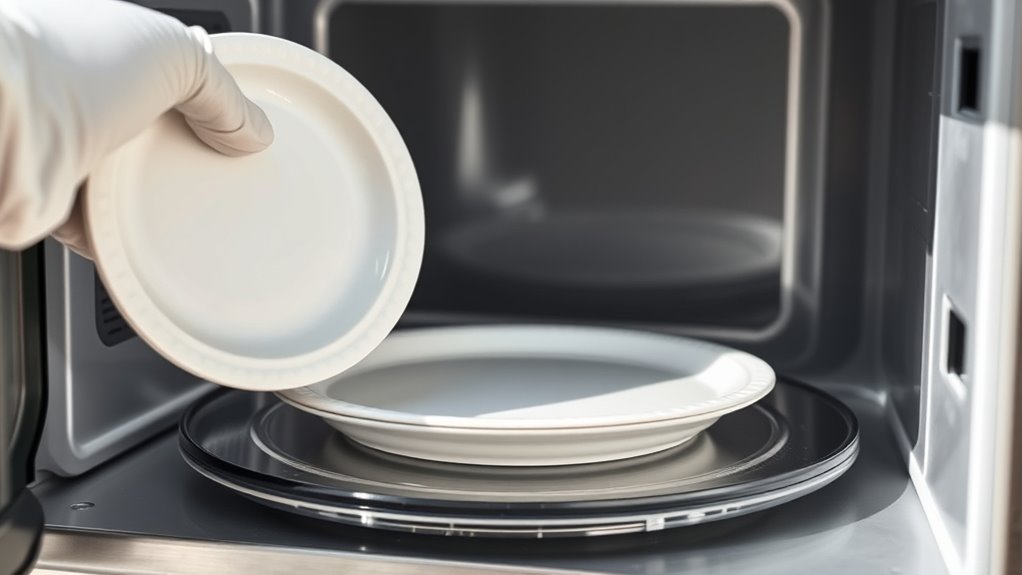
When you microwave paper plates, you need to make sure they can handle the heat without breaking down or releasing harmful substances. Not all paper plates are created equal—some have coatings or materials that aren’t heat resistant.
To check, look for labels indicating heat resistance or microwave safety. Avoid plates with plastic or metallic coatings, which can melt or spark.
Choose plates made from uncoated, natural paper or specifically designed microwave-safe materials. You can even test by microwaving a plate empty for 20 seconds; if it becomes too hot or smells odd, don’t use it.
Proper Microwave Settings for Paper Plates
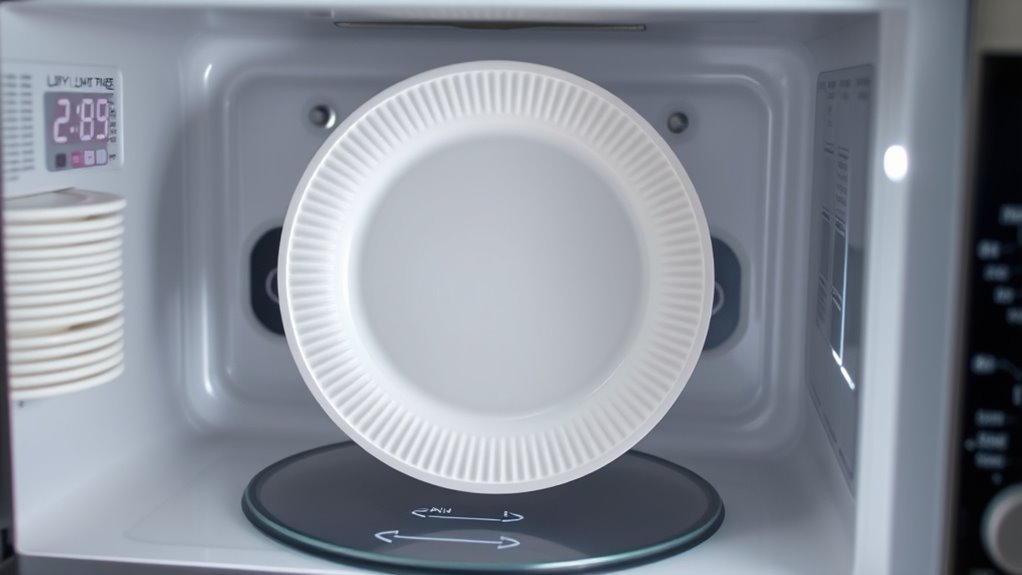
You’ll want to use a medium or low power setting when microwaving paper plates to avoid overheating. Keep heating times short, typically under two minutes, to prevent damage or burning.
Following these guidelines helps you heat food safely without compromising the plate’s integrity. It’s a simple way to enjoy your meal without any mess or hassle.
Power Level Recommendations
Since paper plates can vary in thickness and coating, adjusting your microwave’s power level is key to preventing burns or sparks. You’ll want to avoid using the highest setting, as it can cause the plate to overheat or even ignite.
Instead, try these power level tips:
- Use medium or 50-70% power to evenly warm your food without damaging the plate.
- Avoid high power for extended periods; it stresses the plate’s material.
If your microwave has a “reheat” setting, it’s usually perfect for paper plates. And hey, always keep an eye on the plate while it’s heating to catch any signs of overheating early.
Heating Duration Guidelines
Although paper plates are convenient for quick meals, heating them for too long can cause warping or even fire hazards. To avoid this, keep your microwave heating time short—generally, no more than one to two minutes at medium power.
If you’re warming leftovers, check every 30 seconds to prevent overheating. Avoid using high power settings for extended periods, as this increases the risk of damage.
If your meal requires longer heating, transfer it to microwave-safe glass or ceramic dishes. Always monitor the plate while heating; if you notice any smoke or burning smell, stop immediately.
Avoiding Overheating and Fire Hazards
When microwaving paper plates, you must monitor cooking times closely to prevent overheating, which can lead to fires. Overheating paper plates can cause them to scorch or ignite, so keep your microwave session short and check frequently.
Here’s how to avoid fire hazards: use microwave-safe paper plates labeled for heating. Also, avoid microwaving plates with metallic trims or coatings.
Don’t exceed recommended heating times; stop if you see smoke or smell burning. And always keep an eye on the microwave — never leave it unattended during use.
Handling and Disposal After Microwaving
After microwaving, let your paper plate cool down before handling to avoid burns. Check it for any signs of damage or warping that could affect safety.
When it’s time to toss it, choose eco-friendly disposal methods whenever possible. It’s a simple way to be kind to the environment while keeping things safe in your kitchen.
Cooling Down Properly
Since microwaved paper plates can become very hot, you’ll want to let them cool down before handling to avoid burns. After heating, give your plate a few minutes to reach a safe temperature.
Here’s how to cool down properly: place the plate on a heat-resistant surface to prevent damage. Avoid stacking hot plates to allow better air circulation.
If you need to move the plate right away, use oven mitts or a thick cloth. And make sure to keep children and pets away from the cooling area to prevent accidents.
Inspecting for Damage
Once your paper plate has cooled down, take a moment to check it for any signs of damage before reuse or disposal. Look for scorch marks, warping, or areas where the plate feels brittle or weakened.
If you notice any discoloration or soft spots, it’s best not to reuse the plate, as these indicate it has been compromised by heat. Avoid plates with any signs of charring or melting, as these can release harmful chemicals or catch fire if microwaved again.
Even small tears or soggy spots can reduce the plate’s structural integrity, making it unsafe to hold hot food. By carefully inspecting each plate, you ensure your safety and maintain the quality of your meals without risking contamination or accidents.
Eco-Friendly Disposal Methods
When you’re done using your paper plate in the microwave, consider eco-friendly disposal methods to minimize environmental impact. Instead of just tossing it in the trash, think about how you can reduce waste and support sustainability.
Here are some simple steps you can take:
- Compost the plate if it’s free of heavy grease or plastic coatings.
- Tear it into smaller pieces to speed up decomposition.
- Reuse clean plates for crafts or as seed starters in your garden.
- Check local recycling guidelines to see if your paper plate is accepted.
Alternatives to Using Paper Plates in the Microwave
Although paper plates offer convenience, you might want to explore safer and more sustainable alternatives for microwaving. Reusable microwave-safe glass or ceramic plates are excellent options—they won’t leach chemicals or catch fire like some paper plates can.
Silicone microwave-safe mats or containers provide durability and easy cleanup while being eco-friendly. If you prefer disposable options, look for compostable plates made from materials like bamboo or sugarcane fiber, which handle heat better and break down naturally.
Avoid plastic containers not labeled microwave-safe, as they can release harmful substances. By choosing these alternatives, you reduce waste and minimize health risks.
Switching to these options not only keeps your food safe but also contributes to a greener kitchen routine you can feel good about every day.
Conclusion
Now that you know how to spot microwave-safe paper plates and avoid hidden dangers, imagine the quiet hum of the microwave as your meal heats—no sparks, no smoke, just warmth.
But be cautious; one wrong setting, and that harmless plate could turn into a fiery trap. So, choose wisely, watch closely, and handle with care.
Because when it comes to microwaving paper plates, safety isn’t just smart—it’s essential. Always opt for plates labeled microwave-safe to prevent any risk of fire or chemicals leaching into your food.
Remember, even microwave-safe paper plates have limits—avoid overheating or using plates with metallic decorations. By following these tips, you can enjoy the convenience of microwaving paper plates safely and confidently every time.