How to Measure the Thickness of a Piece of Paper
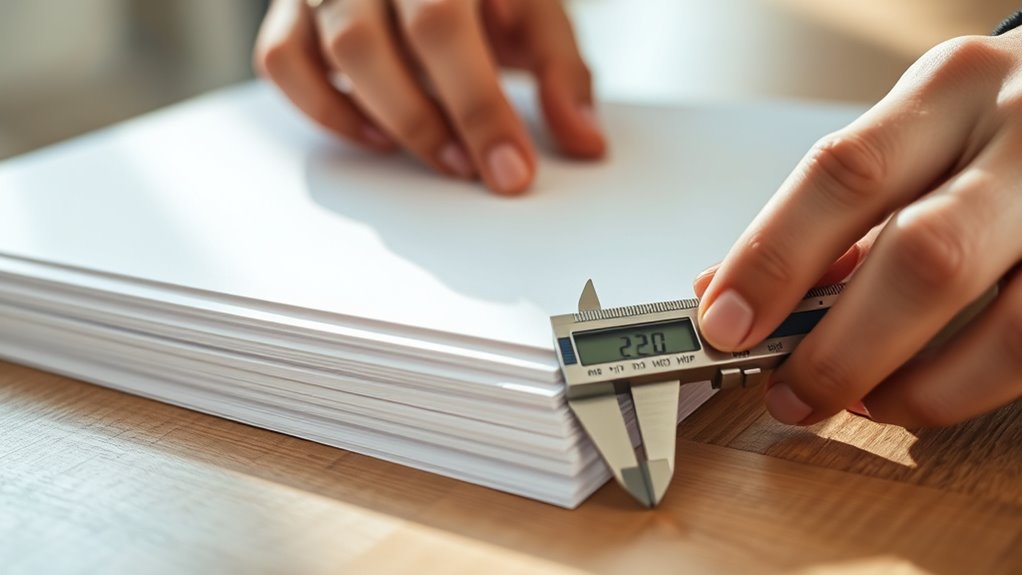
You can measure paper thickness using a micrometer or calipers, which give quick, precise readings if you handle the paper gently and apply consistent pressure. These tools are ideal for getting an accurate thickness measurement without damaging the paper.
Alternatively, you can stack multiple sheets together, measure the total thickness with a ruler, then divide by the number of sheets for a rough estimate.
This method works well if you don’t have specialized tools handy.
You can also calculate the thickness by multiplying the thickness of a single sheet by the total number of sheets in the stack. Handling tools properly and averaging multiple measurements improves accuracy.
Keep going to discover more detailed methods and helpful tips on how to measure the thickness of a piece of paper effectively.
Understanding Paper Thickness and Its Importance
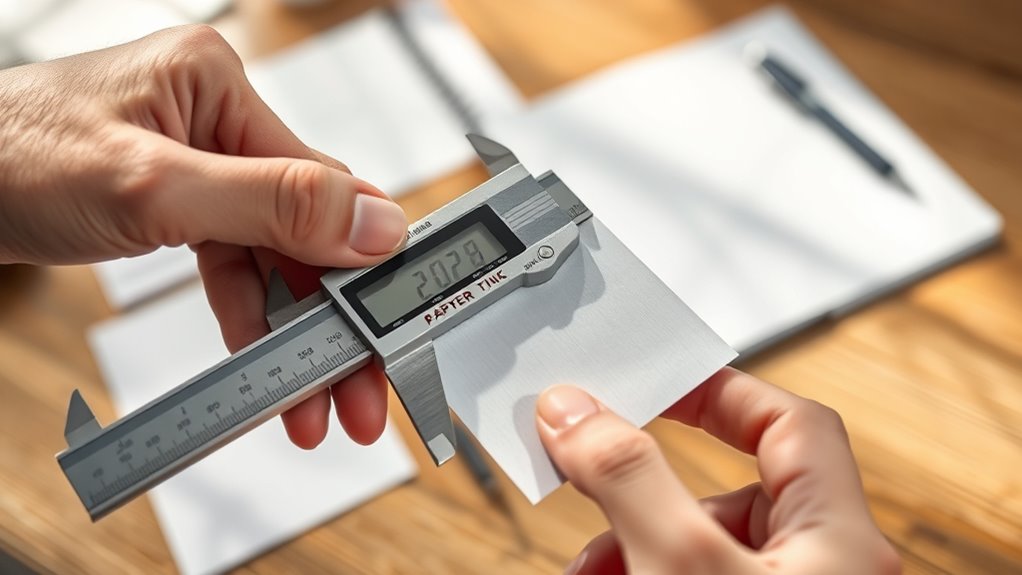
Although paper thickness might seem like a minor detail, it plays a crucial role in how your documents look and feel. When you choose thicker paper, your documents often feel more professional and durable.
Thin paper can feel flimsy and might not hold up well over time. The thickness also affects how ink or toner interacts with the surface, impacting print quality.
If you’re handling invitations, business cards, or important reports, thickness helps convey quality and importance. Additionally, paper thickness influences how well your sheets feed through printers or copiers, preventing jams or misfeeds.
Tools You Can Use to Measure Paper Thickness
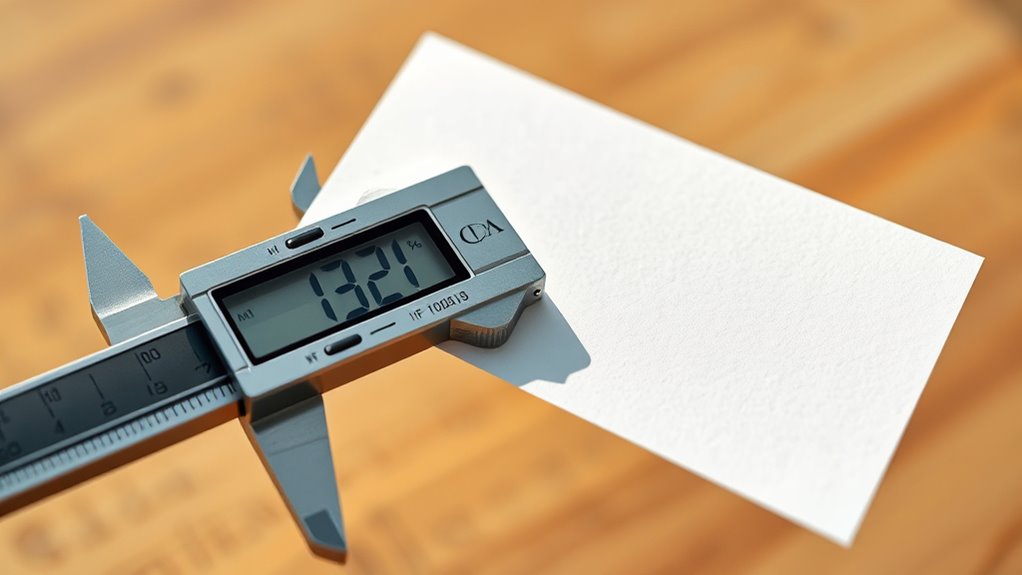
To measure paper thickness accurately, you’ll want to choose the right tool for the job. Micrometers and calipers offer precise readings when used correctly, while paper gauges provide a handy alternative for quick checks.
Let’s explore how to use each tool effectively to get reliable measurements. It’s easier than you might think once you know the basics!
Micrometer Usage Tips
When you measure paper thickness with a micrometer, handling the tool carefully guarantees accurate readings. First, verify the micrometer is calibrated properly before use.
Gently place the paper between the spindle and anvil—don’t squeeze too hard, as excessive pressure can compress the paper and skew results. Use the ratchet stop or friction sleeve to apply consistent force.
Always measure at multiple points on the paper to account for any unevenness, then average the measurements. Keep the micrometer clean and free of dust or debris, which could affect accuracy.
Store it in its case when not in use to prevent damage. By following these tips, you’ll get reliable and precise thickness readings every time you use your micrometer.
Caliper Measurement Guide
Since you need quick and reliable measurements, using a caliper can be an excellent choice for determining paper thickness. Digital or dial calipers offer precise readings down to hundredths of a millimeter, making them ideal for thin materials like paper.
To measure, gently close the caliper jaws around the paper’s edge without compressing it, ensuring accuracy. If the paper is too flexible, stack multiple sheets for a better grip and divide the total thickness by the number of sheets.
Always zero your caliper before measuring to avoid errors. Calipers are easy to use, portable, and provide instant results, so you can quickly gauge thickness for quality control or comparisons.
With proper handling, calipers deliver consistent and dependable paper thickness readings. It’s a handy tool to have around when precision matters.
Paper Gauge Alternatives
While calipers provide accurate paper thickness readings, you might want to explore other tools that fit different needs or budgets. A paper gauge, for example, is a simple tool specifically designed to measure paper thickness quickly.
It’s less precise than calipers but useful for rough measurements. Micrometers are another alternative—they offer high precision and are compact, making them easy to carry around.
If you don’t have specialized tools, you can also use a stack method: measure the thickness of a stack of sheets with a ruler and divide by the number of sheets.
Each method has pros and cons, so choose one based on the accuracy you need and the tools available. This way, you’ll measure paper thickness effectively without overspending.
How to Measure Thickness Using a Micrometer
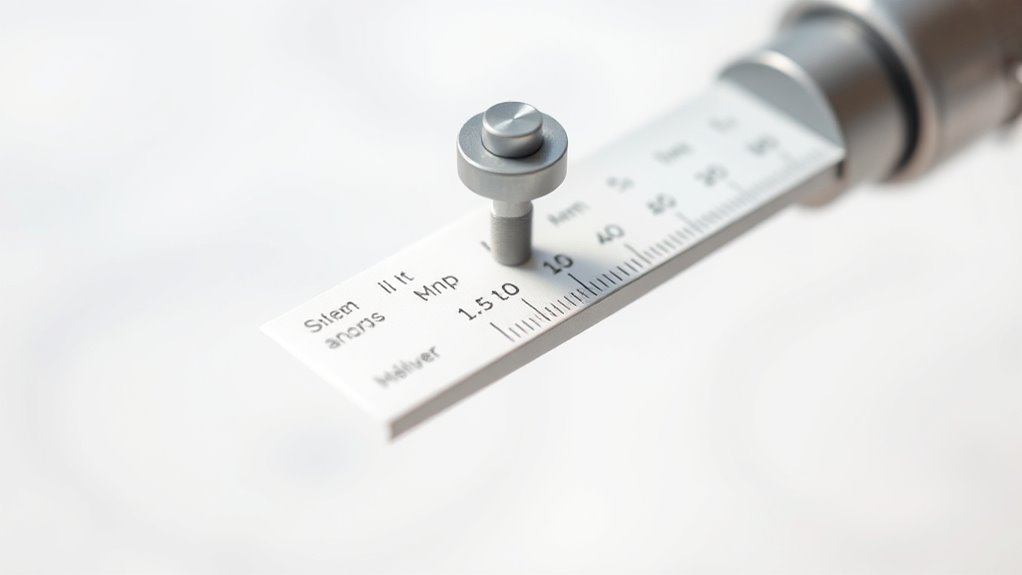
To accurately measure paper thickness, you’ll want to use a micrometer designed for precise readings. First, clean the micrometer’s anvil and spindle to remove dust or debris.
Then, gently place the paper between the anvil and spindle without compressing it. Slowly turn the ratchet until the spindle lightly touches the paper, ensuring consistent pressure.
Read the measurement on the micrometer’s scale—this usually includes a main scale and a rotating thimble for fine increments. Record the thickness, typically in millimeters or thousandths of an inch.
For the most accurate result, measure multiple spots on the sheet and calculate the average. Using a micrometer gives you a direct and reliable thickness reading, ideal when precision matters more than convenience.
Measuring Thickness With a Ruler and Weight Method
Although using a micrometer offers precise measurements, you can also estimate paper thickness with a ruler and weight method. First, stack a known number of identical sheets neatly. Use a ruler to measure the stack’s total thickness in millimeters.
Next, weigh the stack on a precise scale and note its mass. Since paper density is relatively consistent, you can calculate thickness by dividing the total thickness by the number of sheets. This method works best with uniform paper types and clean edges.
While less exact than a micrometer, it gives a reasonable estimate without specialized tools. Remember, accuracy depends on careful stacking and precise measurement of both weight and thickness to reduce errors in your calculation.
Estimating Thickness by Counting Sheets and Calculating
If you know the thickness of a single sheet, you can estimate the total thickness by simply counting the sheets and multiplying. First, find the thickness of one sheet using a precise method or manufacturer specifications.
Then, count the total number of sheets you want to measure. Multiply the number of sheets by the thickness of a single sheet to get an estimated total thickness.
For example, if one sheet is 0.1 millimeters thick and you have 50 sheets, the total thickness is 0.1 mm × 50 = 5 mm. This method works best with uniform paper types and consistent sheet thickness.
It’s a quick way to get a reasonable estimate without specialized tools. So, if you don’t have fancy equipment, this trick can really come in handy!
Tips for Accurate Paper Thickness Measurement
When you want precise results, paying attention to small details can make all the difference in measuring paper thickness accurately. First, verify your measuring tool, like a micrometer or caliper, is calibrated correctly before use.
Always measure at multiple points on the paper to account for any unevenness. Use a flat, hard surface to place the paper, avoiding any bending or curling.
If you’re measuring multiple sheets, count them carefully and avoid compression that could alter thickness. Handle the paper with clean, dry hands to prevent moisture or oils from affecting the measurement.
Finally, take several readings and average them for the most reliable result. Following these tips will help you get consistent and accurate paper thickness measurements every time.
Conclusion
Now that you know nifty methods to measure paper thickness, you can confidently choose the correct caliber for your craft or printing project. Whether you use a micrometer, a ruler with weight, or simple sheet counting, stay steady and sure in your steps.
Remember, precise paper measurement prevents printing problems and promotes professional results. So, sharpen your skills, stay sharp, and savor the satisfaction of superb, spot-on sheet selection every time!
Measuring paper thickness accurately is key to achieving the best results in printing, crafting, or any project involving paper. By mastering these easy techniques, you ensure your paper’s caliber matches your needs perfectly. This way, you avoid common issues like misfeeds or ink smudging, making your work look polished and professional. Keep practicing these measurement methods, and you’ll find choosing the right paper thickness becomes second nature. So go ahead, measure with confidence, and enjoy flawless outcomes every time you work with paper!