How Is Toilet Paper Made Step by Step
You start with wood fibers from carefully managed trees or recycled paper, which are cleaned and turned into a soft pulp through heat and chemicals.
This pulp gets bleached for brightness and then refined for softness and strength.
Next, the pulp spreads onto a screen, pressed to remove water, and dried thoroughly.
Finally, it’s rolled into big reels before being cut into toilet paper rolls.
Keep exploring, and you’ll uncover each detailed step behind this everyday essential.
Harvesting and Preparing Raw Materials
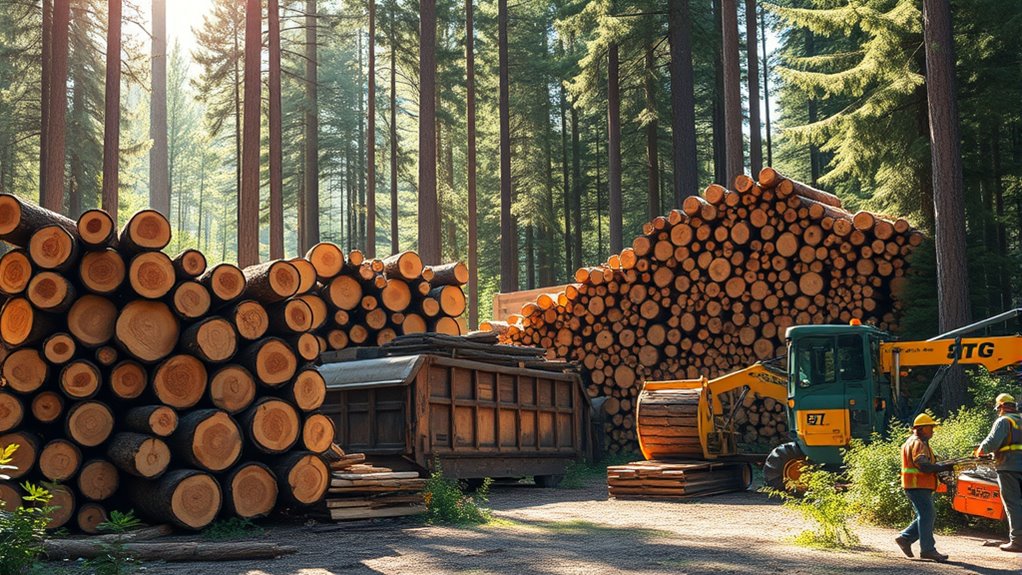
Before toilet paper can reach your bathroom, manufacturers first harvest and prepare the raw materials needed for production. You’ll find that most toilet paper starts with wood fibers from softwood and hardwood trees.
These trees grow in managed forests where they’re carefully selected and cut down to ensure sustainability. After logging, the wood is transported to mills where it’s debarked and chipped into small pieces.
These wood chips are then cleaned to remove dirt and impurities, setting the stage for the next step in production. Some manufacturers also use recycled paper, which goes through sorting and cleaning to eliminate inks and contaminants.
This preparation guarantees the raw materials are ready to be transformed into the soft, absorbent sheets you use every day.
Pulping Process
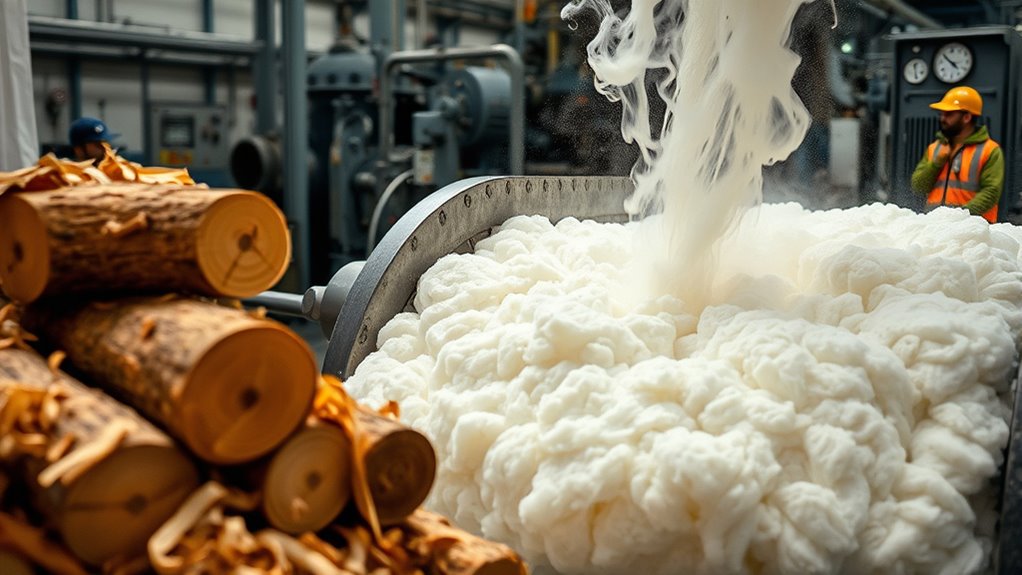
How does wood transform from chips into the soft pulp used for toilet paper? You start by breaking down wood chips in a pulping machine where heat, pressure, and chemicals (or mechanical action) separate fibers.
This process turns tough wood into a mushy pulp ready for further treatment.
Here’s a simple view of the pulping process:
| Step | Description |
|---|---|
| Wood Chips | Small, uniform pieces of wood |
| Cooking | Heat and chemicals soften wood |
| Fiber Separation | Fibers loosen and separate |
| Pulp Formation | Soft, fibrous pulp produced |
You’ll see the pulp’s texture shift from rigid chips to a soft mass, perfect for making toilet paper sheets.
This step guarantees fibers are ready to be cleaned and refined next.
Bleaching and Refining the Pulp
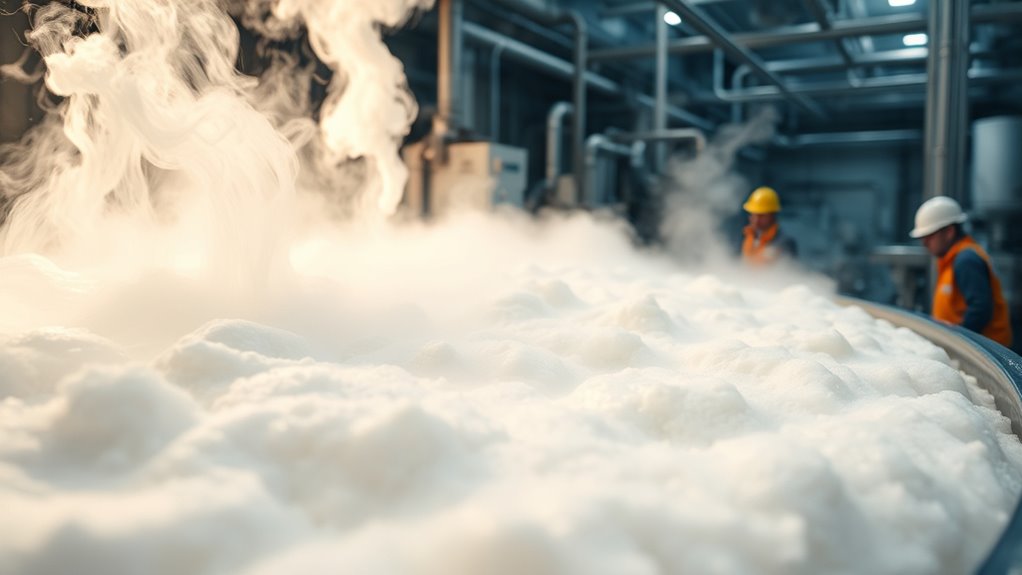
Why does the pulp need bleaching and refining? You want your toilet paper to be soft, strong, and bright white. Bleaching removes natural color and impurities from the pulp, giving you that clean, fresh look.
It also helps kill bacteria, ensuring hygiene. During refining, you mechanically treat the pulp fibers to improve their bonding ability. This step controls the paper’s strength and softness by adjusting fiber length and flexibility.
You’ll use chemicals like hydrogen peroxide or chlorine-free agents to bleach, minimizing environmental impact. Refining happens in specialized equipment that gently beats the fibers without damaging them.
Together, these processes prepare the pulp to form a smooth, durable sheet that meets your everyday comfort and quality expectations.
Forming and Pressing the Paper Sheet
Once the pulp is perfectly bleached and refined, it moves onto the forming and pressing stage, where the fibers start transforming into a continuous paper sheet. You’ll see the pulp slurry spread evenly onto a moving mesh screen called the wire section.
This screen allows water to drain out while the fibers interlock, creating a wet paper web. Next, the sheet passes through a series of press rollers that squeeze out excess water.
By applying pressure, these rollers compact the fibers, improving the sheet’s strength and smoothness. You’ll notice the sheet becomes thinner and more uniform as it moves through this stage.
This careful forming and pressing process sets the foundation for the toilet paper’s texture and durability before it moves on to drying.
Drying and Rolling the Paper
Once the paper sheet is formed and pressed, you’ll need to dry it quickly to prevent wrinkles or tears. Specialized drying machines use heat and air to remove moisture efficiently.
After drying, the paper moves onto large rollers that wind it into the familiar toilet paper rolls you use every day. It’s pretty cool how that simple process turns out something we use all the time!
Paper Drying Techniques
How do manufacturers transform wet pulp into the soft, dry sheets you use every day?
Once the pulp is formed into thin sheets, it needs thorough drying to become usable toilet paper. This step removes moisture efficiently while preserving softness and strength.
Here’s how the drying process works:
The wet sheet passes through a series of heated drying cylinders. Then, hot air blows over the paper to evaporate remaining water.
Tension controls keep the sheet flat and wrinkle-free. Temperature and speed are carefully adjusted to avoid damaging the fibers.
Rolling Machine Process
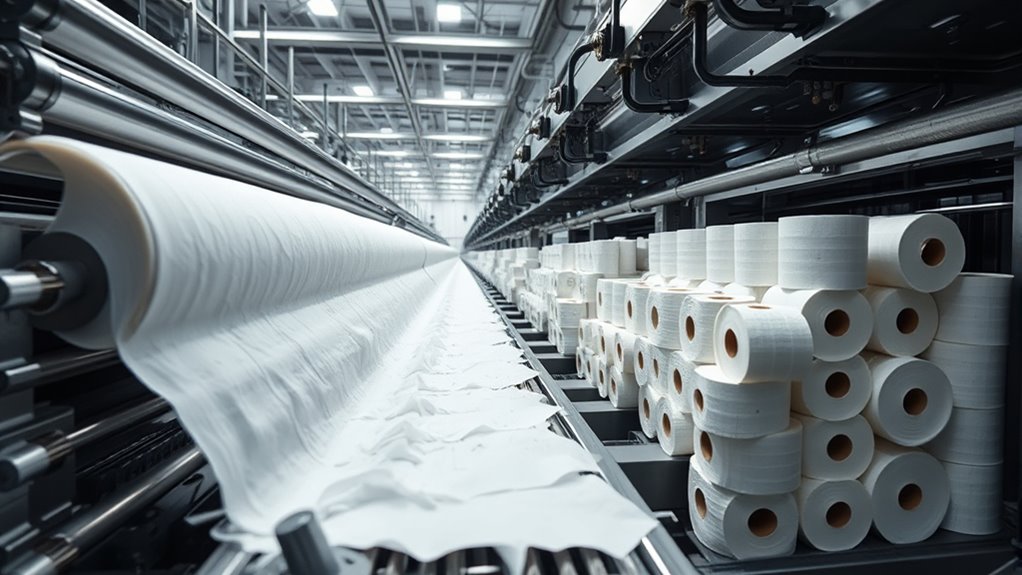
Although the paper has dried, it still needs to be carefully rolled into large, manageable reels before it can be cut into individual toilet paper rolls. You’ll guide the continuous sheet onto a massive reel using the rolling machine.
This machine guarantees the paper winds evenly and tightly without wrinkles or tears. As the paper wraps around the core, the machine maintains consistent tension, preventing slack or overstretching.
Once the reel reaches its desired size, you stop the process and secure the roll. These large reels are easier to handle during the next stage.
Cutting, Packaging, and Quality Control
Before toilet paper reaches your bathroom, the large rolls go through precise cutting and packaging processes to guarantee each roll meets quality standards.
First, machines slice these jumbo rolls into smaller, consumer-sized rolls. Then, each roll is tightly wrapped to maintain hygiene and softness.
Throughout this phase, quality control checks play a pivotal role. Inspectors and automated systems make sure the paper’s thickness, softness, and sheet count are consistent.
You’ll notice these key steps:
- Cutting rolls to the correct size
- Wrapping rolls with protective packaging
- Checking for defects like tears or uneven layers
- Verifying packaging labels and roll weight
This careful process ensures the toilet paper you use is reliable, comfortable, and ready for everyday use.
Conclusion
Now that you’ve seen how toilet paper transforms from trees into soft sheets, you realize it’s more than just a roll—it’s a carefully crafted comfort.
Each step, from pulping to packaging, works like clockwork, ensuring you get reliable softness every time.
So next time you reach for a roll, remember the journey it took to land in your hands.
Toilet paper is not just a product; it’s everyday care wrapped up like a gentle hug, made through a detailed, step-by-step process that guarantees quality and softness.