How to Choose Biodegradable Toilet Paper
You should choose biodegradable toilet paper that breaks down quickly using natural fibers without synthetic chemicals or bleach. This ensures it’s gentle on the environment and won’t contribute to pollution.
Look for trusted certifications like FSC, BPI, or EU Ecolabel to guarantee eco-friendly sourcing and compostability.
Balancing softness and strength is key. Try multi-ply, plant-based options that feel comfortable yet durable. It’s all about finding a product that works well for you while being kind to the planet.
Also, consider packaging and production impact for a lower environmental footprint. Keep exploring these factors to find the best sustainable option for your needs.
Understanding Biodegradable Materials
What makes materials biodegradable, and why should you care? Biodegradable materials break down naturally through the action of microbes like bacteria and fungi.
When you choose biodegradable toilet paper, you’re opting for a product that decomposes faster in the environment. This helps reduce landfill waste and pollution.
These materials are typically plant-based and free from synthetic chemicals or plastics that linger for years. You want to avoid toilet paper containing bleach, dyes, or other additives that slow decomposition.
Key Certifications to Look For
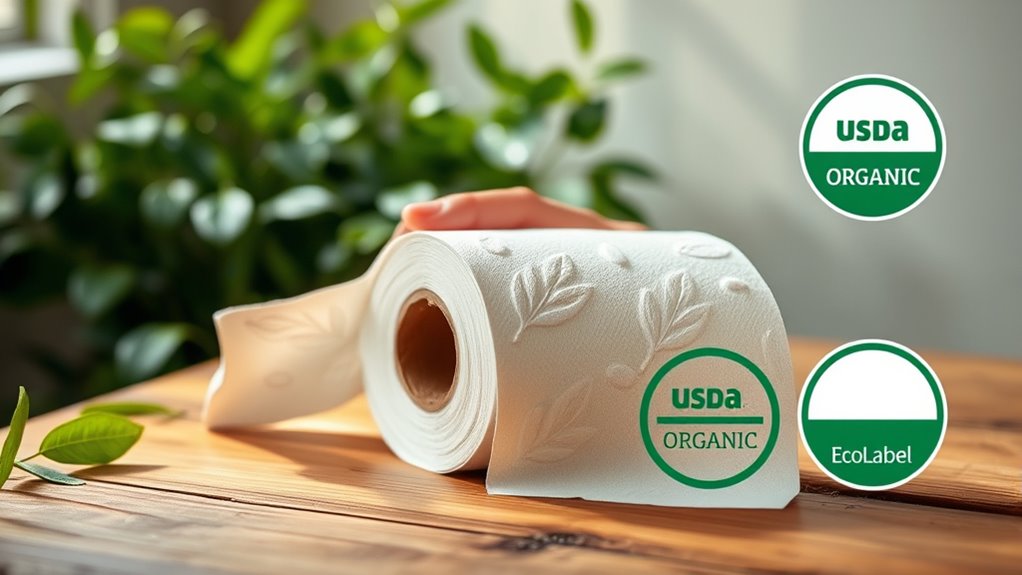
Since not all biodegradable toilet papers meet the same environmental standards, you should look for key certifications that verify their eco-friendly claims. Certifications like the Forest Stewardship Council (FSC) ensure the paper originates from responsibly managed forests.
The Rainforest Alliance seal means sustainable sourcing without harming ecosystems. Look for the Biodegradable Products Institute (BPI) certification, which guarantees the product decomposes quickly in commercial composting facilities.
Additionally, the EU Ecolabel indicates the product meets strict environmental criteria, including reduced water and energy use during production. Checking for these certifications helps you choose toilet paper that’s genuinely better for the planet.
Always read labels carefully because some brands may greenwash without providing proof. These certifications give you confidence that your choice supports sustainability.
Comparing Softness and Comfort
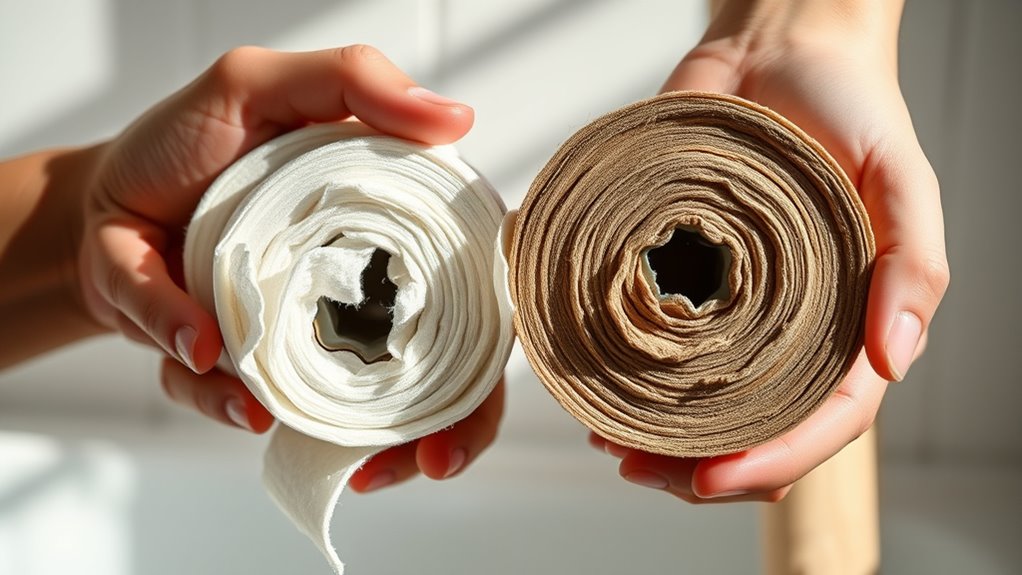
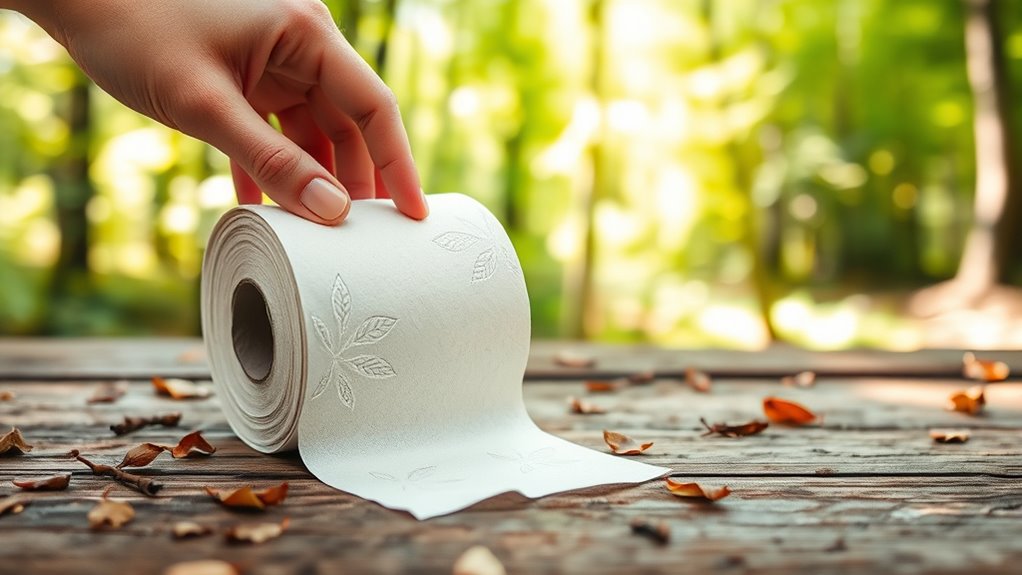
Although biodegradable toilet paper prioritizes environmental impact, you don’t have to sacrifice softness and comfort when making an eco-friendly choice. Many brands now use plant-based fibers like bamboo or recycled paper that feel gentle on your skin.
When comparing options, check if the paper is multi-ply; more layers usually mean a softer touch. Also, consider the texture—some biodegradable papers are embossed or treated to enhance softness without chemicals.
Keep in mind that softness varies widely, so trying samples can help you find what suits your preferences best. Ultimately, choosing a biodegradable toilet paper that balances comfort with sustainability lets you care for the planet while enjoying a pleasant daily experience.
Evaluating Strength and Durability
When choosing biodegradable toilet paper, you’ll want to make sure it holds up well during use. Strength and durability are vital because flimsy paper can tear easily, causing discomfort and waste.
Look for products that balance toughness with softness, so you don’t sacrifice comfort for function. Check if the paper is multi-ply or reinforced, as these typically offer better durability.
Also, consider customer reviews focusing on whether the paper disintegrates too quickly or stays intact long enough to avoid frustration. Remember, a strong biodegradable toilet paper means less product use overall, which helps you save money and reduces environmental impact.
Testing a few brands can help you find the one that meets your needs without compromising on eco-friendliness. It’s worth taking the time to find the right fit!
Environmental Impact Beyond Biodegradability
When choosing biodegradable toilet paper, you should also consider how the manufacturing process affects the environment. Pay attention to packaging sustainability and whether it uses recyclable or compostable materials.
Don’t forget to check the water usage involved in production, as it can have a big environmental impact too. It’s all about looking beyond just the product itself and thinking about the bigger picture!
Manufacturing Process Effects
Because the environmental impact of biodegradable toilet paper extends beyond its ability to break down, you should consider how its manufacturing process affects the planet. Production involves energy use, water consumption, and chemical treatments that can leave a significant footprint.
Choosing brands that minimize these impacts helps reduce pollution and conserve resources. It’s worth paying attention to these details when making a choice.
| Factor | Impact on Environment |
|---|---|
| Energy Consumption | High energy use increases carbon emissions |
| Water Usage | Excessive water strains freshwater sources |
| Chemical Treatments | Harmful substances can pollute water bodies |
| Source Material | Sustainable fibers reduce deforestation |
Packaging Sustainability
Although biodegradable toilet paper reduces waste, its packaging plays a crucial role in overall sustainability. When choosing your toilet paper, look for packaging made from recycled or compostable materials.
Avoid plastic wrappers that contribute to landfill buildup and microplastic pollution. Some brands use paper or plant-based films that break down naturally, minimizing environmental harm.
Also, consider packaging size and design—bulk options reduce excess waste and transportation emissions. Transparent labeling on packaging helps you identify eco-friendly choices quickly.
Water Usage Implications
Packaging choices impact more than just waste—they also tie into the water footprint of producing biodegradable toilet paper. When you pick a brand, consider how much water it takes to grow the raw materials, especially if they use virgin fibers.
Bamboo and recycled paper generally require less water than conventional wood pulp, helping reduce overall consumption. Additionally, some manufacturers implement water-saving technologies during processing, which you should look out for.
By choosing products from companies committed to minimizing water use, you help lessen the strain on freshwater resources. So, don’t just focus on biodegradability—think about the entire water usage cycle behind your toilet paper.
Your choice can support more sustainable water management and make a meaningful environmental difference.
Budget Considerations and Value Options
When shopping for biodegradable toilet paper, you’ll find a wide range of prices that reflect different qualities and brands. Balancing cost with environmental impact is key, so look for options that offer both value and sustainability.
Sometimes, slightly higher prices mean better durability or faster decomposition. To help you decide, here’s a quick comparison:
| Brand | Price per Roll | Biodegradability Rating |
|---|---|---|
| GreenSoft | $0.80 | High |
| EcoPly | $0.65 | Medium |
| NatureWrap | $1.00 | Very High |
| EarthCare | $0.70 | High |
| BioRoll | $0.60 | Medium |
Consider your budget but prioritize products that align with your eco goals. Buying in bulk can also save money and reduce packaging waste.
Conclusion
Choosing biodegradable toilet paper isn’t just good for the planet—it’s like giving Mother Earth a big, eco-friendly hug! By understanding the materials used, you can make sure you’re picking a product that truly breaks down without harming the environment.
Check for certifications that guarantee the paper meets environmental standards. Balancing softness with strength is key, so you don’t have to compromise comfort for sustainability. Also, don’t forget to weigh the environmental impact beyond biodegradability, like packaging and production methods, along with your budget.
With these tips, you’ll find the perfect roll that feels great and does good. Choosing biodegradable toilet paper means your bathroom routine just got a whole lot greener—comfort and eco-friendliness can go hand in hand!