
Do You Get Scratch Paper for the MCAT and How Should You Use It
You don’t get traditional scratch paper for the MCAT; instead, you’ll use laminated note boards and dry-erase markers. These tools are your go-to for jotting down formulas, diagrams, and key points.
It’s a different kind of scratch paper, but just as useful if you know how to use it right.
Use the boards to organize your notes with abbreviations and clear sections for quick reference. Erase carefully between sections to keep your workspace clean and efficient.
Mastering these note-taking strategies will help you stay focused and solve problems faster. Keep going to discover how to make the most of these tools during the test.
What Materials Are Provided for Note-Taking During the MCAT?
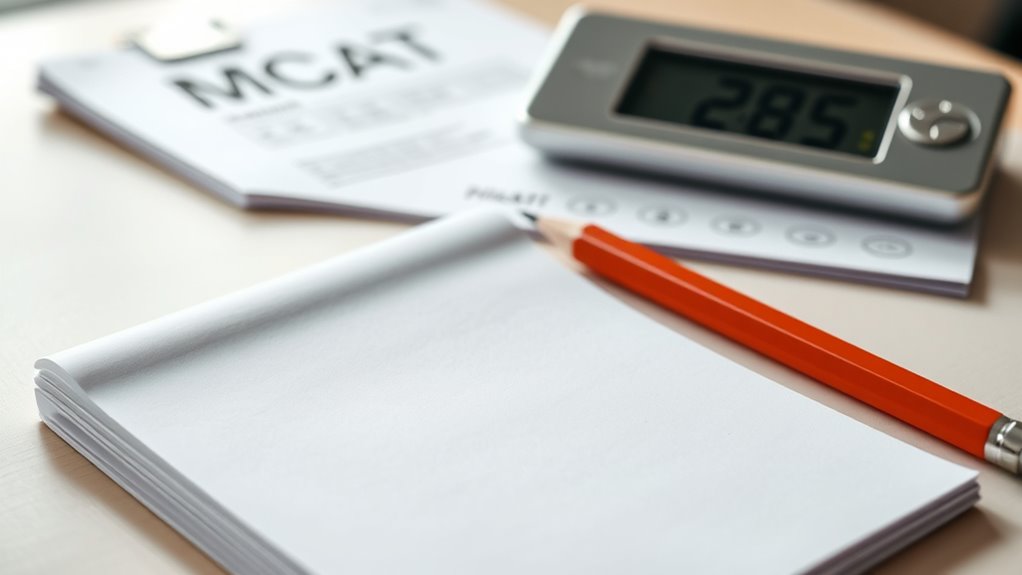
Although you might expect to bring your own materials, the MCAT provides all the scratch paper you’ll need for note-taking during the exam. When you arrive, test proctors will hand you laminated note boards and dry-erase markers.
These boards function as your scratch paper, letting you jot down formulas, draw diagrams, or outline passages. You won’t find traditional paper or pencils allowed, so it’s important to get comfortable with this setup beforehand.
After each section, your proctors will collect the boards, erase them, and prepare them for the next use, ensuring a clean slate every time. This system helps maintain exam security and reduces waste.
Differences Between Traditional Scratch Paper and MCAT Note Boards
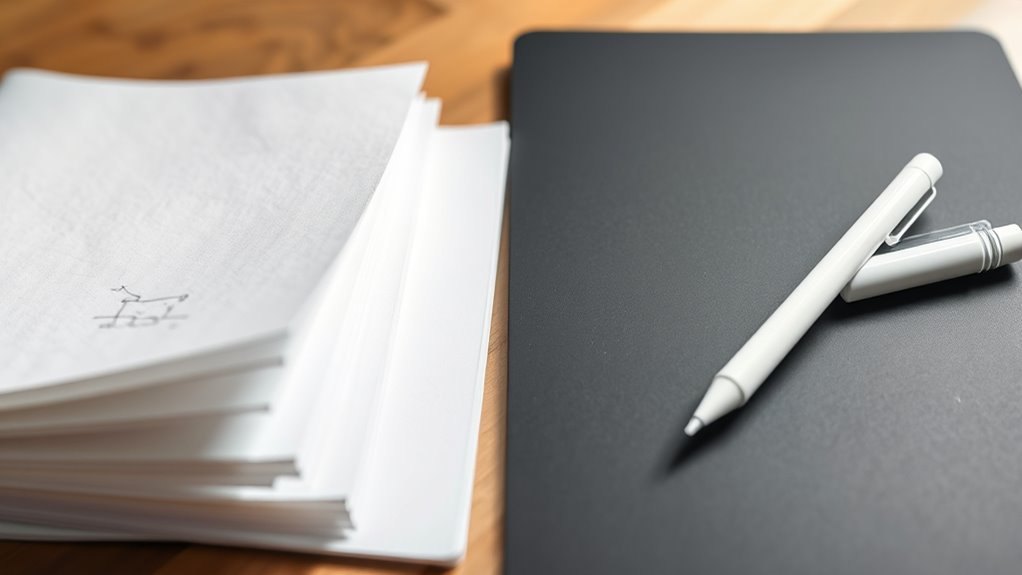
While traditional scratch paper lets you freely write and erase with familiar tools like pencils, the MCAT’s note boards require you to adapt to a different style using dry-erase markers on laminated surfaces. You’ll notice three key differences:
- Writing Tools: Instead of pencils, you use dry-erase markers that glide differently and erase instantly.
- Surface Feel: The laminated boards feel slicker, which might change how you form letters or diagrams.
- Reusability: Unlike paper, these boards let you erase and rewrite endlessly, so you must manage space efficiently.
Understanding these differences helps you adjust your note-taking approach, ensuring you stay comfortable and effective during the exam. Embracing the note boards’ unique features will make your MCAT experience smoother and less distracting.
Strategies for Effective Use of Laminated Note Boards

You’ll want to maximize every inch of your laminated note board by organizing information clearly and prioritizing key concepts. Using quick erase techniques helps you adjust your notes on the fly without wasting time.
These strategies keep your board efficient and ready for rapid problem-solving during the MCAT. It’s all about staying flexible and focused, so you can tackle questions with confidence and speed.
Maximizing Board Space
How can you make the most of your laminated note board during MCAT prep? Maximizing board space is key to staying organized and efficient.
First, prioritize content: jot down formulas, key concepts, and quick reminders you frequently need. This way, you have the essential info right at your fingertips.
Second, use abbreviations and symbols to save space without losing meaning. It’s a neat trick to fit more on the board without clutter.
Third, segment your board into zones—dedicate sections for biology, chemistry, and physics. That way, you can find info fast and keep everything tidy.
Quick Erase Techniques
Since quick corrections are essential during intense MCAT study sessions, mastering erase techniques can save you valuable time. Use a microfiber cloth or a felt eraser to swiftly wipe away errors without smudging.
Keep a small spray bottle of water handy to dampen stubborn marks for easier removal. Practice erasing in smooth, confident strokes to avoid wasting seconds. Here’s a quick guide:
| Tool | Best Use | Tip |
|---|---|---|
| Microfiber Cloth | General erasing | Use circular motions |
| Felt Eraser | Small corrections | Dab gently, avoid smearing |
| Water Spray | Stubborn marks | Light mist, then wipe clean |
With these techniques, you’ll keep your laminated note board neat and efficient throughout your MCAT prep. Just a little practice, and you’ll be erasing like a pro in no time!
Tips for Organizing Your Notes and Calculations
You’ll want to organize your notes by subject to find information quickly during the test. Using abbreviations efficiently can save valuable time and space on your scratch paper.
Keep your layout clear and consistent so your calculations stay easy to follow under pressure. This way, you won’t get lost in the details when it really counts.
Categorize by Subject
Organizing your scratch paper by subject can save you valuable time during the MCAT. When you clearly separate your notes, you avoid confusion and streamline problem-solving.
Here’s how to do it effectively:
- Designate Sections: Assign specific areas of your scratch paper to each subject—like biology, chemistry, and physics—to keep calculations and notes tidy.
- Use Headers: Label each section clearly so you can quickly locate relevant information without rereading everything.
- Keep Related Work Together: Group formulas, diagrams, and calculations related to the same question or topic. This reduces flipping back and forth and helps you track your thought process.
Use Abbreviations Efficiently
How can abbreviations speed up your note-taking during the MCAT? Using abbreviations lets you jot down complex terms and formulas quickly, saving precious time.
They reduce clutter on your scratch paper, helping you focus on solving problems instead of writing long words repeatedly. Develop a consistent set that you recognize instantly to avoid confusion.
Here’s a simple table to get you started:
| Term | Abbreviation | Example Usage |
|---|---|---|
| Mitochondria | Mito | Energy prod. in Mito |
| Photosynthesis | Photo | Rate of Photo calc. |
| Sodium chloride | NaCl | Conc. of NaCl soln. |
Keep your abbreviations simple and relevant to the topic to maximize efficiency. It really makes a difference once you get the hang of it!
Maintain Clear Layout
A clear layout on your scratch paper helps you spot errors quickly and follow your thought process during the MCAT. When organizing notes and calculations, keep things neat and systematic.
Here’s how you can do it effectively:
- Segment Your Work: Divide your paper into sections for different problems or concepts to avoid mixing up information.
- Use Headings and Labels: Clearly mark each section with headings or abbreviations to know what each part represents at a glance.
- Leave Space for Revisions: Don’t cram your work; leave enough room to add notes or corrections without clutter.
Managing Time While Using the Note Boards
When you use note boards during the MCAT, keeping track of time becomes essential to staying on pace. You don’t want to spend too long writing or reworking notes, as every second counts.
To manage your time efficiently, allocate a specific amount of time for jotting down formulas, diagrams, or calculations before returning to the questions. Use shorthand or symbols to speed up writing.
Quickly glance at your notes instead of rereading everything in detail. Keep your notes organized so you can find information immediately without wasting time.
Practice timing yourself when using note boards during your study sessions. This will help you develop a rhythm and avoid getting stuck on note-taking during the actual exam.
Staying mindful of time lets you balance note usage and question answering effectively. It’s all about finding that sweet spot where your notes help, but don’t slow you down.
Best Practices for Erasing and Reusing the Note Boards During the Exam
Although you’ll want to jot down plenty of notes, clearing your note boards efficiently lets you maximize space and stay organized throughout the exam.
To erase and reuse the boards effectively, keep these best practices in mind:
- Erase fully between sections: Use the provided eraser to clear all markings completely before moving on. This helps prevent confusion or leftover information from previous questions.
- Use separate areas for different problems: Divide your board into sections to keep notes distinct. Then, erase only the used parts, preserving important info for later reference if needed.
- Stay calm and deliberate: Rushing to erase can smudge or miss spots, so take a few seconds to ensure clarity. This habit keeps your workspace clean and your thoughts organized throughout the test.
Conclusion
You might wonder if you get scratch paper for the MCAT—but here’s the twist: you don’t. Instead, you’ll use laminated note boards, a tool that might feel unfamiliar at first.
Mastering these boards can give you an edge, but only if you know how to organize and erase swiftly. So, will you let this unique challenge trip you up, or will you turn it into your secret weapon?
Remember, the MCAT doesn’t provide traditional scratch paper, so getting comfortable with using laminated note boards is key. Practice organizing your notes clearly and erasing efficiently to save time during the exam. By mastering this unconventional method, you can enhance your test-taking strategy and reduce stress, making these note boards a powerful tool rather than a hurdle. So, embrace the challenge and use the laminated boards to your advantage—they could be the secret to boosting your MCAT performance.