How Is Synthetic Paper Made?
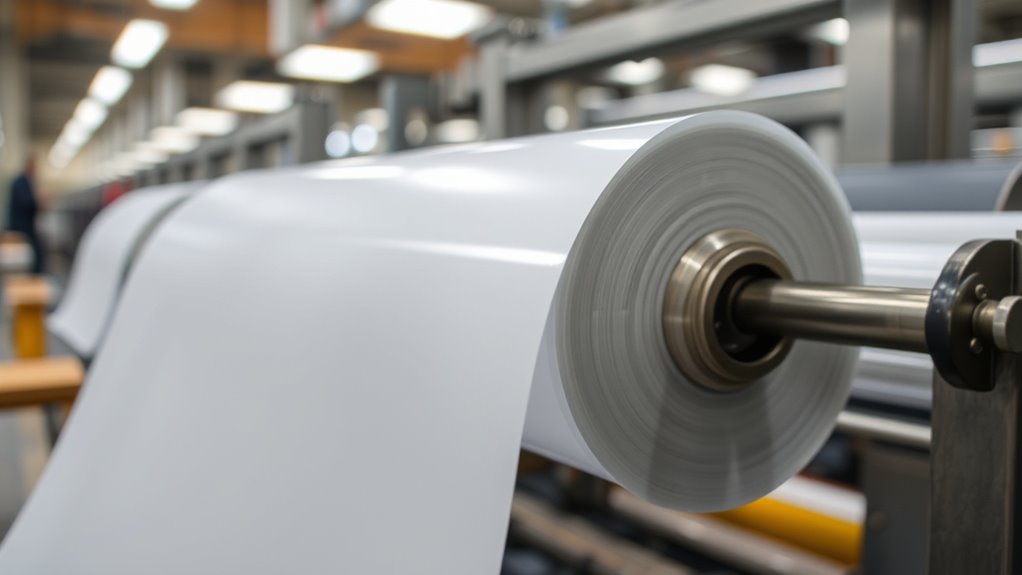
You make synthetic paper by melting plastic resins such as polypropylene or polyethylene and shaping them into continuous sheets through extrusion. This process is fundamental in creating synthetic paper, which is prized for its durability and versatility in printing applications.
Then, you smooth and strengthen the surface using calendering and special coatings, which also help inks stick well and dry quickly. These finishing touches make synthetic paper water-resistant and tear-proof, perfect for various uses.
This process gives you a durable, water-resistant, and tear-proof material ideal for printing. If you want to understand the detailed steps and environmental factors involved, there’s more to uncover about how it’s made.
Raw Materials Used in Synthetic Paper Production
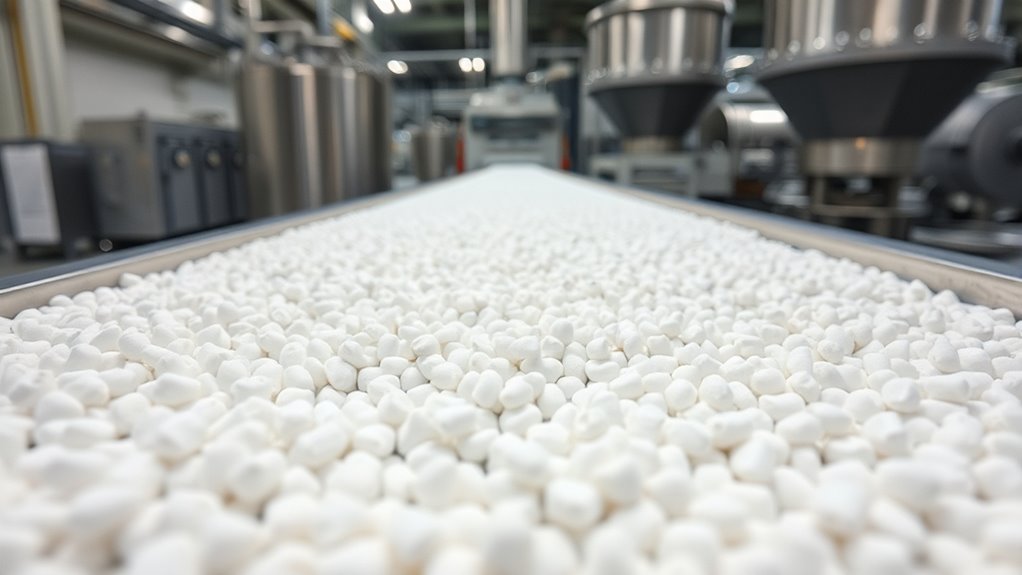
Although synthetic paper might look like the real thing, it’s made from very different raw materials. Instead of wood pulp like traditional paper, you’ll find synthetic paper primarily consists of polymers such as polypropylene or polyethylene.
These materials give synthetic paper its durability, water resistance, and tear-proof qualities. You’ll also encounter additives like fillers and pigments that enhance the texture, opacity, and printability of the paper.
Synthetic paper’s durability and tear resistance come from polymers, enhanced with fillers and pigments for better texture and print quality.
Unlike natural fibers, these synthetic components are designed to withstand harsh conditions without degrading quickly. When you handle synthetic paper, you’re working with a product engineered at the molecular level to combine the best traits of plastic and paper.
This unique blend of raw materials is what sets synthetic paper apart in terms of strength and versatility. It’s pretty cool how science can create something that feels like paper but performs so much better in tough conditions.
The Extrusion Process Explained
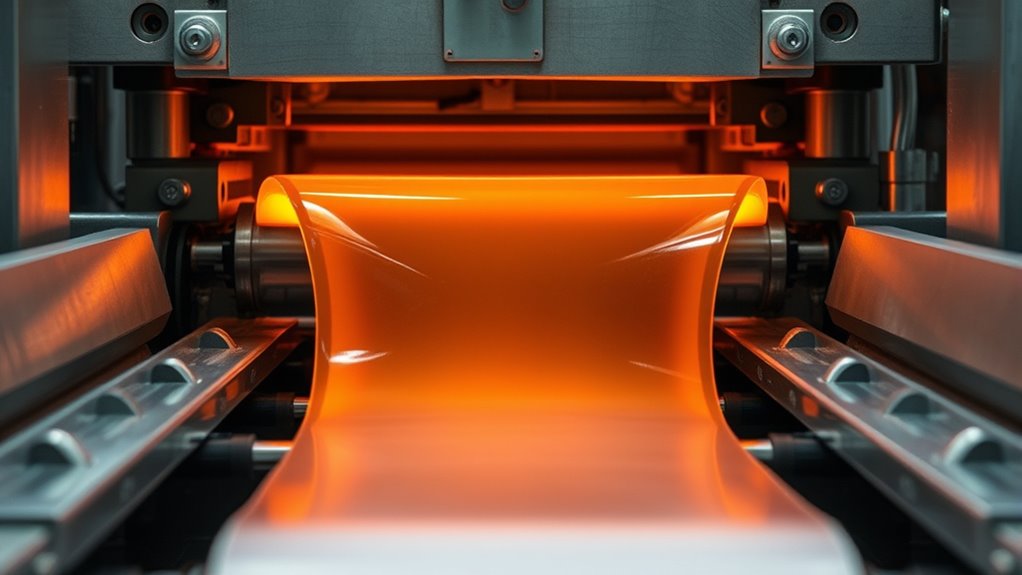
Once the raw materials like polypropylene or polyethylene are ready, they move into the extrusion process. Here, they’re transformed from pellets into thin, flexible sheets that resemble traditional paper.
You feed the pellets into a heated barrel, where they melt and become a thick liquid. This molten material is then pushed through a flat die, shaping it into a continuous sheet.
As the sheet exits, it cools and solidifies.
Here’s a quick overview:
| Step | Description |
|---|---|
| Melting | Pellets heated until molten |
| Shaping | Molten material extruded as sheet |
| Cooling & Solidifying | Sheet cooled to retain form |
This process guarantees the synthetic paper is uniform and ready for further finishing.
Calendering and Surface Treatment
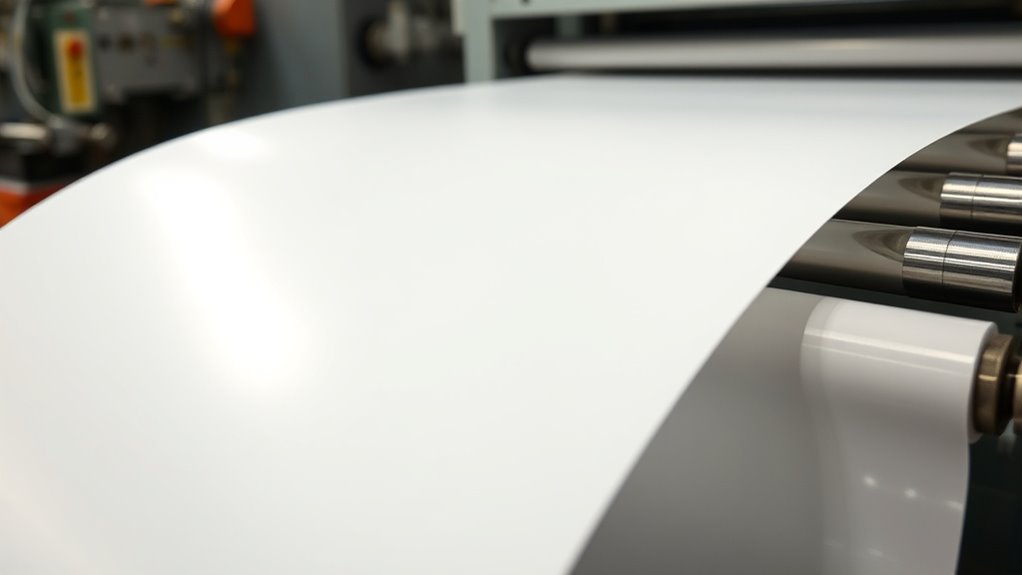
After extrusion, the synthetic paper undergoes calendering, where rollers press the sheet to achieve the desired thickness and smoothness. You’ll notice the paper’s surface becomes more uniform, reducing any irregularities from earlier stages.
This step is vital because it controls the paper’s final feel and strength. Following calendering, surface treatment is applied to enhance properties like printability and resistance to water or chemicals.
You might see coatings or treatments that improve adhesion or add texture, depending on the paper’s intended use. These treatments guarantee the synthetic paper performs well in various environments and applications.
Printing Compatibility and Finishing Techniques
How well does synthetic paper handle different printing methods? You’ll find that it performs exceptionally across various techniques like inkjet, laser, flexographic, and offset printing. Its smooth, non-porous surface ensures that inks dry quickly without smudging, giving you sharp, vibrant images and text.
When finishing synthetic paper, you can use laminating, die-cutting, embossing, and varnishing to enhance durability and aesthetics. Just keep in mind that some coatings may require adjustments to your printing settings for perfect adhesion.
Because synthetic paper resists moisture and tearing, it’s ideal for labels, maps, and outdoor materials. By choosing the right inks and finishing processes, you’ll get professional results with synthetic paper’s unique properties working in your favor.
Environmental Considerations and Recycling
Why should you consider environmental factors when choosing synthetic paper? Because it impacts sustainability and waste management. Synthetic paper is made from plastic resins, which can be less eco-friendly than traditional wood pulp paper.
However, many manufacturers now focus on using recyclable materials and eco-friendly production processes to reduce environmental harm. When you buy synthetic paper, check if it’s recyclable or made from recycled content.
Recycling synthetic paper is possible but requires specialized facilities, so ensure local recycling programs accept it. By choosing synthetic paper with environmental considerations in mind, you help reduce plastic waste and support sustainable practices.
Being mindful about disposal and recycling helps minimize the ecological footprint of synthetic paper, making your choice more responsible. It’s a small step that can make a big difference!
Common Applications of Synthetic Paper
Understanding the environmental impact of synthetic paper helps you appreciate its practical uses. You’ll find synthetic paper in many places because it’s durable, water-resistant, and tear-proof.
For example, it’s ideal for outdoor signage and labels that need to withstand harsh weather. You’ll also see it in maps, menus, and wristbands where moisture or frequent handling is common.
If you work in packaging, synthetic paper offers a reliable alternative for flexible, recyclable materials. Plus, artists and designers use it for printing high-quality images without worrying about paper damage.
When you choose synthetic paper, you’re selecting a versatile product that meets demanding conditions while reducing environmental waste. Its unique properties make it perfect for applications where traditional paper just won’t cut it.
Conclusion
Now that you know how synthetic paper is made—from raw materials and extrusion to finishing—you’ll appreciate its durability and versatility.
Did you know synthetic paper can last up to 100 years without yellowing or tearing? That’s why it’s perfect for long-lasting applications like maps and outdoor signage.
Plus, its recyclability makes it an eco-friendly choice. By choosing synthetic paper, you’re opting for strength and sustainability in one smart package.
Synthetic paper combines toughness with environmental benefits, making it ideal for various uses. Whether you need waterproof labels or durable posters, synthetic paper delivers performance and longevity. So, when looking for a reliable, long-lasting paper alternative, synthetic paper is a smart, sustainable choice worth considering.