Will Parchment Paper Burn in the Oven?
You can use parchment paper in the oven safely if you keep the temperature below about 420°F. It’s made to resist heat but will burn or catch fire above that. So, it’s important to watch for dark edges, curling, or smoke as signs it’s overheating.
Also, avoid contact with heating elements or folding the paper to prevent uneven burning.
Want to bake safely and learn what to do if you need higher heat or alternatives? There’s more worth knowing.
What Is Parchment Paper Made Of?
Although parchment paper looks like regular paper, it’s specially treated to resist heat and prevent sticking. You’ll find it’s made by soaking paper in sulfuric acid or zinc chloride, which changes its surface to create a nonstick, durable layer.
This treatment strengthens the fibers and makes the paper greaseproof and moisture-resistant. Unlike wax paper, which is coated with wax, parchment paper has this unique chemical process that gives it heat resistance and prevents food from sticking during baking.
When you use parchment paper, you’re relying on these properties to keep your baked goods intact without mess. So, the next time you reach for parchment, remember it’s not just paper—it’s been engineered for cooking and baking tasks.
Heat Resistance and Temperature Limits
Understanding what parchment paper is made of helps explain why it can handle heat better than regular paper. It’s coated with silicone, making it non-stick and heat-resistant.
Parchment paper’s silicone coating makes it non-stick and heat-resistant, unlike regular paper.
When you use parchment paper, keep these temperature limits in mind:
- Most parchment papers withstand temperatures up to 420°F (215°C).
- Some heavy-duty brands tolerate up to 450°F (232°C).
Avoid using parchment paper under a broiler or direct flame; it can ignite beyond its heat limit.
Using parchment paper within these limits prevents burning or smoking, ensuring safe baking. So, just keep an eye on the temperature and you’re good to go!
Signs That Parchment Paper Is Burning
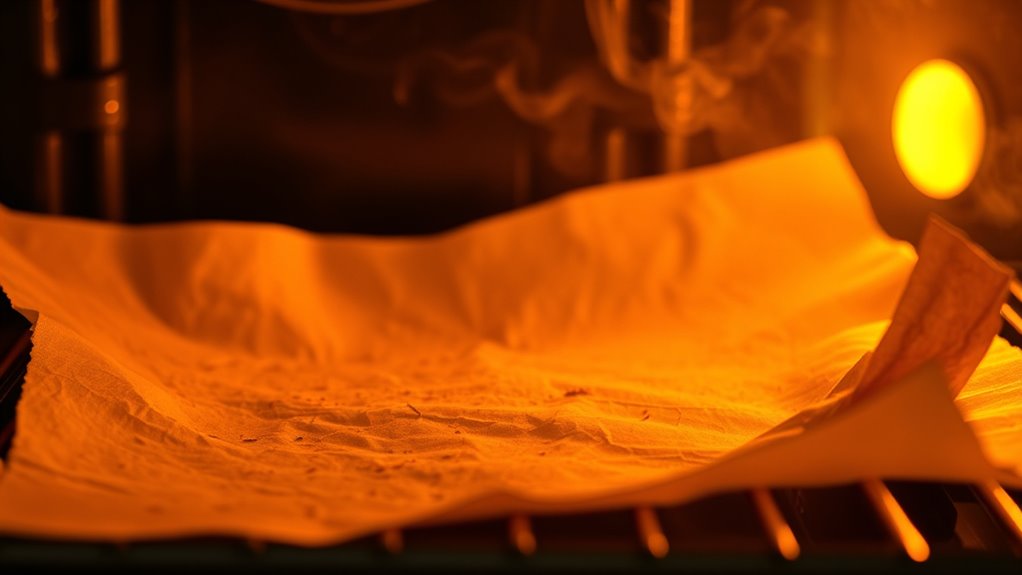
If you notice darkening edges, curling, or a distinct burnt smell while baking, your parchment paper is likely burning. These signs indicate it’s been exposed to temperatures beyond its safe limit.
You might also see smoke or small flames if the paper is extremely overheated. That’s definitely a warning to act fast.
| Sign | What It Means |
|---|---|
| Darkened Edges | Paper is overheating |
| Curling | Heat is causing the paper to shrink |
| Burnt Smell | Paper is starting to char |
| Smoke | Paper is combusting |
| Small Flames | Paper has ignited |
Spotting these signs early helps you prevent fire hazards and keeps your cooking safe. Always keep an eye on your oven when using parchment paper—it’s better to be safe than sorry!
Tips for Using Parchment Paper Safely in the Oven
To use parchment paper safely, you’ll want to keep your oven temperature below its recommended limit, usually around 420°F. Make sure the paper stays flat on the baking sheet and doesn’t touch the oven’s heating elements.
If you’re worried about burning, consider alternatives like silicone baking mats or aluminum foil. These can be great options when you want a little extra peace of mind.
Oven Temperature Limits
How hot can your oven get before parchment paper becomes a hazard? Most parchment paper brands handle temperatures up to 420°F (215°C). Beyond this, the paper risks scorching or catching fire.
To keep your baking safe and smooth, remember these limits:
- Check the parchment packaging for its maximum temperature rating. It’s always best to know exactly what your brand can handle.
- Avoid using parchment paper under a broiler, where temperatures soar above 500°F. That’s way too hot for the paper to handle safely.
- If your recipe calls for extremely high heat, consider reducing the oven temperature. Or better yet, switch to a silicone baking mat, which can take the heat.
- Don’t reuse parchment paper that’s already browned or brittle from previous uses. It’s more likely to burn and cause problems. So, toss it out and start fresh!
Proper Parchment Placement
Knowing your parchment paper’s temperature limits is just the start of using it safely. You also need to position it correctly in the oven to prevent burning.
Always lay parchment paper flat on a baking sheet or inside a pan; avoid letting it hang over the edges. When parchment extends beyond the pan, it’s exposed directly to oven heating elements and can easily ignite.
Also, keep parchment away from open flames or broiler elements, as these can cause it to catch fire quickly. If your recipe calls for lining a cake pan, trim excess paper so it fits snugly without curling up.
Alternatives to Parchment
Although parchment paper is a popular choice for baking, you might want to explore alternatives that offer similar benefits without the risk of burning. Here are some options to contemplate:
- Silicone Baking Mats: Reusable and heat-resistant, these mats provide a non-stick surface and withstand high temperatures safely.
- Aluminum Foil: Use it for roasting or baking at temperatures where parchment might burn; just grease it lightly to prevent sticking.
- Cooking Spray or Oil: Greasing your pans directly is simple and effective for many recipes, eliminating the need for liners.
- Wax Paper: Good for wrapping or storage, but avoid using it in the oven as it can smoke or catch fire.
Trying these alternatives can give you flexibility while keeping your baking safe and efficient. Give them a shot and see which one works best for your kitchen!
Alternatives to Parchment Paper for High-Heat Cooking
If you’re cooking at high temperatures, parchment paper might not always be the best choice. You can switch to silicone baking mats, which handle heat well and are reusable.
Alternatively, aluminum foil or simply greasing your pan with oil can prevent sticking without the risk of burning. It’s all about finding what works best for your recipe and cooking style.
Silicone Baking Mats
When you need a reliable alternative to parchment paper for high-heat cooking, silicone baking mats offer a durable and reusable solution. They withstand temperatures up to 480°F (250°C), making them perfect for roasting, baking, and grilling without burning.
Here’s why you should consider them:
- Non-stick surface means you don’t need extra oil or spray.
- Easy to clean—just wash with warm, soapy water or toss in the dishwasher.
- Eco-friendly since you can reuse them hundreds of times, reducing waste.
- Flexible and sturdy, they fit standard baking sheets and won’t tear like parchment.
Using silicone mats helps you avoid the risk of parchment paper burning, especially during high-heat cooking. They’re a smart, long-lasting choice for your kitchen.
Aluminum Foil Uses
Wondering how to handle high-heat cooking without parchment paper? Aluminum foil is a reliable alternative that can withstand much higher temperatures without burning. You can use it to line baking sheets, cover dishes, or wrap food for roasting and grilling.
Foil’s reflective surface also helps distribute heat evenly, preventing hot spots. However, be cautious when using it with acidic foods like tomatoes or citrus, as the foil may react and alter flavors.
Unlike parchment paper, foil isn’t non-stick, so you might want to lightly grease it or use a silicone mat underneath to prevent sticking. Overall, aluminum foil offers durability and versatility for tasks where parchment paper might not hold up, especially at temperatures above 450°F.
Oil and Grease Methods
How can you prevent food from sticking and burning without parchment paper in high-heat cooking? Using oil and grease methods is a reliable alternative. They create a natural barrier between your food and the pan, reducing the chance of sticking and burning.
Try these four effective techniques:
- Brush with oil: Lightly coat your baking surface with vegetable, olive, or avocado oil.
- Use butter or ghee: These add flavor and prevent sticking, especially for baked goods.
- Apply non-stick spray: Convenient and quick, sprays evenly cover the pan.
- Grease with animal fats: Lard or bacon grease work well for roasting meats and vegetables.
Each method withstands high temperatures better than parchment paper, ensuring your food cooks evenly without burning or sticking. So, give them a try next time you’re cooking up something hot!
Common Mistakes to Avoid When Using Parchment Paper
Although parchment paper is a handy kitchen tool, you can easily make mistakes that reduce its effectiveness or even cause safety hazards. First, don’t use parchment paper beyond its heat limit—usually around 420°F (215°C). Pushing it past that can cause burning or smoke.
Also, avoid letting parchment paper touch oven walls or heating elements, as this increases fire risk. And don’t reuse parchment paper if it’s greasy or torn; it won’t perform well and could ignite.
Never substitute parchment paper with wax paper, which can melt or catch fire in the oven. Lastly, make sure the paper fits your baking pan properly; folding or crumpling it can create uneven cooking or burning spots.
Conclusion
So, yes, parchment paper can burn in the oven—surprise! You’d think something designed for baking would be indestructible, right? But it’s only heat-resistant up to about 420°F, not a magical fireproof shield.
Next time, don’t treat it like a superhero; use it within limits. Otherwise, you might just end up with a smoky kitchen and a crispy mess instead of perfectly baked goodies.
Sometimes, even the best tools have their weak spots! Remember, when using parchment paper, always check your oven temperature and keep it below that 420°F threshold. This way, you can avoid burning the parchment paper in the oven and ensure your baking turns out just right. So, while parchment paper is a great helper in the kitchen, it’s important to respect its limits to keep your baked goods safe and delicious.