What Is Loose Leaf Paper and How Is It Used?
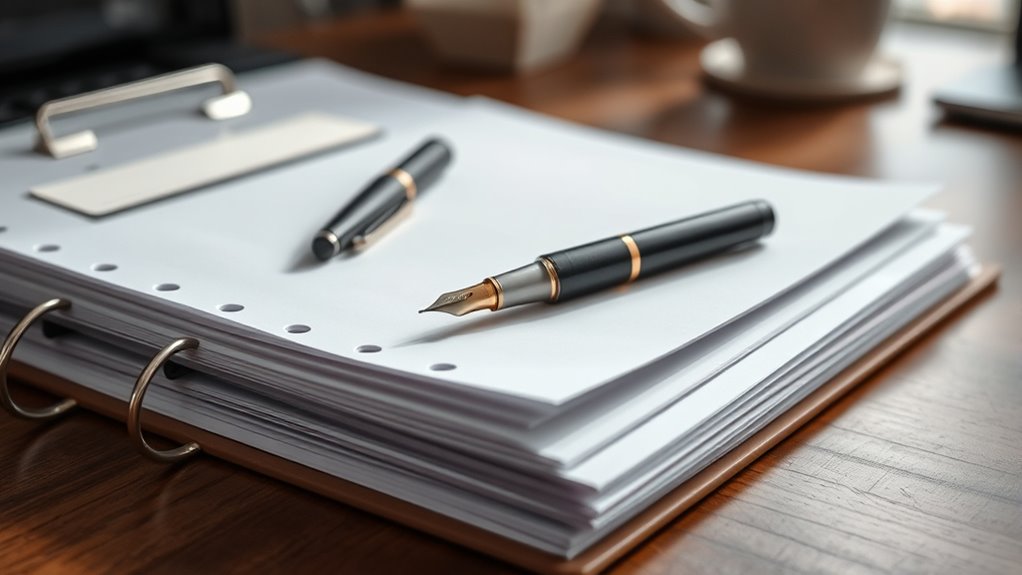
Loose leaf paper is unbound sheets with pre-punched holes that you can easily add, remove, or rearrange in a binder. It’s a popular choice for students and professionals alike because of its flexibility.
Whether you’re taking notes, working on projects, or organizing reports, loose leaf paper makes it easy to keep everything in order.
It comes in various types like ruled, graph, and blank, usually sized to fit standard binders. This variety means you can pick the perfect style for your needs, whether you prefer lined pages for writing or blank ones for sketching.
Plus, since the sheets aren’t fixed, you can shuffle them around whenever you want.
You’ll find it flexible for organizing notes, projects, or reports since you’re not stuck with a fixed order. Plus, it helps keep your work neat and easy to manage.
There’s a lot more to learn about using and organizing it effectively.
Definition and Characteristics of Loose Leaf Paper
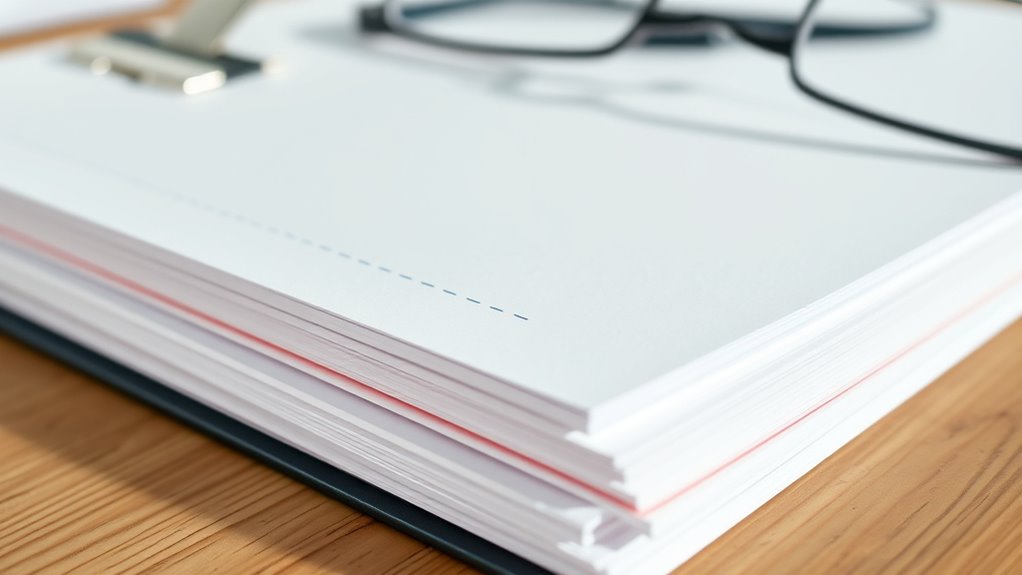
What exactly makes loose leaf paper different from other types of paper? You’ll notice it’s designed with pre-punched holes, allowing you to insert or remove pages easily from binders or folders. This flexibility means you can organize your notes, assignments, or documents without hassle.
Unlike bound notebooks, loose leaf paper lets you rearrange or replace sheets as needed. The paper typically features ruled lines for neat writing, and the holes are spaced to fit standard ring binders.
You’ll also find the paper is usually thin but durable enough for daily use. This combination of adjustability and practicality makes loose leaf paper a favorite for students, professionals, and anyone who values customizable organization. It’s all about giving you control over how you manage your written materials.
Common Types and Sizes of Loose Leaf Paper
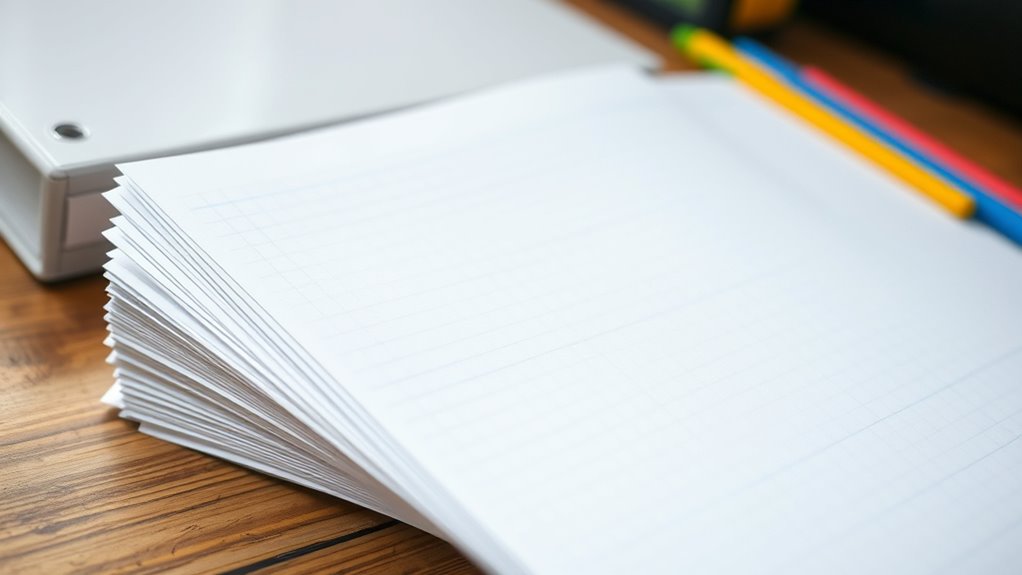
Loose leaf paper comes in several common types and sizes to suit different needs. You’ll typically find ruled, graph, and blank varieties. Ruled paper is perfect for note-taking, with lines spaced differently—college-ruled and wide-ruled being the most popular.
Graph paper features a grid, ideal for math, engineering, or design work. Blank sheets give you a clean slate for drawing or brainstorming.
As for sizes, the most common in the U.S. is 8.5 x 11 inches, fitting standard binders. In other regions, A4 (210 x 297 mm) is widely used.
You can also find smaller sizes like junior or half sheets, which are easier to carry around. Selecting the right type and size depends on your specific tasks and preferences.
Advantages of Using Loose Leaf Paper
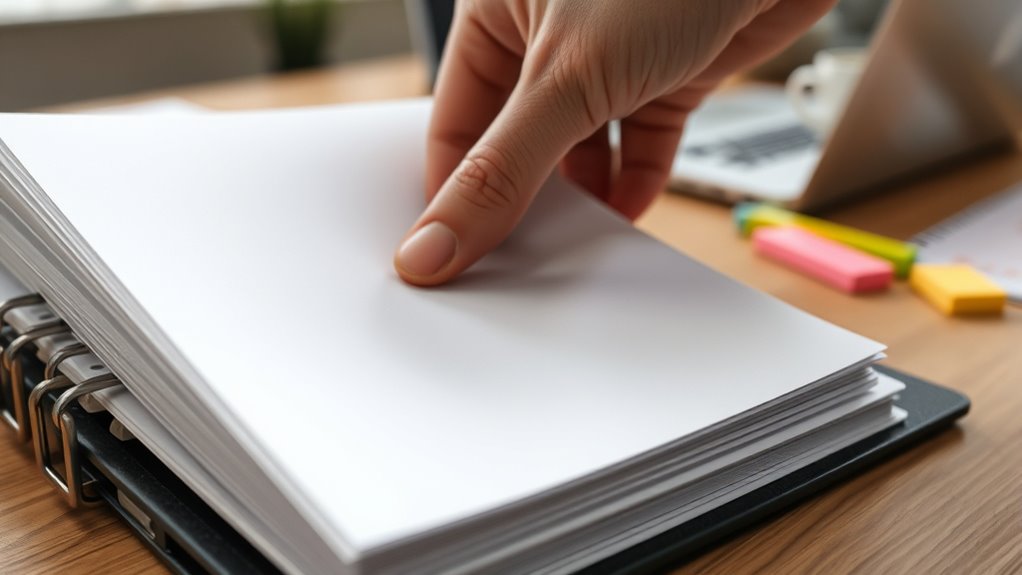
Why choose loose leaf paper over notebooks or digital notes? Loose leaf paper offers flexibility you won’t get elsewhere.
You can add, remove, or rearrange pages without hassle, making it perfect for customized note-taking. Plus, it’s compatible with binders of various sizes, so you can organize your material as you like.
Here’s a quick look at some key advantages:
| Advantage | Benefit |
|---|---|
| Flexibility | Easily add or remove pages |
| Customization | Organize by subject or priority |
| Portability | Carry only what you need |
With loose leaf paper, you control your notes. You’re not stuck with a fixed order or bulky notebook, and you avoid screen fatigue from digital devices.
How to Organize Loose Leaf Paper Effectively
Since you can customize and rearrange your pages easily, organizing loose leaf paper effectively becomes key to keeping your notes accessible and useful. To start, use a sturdy binder or folder to hold your pages together.
Next, divide your notes by subject or topic with clearly labeled tabs. Consider numbering your pages or adding a table of contents to quickly locate information.
You can also punch holes evenly to ensure pages fit securely without tearing. Finally, regularly review and remove outdated or unnecessary sheets to avoid clutter.
Punch holes evenly for secure pages and regularly clear out old sheets to keep your notes tidy.
Here’s a quick checklist:
- Use a durable binder or folder
- Separate sections with labeled tabs
- Number pages or add a contents list
- Punch holes carefully for secure placement
- Remove old pages regularly
This approach keeps your loose leaf paper neat and easy to navigate. Pretty simple, right? Just a few steps and you’re all set!
Practical Uses in Academic and Professional Settings
Although you might think digital tools have taken over, loose leaf paper still plays a vital role in both academic and professional settings. You can use it to quickly jot down notes during lectures or meetings, where typing might slow you down.
It’s perfect for brainstorming, sketching ideas, or outlining projects before transferring them to digital formats. In school, you can easily rearrange pages for assignments or group projects, making collaboration smoother.
Professionals often rely on loose leaf paper for organizing reports, drafting documents, or keeping records that require frequent updates. Its flexibility lets you add, remove, or reorganize sheets without hassle.
Whether you’re studying or working, loose leaf paper provides a tangible, adaptable way to manage information efficiently, complementing the digital tools you use every day.
Tips for Maintaining and Protecting Loose Leaf Paper
To keep your loose leaf paper in good condition, you’ll want to handle it carefully and store it properly. Avoid bending or tearing the pages, and make sure to keep them dry.
Protecting your paper ensures it stays neat and usable. Here are some practical tips to maintain and safeguard your loose leaf paper:
Protect your paper to keep it neat and usable with simple, practical care tips.
- Use a sturdy binder or folder to prevent damage.
- Store your papers in a cool, dry place to avoid moisture.
- Handle sheets with clean, dry hands to prevent stains.
- Avoid overstuffing binders to keep holes intact.
- Label sections to reduce unnecessary flipping and wear.
Conclusion
Now that you know what loose leaf paper is and how to use it, you might wonder if it’s truly better than notebooks. The truth is, loose leaf paper gives you flexibility and organization that bound notebooks can’t match.
You can rearrange, add, or remove pages anytime, making your notes more efficient and personalized. So, why stick to one style when loose leaf lets you create your perfect system?
Give it a try and see the difference yourself! Loose leaf paper is ideal for anyone wanting customizable note-taking. It’s perfect for students, professionals, or anyone who values easy organization and the ability to adapt their notes as needed. With loose leaf paper, your note-taking can be as dynamic as your ideas.