How You Can Recycle Shredded Paper Properly
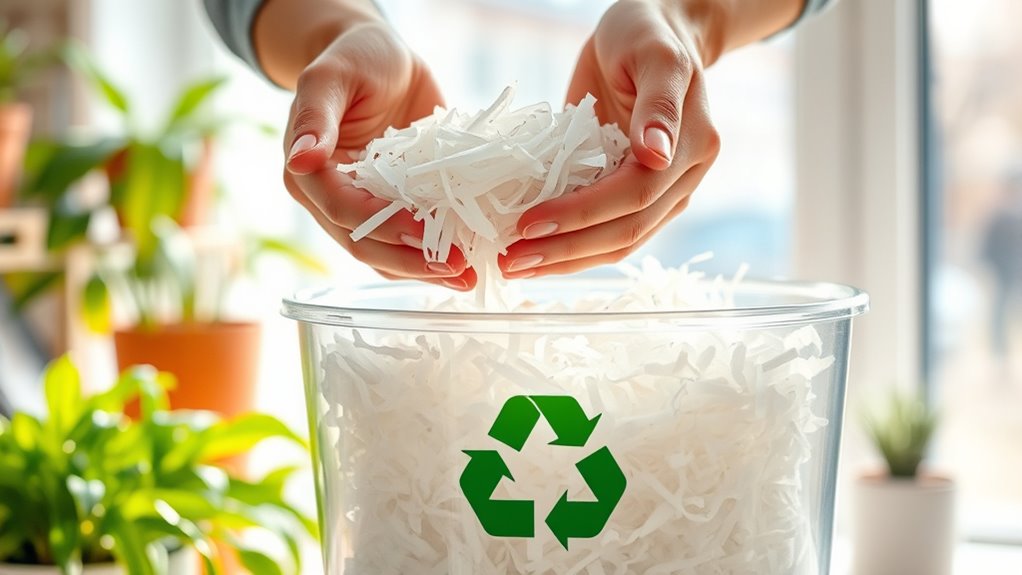
To recycle shredded paper properly, start by gathering your shreds in a sealed paper bag or a sturdy plastic bin. This helps stop those tiny pieces from scattering everywhere, which can be a real mess.
Before you toss them in, make sure to remove any staples or plastics. Keeping the paper dry is super important too because wet paper can contaminate the whole batch.
Now, here’s something you might not know—check your local recycling center’s policies. Many places require shredded paper to be bagged separately, and some might not accept it loose at all.
If recycling isn’t an option, don’t worry! You can repurpose shredded paper for packing material or even compost it.
Want to learn more tips on handling shredded paper responsibly and cutting down waste? Keep exploring these ideas—you’ll be surprised how easy it is to make a difference!
Understanding the Challenges of Recycling Shredded Paper
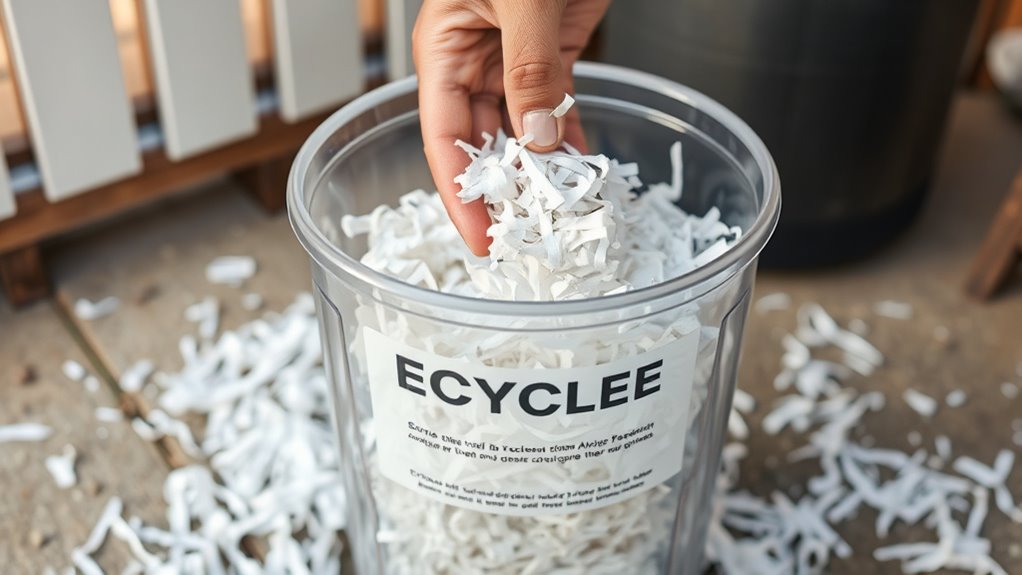
Although shredded paper seems like an easy material to recycle, it actually presents several challenges that complicate the process. When paper is shredded, it breaks into small pieces that can slip through sorting machines at recycling facilities, making it harder to separate from other materials.
You’ll find these tiny bits often get tangled in the machinery, causing delays or damage. Plus, shredded paper has a lower fiber quality compared to whole sheets, which reduces its value and usability in creating new products.
Because it’s lightweight and bulky, it can also cause issues with transportation and storage. Understanding these challenges helps you realize why many recycling centers have specific rules about shredded paper.
Preparing Shredded Paper for Recycling
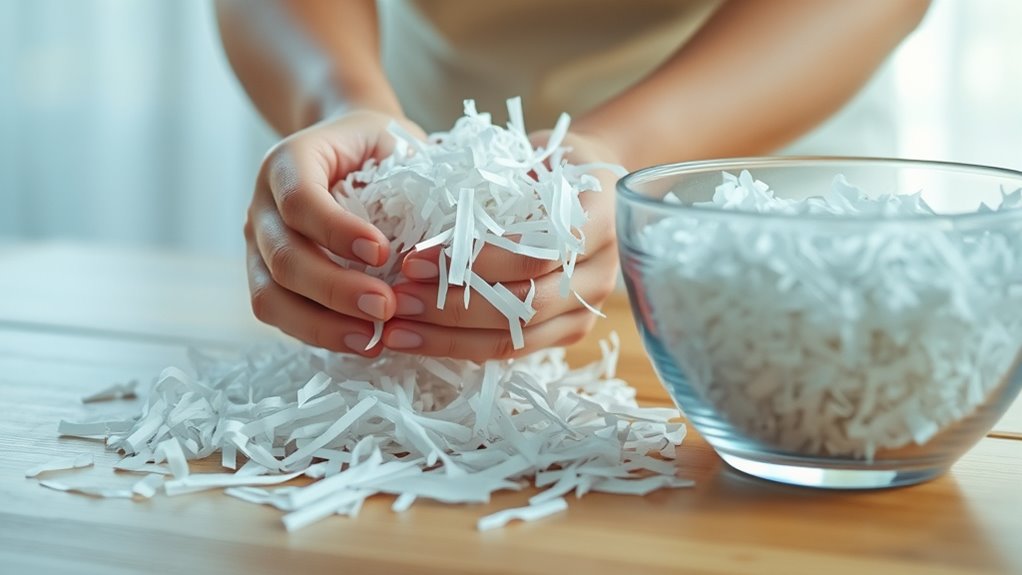
Before recycling shredded paper, you’ll want to collect the shreds neatly to prevent mess and guarantee easy processing.
Make sure to remove any contaminants like staples or plastic bits that could interfere with recycling.
Finally, use proper containers—preferably paper bags or cardboard boxes—to keep the shredded paper secure and ready for pickup.
Collecting Shreds Neatly
When you gather shredded paper, keeping it neat makes recycling much easier and more efficient. Start by using a paper bag or a cardboard box to collect your shreds instead of loose piles. This prevents them from scattering and makes transportation simpler.
You can also place shredded paper inside a clear plastic bag, but check local recycling rules first, as some facilities require it to be bagged securely. Avoid mixing shredded paper with other recyclables to maintain quality.
Once collected, compress the shreds gently to save space without compacting them too tightly, which can hinder processing. By organizing your shredded paper neatly, you help recycling centers handle your materials more effectively and contribute to a smoother recycling process overall.
Removing Contaminants First
Since contaminants can ruin batches of recycled paper, you should remove staples, tape, and any plastic bits from your shredded paper before recycling. These materials can clog recycling machines or degrade the quality of the recycled pulp.
Take a moment to sift through your shredded paper and pick out any foreign objects. If you find sticky notes or labels with adhesive, peel them off as well.
Avoid including anything coated with plastic or foil, as these won’t break down during recycling. By ensuring your shredded paper is free of contaminants, you help maintain the efficiency of the recycling process and the integrity of the final product.
This simple step prevents your paper from being rejected at the recycling facility and improves the chances it’ll be successfully reused. It’s a quick task that makes a big difference!
Using Proper Containers
After clearing out contaminants, you’ll want to focus on how you store your shredded paper for recycling. Using proper containers helps keep the paper contained and dry. This makes it easier for recycling centers to process.
Avoid loose piles that can scatter or get wet. Instead, use paper bags or cardboard boxes, which are widely accepted. Plastic bags often aren’t recyclable with shredded paper, so check local guidelines before using them.
| Container Type | Recommended Use |
|---|---|
| Paper Bags | Ideal for dry, shredded paper |
| Cardboard Boxes | Good for bulk amounts |
| Plastic Bags | Only if local rules allow |
Choose containers that prevent moisture and spills. This way, your shredded paper gets recycled efficiently without any hassle.
Best Containers to Use for Shredded Paper
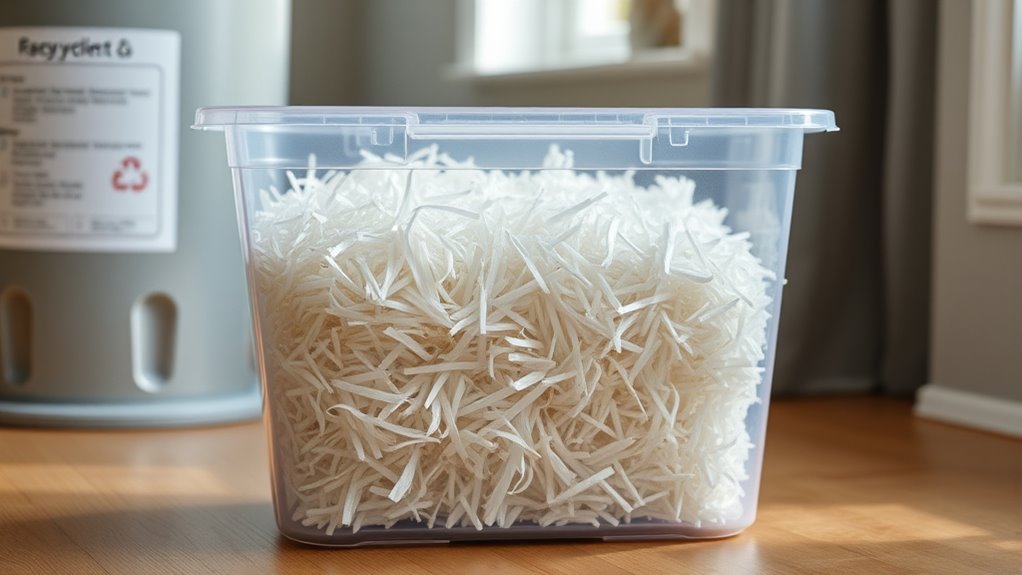
You’ll want to choose containers that keep shredded paper secure and dry, like sturdy bins with tight-fitting lids or paper bags.
Clear labeling helps prevent contamination, and storing shreds in a cool, dry place preserves their recyclability.
Let’s explore the best options to make your recycling efforts easier and more effective.
Ideal Bin Types
When choosing a container for shredded paper, you want something that keeps the tiny pieces contained without creating a mess. The right bin makes recycling easier and less frustrating.
Here are some ideal bin types for shredded paper:
- Sealable plastic bins: They prevent shreds from escaping and protect them from moisture, giving you peace of mind.
- Paper bags with ties: Eco-friendly and easy to close, they’re great if you want a biodegradable option.
- Dedicated recycling bins with liners: These bins are designed to handle small particles and make transport hassle-free.
Picking the right bin means less cleanup and more confidence that your shredded paper will be properly recycled. It’s a small step that makes a big difference in your recycling routine.
Storage Tips for Shreds
Choosing the right bin sets the foundation, but how you store shredded paper afterward also matters. You want containers that keep the shreds dry and contained to avoid messes.
Clear plastic bags or sealable plastic bins work well because they prevent moisture and let you see the contents easily. Just make sure to avoid flimsy bags that tear or let dust escape.
Cardboard boxes can be a backup, but they absorb moisture and can break down. It’s a good idea to label your containers to keep track of what’s inside, especially if you shred different materials.
Also, keep your storage area cool and dry to protect the paper until recycling day. By picking sturdy, moisture-resistant containers and storing them properly, you’ll keep your shredded paper clean and ready for recycling without any hassle.
Local Recycling Guidelines to Follow
Because recycling rules vary by location, it’s important to check your local guidelines before disposing of shredded paper. Some recycling centers won’t accept loose shreds because they can jam machinery or contaminate other recyclables.
To make sure your efforts count, follow these tips:
- Bag it right: Use a clear plastic bag or paper bag to contain the shreds and keep them from scattering.
- Avoid mixing: Don’t combine shredded paper with other recyclables like cardboard or plastic.
- Confirm pickup rules: Some areas require you to take shredded paper to specific drop-off points instead of curbside bins.
Alternative Uses for Shredded Paper
If your local recycling program doesn’t accept shredded paper, don’t toss it out just yet. You can repurpose shredded paper in several practical ways around your home. Use it as packing material when shipping fragile items—its cushioning properties protect your belongings.
You can also add shredded paper to your compost bin, as it serves as a great source of carbon, balancing out green waste. Another option is using it as bedding for small pets like hamsters or guinea pigs, providing them a soft, absorbent layer.
Additionally, shredded paper works well as mulch in your garden to help retain moisture and suppress weeds. With these alternative uses, you reduce waste while giving shredded paper a new life.
Tips for Reducing Paper Waste Before Shredding
Before shredding your documents, think about ways to cut down the amount of paper you actually need to destroy. This not only helps reduce waste but also makes recycling easier and more efficient.
You can take some simple steps to use less paper and still keep your sensitive info safe without shredding more than necessary. Here are a few tips to get you going:
- Use digital documents and e-signatures whenever you can to avoid printing.
- Try double-sided printing to cut the paper use in half for drafts or notes.
- Regularly review your files and securely delete what you don’t need instead of printing them out for reference.
Conclusion
Recycling shredded paper might seem tricky, but with the right steps, you can make a real difference. By preparing it properly and using the right containers, you can ensure it gets recycled the right way.
Don’t forget to follow your local guidelines closely. They often have specific rules about shredded paper recycling that can help you avoid contamination. Plus, exploring alternative uses gives shredded paper a second life, like composting or packing material.
So, why not take a moment to reduce your paper waste before shredding? Every small effort counts toward a cleaner planet. Proper recycling of shredded paper helps keep waste out of landfills and supports environmental sustainability. After all, aren’t you worth that?