How Many Sheets of Paper Can You Mail With One Stamp?
You can mail about six sheets of standard 20-pound paper with one USPS first-class stamp, as long as your letter weighs under one ounce and fits within size and thickness limits (no more than 1/4 inch thick).
If your paper is heavier or your envelope is bulky, you’ll need extra postage.
Sticking to standard sizes helps keep costs down, and if you want to send more without added fees, there are ways to make it work.
Understanding USPS First-Class Mail Weight Limits
Although you might think mailing a few sheets of paper is straightforward, USPS First-Class Mail has specific weight limits you need to be aware of. Each First-Class stamp covers mailing a letter weighing up to 1 ounce.
If your paper stack weighs more, you’ll need to add extra postage. Typically, a standard sheet of 20-pound paper weighs about 0.16 ounces, so you can mail around six sheets with one stamp.
Remember, the total weight includes the envelope, so factor that in. If your letter exceeds 1 ounce, USPS charges for each additional ounce or fraction thereof.
Knowing these weight limits helps you avoid underpaying postage, which could delay delivery or result in extra fees. Always weigh your mail before stamping to ensure it meets First-Class Mail requirements.
Standard Letter Size and Thickness Requirements
You need to make certain your letter fits within the standard size dimensions set by USPS to qualify for one stamp. The thickness of your paper also matters, as there’s a maximum limit you can’t exceed.
Plus, keeping the total weight under the allowed limit ensures your letter won’t require extra postage. It’s all about making sure your mail meets these guidelines so it gets delivered without any hassle.
Letter Size Dimensions
A standard letter size measures 8.5 by 11 inches, which is the most common dimension accepted by postal services for mailing. When preparing your mail, make sure your paper fits within these dimensions to avoid extra charges or rejection.
Besides length and width, thickness plays a vital role, but we’ll focus on size here. Knowing the exact size helps you stay compliant and efficient.
| Dimension | Measurement (inches) | Notes |
|---|---|---|
| Width | 8.5 | Standard letter width |
| Length | 11 | Standard letter length |
| Minimum Width | 3.5 | Minimum to qualify as letter |
| Minimum Length | 5 | Minimum to qualify as letter |
| Maximum Length | 11.5 | Max length for letter size |
Stick to these dimensions, and your letter will meet postal guidelines perfectly.
Maximum Paper Thickness
Since thickness directly affects mailing costs and eligibility, it’s crucial to understand the maximum paper thickness allowed for standard letters. The United States Postal Service (USPS) specifies that your letter must be no thicker than 1/4 inch (0.25 inches) to qualify for a single First-Class Mail stamp.
If your stack of sheets exceeds this thickness, your letter will be categorized differently, often requiring additional postage. Keep in mind that standard letter size is 6 1/8 inches by 11 1/2 inches, and your envelope plus contents can’t be too thick or bulky.
When stacking sheets, measure carefully to stay within the 1/4 inch limit. Staying within these thickness guidelines ensures your mail travels smoothly without delays or extra charges.
Weight Limits per Stamp
While keeping your letter’s thickness within 1/4 inch helps avoid extra postage, weight also plays a key role in determining how many sheets one stamp can cover.
A standard First-Class Mail stamp covers up to 1 ounce. Additional ounces require extra postage. Since typical printer paper weighs about 0.16 ounces per sheet, you can mail roughly 6 sheets with a single stamp before needing more.
Here’s a quick guide:
| Sheets of Paper | Total Weight (oz) | Postage Required |
|---|---|---|
| 1 | 0.16 | 1 Stamp (1 oz) |
| 3 | 0.48 | 1 Stamp (1 oz) |
| 6 | 0.96 | 1 Stamp (1 oz) |
| 7 | 1.12 | Additional Stamp Needed |
Keep weight in mind to avoid surprises at the post office!
How Paper Type Affects Mail Weight
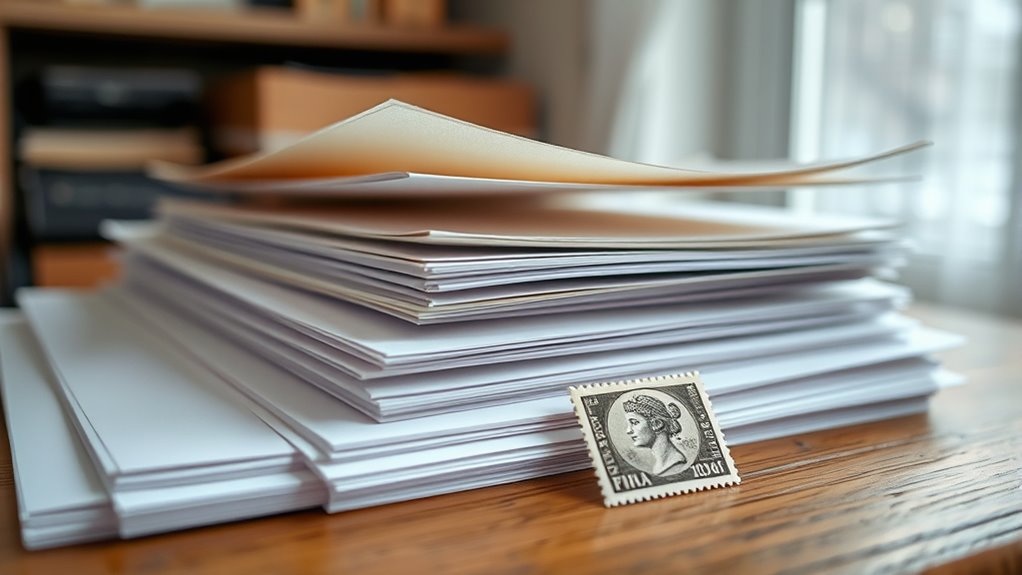
Because different types of paper vary in thickness and density, the number of sheets you can mail with one stamp depends heavily on the paper you choose.
Paper thickness and density determine how many sheets fit under one postage stamp.
For example, standard 20-pound printer paper is lighter and thinner, which means you can send more sheets within the one-ounce limit. On the other hand, cardstock or heavyweight paper adds extra weight quickly, so you’ll be able to include fewer sheets.
If you use specialty papers like photo paper, the weight increases even more, limiting your mailing capacity further. So, when deciding how many sheets to mail with a single stamp, consider the paper type carefully.
Choosing lighter paper lets you maximize the number of sheets sent without needing extra postage. It’s a simple way to save money and avoid surprises at the post office.
Calculating Postage for Multiple Sheets
You’ll need to know the standard letter weight limits before mailing multiple sheets with one stamp. If your envelope gets too thick or heavy, additional postage will be required.
Paying attention to both weight and thickness guarantees your mail arrives without delays. It’s a simple way to avoid any hold-ups at the post office. Just keep an eye on those details before you seal your envelope!
Standard Letter Weight Limits
Understanding the standard letter weight limits is essential when calculating postage for multiple sheets. For a standard letter sent via USPS, the maximum weight allowed with one first-class stamp is one ounce.
This usually covers about 4 to 6 sheets of regular 20-pound paper, depending on their thickness. If your letter exceeds one ounce, you’ll need to add extra postage. To avoid surprises, weigh your letter before mailing.
Keep in mind that envelopes, inserts, and heavier paper increase the total weight. Staying within the one-ounce limit lets you use just one stamp, making mailing simpler and more cost-effective.
Additional Postage Requirements
How do you determine if you need extra postage when mailing multiple sheets? First, weigh your entire letter, including all sheets and the envelope. The USPS standard stamp covers letters up to 1 ounce.
If your letter weighs more, you’ll need additional stamps. Typically, one standard sheet of paper weighs about 0.16 ounces, so adding several sheets can quickly push you over that limit.
For each additional ounce or fraction thereof, add another stamp or use supplementary postage. It’s easy to calculate by rounding up the total weight and multiplying by the cost of a single stamp.
Using a kitchen scale or postal scale helps ensure accuracy. By checking weight before mailing, you avoid postage due or returned mail.
Envelope Thickness Considerations
Although weight is the primary factor in determining postage, envelope thickness can also influence mailing costs and eligibility. When you add too many sheets, your envelope might become too thick for standard rates.
The USPS sets a maximum thickness of 1/4 inch for a letter to qualify for a single First-Class stamp. If your envelope exceeds this, it’s considered a “thick” or “non-machinable” letter, requiring extra postage.
To avoid surprises, measure your envelope’s thickness before mailing. Use a ruler or caliper to check if it stays within the limit.
If it’s thicker, plan on adding additional stamps or opting for a different mailing class. Being aware of thickness helps you keep costs predictable and ensures your mail reaches its destination without delays.
Tips for Reducing Postage Costs
If you want to send more without extra cost, you can take simple steps to reduce postage expenses. First, choose lightweight paper to keep your envelope under the one-ounce limit. Avoid bulky inserts or heavy cardstock that can push your mail into a higher rate.
Use standard-sized envelopes since odd shapes may require extra postage. Flatten your contents to prevent adding thickness, which can increase costs. Also, consider trimming unnecessary pages or combining information to minimize sheet count.
If you frequently mail letters, buy stamps in bulk or use digital postage services, which often offer discounts. Always weigh your envelope before mailing to ensure it qualifies for a single stamp. Following these tips helps you save money and avoid unexpected postage fees.
Alternatives When Your Letter Exceeds Stamp Limits
When your letter exceeds the weight or size limits for a single stamp, you’ll need to explore other mailing options to avoid delays or extra charges. First, consider adding additional stamps to cover the extra weight—each additional ounce requires more postage.
If your letter is too heavy or large for one stamp, add more postage to cover the extra weight.
Alternatively, you can use a larger envelope or switch to a flat-rate mailing service, which lets you send heavier items for a fixed price. If your documents are bulky or numerous, think about mailing them in multiple envelopes.
For important or time-sensitive mail, upgrading to priority or certified mail ensures faster delivery and tracking. Finally, digital alternatives like email or online document sharing might be more effective if physical copies aren’t mandatory.
Choose the option that best balances cost, convenience, and delivery speed. It really depends on what works best for you!
Conclusion
You can mail up to six standard sheets of paper with one USPS First-Class Mail stamp, as long as your letter meets size and thickness requirements. It’s surprising how quickly weight accumulates, especially with heavier paper types!
Knowing this helps you avoid extra postage costs and ensures your mail gets delivered without delays. Keep these tips in mind, and you’ll save both money and time on your next mailing.
Remember, sticking to the weight limits for First-Class Mail keeps your letters simple and affordable. So, whether you’re sending invitations, bills, or personal notes, using one stamp for up to six sheets is a smart way to manage postage. Always check the size and thickness to avoid surprises, and you’ll keep your mail efficient and budget-friendly.