How Do You Use Rice Paper in 3 Simple Steps
To use rice paper, first prepare a clean, damp surface to work on.
Handle the sheets gently to avoid tearing—they can be quite delicate.
Next, soften each sheet by briefly dipping it in warm water for 5–10 seconds.
You want it pliable but not too fragile, so keep an eye on it.
Finally, place your fillings near the bottom, fold the edges snugly, and roll tightly to seal.
Keep your movements gentle and swift for the best results.
Stick around to uncover tips that make your rolls perfect every time.
Trust me, once you get the hang of it, making rice paper rolls is a breeze!
Preparing the Rice Paper
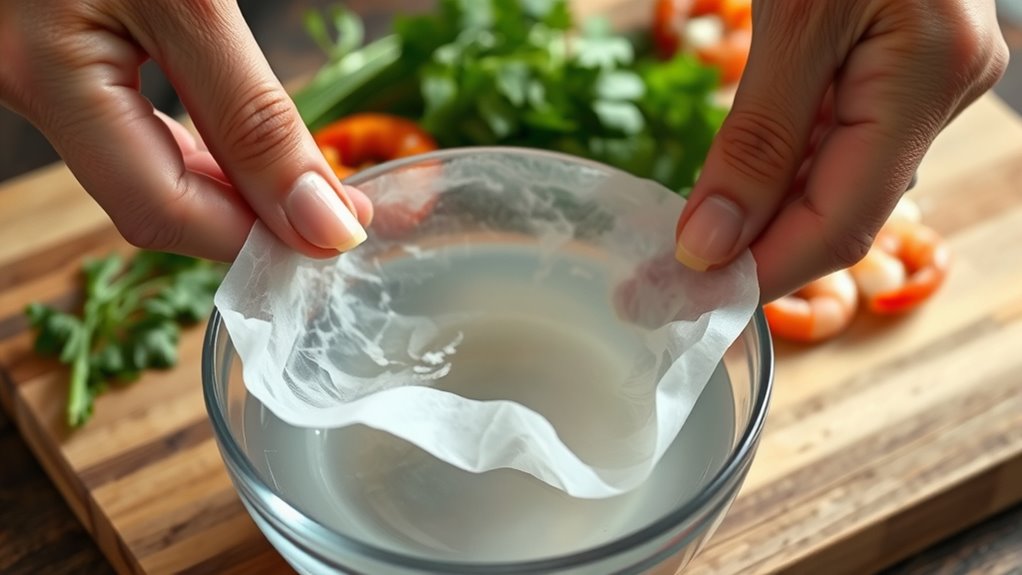
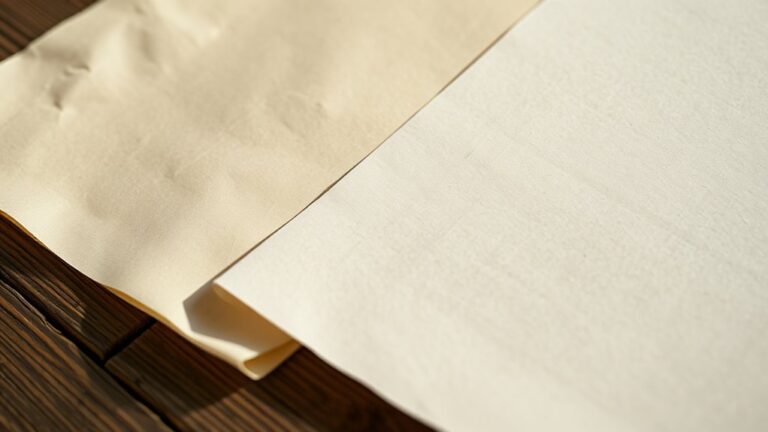
How do you get rice paper ready for use? First, you want to make sure your workspace is clean and dry. Lay out a damp kitchen towel or a large plate to place the rice paper on once it’s ready.
Open your package carefully because these sheets can be fragile. Select the number of sheets you need, but don’t take them out all at once to avoid drying out.
Keep the remaining sheets sealed in the bag or container to maintain freshness. It’s important to handle each sheet gently to prevent tearing.
Also, have your filling ingredients prepared and within reach because rice paper needs to be used quickly after preparation. This careful setup guarantees your rice paper stays intact and ready for the next step.
Softening the Rice Paper

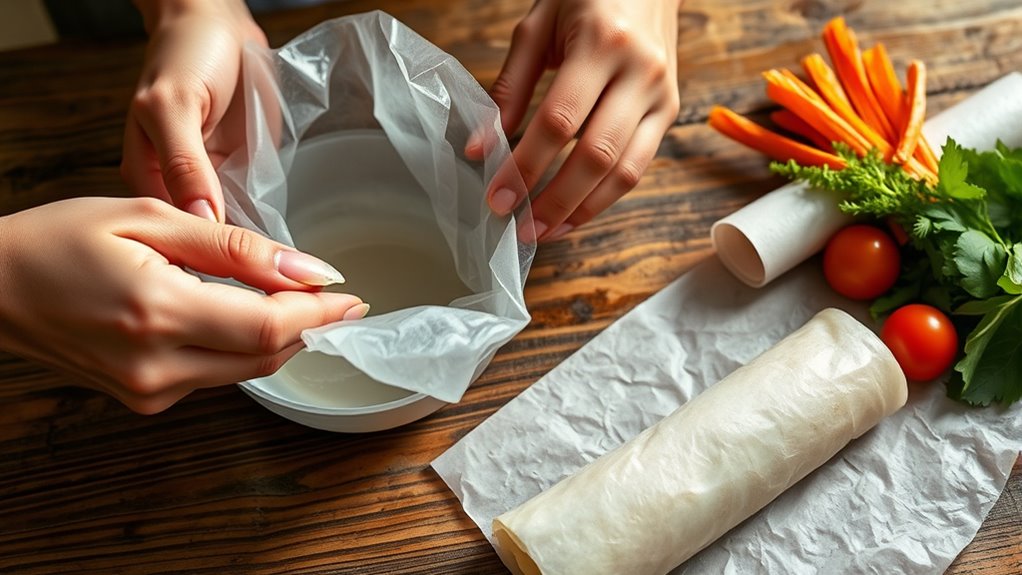
Once you’ve prepared your workspace and handled the rice paper carefully, the next step is to soften the sheets so they become pliable. To do this, briefly dip each sheet into warm water for about 5–10 seconds.
Avoid soaking it too long, or it will become too fragile to work with. After dipping, lay the sheet flat on a clean surface or a damp towel. The paper will soften quickly, becoming easy to fold or roll without tearing.
| Step | Tip |
|---|---|
| 1. Warm Water | Use water around 30°C (86°F) |
| 2. Dip Time | 5–10 seconds only |
| 3. Handle Gently | Avoid stretching or tearing |
| 4. Lay Flat | Use a damp towel or plate |
| 5. Ready to Use | Soft but firm |
Filling and Rolling the Rice Paper
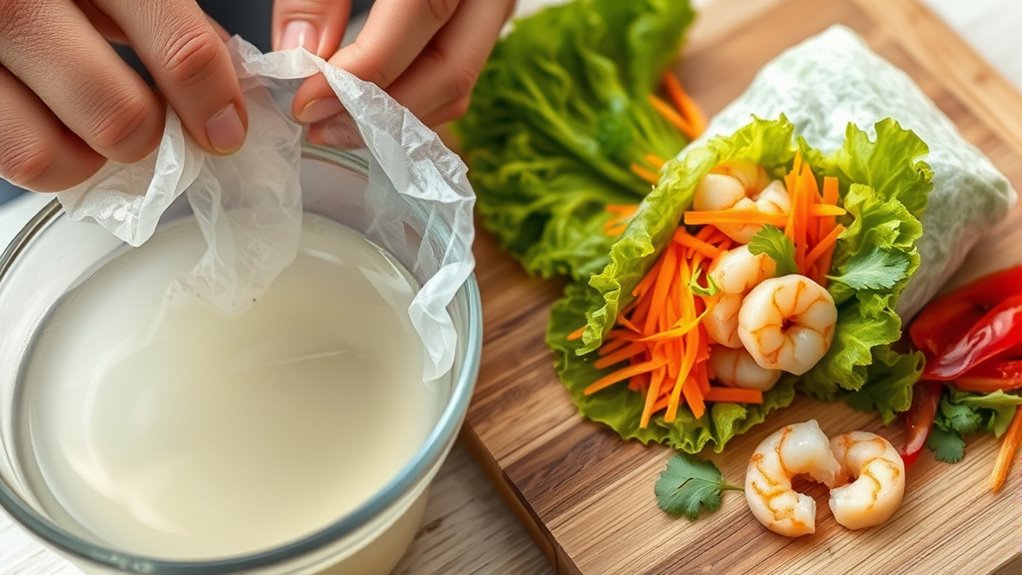
Although the rice paper is soft and pliable, you’ll want to work quickly to fill it before it dries out. Lay the softened rice paper flat on a clean surface.
Place your desired fillings—such as fresh vegetables, herbs, cooked shrimp, or noodles—near the bottom third of the sheet. Don’t overload it; a modest amount prevents tearing and makes rolling easier.
Fold the bottom edge over the filling, then fold in the sides snugly. Finally, roll the rice paper tightly upward until sealed.
Keep your movements gentle to avoid ripping. If the rice paper starts drying mid-roll, dampen your hands or lightly mist it with water.
Practice makes perfect, so don’t be discouraged if your first rolls aren’t flawless—they’ll taste great anyway!
Conclusion
Using rice paper is like planting a seed—you start by preparing the soil, gently softening the paper to make it pliable. This step is key because it makes rolling much easier and prevents tearing. Then, like nurturing a young sprout, you carefully add your fillings, rolling everything together with care.
Just as a seed grows into something nourishing, your wrapped creation transforms into a delicious bite. So, embrace the process, and watch how simple steps can bring a flavorful harvest to your table. Using rice paper is straightforward once you get the hang of softening, filling, and rolling. These three simple steps unlock endless possibilities for fresh, tasty dishes that are both fun to make and delightful to eat. Give it a try, and enjoy the fresh flavors and textures that rice paper brings to your meals!