How You Compost Paper Towels Safely and Effectively
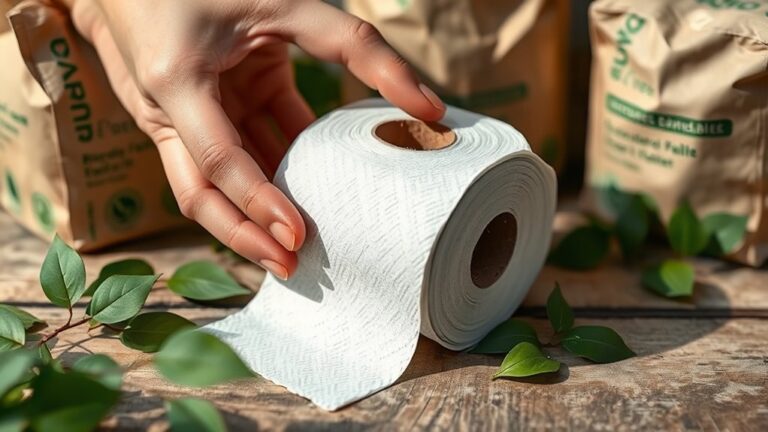
To compost paper towels safely and effectively, start by choosing those labeled compostable, unbleached, and free from chemicals or scents. These types break down more easily and won’t introduce harmful substances into your compost.
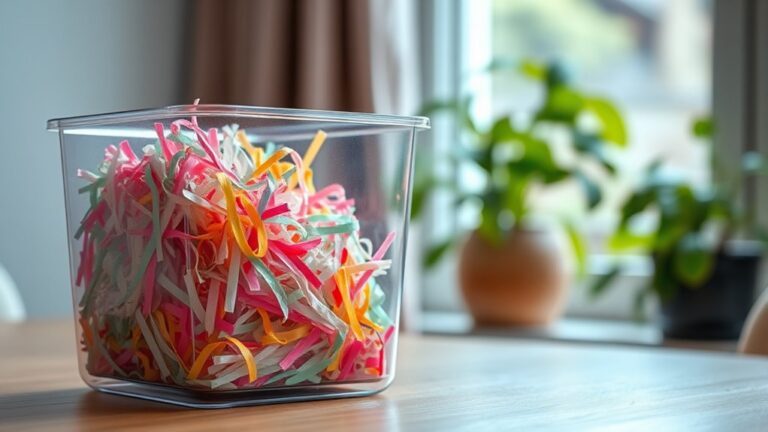
Next, tear the paper towels into smaller pieces. This helps speed up the breakdown process, making your compost pile healthier and more efficient. Mixing them evenly into your compost pile is key—it keeps airflow flowing and prevents clumping.
Make sure to balance moisture levels. If your paper towels are wet, add some dry materials like leaves or shredded newspaper to absorb excess water.
And always avoid composting towels soiled with chemicals or cleaners.
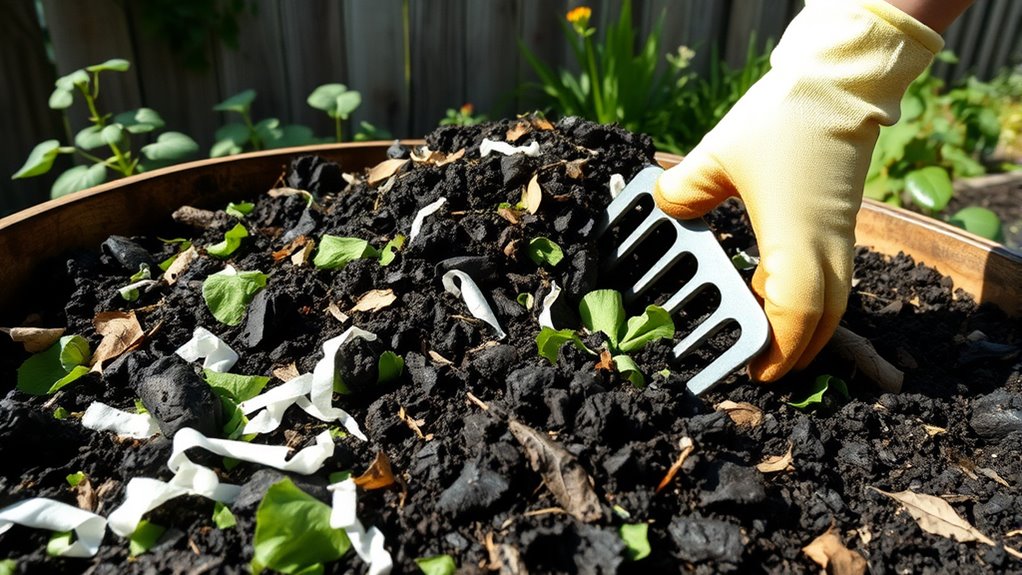
Don’t forget to turn your compost pile regularly. This keeps it aerated and lively, helping microbes do their job better.
Keep these basics in mind for great composting results—and there are plenty more tips to make it even easier!
Identifying Compostable Paper Towels
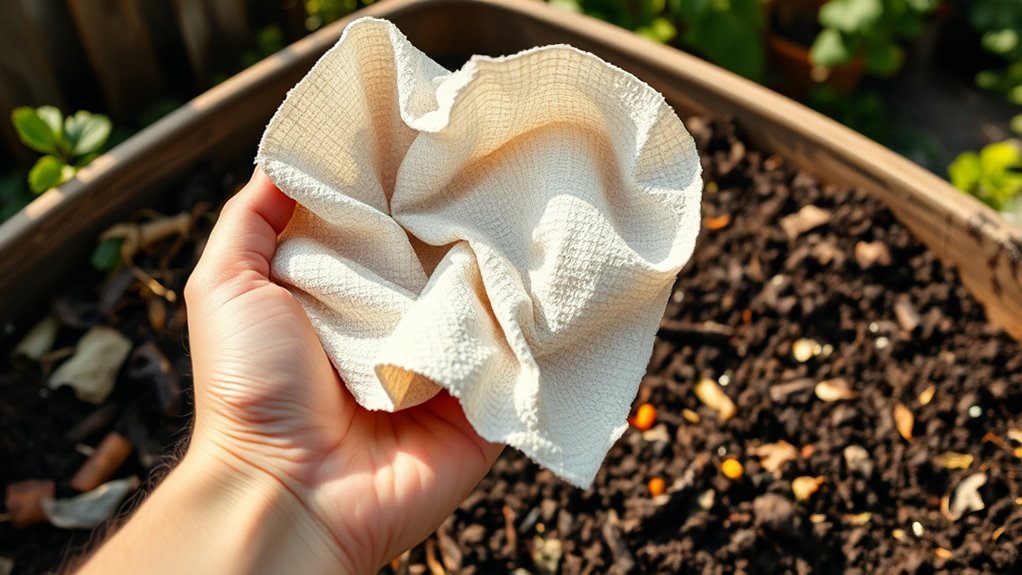
Before composting paper towels, you need to make certain they’re compostable. Not all paper towels break down naturally, especially if they contain synthetic fibers, dyes, or chemicals.
Look for towels labeled “compostable” or “biodegradable,” which indicates they’re designed to break down safely in your compost pile. Avoid towels with lotions, antibacterial agents, or heavy inks, as these can harm the compost ecosystem.
Plain, unbleached, and chemical-free paper towels are your best bet. If you’re unsure, check the packaging or manufacturer’s website for composting guidelines.
Preparing Paper Towels for Composting
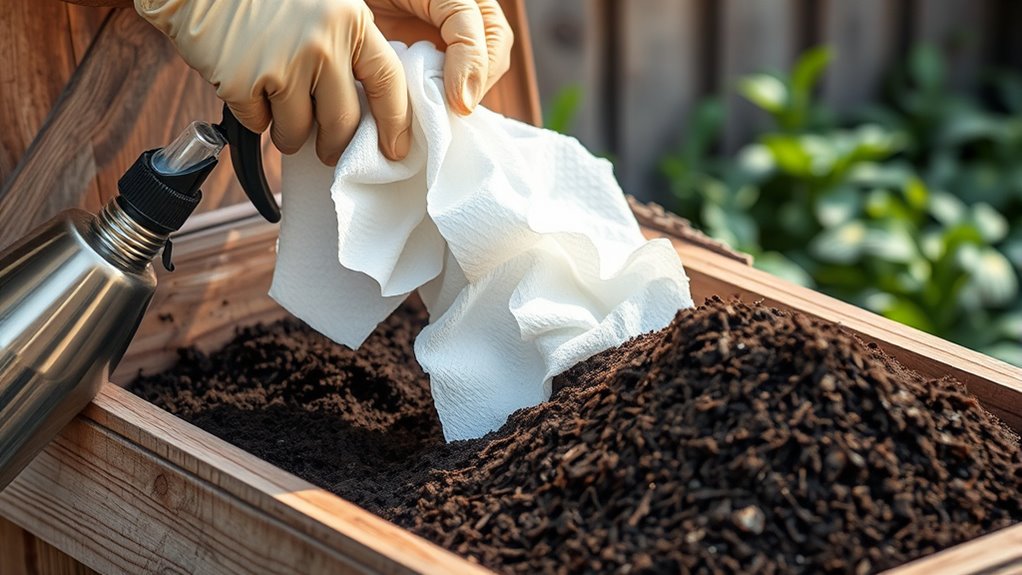
Once you’ve confirmed your paper towels are compostable, you’ll want to prepare them properly to speed up decomposition and maintain a balanced compost pile. Start by tearing the paper towels into smaller pieces. This increases the surface area, helping microbes break them down faster.
If your paper towels are heavily soiled with food scraps or natural substances like fruit juice, you can compost them directly. However, avoid composting towels with synthetic chemicals or harsh cleaners.
If the towels are wet, squeeze out excess liquid to prevent creating a soggy, compacted pile. Mixing the torn paper towels evenly throughout your compost heap helps air circulate and moisture distribute evenly.
This preparation ensures that your paper towels contribute effectively to nutrient-rich compost without slowing the breakdown process. It’s all about giving those microbes a helping hand!
Balancing Your Compost Pile With Paper Towels
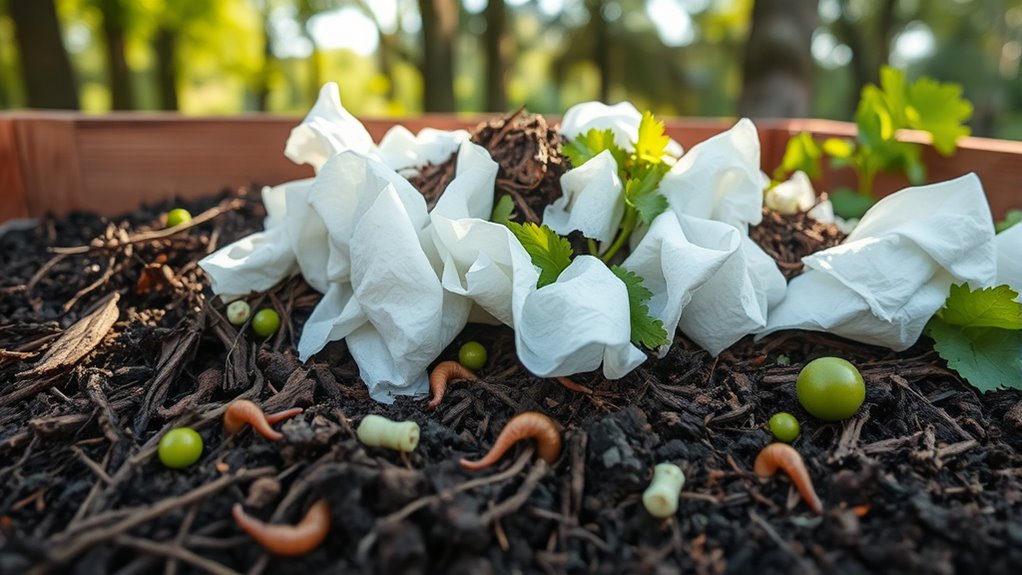
When you add paper towels to your compost pile, keeping the moisture level just right is key to avoiding sogginess.
You’ll also want to balance the carbon-to-nitrogen ratio by mixing paper towels with green materials like food scraps or grass clippings.
This balance helps your compost break down efficiently and stay healthy.
Moisture Control Tips
Although paper towels add valuable carbon to your compost, they can also affect moisture levels, so you’ll need to monitor and adjust your pile carefully. Paper towels often retain water, making your compost too wet if you add them in large amounts.
To keep moisture balanced, add paper towels in small, manageable batches and mix them well with dry materials like leaves or shredded cardboard. If the pile feels soggy, turn it frequently to improve aeration and speed up drying.
Conversely, if it’s too dry, sprinkle water lightly while turning to maintain a damp, sponge-like consistency. Keeping your compost’s moisture in check ensures efficient decomposition and prevents unpleasant odors or mold growth.
Stay attentive, and your pile will thrive.
Carbon-to-Nitrogen Ratio
Since paper towels are rich in carbon, you’ll need to balance them with nitrogen-rich materials to maintain the ideal carbon-to-nitrogen (C:N) ratio in your compost pile. A good target ratio is around 30:1 (carbon to nitrogen).
Paper towels, being “browns,” provide carbon but lack nitrogen. To keep your compost healthy and active, add “greens” like vegetable scraps, coffee grounds, or grass clippings, which are high in nitrogen.
If you add too many paper towels without enough nitrogen, decomposition slows down, and your pile may smell musty. Keep an eye on your compost by mixing these materials well and checking moisture levels.
Balancing carbon and nitrogen ensures efficient breakdown and rich, nutrient-dense compost ready for your garden. It’s a simple step that makes a big difference!
Avoiding Contaminants and Harmful Substances
You’ll want to watch out for paper towels soaked with chemicals like bleach or oils, as they can harm your compost. Make sure to separate any non-compostable materials like plastics or adhesives before adding towels to the pile.
Also, keep your compost area clean to prevent cross-contamination from other waste. It’s a simple step, but it really helps keep everything healthy and safe.
Identifying Unsafe Chemicals
How can you tell if your paper towels contain unsafe chemicals before composting them? First, check the packaging for any mention of additives like bleach, dyes, or fragrances. These often indicate chemicals that don’t break down easily.
Avoid towels labeled “antibacterial” or “chemical-treated,” as these can introduce harmful substances into your compost. Also, if they’ve been used to clean up household cleaners, oils, or other chemicals, they’re unsafe for composting.
When in doubt, opt for unbleached, 100% natural fiber towels without added scents or treatments. By identifying and excluding towels with these unsafe chemicals, you protect your compost’s health and ensure it remains free from contaminants that could harm plants or soil life.
Separating Non-Compostable Materials
Why is it essential to separate non-compostable materials before adding paper towels to your compost? Mixing in items like plastics or chemicals can harm your compost’s quality and the environment.
You want to keep your compost clean and effective by removing anything that doesn’t break down naturally.
Here’s a quick guide to what to watch for:
| Material Type | Common Examples | Why Avoid? |
|---|---|---|
| Plastics | Wrappers, stickers | Doesn’t decompose, pollutes |
| Chemicals | Cleaning wipes, sprays | Toxic to microbes and plants |
| Metals | Staples, foil | Non-biodegradable, hazardous |
| Synthetic fabrics | Microfiber towels | Releases microplastics |
Always check your paper towels for these before composting to keep your pile healthy. Don’t rush it — a quick look can save you a lot of trouble!
Preventing Cross-Contamination Risks
After separating non-compostable materials, take extra care to avoid introducing contaminants or harmful substances into your compost. Don’t compost paper towels used with chemicals, oils, or cleaning agents, as these can harm beneficial microbes and plants.
Avoid paper towels that contain synthetic additives, dyes, or fragrances since they may release toxins during decomposition. If you’re unsure about what was on a paper towel, it’s safer to discard it in the trash.
Also, keep compost bins away from pet waste or food scraps that could attract pests or spread pathogens. Regularly clean your compost tools and bins to minimize cross-contamination.
Tips for Accelerating Paper Towel Decomposition
Although paper towels break down naturally, you can speed up their decomposition by maintaining the right moisture and aeration levels in your compost pile. Make sure your pile stays damp but not soggy—think of a wrung-out sponge.
Too much water slows decomposition, while too little dries out microbes. Turn the pile regularly to introduce oxygen, which helps microbes thrive and break down paper fibers faster.
Shred or tear paper towels before adding them to increase surface area. This lets microbes access the fibers more easily.
Mix paper towels with green materials like vegetable scraps to balance carbon and nitrogen. This creates an ideal environment for decomposition.
Following these tips will help you compost paper towels efficiently, turning waste into rich, usable compost quicker.
Monitoring and Maintaining Your Compost Pile
To keep your compost pile healthy and effective, you need to monitor its temperature, moisture, and aeration regularly. This ensures the paper towels and other materials break down efficiently without creating odors or attracting pests.
Here’s what you should focus on:
- Check temperature: Aim for 130-160°F to kill pathogens and speed decomposition.
- Maintain moisture: Keep the pile as damp as a wrung-out sponge to support microbial activity.
- Turn the pile: Aerate by mixing every 1-2 weeks to supply oxygen and prevent compaction.
- Observe texture and smell: Look for crumbly, dark material and earthy smell as signs of progress.
Conclusion
Composting paper towels can be a breeze when you know what to look for and how to prepare them. By balancing your pile and steering clear of contaminants, you’ll create a healthy environment where those towels break down like magic.
Keep an eye on moisture and turn your compost regularly to speed up the process. This helps everything break down evenly and prevents any smelly surprises.
Soon, you’ll have rich, dark soil—a true reward for treating your waste like treasure instead of trash. Composting paper towels safely and effectively not only reduces waste but also enriches your garden soil. So, next time you toss a used paper towel, remember it can be part of your compost pile, helping you create nutrient-rich compost that benefits your plants and the planet.