How to Have Your Pap Smear While on Your Period
You can have your Pap smear during your period, but keep in mind that heavy bleeding might affect test accuracy. It’s important to let your healthcare provider know about your flow before the test.
Avoid using tampons or any vaginal products for 24-48 hours before your appointment. Wearing comfortable clothes can help you feel more at ease during the procedure.
Your provider may use gentle techniques to minimize discomfort and ensure they get an accurate sample.
If your period is heavy or you’re feeling unsure, it’s totally okay to reschedule. Remember, these tips can help you feel more confident and comfortable throughout the process.
Don’t hesitate to talk openly with your provider—they’re there to support you!
Understanding the Impact of Your Period on Pap Smear Results
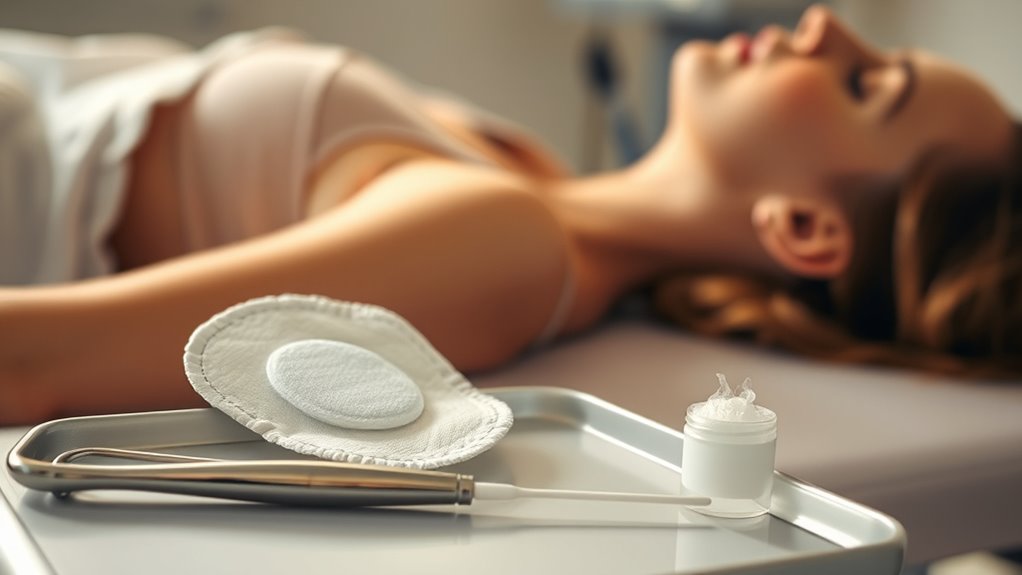
How does your period affect Pap smear results? When you have your period, the presence of blood can sometimes make it harder for the lab to analyze your cervical cells accurately. Blood and menstrual fluid may obscure the sample, leading to inconclusive or less reliable results.
However, many healthcare providers can still perform the test during your period if the bleeding is light or spotting. Heavy flow might interfere more profoundly, so your provider might recommend rescheduling for the best accuracy.
It’s important to know that having your period doesn’t automatically mean you can’t get a Pap smear. Understanding this impact helps you make informed decisions and communicate effectively with your healthcare provider about the timing of your test.
Preparing Yourself Before the Appointment
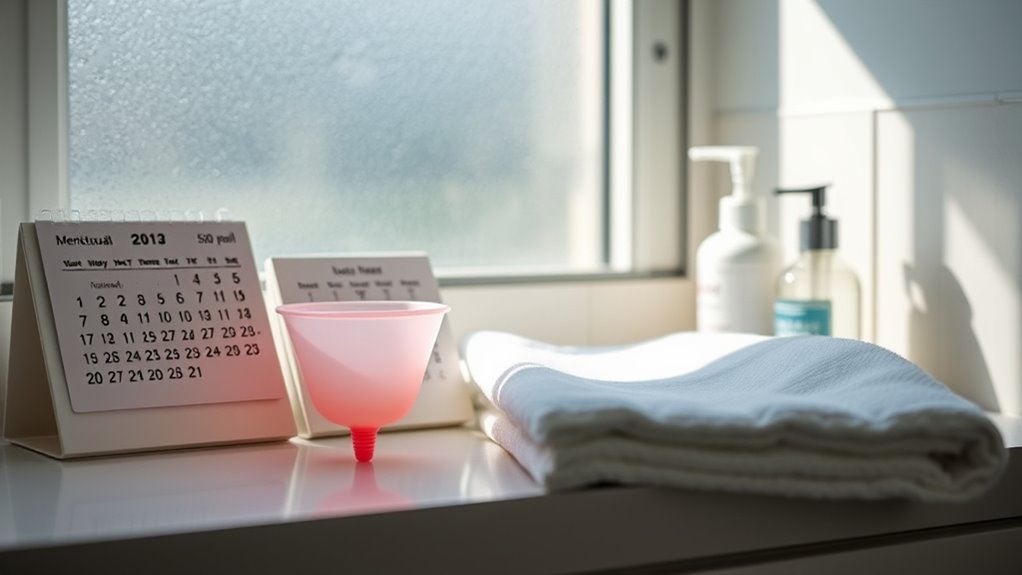
Before your appointment, take a few simple steps to make certain the Pap smear goes smoothly, even if you’re on your period.
First, keep track of your cycle so you can inform your healthcare provider about your current flow. Second, avoid using tampons, douches, or vaginal medications 24 to 48 hours before the test, as they can interfere with the results.
Third, wear comfortable clothing that’s easy to remove, and bring a sanitary pad for after the appointment.
What to Expect During the Pap Smear on Your Period
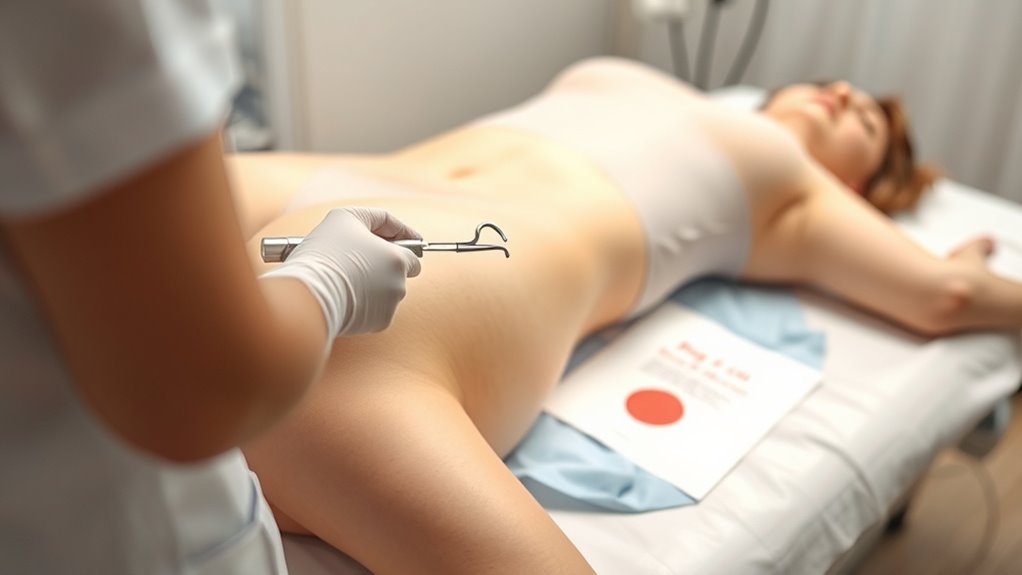
When you have a Pap smear during your period, your provider might adjust the timing or technique to guarantee accurate results.
You can expect a few changes in the procedure, but they’ll explain everything beforehand to keep you comfortable.
If you’re worried about discomfort or any concerns, don’t hesitate to speak up—they’re there to help.
Preparation Tips for Timing
Although scheduling a Pap smear during your period might seem inconvenient, you can still prepare effectively to guarantee the appointment goes smoothly. Timing your visit and taking specific steps can really ease the process.
- Choose the right day: If possible, try to schedule your Pap smear during the lighter days of your period. This can help minimize discomfort and ensure clearer results.
- Avoid intercourse and vaginal products: At least 24-48 hours before your appointment, steer clear of douching, tampons, or vaginal creams. These things can interfere with test accuracy, so it’s best to avoid them.
- Communicate with your healthcare provider: Make sure to let them know you’re on your period when booking and again when you arrive. This helps them prepare and adjust their approach if needed.
Procedure Adjustments Explained
Since you’re on your period, your healthcare provider might make slight adjustments to the Pap smear procedure to guarantee comfort and accuracy. They’ll begin by gently inserting the speculum, taking care to minimize discomfort.
Because menstrual blood can interfere with clear sample collection, they may use a special technique to collect cells from your cervix, ensuring the sample isn’t contaminated.
You might notice the provider using a smaller speculum or lubricating it differently to ease insertion. The whole process remains quick, typically lasting just a few minutes.
Despite the adjustments, the goal is the same: to get an accurate reading without causing unnecessary discomfort. Remember, these modifications help maintain the test’s reliability even during your period.
Managing Discomfort and Concerns
Even if you’re on your period, you can expect the Pap smear to be as comfortable as possible. Your healthcare provider will be attentive to any concerns you have.
To help manage discomfort and ease your mind, keep these points in mind:
- Communicate openly: Let your provider know if you’re feeling pain or anxiety. That way, they can adjust their approach.
- Use relaxation techniques: Deep breathing or focusing on a calming image can really help reduce tension in your pelvic muscles.
- Ask questions: Understanding each step can make the process feel less intimidating and more under your control.
Tips for Staying Comfortable Throughout the Procedure
When you prepare for your pap smear during your period, choosing comfortable clothing and scheduling the appointment at a time when your cramps are least severe can make a significant difference. Wear loose, breathable clothes that allow you to relax easily in the exam room.
Bring a sanitary pad or panty liner for afterward to feel fresh and secure. Practice deep, steady breathing during the procedure to ease tension and reduce discomfort. Don’t hesitate to ask to pause if you feel any pain.
Keeping a warm compress nearby before the appointment can help soothe cramps and relax your pelvic muscles. Staying hydrated and avoiding caffeine might also lessen cramping.
These steps help you stay comfortable and calm throughout your pap smear, even while on your period. Just take it easy and listen to your body.
How to Communicate With Your Healthcare Provider
Although having your period during a pap smear might feel awkward, communicating openly with your healthcare provider guarantees the procedure goes smoothly.
You should be honest about your period. Let them know the day of your cycle and any symptoms you’re experiencing. This helps them prepare and adapt the procedure if needed.
Also, don’t hesitate to ask questions. Ask how your period might affect the results or if you need to take any special steps before or after the test.
If you feel pain or embarrassment at any point, speak up immediately. Your provider can pause or make adjustments to keep you comfortable.
Clear communication ensures you get accurate results while feeling supported throughout the exam.
When to Reschedule Your Pap Smear if Necessary
Open communication with your healthcare provider helps you decide if your pap smear should proceed during your period or if rescheduling would be better. You should consider rescheduling if your menstrual flow is heavy, as blood can interfere with the accuracy of the results.
If you experience significant discomfort, pain, or unusual symptoms during your period, it’s best to postpone the appointment. Also, if you’ve recently used vaginal medications, douches, or had intercourse within 48 hours before the test, rescheduling might be necessary for clear results.
Your provider may suggest timing your appointment between periods, ideally about 10 to 20 days after the first day of your last period. Don’t hesitate to discuss any concerns, so you get the most reliable screening possible.
Conclusion
Having your pap smear while on your period might feel as tricky as walking a tightrope, but with the right preparation and communication, you can handle it smoothly. Remember, being open with your healthcare provider and knowing what to expect will make the process more comfortable.
If it feels overwhelming, don’t hesitate to reschedule. Taking these steps guarantees your health stays a priority, no matter the timing of your cycle.
It’s important to remember that having your pap smear during your period is possible, though some doctors prefer to avoid it due to potential interference with results. Staying comfortable and informed will help ease any worries you have. So, whether you choose to go ahead or wait, your health and peace of mind come first.