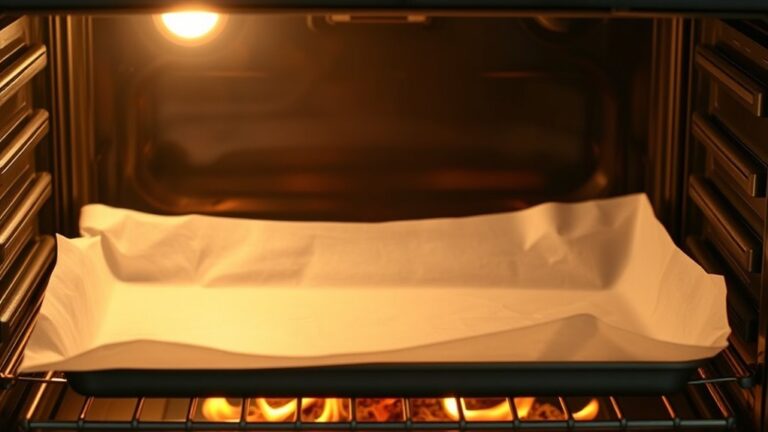
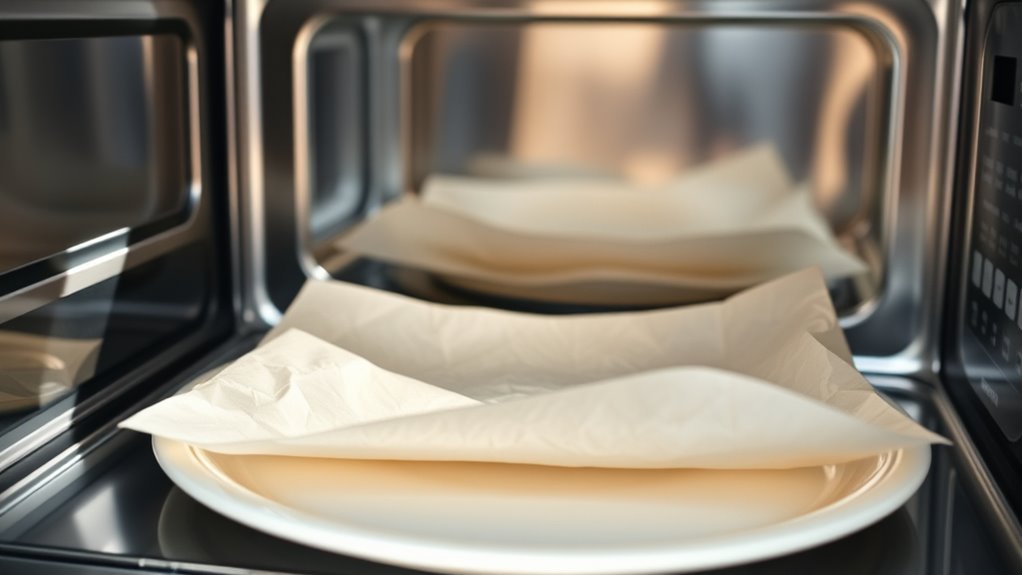
Can Parchment Paper Be Microwaved Safely?
You can safely microwave parchment paper because it’s made from cellulose fibers with a heat-resistant silicone coating that won’t melt or catch fire under normal microwave temperatures.
This makes parchment paper a great choice for cooking or reheating food in the microwave without worrying about it burning or releasing harmful chemicals.
Just make sure you don’t use it with metal or let it touch the microwave walls. Avoid tightly wrapping oily foods since that can cause smoke or burning.
Use parchment loosely to cover containers and allow steam to escape.
Keep following along to discover tips for using parchment paper properly in your microwave meals. It’s a handy kitchen tool that makes cooking easier and cleaner!
What Is Parchment Paper Made Of?
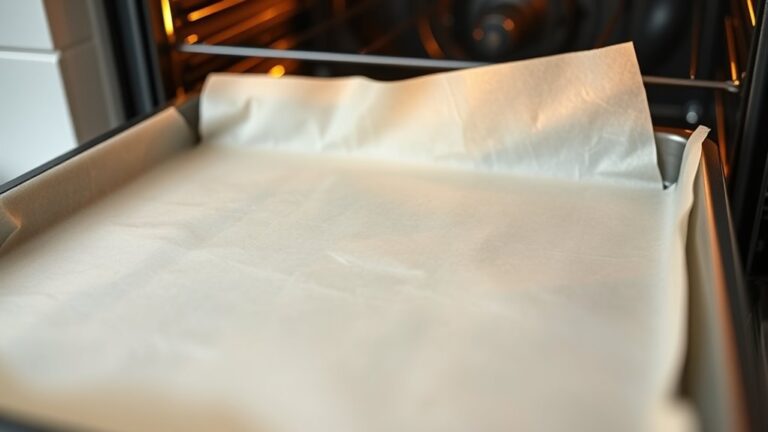
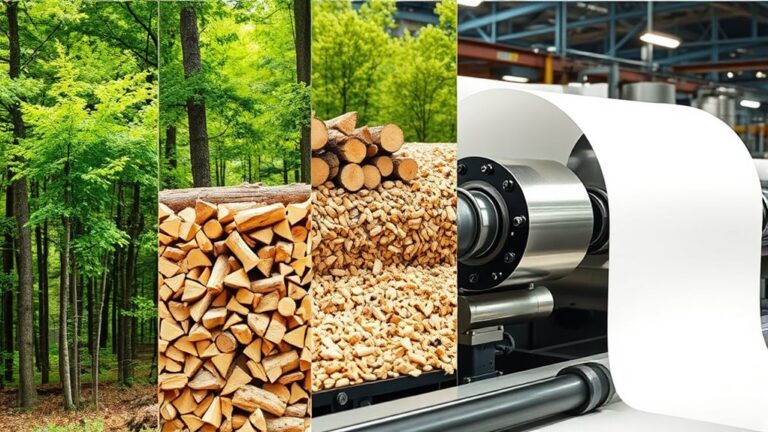
Although you might think parchment paper is just ordinary paper, it’s actually made from cellulose fibers treated with a nonstick coating, usually silicone. This treatment gives it that smooth, heat-resistant surface you rely on in the kitchen.
Unlike wax paper, which is coated with wax, parchment paper’s silicone layer prevents food from sticking without melting or burning easily. When you use parchment paper, you benefit from its grease and moisture resistance, which keeps your baked goods from sticking and helps them cook evenly.
Its cellulose base provides strength and flexibility, so it doesn’t tear easily even when wet. Understanding these materials helps you appreciate why parchment paper works so well for baking and cooking tasks, making your kitchen prep cleaner and more efficient.
Heat Resistance and Microwave Safety of Parchment Paper
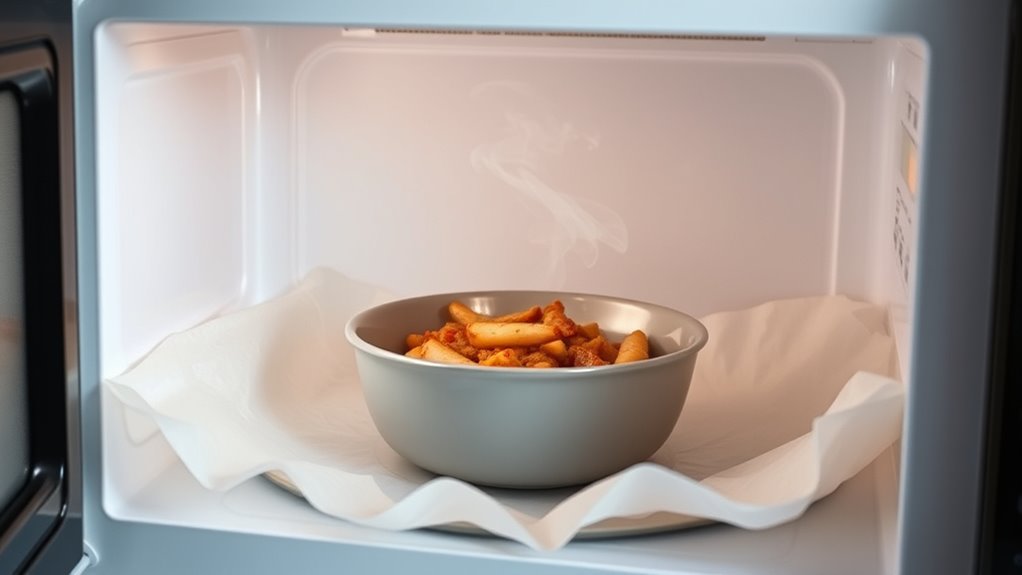
You need to know the temperature limits of parchment paper before using it in the microwave to avoid damage or fire hazards. It’s generally safe for microwave use, but overheating can cause issues.
Let’s explore how to use it properly and understand any potential risks. This way, you can keep your cooking safe and efficient.
Temperature Limits
How much heat can parchment paper tolerate before it starts to break down? Generally, parchment paper withstands temperatures up to about 420°F (215°C). Beyond this, it may begin to brown, char, or even catch fire.
When you use it in the oven, staying under this limit ensures the paper maintains its non-stick and heat-resistant properties without degrading. In a microwave, temperatures rarely exceed this threshold, so parchment paper usually remains stable.
However, direct contact with heating elements or open flames is a no-go since parchment paper isn’t designed for extreme heat exposure. Knowing these temperature limits helps you avoid damaging the paper or creating safety hazards while cooking or baking.
Always check the package instructions, as some brands might have slightly different heat tolerances.
Microwave Suitability
Since parchment paper can handle heat up to around 420°F (215°C), it works well in the microwave where temperatures rarely get that high. You can safely use parchment paper to cover dishes, wrap food, or line microwave-safe containers without worrying about it catching fire or melting.
Its heat-resistant coating won’t break down under typical microwave conditions, making it a convenient option for steaming or reheating food evenly. Just make sure the parchment paper doesn’t touch the microwave’s interior walls, as this could cause charring.
Also, avoid using parchment paper with metal trims or decorations since metal isn’t microwave-safe. Overall, parchment paper provides a practical, heat-safe barrier in the microwave, helping you cook or reheat food without mess while keeping things safe.
Potential Risks
Although parchment paper handles typical microwave temperatures well, it can pose risks if misused. If you expose it to direct flames or extremely high heat, it might catch fire since it’s coated with silicone, not designed for open flames.
Overheating or prolonged microwave use can cause the paper to brown or even burn, creating smoke and unpleasant odors. Also, avoid using parchment paper with metal trims or designs, as they can spark and damage your microwave.
When you use parchment paper, make sure it doesn’t touch the microwave walls or heating elements. By following these precautions, you’ll minimize risks and safely enjoy parchment paper’s convenience in your microwave cooking.
How to Use Parchment Paper Properly in the Microwave
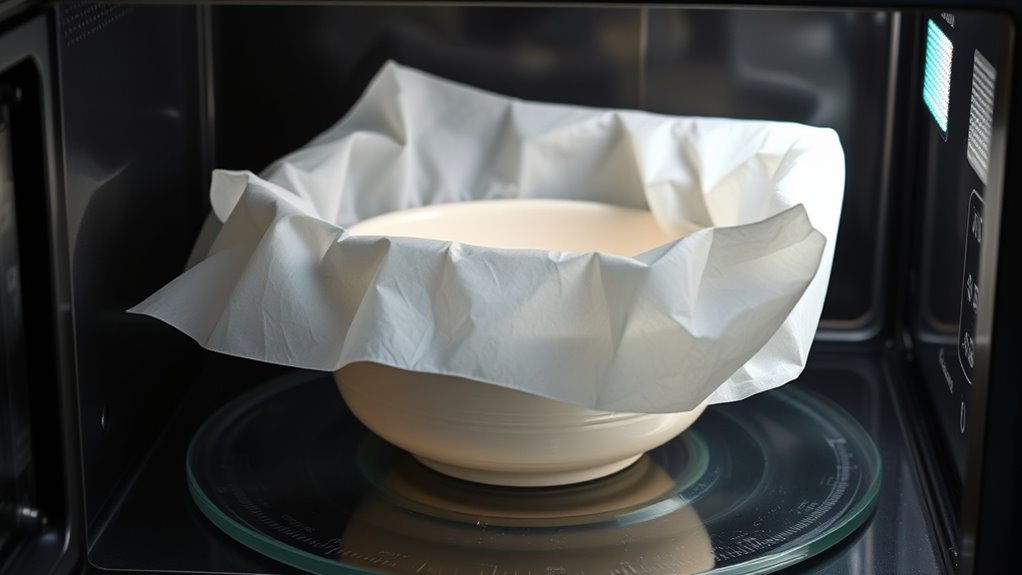
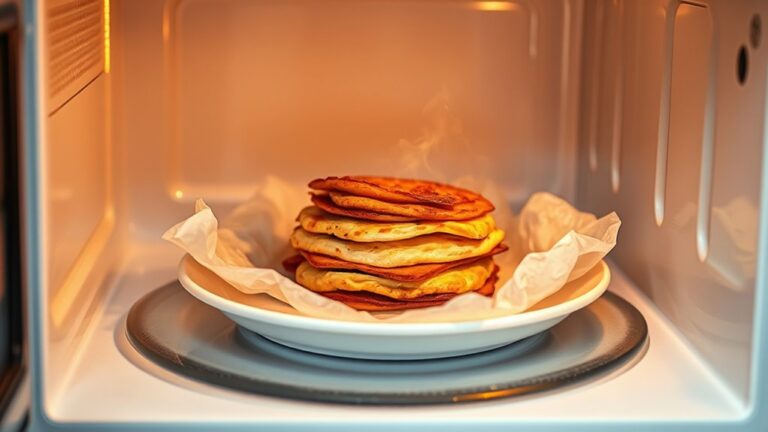
When you use parchment paper in the microwave, you protect your food from splatters while allowing steam to escape, which helps it cook evenly. To use it properly, cut the parchment paper slightly larger than your dish.
Using parchment paper in the microwave prevents splatters and allows steam to escape for even cooking.
Avoid letting it touch the microwave walls or heating elements, as this could cause burning. Place it loosely over the food, not tightly wrapped, to allow steam to vent.
Always use parchment paper labeled microwave-safe, and don’t reuse parchment that’s already charred or heavily stained. Keep cooking times and power settings moderate to prevent overheating.
After microwaving, handle the parchment carefully—it may be hot or contain steam. Following these steps guarantees safe, effective use of parchment paper and keeps your microwave clean without compromising food quality.
Comparing Parchment Paper With Wax Paper and Aluminum Foil
When you use parchment paper, wax paper, or aluminum foil in the microwave, it helps to understand their material differences and safety. Parchment is coated with silicone, making it heat-resistant.
Wax paper has a thin wax layer that can melt. Aluminum foil, on the other hand, reflects microwaves and can cause sparks, so you need to be careful with it.
Material Composition Differences
Because each kitchen wrap is made from distinct materials, understanding their composition helps you choose the best option for microwave use. Here’s a quick breakdown:
- Parchment Paper: Made from cellulose fibers treated with silicone. It’s heat-resistant and non-stick, so it can handle microwave heat without melting or catching fire.
- Wax Paper: Coated with a thin layer of paraffin wax. It’s moisture-resistant but not heat-resistant, which means the wax can melt or smoke when microwaved.
- Aluminum Foil: Composed of thin metal sheets. It reflects microwaves and can cause sparks or fires, making it unsafe for microwave use.
Knowing these material differences helps you avoid potential hazards and pick the safest wrap for your microwave needs. So, always check what your wrap is made of before heating!
Microwave Safety Comparison
Understanding the material differences between parchment paper, wax paper, and aluminum foil sets the stage for comparing their safety in microwave use. Parchment paper is treated with silicone, making it heat-resistant and microwave-safe.
Wax paper, coated with wax, may melt or catch fire in the microwave. Aluminum foil reflects microwaves and can cause sparks or fires if used improperly.
| Material | Microwave Safety |
|---|---|
| Parchment Paper | Safe; heat-resistant |
| Wax Paper | Unsafe; wax can melt or ignite |
| Aluminum Foil | Unsafe; can spark and cause fire |
You should always choose parchment paper for microwave cooking to avoid hazards and ensure safe heating. It’s best to avoid wax paper and aluminum foil in microwaves.
Common Mistakes to Avoid When Microwaving With Parchment Paper
Although parchment paper is generally safe for microwaving, you’ll want to avoid certain mistakes that can lead to uneven cooking or even damage to your microwave.
Parchment paper is usually microwave-safe, but avoid errors that cause uneven cooking or microwave damage.
Here are three common errors to watch out for:
- Using Too Much Paper: Wrapping food too tightly or using excessive parchment can prevent steam from escaping. This might cause soggy results or uneven heating.
- Overheating: Microwaving parchment paper for too long or at high power can cause it to brown or even catch fire. So, it’s best to avoid extended cooking times.
- Direct Contact with Heating Elements: Never let parchment paper touch the microwave’s walls or heating elements. This can ignite the paper or damage your appliance.
Best Practices for Safe and Effective Microwave Cooking With Parchment Paper
When you use parchment paper in the microwave, you’ll want to guarantee it’s positioned properly to allow steam to escape and prevent sogginess. Always cut the parchment paper slightly larger than your food, folding edges loosely to avoid sealing in moisture.
Avoid direct contact with heating elements or exposed flames, as parchment paper can scorch. Use it mainly to cover dishes or line microwave-safe containers, ensuring no plastic or metal components are nearby.
Don’t reuse parchment paper that’s heavily stained or burnt. Also, avoid microwaving fatty or oily foods wrapped tightly in parchment, as excessive heat buildup may cause smoking.
Conclusion
When you wrap your food in parchment paper, you’re giving it a cozy, heat-safe blanket that won’t melt or catch fire in the microwave. Just like a trusted sidekick, parchment paper helps you cook evenly without the mess.
But remember, it’s not invincible—avoid overheating or using waxy alternatives. Treat it right, and parchment paper will be your kitchen’s quiet hero, turning microwave meals into safe, hassle-free delights every time.
Microwaving parchment paper is generally safe because it’s designed to withstand heat without releasing harmful chemicals or catching fire. Just make sure the paper is uncoated and specifically labeled microwave-safe. Avoid using wax paper instead, as it can melt or ignite.
In conclusion, parchment paper is a practical and safe choice for microwaving food when used correctly. It helps prevent messes and promotes even cooking, making it a valuable kitchen tool. Just be cautious with heating times and never substitute it with wax paper. Using microwave-safe parchment paper ensures your meals stay delicious and your microwave stays clean without risk.