5 Steps Explaining How Paper Is Produced From Trees
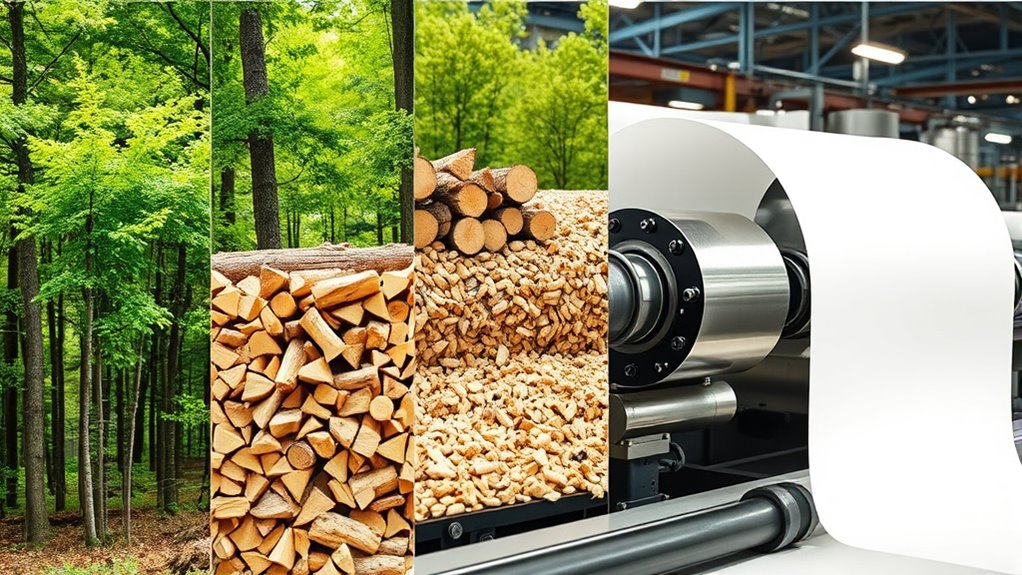
You start by harvesting wood from sustainable forests, making sure the trees are responsibly sourced to protect the environment. Then, you remove the bark and cut the logs into small chips. This step is important because it prepares the wood for the next stage.
Next, those wood chips are broken down into pulp through mechanical or chemical methods. This pulp is basically a slurry of fibers that will eventually become paper.
After that, you clean and bleach the pulp to remove impurities and brighten it, giving the paper its clean, white appearance.
Then, you spread the pulp onto screens to form wet sheets. These sheets are pressed to squeeze out water and start forming the texture of the paper.
Finally, the sheets are dried, pressed again, and finished to add strength and smoothness, making the paper ready for use. Keep reading to uncover the details behind each step!
Harvesting and Preparing Wood
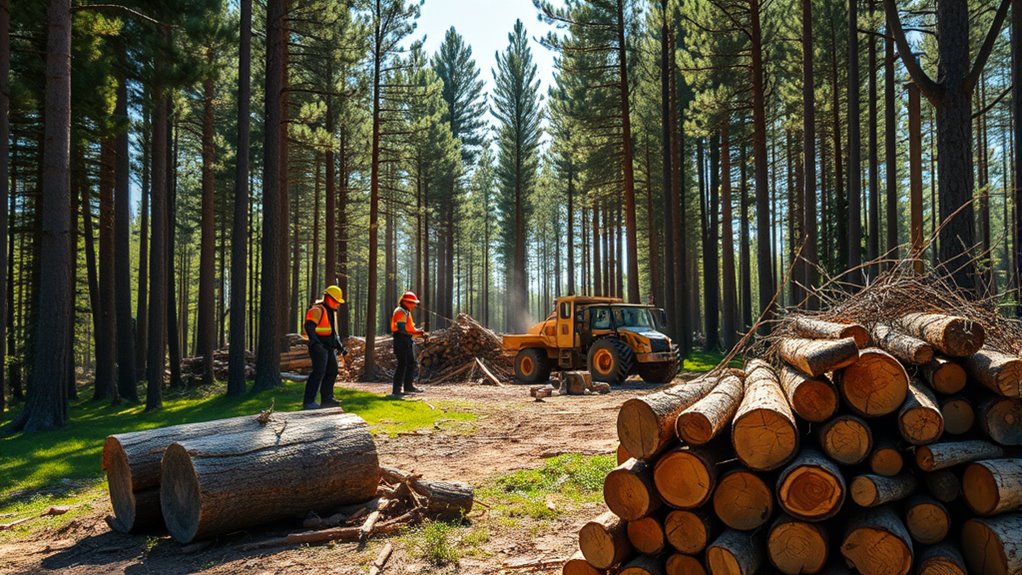
Before the wood can be turned into paper, workers harvest trees from carefully managed forests. You’ll see them selecting mature trees while guaranteeing younger ones remain to grow. This sustainable approach helps maintain the forest’s health and future supply.
After felling, the logs are transported to mills, where they’re debarked to remove the outer bark layer. You’ll notice machines stripping away this rough exterior, leaving clean wood behind.
The logs are then cut into smaller, uniform chips to prepare for processing. These chips ensure a consistent quality for the next production step.
Throughout this stage, you rely on precise timing and handling to keep the wood fresh and ready, setting the foundation for producing strong, high-quality paper.
Breaking Down Wood Into Pulp
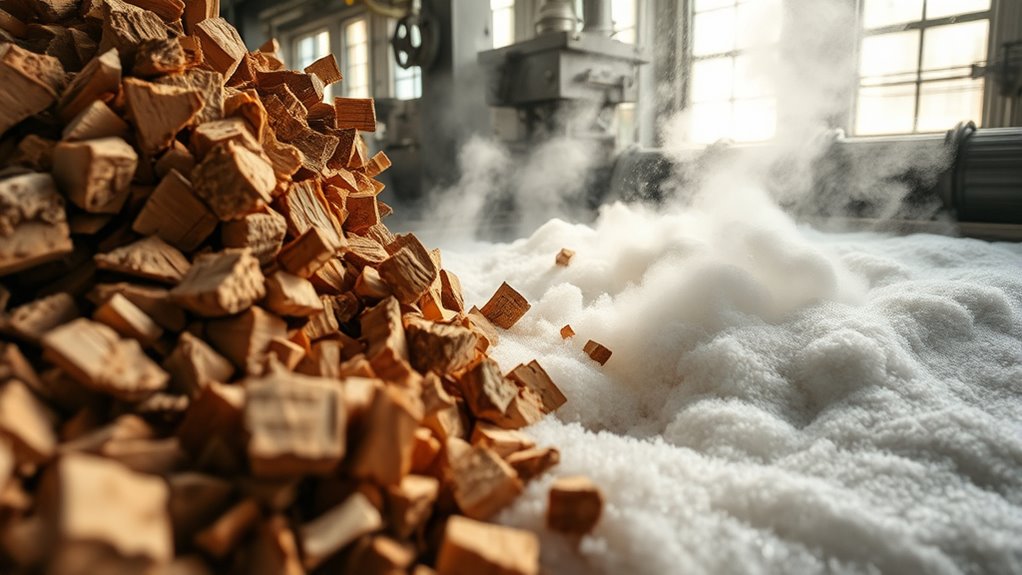
Once the wood chips reach the mill, workers start breaking them down into pulp, the essential raw material for paper. You’ll see two main methods: mechanical and chemical pulping.
Mechanical pulping grinds the wood chips into fibers, preserving most of the wood components. Chemical pulping uses chemicals to dissolve lignin, freeing the fibers more thoroughly.
Each method affects the pulp’s strength, color, and texture differently. So, the choice of method really depends on what kind of paper they want to make.
| Pulping Method | Description |
|---|---|
| Mechanical | Physically grinds wood chips into pulp |
| Chemical | Uses chemicals to break down lignin |
| Semi-Chemical | Combines mechanical and chemical steps |
| Thermo-Mechanical | Applies heat and mechanical grinding |
Cleaning and Bleaching the Pulp
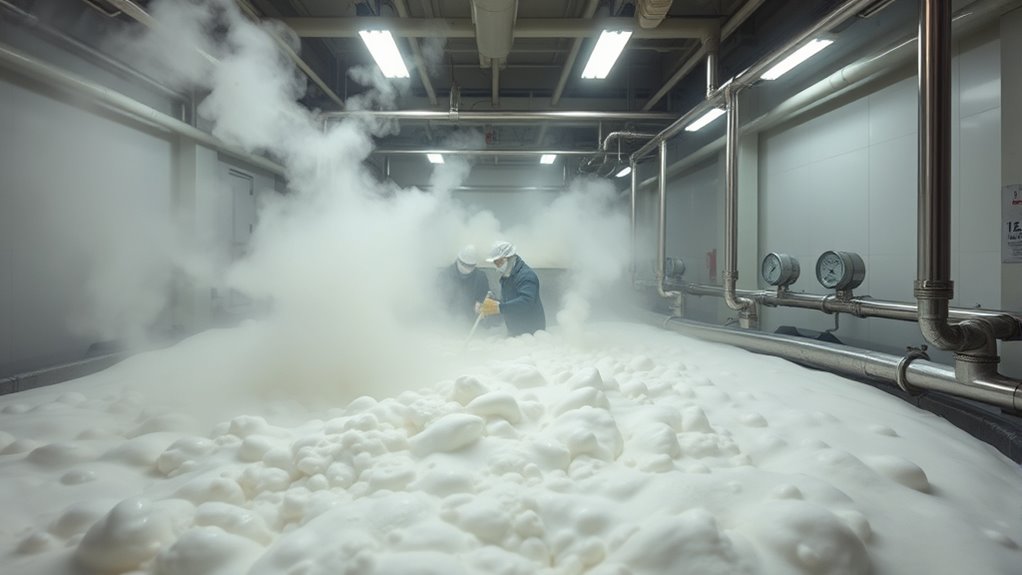
After pulping, the resulting mixture still contains impurities and natural colors that can affect the paper’s quality. You need to purify the pulp to remove any remaining bark, dirt, or unwanted particles. This process usually involves screening, where the pulp passes through fine meshes that catch debris.
Next, you’ll bleach the pulp to lighten its color and improve brightness. Bleaching uses chemicals like chlorine dioxide or oxygen-based compounds, depending on the desired environmental impact and paper grade. You’ll carefully control the amount and timing of these chemicals to prevent damaging the fibers.
Forming the Paper Sheets
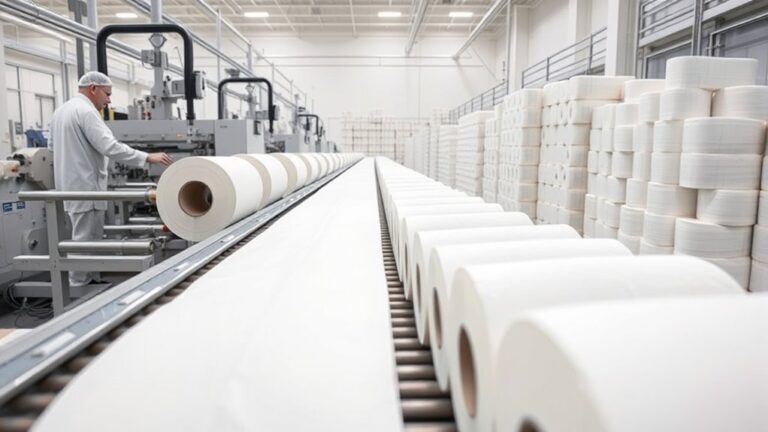
Although the pulp is now clean and bright, you still need to transform it into thin, flexible sheets. This process begins by spreading the pulp mixture onto a moving mesh screen, where water drains away.
As the fibers start to bond, you’ll see the formation of a wet paper mat. To guarantee even thickness and texture, the pulp is carefully controlled.
Here’s what happens next:
- The wet mat passes through a series of rollers that squeeze out excess water.
- Fibers interlock tightly, giving the sheet strength.
- The sheet moves continuously along the production line.
- You monitor for uniform thickness and surface smoothness.
This stage is vital for shaping the paper before it moves on to drying and finishing.
Drying, Pressing, and Finishing the Paper
While the paper sheet is still damp, you guide it through heated rollers that remove moisture quickly and evenly. This pressing step flattens the paper, improving its strength and surface smoothness.
Next, the paper passes through drying sections to reduce moisture content to the desired level, making it ready for finishing.
Finally, you apply coatings or calendering to enhance texture, gloss, or printability.
| Step | Purpose | Outcome |
|---|---|---|
| Pressing | Remove excess water | Smooth, dense sheet |
| Drying | Evaporate remaining moisture | Stable, dry paper |
| Finishing | Improve surface properties | Glossy, printable sheet |
| Inspection | Ensure quality control | Defect-free paper |
Conclusion
So, next time you jot down a quick note or flip through a magazine, remember all the messy, noisy steps it took to turn a towering tree into that smooth sheet in your hand. It’s almost funny how something so simple feels so natural.
Yet, it’s the result of a wild journey—chopped, pulped, bleached, pressed—just so you can scribble, doodle, or maybe even waste another scrap. Trees never saw it coming!
From harvesting to processing, each step in paper production involves transforming raw wood into the familiar paper we use daily. Understanding this process helps us appreciate the work behind every sheet, encouraging responsible use and recycling to protect our forests.