3 Tips for When to Wrap Brisket in Butcher Paper
You should wrap your brisket in butcher paper once you notice the stall—when the internal temperature pauses around 165-170°F. This is a crucial step in smoking brisket because wrapping helps push through the stall faster and keeps the meat moist. But timing it right is key.
Make sure the bark is well-developed: firm, dry, and dark, not shiny or soft. Wrapping too early can ruin that beautiful bark you worked hard to create. On the other hand, waiting too long means your cooking time drags on longer than necessary.
Keep an eye on your thermometer and wrap during the temperature plateau to speed through the stall. If you want to perfect your technique, there’s more to explore about timing and texture. It’s all about balancing moisture retention and bark quality for the best brisket!
Identifying the Stall Phase
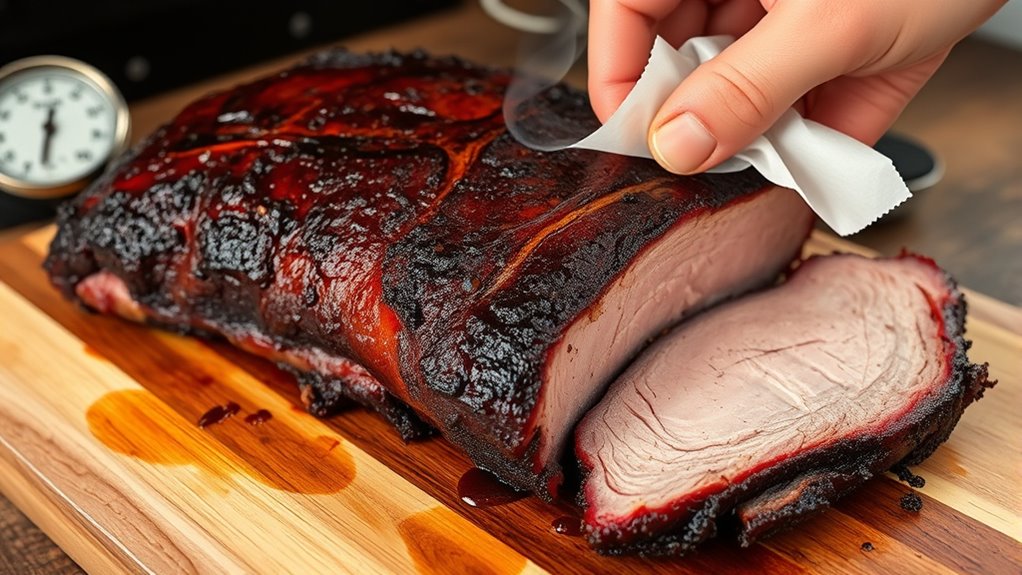
Although it can be frustrating, you’ll likely notice your brisket’s internal temperature plateauing for several hours during cooking—this is known as the stall phase.
During this time, the temperature may hover around 150-170°F, making it seem like progress has stopped. You might wonder if your smoker is working properly, but rest assured, this is normal.
Expect the temperature to stall around 150-170°F—it’s normal and not a sign your smoker is failing.
The stall happens because moisture evaporates from the meat’s surface, cooling it and slowing the temperature rise. You can identify it by watching for a prolonged pause in temperature increase despite consistent heat.
Recognizing the stall helps you decide when to wrap your brisket, which can speed up cooking and retain moisture. Being patient during this phase is key to a juicy, tender result.
Monitoring Internal Temperature
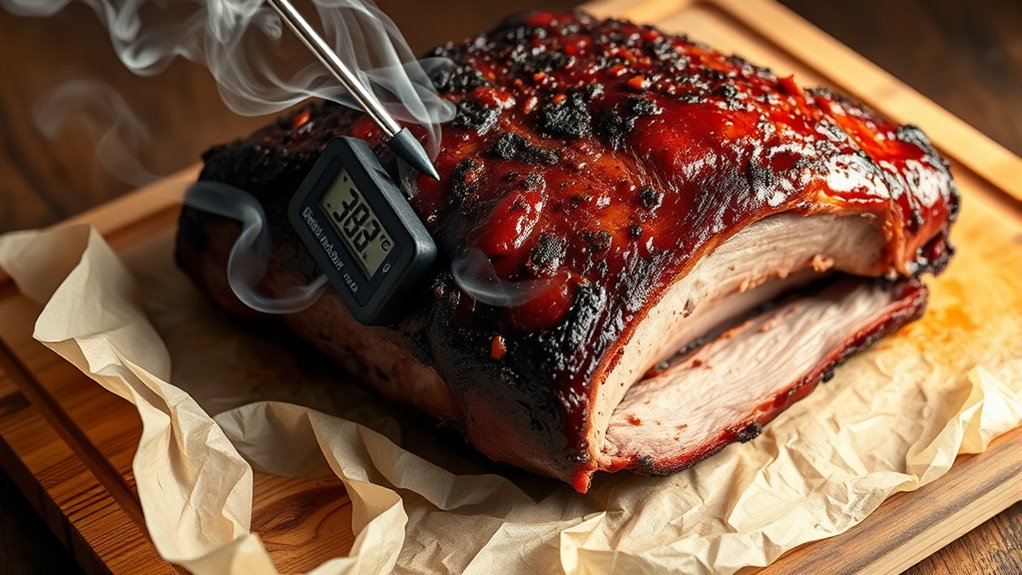
Once you’ve wrapped your brisket, you’ll need to monitor its internal temperature closely to guarantee it reaches the ideal doneness without overcooking. Use a reliable meat thermometer to track the temperature, aiming for around 195°F to 205°F for tender, slice-ready brisket.
Check the temperature periodically but avoid opening the smoker too often, as it causes heat loss. When the internal temp reaches about 165°F to 170°F, the brisket is often in the stall phase, so wrapping helps push through this plateau.
After wrapping, keep an eye on the temp every 30 minutes to catch when it starts rising steadily again. Pull your brisket once it hits the target range, ensuring it’s tender but not dry.
Monitoring temperature precisely is key to a perfect brisket. So, stay patient and keep that thermometer handy!
Assessing Bark Development
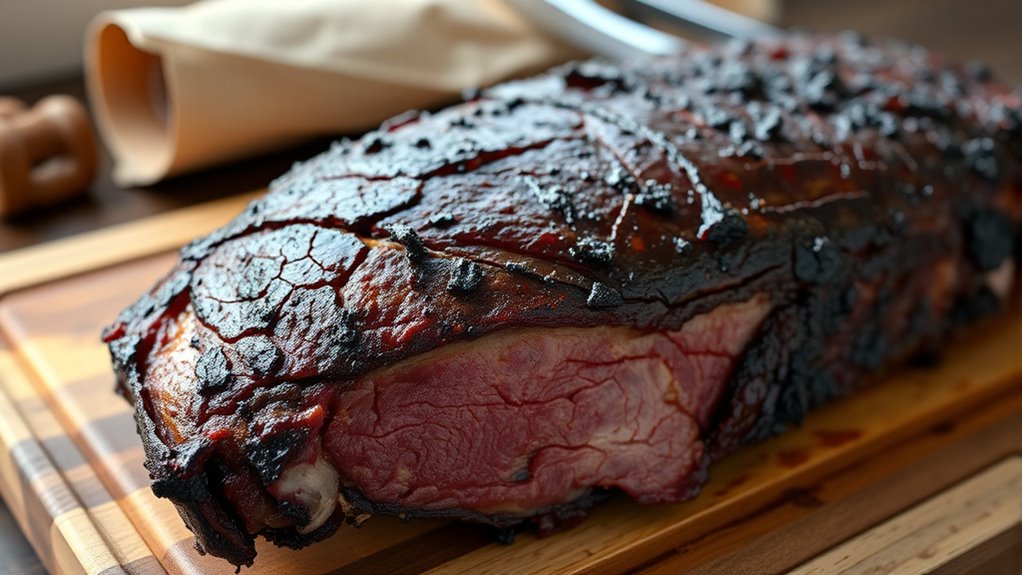
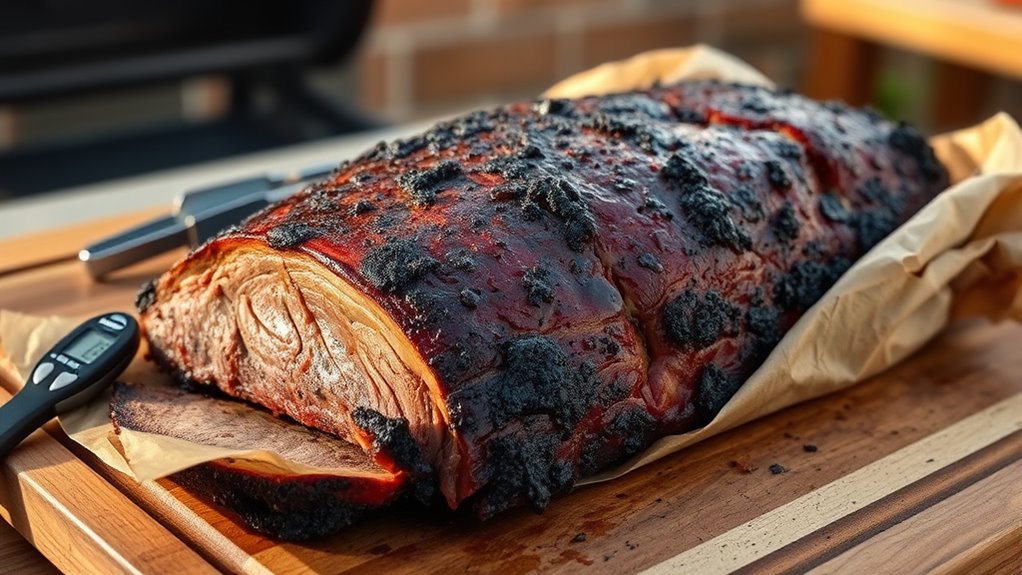
While your brisket cooks, you’ll want to keep a close eye on the bark—the flavorful crust that forms on the outside. A well-developed bark is dry, dark, and textured, signaling the perfect balance of smoke and seasoning.
Check for a matte finish rather than a shiny, wet look; the latter means the bark hasn’t set yet. When the bark feels firm to the touch, it’s nearing readiness for wrapping.
If you wrap too early, you risk softening the bark, losing that prized crunch. Wait until the bark is well-formed but the internal temperature hasn’t stalled.
This way, you lock in moisture without sacrificing texture. Evaluating bark development carefully ensures you wrap at the ideal moment for a tender, flavorful brisket.
Conclusion
Knowing when to wrap your brisket in butcher paper can make all the difference in flavor and texture. Since the stall phase can last up to 4 hours, closely monitoring internal temperature and bark development helps you decide the perfect moment to wrap.
Remember, about 70% of moisture is lost during this phase, so wrapping locks in juiciness while letting the bark set beautifully. Trust your instincts, and your brisket will thank you!
Wrapping your brisket at just the right time ensures you keep that delicious smoky flavor and tender texture. The butcher paper acts like a breathable barrier, preserving moisture without sogging the bark. So keep an eye on temperature, watch that bark, and wrap your brisket in butcher paper when the stall hits. Your cooking patience will pay off with a mouthwatering brisket that’s juicy, flavorful, and perfectly cooked every time!