Does Toilet Paper Dissolve Properly?
You can trust toilet paper to dissolve properly if it’s designed with water-soluble cellulose fibers that break down quickly when wet. This is especially important for preventing clogs and keeping your plumbing running smoothly.
Single-ply and recycled papers tend to dissolve faster, making them a safer choice for septic systems.
Thicker, multi-ply options with additives might take longer to break down and could risk clogging pipes. Using septic-safe paper helps prevent plumbing issues and reduces strain on septic systems.
Choosing the right type of toilet paper really makes a big difference.
Understanding what influences how toilet paper dissolves can save you from costly problems down the line. So, it’s worth picking the right product that works well with your plumbing setup.
How Toilet Paper Is Designed to Break Down
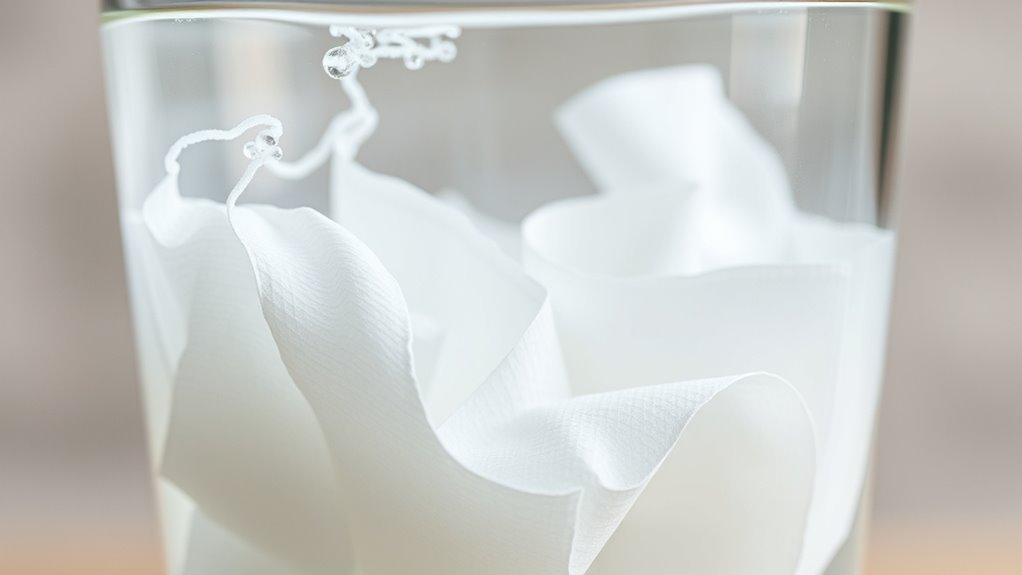
Although it might seem simple, toilet paper is carefully engineered to dissolve quickly when wet. When you use it, the paper’s fibers start to break apart almost immediately.
This happens because manufacturers select materials like cellulose fibers that absorb water rapidly and weaken the paper’s structure. The paper is also designed with a balance between strength and softness, so it holds together during use but disintegrates easily in water.
You’ll notice that the sheets are thin and loosely bonded, which helps them separate and break down faster. This design prevents blockages in plumbing and septic systems by ensuring the paper doesn’t stay intact after flushing.
Factors Influencing Toilet Paper Dissolution
You’ll notice that the materials used in toilet paper play a big role in how quickly it breaks down. The type of fibers and additives can either speed up or slow the process.
Plus, the temperature of the water affects dissolution—warmer water usually helps it dissolve faster.
Material Composition Effects
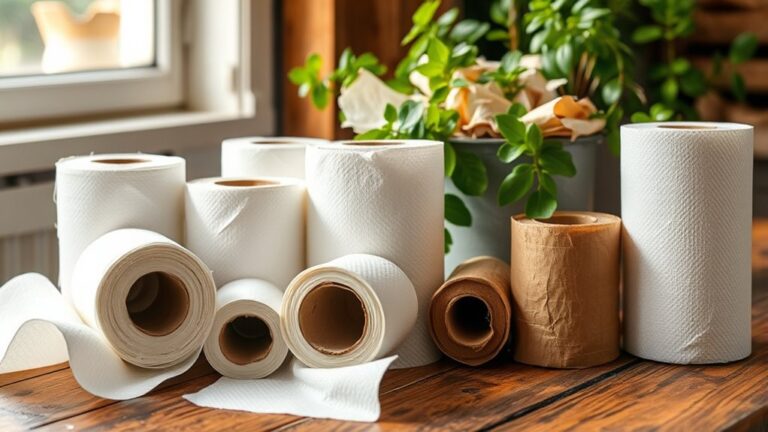
When you choose toilet paper, the material composition plays a crucial role in how quickly it dissolves. Papers made from recycled fibers tend to break down faster because they have shorter fibers and less bonding.
On the other hand, virgin fibers, which are longer and stronger, make the paper more durable but slower to dissolve. Some toilet papers also include additives like lotions or perfumes that can affect dissolution by creating a slight coating, which slows the process.
Additionally, multi-ply toilet papers, with layers bonded tightly together, take longer to break apart compared to single-ply options. If you want toilet paper that dissolves quickly—especially for septic systems or RVs—look for products labeled as “septic-safe” or “rapidly dissolving.” Their material composition is optimized for faster disintegration.
Water Temperature Impact
Beyond the material composition, water temperature considerably affects how toilet paper dissolves. When you flush, warmer water helps break down fibers faster, preventing clogs and keeping your plumbing smooth.
Cold water slows dissolution, increasing the risk of blockages and unpleasant backups. You might not think about it, but the temperature plays a vital role in your bathroom’s efficiency.
Consider these impacts of water temperature on toilet paper:
- Warm water speeds up fiber breakdown
- Cold water can cause slow dissolution
- Hot water might damage plumbing over time
- Room temperature water offers a balanced effect
- Temperature fluctuations affect overall flush performance
Comparing Different Types of Toilet Paper
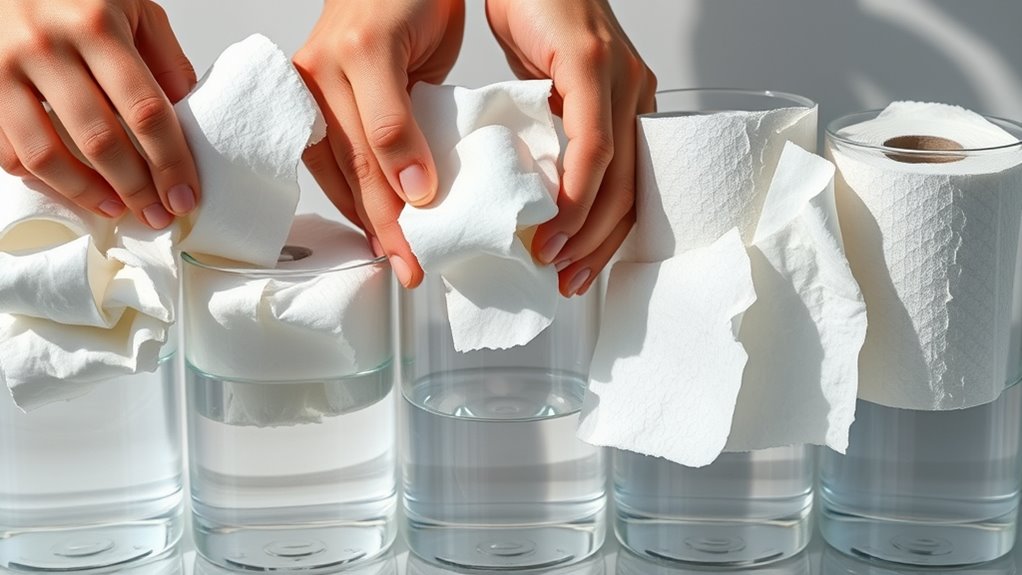
How quickly toilet paper dissolves can vary widely depending on its type and composition. When you choose standard, single-ply toilet paper, you’ll notice it breaks down faster in water due to its thin layers.
Single-ply toilet paper dissolves faster thanks to its thin layers and simple composition.
On the other hand, multi-ply or premium toilet papers, which are thicker and designed for comfort, tend to take longer to dissolve because of their dense fibers and added lotions or fragrances.
Recycled toilet paper often dissolves more quickly than virgin fiber types since it contains shorter fibers that break apart easily. If you’re concerned about dissolution, opting for toilet paper labeled as septic-safe or quick-dissolving can help.
Understanding these differences lets you pick the right toilet paper for your needs while ensuring it breaks down efficiently.
Impact on Plumbing and Septic Systems
You need to choose toilet paper that dissolves quickly to avoid plumbing clogs. Using the right type also helps keep your septic system functioning smoothly.
Let’s look at how different papers affect both your pipes and septic tank. It’s pretty interesting once you get into the details!
Plumbing Clog Risks
When toilet paper doesn’t dissolve properly, it can quickly lead to clogs in your plumbing system. You might face slow drains, backups, or even costly repairs that disrupt your daily routine.
Ignoring this risk can cause serious headaches. Here’s what you could experience:
- Frustrating slow drainage that wastes your time
- Unexpected overflows that damage your home
- Expensive plumber visits eating into your budget
- Unpleasant odors from trapped waste
- Stress from dealing with recurring blockages
Choosing the right toilet paper that dissolves well helps prevent these issues. Taking care of your plumbing isn’t just about convenience—it protects your home and peace of mind.
Don’t let poor toilet paper choices jeopardize your plumbing’s health. It’s worth picking the right kind to keep everything flowing smoothly.
Septic System Compatibility
Beyond preventing clogs, choosing toilet paper that breaks down easily plays a vital role in maintaining your septic system’s health. When toilet paper dissolves quickly, it prevents large, undigested clumps from accumulating in your septic tank. This buildup can cause blockages or overload the system.
You want toilet paper labeled as “septic-safe” because it’s designed to disintegrate rapidly and reduce strain on the bacteria that break down waste. Using thick or multi-ply toilet paper that doesn’t dissolve well can lead to costly repairs and frequent pumping.
Paying attention to your toilet paper choice helps your septic system function smoothly, avoids backups, and extends its lifespan. So, always pick products that are septic-compatible to keep your plumbing and septic system running efficiently.
Environmental Considerations of Toilet Paper Use
Although toilet paper seems like a simple household item, its production and disposal have significant environmental impacts that you should consider. Every roll you use affects forests, water resources, and waste systems.
When you think about it, the environmental cost can be startling: trees are cut down, which reduces wildlife habitats. Plus, large amounts of water are consumed during manufacturing.
There are also chemicals and bleaching agents that pollute waterways. Not to mention, non-biodegradable fibers can clog septic and sewage systems.
All this excess waste contributes to landfill overflow. You can’t ignore that your daily choice influences these issues.
Being aware helps you make more responsible decisions and reduce your ecological footprint. Understanding these impacts encourages you to use toilet paper thoughtfully and explore sustainable alternatives when possible.
Tips for Choosing Toilet Paper That Dissolves Well
Since toilet paper that dissolves quickly helps prevent plumbing problems and protects the environment, you should choose brands designed for fast breakdown. Look for toilet paper labeled as “septic-safe” or “biodegradable,” as these break down more easily in water.
Avoid thick, multi-ply options that tend to resist dissolving. You can also check product reviews and manufacturer details to identify papers tested for quick disintegration.
Consider using recycled toilet paper, which often dissolves faster due to its manufacturing process. If you’re unsure, try a simple home test: drop a small piece in water and see how quickly it breaks apart.
Conclusion
You want toilet paper that dissolves quickly, and luckily, many brands are designed just for that. When you pick the right type, you avoid clogs, protect your plumbing, and help the environment—all at once.
It’s a win-win: your pipes stay clear, your septic system stays healthy, and you do your part for the planet. Choosing toilet paper that dissolves properly is key to maintaining a smooth-running bathroom system.
So, choose wisely, use responsibly, and watch how something small like toilet paper can make a big difference. Quick-dissolving toilet paper not only prevents plumbing issues but also supports eco-friendly living. Remember, the right toilet paper helps your home and the environment stay happy and healthy!