Can Tissue Paper Be Recycled?
You shouldn’t recycle tissue paper because its short fibers and added lotions make it break down too easily during recycling. It’s designed to be soft and absorbent, not strong enough for traditional recycling processes.
Plus, any food, oils, or chemicals on used tissue paper can contaminate recycling batches and harm machinery.
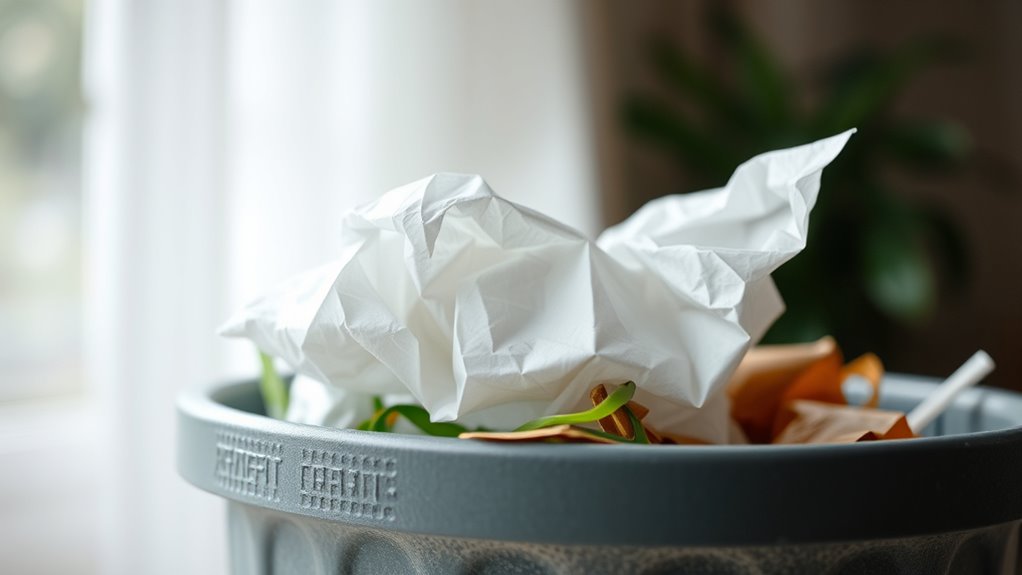
Instead, consider composting or disposing of it with biodegradable waste.
If you want, there’s more to learn about tissue paper’s impact and better disposal options.
Understanding the Composition of Tissue Paper
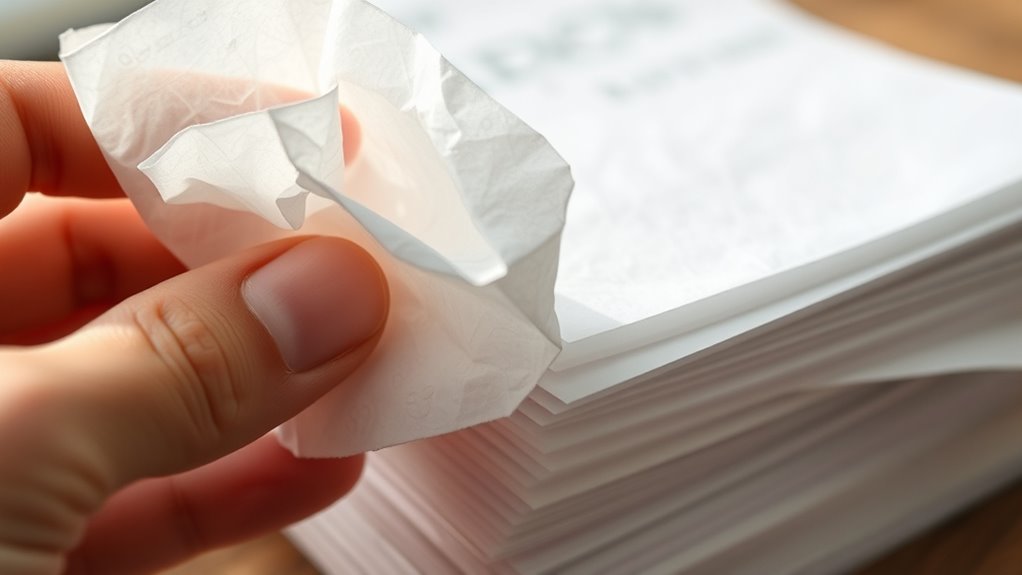
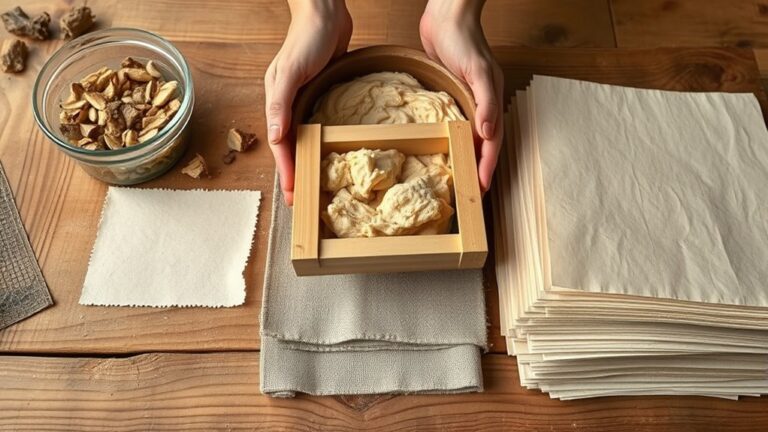
Although tissue paper feels delicate, it’s made primarily from wood pulp fibers, which give it strength despite its thinness. When you look closely, you’ll notice these fibers are shorter and less densely packed than those in regular paper, making tissue paper softer and more absorbent.
You’ll also find that tissue paper often contains additives like softening agents or lotions, especially in facial tissues, to enhance comfort. Because of this composition, tissue paper behaves differently during recycling compared to standard paper.
It’s designed to break down quickly, which is great for personal use but affects how it should be processed afterward. Understanding these details helps you make better choices about disposing of tissue paper responsibly and knowing when recycling is appropriate.
Differences Between Tissue Paper and Recyclable Paper
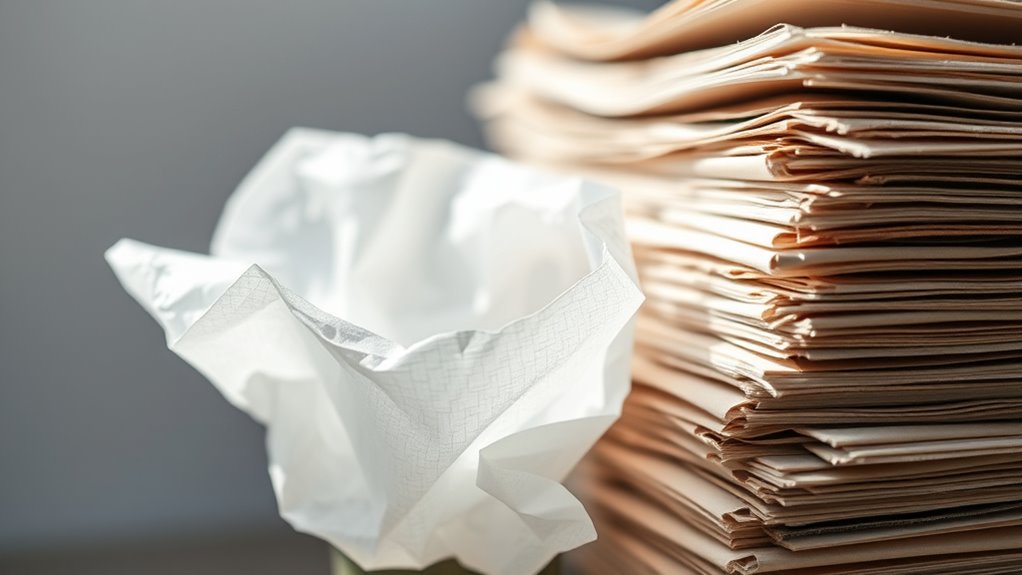
Knowing how tissue paper is made helps explain why it differs so much from recyclable paper. Tissue paper is thin, soft, and often treated with additives to enhance absorbency and strength. These features make it fragile and prone to breaking down quickly, unlike the sturdier fibers in recyclable paper like cardboard or office paper.
When you try to recycle tissue paper, its short fibers and contaminants cause problems in the recycling process, reducing the quality of recycled pulp. Plus, tissue paper often contains lotions or dyes, which aren’t common in recyclable paper and complicate recycling even more.
How Contamination Affects Tissue Paper Recycling
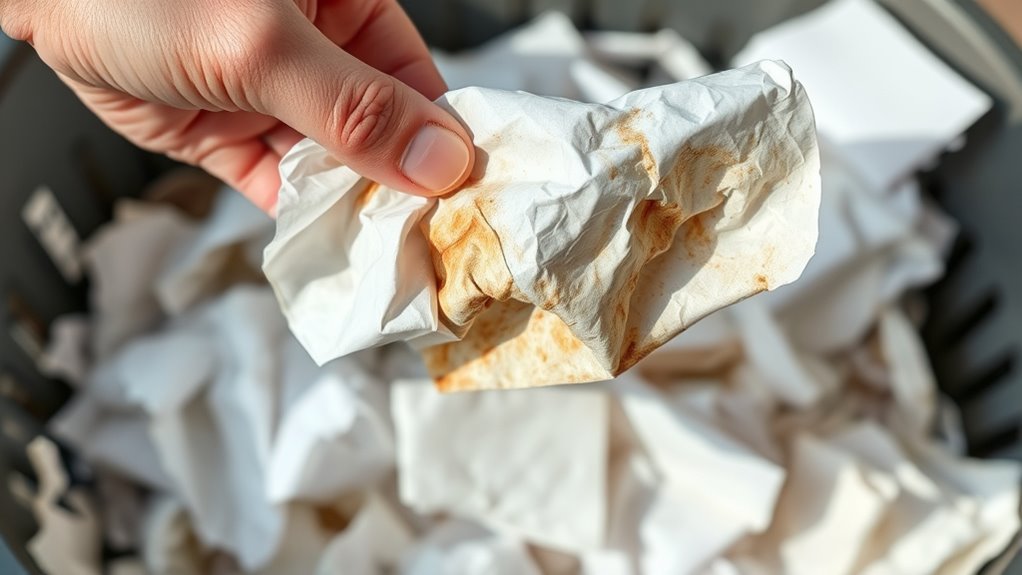
When you toss tissue paper with food scraps or oils, those contaminants can ruin the recycling process. They make it harder to separate fibers and lower the quality of recycled material.
Knowing about these common contaminants really helps you recycle tissue paper more effectively. It’s all about keeping the paper clean so it can be turned into something new without any issues.
Types of Contaminants
How do contaminants impact the recycling of tissue paper? When you’re recycling tissue paper, certain contaminants can cause major issues. They reduce the quality of the recycled material and might even make it unusable.
Here are three common types of contaminants you should watch out for:
- Food Residue – Leftover grease or crumbs can’t be removed easily and spoil the recycling batch.
- Non-Paper Materials – Items like plastic wrappers, tape, or stickers mixed in create complications during processing.
- Chemical Substances – Perfumes, lotions, or cleaning agents on tissue paper introduce harmful chemicals that interfere with recycling.
Impact on Recycling Process
Contaminants don’t just lower the quality of recycled tissue paper—they actively disrupt the entire recycling process. When you toss tissue paper with food residue, oils, or plastics into recycling bins, you risk contaminating the whole batch.
This contamination forces recycling facilities to spend extra time and resources sorting or even discarding affected materials. As a result, the efficiency of recycling drops, and more usable paper ends up in landfills.
Even small amounts of contaminants can cause machinery to jam or damage equipment, leading to costly repairs. So, by keeping tissue paper clean and free from pollutants, you help maintain the integrity of the recycling stream.
That way, materials can be effectively processed and turned into new products without unnecessary waste or delays. It’s a simple step that makes a big difference!
Alternative Ways to Dispose of Used Tissue Paper
Although used tissue paper often ends up in the trash, you can explore several alternative disposal methods that reduce environmental impact.
Here are three practical options you can consider:
- Composting: If the tissue paper isn’t contaminated with harmful substances, you can add it to your compost bin. It breaks down quickly and adds carbon to the mix.
- Using as Mulch: Shredded tissue paper works well as mulch in your garden, helping retain moisture and suppress weeds.
- Home Biodegradation: You can place used tissue paper in a biodegradable waste bin if your community supports home biodegradation, ensuring it’s processed properly.
Environmental Impact of Tissue Paper Waste
Since tissue paper is often used once and thrown away, it contributes considerably to waste buildup in landfills. When you toss tissue paper, it breaks down slowly due to its composition and lack of recycling options.
This process releases methane, a potent greenhouse gas that worsens climate change. Also, producing tissue paper consumes a lot of water and energy, so every sheet wasted means more environmental resources depleted.
By understanding the impact of tissue paper waste, you can see how your daily choices affect the planet. Even though tissue paper seems small, its cumulative effect is significant.
Being aware helps you appreciate the importance of managing tissue paper waste responsibly to minimize environmental harm.
Tips for Reducing Tissue Paper Usage and Waste
You can cut down on tissue paper waste by minimizing single-use products in your daily routine. Choosing reusable alternatives, like cloth napkins or handkerchiefs, makes a big difference.
These simple changes help reduce demand and keep more waste out of landfills. It’s easier than you think to make a positive impact! Just start small and see how much you can save.
Minimize Single-Use Products
When you choose reusable alternatives over single-use tissue paper, you considerably cut down on waste and environmental impact. But before making that switch, you can minimize your use of disposable tissue paper by following simple habits:
Try to use tissues only when necessary. Avoid grabbing a tissue for minor spills or quick face wipes that could be handled with a cloth or handkerchief. It’s a small change, but it adds up.
Also, be mindful of quantity. Instead of pulling out multiple sheets, try to get by with just one or two pieces per use. You’d be surprised how often one sheet is enough.
And finally, opt for other cleaning methods. For example, use a damp cloth for cleaning surfaces instead of disposable tissues. It’s an easy swap that helps reduce waste.
Opt for Reusable Alternatives
Although disposable tissues offer convenience, choosing reusable alternatives can considerably cut down on waste and save money over time. You might consider using cloth handkerchiefs or washable wipes instead of constantly reaching for tissue boxes.
These options are soft, durable, and easy to clean after use. When you switch to reusable cloths, you markedly reduce the pile of waste that single-use tissues create.
Plus, you’ll find yourself spending less on tissues in the long run. Keep a small stash of clean cloths handy in your bag or car for on-the-go needs.
Conclusion
Think of tissue paper as a delicate leaf—beautiful but fragile, and not meant for recycling streams. Since it’s often contaminated and made from materials that can’t be reprocessed easily, tossing it in your recycling bin won’t help.
Instead, you can compost clean tissue paper or reduce your usage altogether. By making small changes, you’ll help keep the environment cleaner and your waste habits greener.
Recycling tissue paper isn’t usually effective because of its low fiber quality and contamination. Composting is a better alternative when the paper is clean. So next time you reach for tissue paper, consider using less or opting for reusable cloths to support eco-friendly waste management. These simple steps contribute to a healthier planet and more sustainable recycling practices.