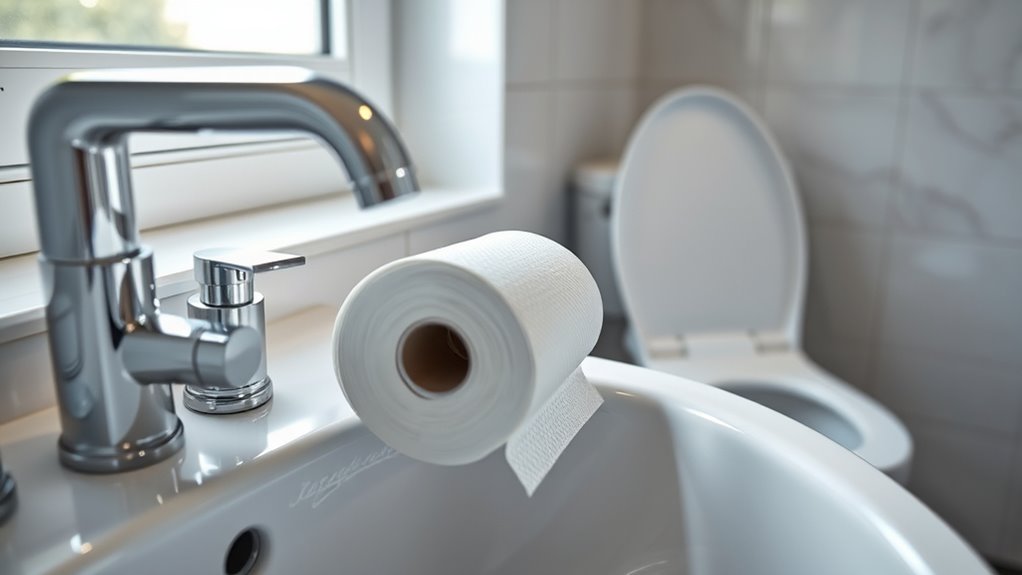
Can You Flush Paper Towels Safely?
You shouldn’t flush paper towels because they’re made from strong, dense fibers with additives that resist breaking down in water. Unlike toilet paper, these towels don’t disintegrate easily and can clog your plumbing or sewer system.
This can cause costly blockages and environmental harm.
Instead, dispose of them in the trash or compost only if they’re chemical-free. Want to know why small changes in how you use paper towels matter? And how to reduce waste? Making these simple adjustments can protect your pipes and the planet.
Understanding the Composition of Paper Towels
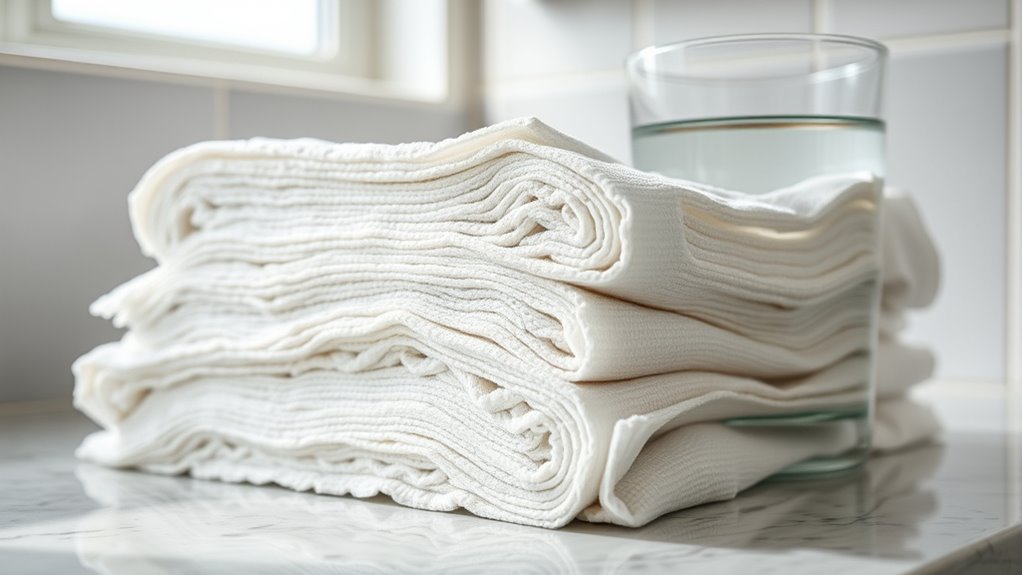
Although paper towels look similar to toilet paper, they’re made from stronger fibers and often contain additives that make them more absorbent and durable. You’ll find that paper towels use long cellulose fibers, which give them the strength needed to handle spills and scrubbing without falling apart.
Manufacturers also add wet-strength resins to keep the towels intact when wet, unlike toilet paper, which breaks down quickly. Additionally, some paper towels include chemicals to enhance absorbency, such as binders and softeners.
When you understand this composition, it becomes clear why paper towels don’t disintegrate easily in water. Their durability is great for cleaning but means they won’t break down like toilet paper in plumbing systems. So, it’s really important to remember this before flushing them.
Differences Between Paper Towels and Toilet Paper
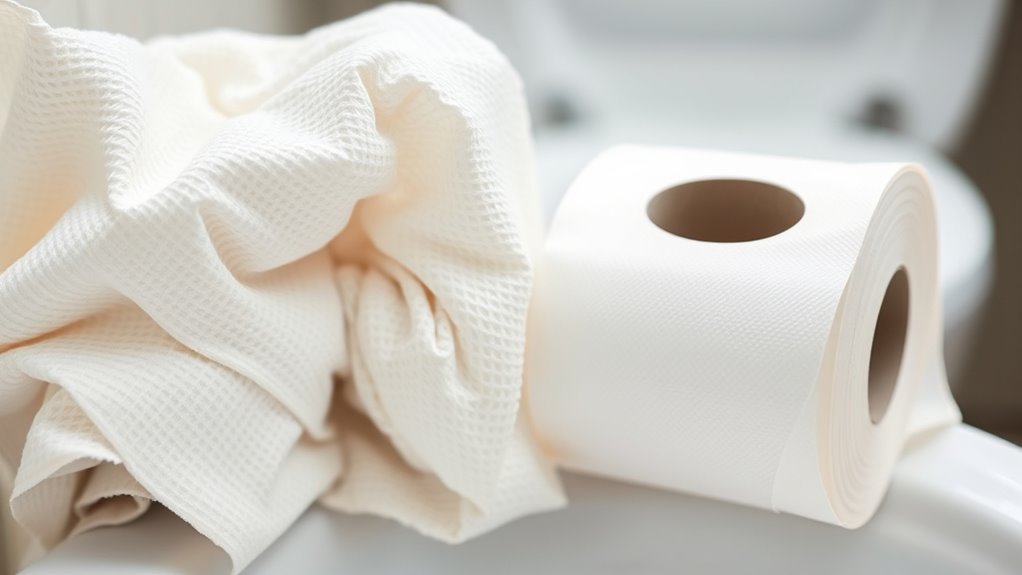
You might not realize that paper towels and toilet paper are made from different materials designed for specific uses. Paper towels are stronger and more absorbent, while toilet paper breaks down quickly in water to prevent clogs.
Understanding these differences helps you decide what’s safe to flush. So, next time you reach for a paper product, think about what it’s made for!
Material Composition Differences
Because paper towels are designed for durability and absorbency, they contain thicker fibers and are often layered more densely than toilet paper. When you compare the two, you’ll notice toilet paper uses thinner, softer fibers that break down quickly in water.
Paper towels, on the other hand, are made from stronger cellulose materials, sometimes mixed with synthetic fibers to boost strength. This composition makes paper towels less likely to disintegrate easily.
You’ll also find that paper towels often include additives like wet-strength resins to keep them intact when wet. These differences in material mean that paper towels aren’t built to dissolve in water like toilet paper.
That’s why flushing them can cause plumbing issues. Understanding these material distinctions helps explain why paper towels and toilet paper behave so differently in your pipes.
Absorbency and Strength Comparison
How do paper towels and toilet paper differ in handling liquids? Paper towels are designed to absorb and hold larger amounts of liquid quickly. When you spill something, you rely on their thick, densely woven fibers to soak it up without falling apart.
Toilet paper, on the other hand, is thinner and less dense, meant for gentle cleaning rather than heavy absorption. It’s strong enough to do its job but breaks down easily to prevent clogging.
Paper towels have greater tensile strength, so they resist tearing even when wet, whereas toilet paper’s strength decreases markedly when damp. Understanding these differences helps you see why paper towels aren’t made to flush—they won’t disintegrate like toilet paper, which could cause plumbing issues.
Breakdown Rate in Water
The differences in absorbency and strength directly impact how paper towels and toilet paper behave in water. When you flush toilet paper, it quickly breaks down, dissolving into small pieces that easily pass through plumbing.
Paper towels, on the other hand, resist breaking down due to their denser fibers and stronger construction. This means they can clog pipes and cause blockages.
| Material | Breakdown Time in Water | Typical Behavior |
|---|---|---|
| Toilet Paper | 2-5 minutes | Quickly disintegrates |
| Paper Towels | 30+ minutes | Maintains structure |
| Wet Wipes | 60+ minutes (varies) | Often clog pipes |
How Flushing Paper Towels Affects Plumbing Systems
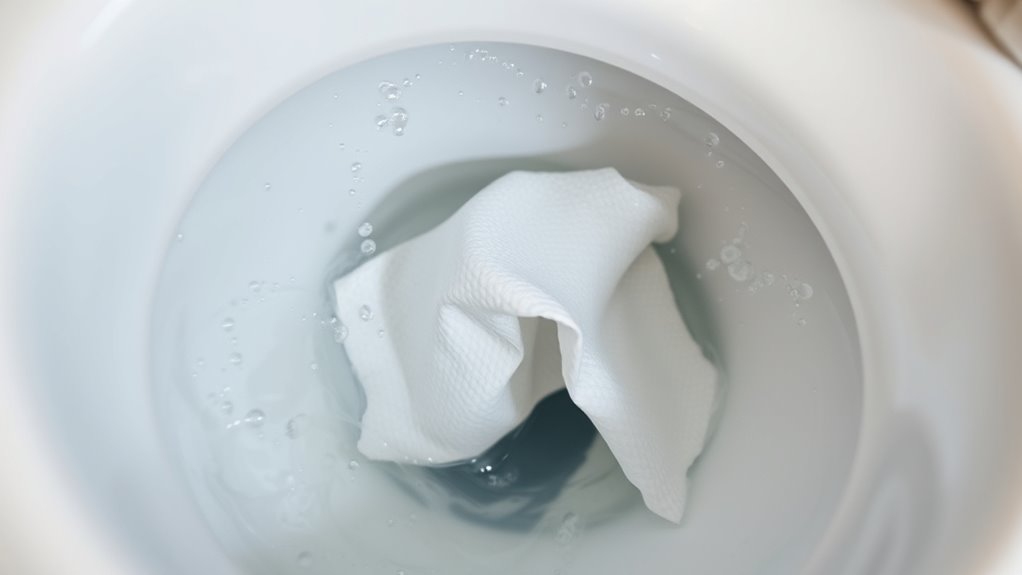
When you flush paper towels, you risk clogging your plumbing because they don’t break down like toilet paper. These blockages can cause backups and costly repairs in your home’s pipes.
Plus, paper towels can harm the broader sewer system by creating serious obstructions. It’s definitely better to toss them in the trash instead of the toilet.
Plumbing Blockage Risks
Although paper towels might seem similar to toilet paper, flushing them can seriously harm your plumbing. Unlike toilet paper, paper towels don’t dissolve easily in water.
When you flush them, they tend to clump together and create stubborn blockages in your pipes. These blockages can restrict water flow, leading to slow drains or even complete backups.
Over time, these clogs may cause damage to your plumbing system, forcing you to spend money on costly repairs or replacements. If you ignore these risks, you might face frequent plumbing emergencies that disrupt your daily routine.
To avoid these headaches, it’s best to dispose of paper towels in the trash rather than flushing them down the toilet. Your plumbing will thank you for it.
Impact on Sewer Systems
Because paper towels don’t break down like toilet paper, flushing them puts extra strain on sewer systems. When you flush paper towels, they can accumulate and cause blockages in the pipes, leading to costly repairs and backups.
Sewer systems rely on materials that dissolve quickly, so non-degradable items disrupt the flow and overload treatment facilities. Over time, this increases the risk of sewer overflows, which harm the environment and public health.
By flushing paper towels, you contribute to these problems and burden municipal infrastructure. To protect your home’s plumbing and the wider sewer system, it’s best to dispose of paper towels in the trash.
Avoiding flushable mistakes helps keep sewers functioning smoothly and prevents unnecessary damage and expenses. So, next time, just toss those paper towels in the bin instead of the toilet!
Environmental Impact of Flushing Paper Towels
If you flush paper towels, you risk clogging pipes and overwhelming wastewater systems designed for softer, breakable materials like toilet paper. When paper towels enter these systems, they don’t break down easily, causing blockages that lead to sewage overflows.
This not only harms local waterways but also strains treatment plants, increasing energy consumption and chemical use. You might not realize it, but flushing paper towels contributes to larger environmental problems, including water pollution and habitat damage.
Additionally, untreated sewage can reach natural bodies of water, affecting aquatic life and public health. By avoiding flushing paper towels, you help reduce these impacts and support a healthier ecosystem.
Your small choices in disposal can make a big difference in protecting the environment. So, next time, just toss paper towels in the trash instead of flushing them down the toilet.
Safe Disposal Methods for Paper Towels
When you need to dispose of paper towels, choosing the right method helps prevent plumbing issues and environmental harm. Flushing them down the toilet can cause blockages and strain wastewater systems.
Properly disposing of paper towels prevents plumbing blockages and protects the environment from unnecessary strain.
Instead, follow these safe disposal methods to keep things running smoothly:
- Trash Bin: Place used paper towels in a regular trash bin for landfill disposal.
- Composting: If the towels are free from chemicals or oils, add them to your compost pile to break down naturally.
- Special Waste Containers: Use designated containers for paper towels contaminated with hazardous substances, following local guidelines.
Tips for Reducing Paper Towel Waste
Proper disposal of paper towels is important, but reducing how many you use in the first place can make an even bigger impact. Start by using reusable cloths or microfiber towels for tasks like cleaning and drying hands. These can be washed and reused multiple times, cutting down on waste.
When you do use paper towels, opt for smaller sheets or fold them to maximize absorbency. Also, try to avoid using paper towels for light spills—grab a sponge or cloth instead.
Keep a stash of reusable options handy in key areas like the kitchen and bathroom so you’re less tempted to grab disposable towels. By making these small changes, you’ll reduce waste and lessen the strain on plumbing and landfill systems. It’s really a simple switch that can make a big difference!
Conclusion
You shouldn’t flush paper towels because they don’t break down like toilet paper. This can lead to clogs and costly plumbing repairs.
Imagine Sarah, who flushed a paper towel and ended up with a sewer backup that cost hundreds to fix. Instead, toss paper towels in the trash or compost if possible.
By disposing of paper towels safely, you protect your plumbing and the environment. Plus, using reusable cloths can help cut down on waste and save money over time.
So, to keep your plumbing in good shape and avoid expensive issues, always remember that paper towels are not flushable. Proper disposal and switching to reusable options are smart moves for both your wallet and the planet.