Can Parchment Paper Catch Fire and How to Use It Safely
Yes, parchment paper can catch fire if it touches open flames or gets hotter than about 420°F (215°C). This is important to know because many people use parchment paper for baking and cooking without realizing the temperature limits.
Keeping your oven temperature at or below this limit helps prevent any risk of fire.
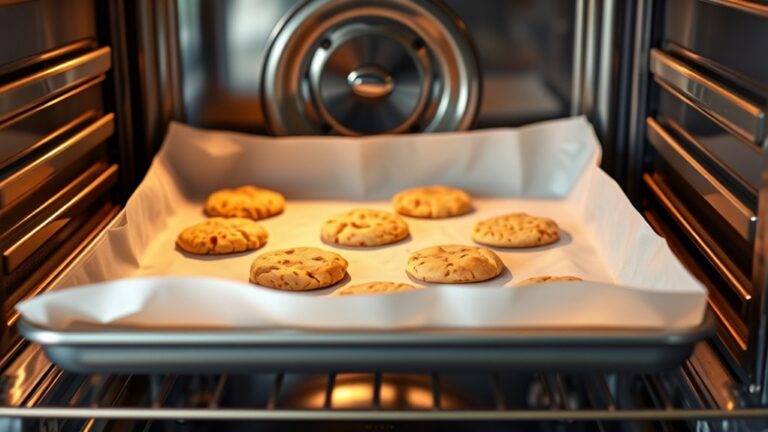
To use parchment paper safely, always place it on baking sheets—not directly on racks. Also, avoid letting it curl or touch heating elements inside the oven.
It’s a simple way to keep things safe while still enjoying the convenience of parchment paper.
Don’t leave the oven unattended when using parchment paper. If you need to cook at higher temperatures, consider alternatives like silicone mats.
These tips will help you bake safely and effectively every time!
Understanding Parchment Paper and Its Heat Resistance
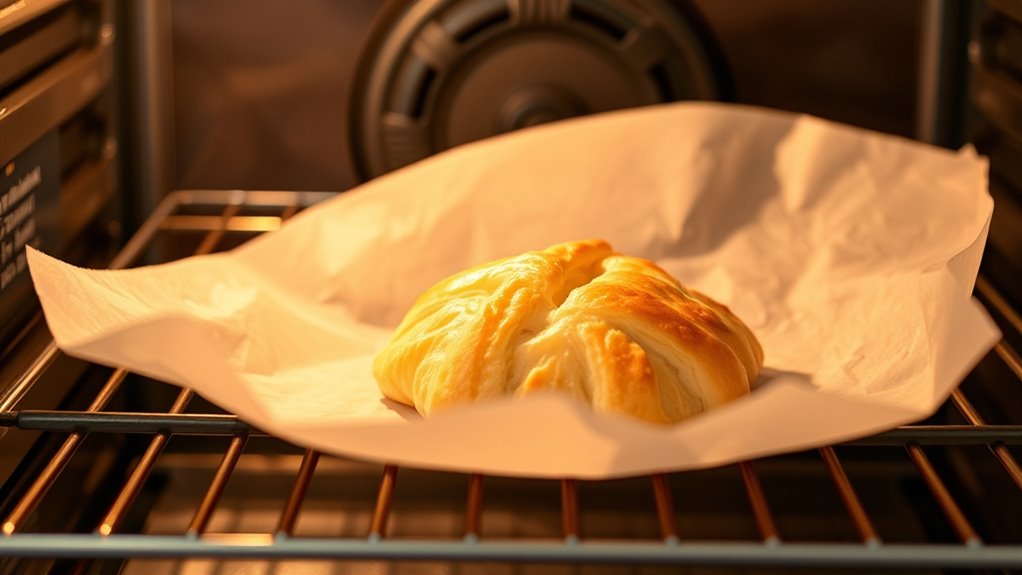
Although parchment paper can withstand high temperatures, you should understand its heat resistance limits to use it safely. Parchment paper is coated with silicone, making it non-stick and heat-resistant, which is why it’s popular for baking and cooking.
You’ll find it handy for lining baking sheets or wrapping foods, preventing sticking and making cleanup easier. However, it’s designed to handle heat up to a certain point without burning or catching fire.
Keep in mind, it’s not the same as wax paper, which can ignite at lower temperatures. When you use parchment paper correctly, it’ll serve you well in the kitchen, but pushing it beyond its limits could lead to unsafe situations.
Always check the manufacturer’s guidelines before use.
The Temperature Limits of Parchment Paper
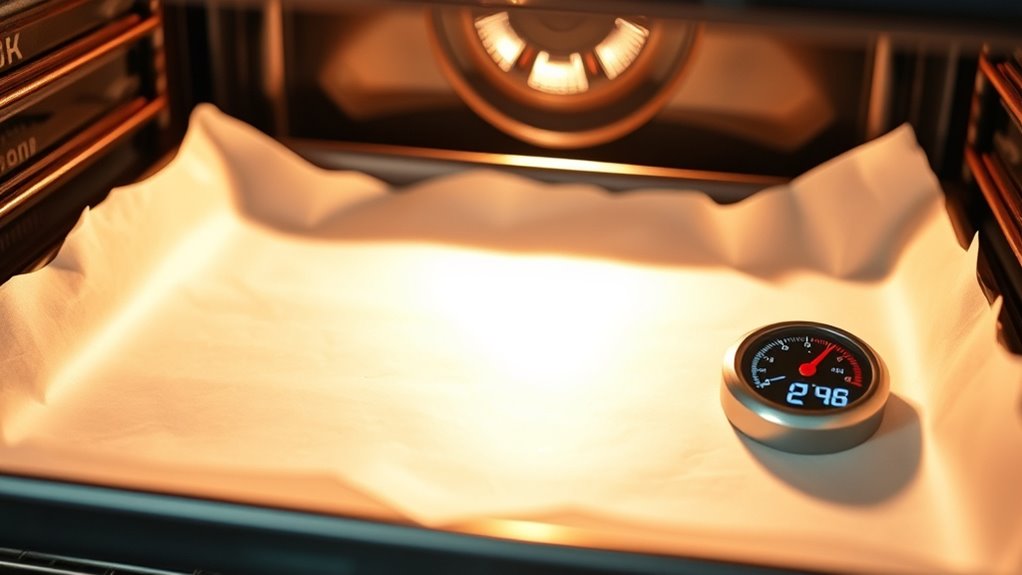
When you use parchment paper, you need to know its exact temperature limits to prevent any fire hazards or damage. Most parchment papers are heat resistant up to around 420°F (215°C).
Exceeding this limit can cause the paper to brown, become brittle, or even ignite. So, always check the packaging for the manufacturer’s specified maximum temperature, as it can vary slightly.
If your cooking or baking requires higher temperatures, consider alternative methods or materials. Also, avoid placing parchment paper directly under an open flame or heating element, even if the temperature seems within limits.
Sticking to these temperature guidelines helps you use parchment paper safely. That way, it serves its purpose without any risk.
What Happens When Parchment Paper Is Exposed to Open Flames
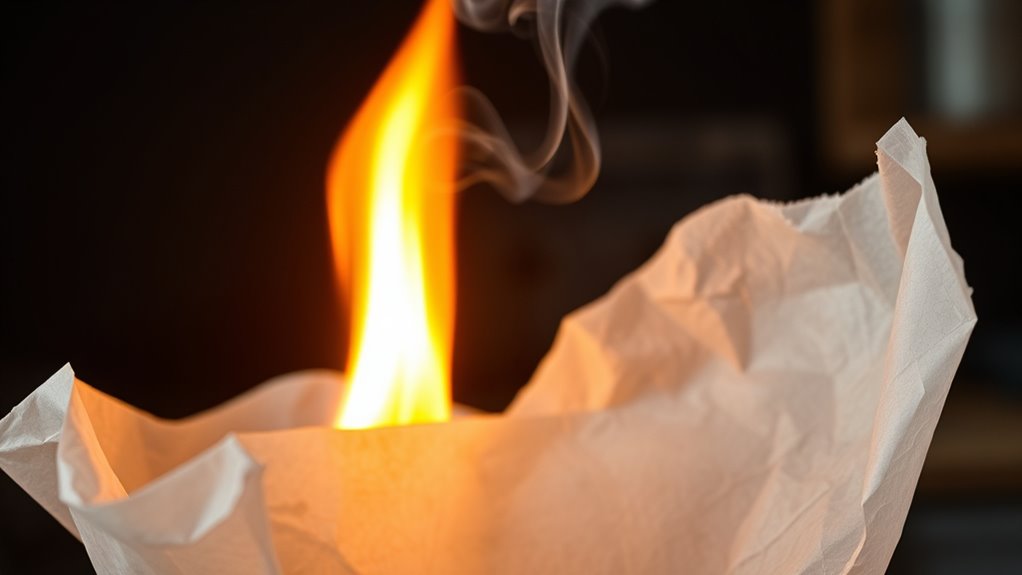
When parchment paper meets an open flame, it quickly reaches its combustion temperature and can catch fire. You’ll notice it chars, burns, and produces smoke almost immediately.
It’s pretty quick to ignite, so you’ve got to be careful. Understanding how flame exposure affects parchment paper helps you avoid dangerous kitchen fires.
Combustion Temperature Threshold
Have you ever wondered what happens to parchment paper if it touches an open flame? Parchment paper has a combustion temperature threshold of around 420°F (215°C). When exposed to temperatures below this, it stays intact, but once it hits that point, things change fast.
If you expose parchment paper to direct flames, it can ignite quickly and burn fiercely. It also produces an unpleasant, acrid smell and releases potentially harmful fumes.
Plus, the paper will turn black and brittle almost instantly. This can damage your cookware or the interior of your oven.
Knowing this threshold is really helpful. It helps you avoid accidental fires and keeps your kitchen safe.
Flame Exposure Effects
If parchment paper meets an open flame, it ignites almost immediately, producing thick black smoke and a sharp, unpleasant odor. You’ll notice it burns quickly, turning to ash in seconds.
Because parchment paper is coated with silicone, it resists moderate heat but can’t withstand direct flames. When exposed, the coating breaks down, releasing fumes that might irritate your eyes or lungs.
Flames will spread fast, so you must act quickly to prevent a fire from escalating. Never place parchment paper directly on a burner or grill flame.
Instead, use it only for baking or cooking methods without open flames. Understanding these effects helps you avoid accidents and keeps your kitchen safe.
Safe Oven Practices for Using Parchment Paper
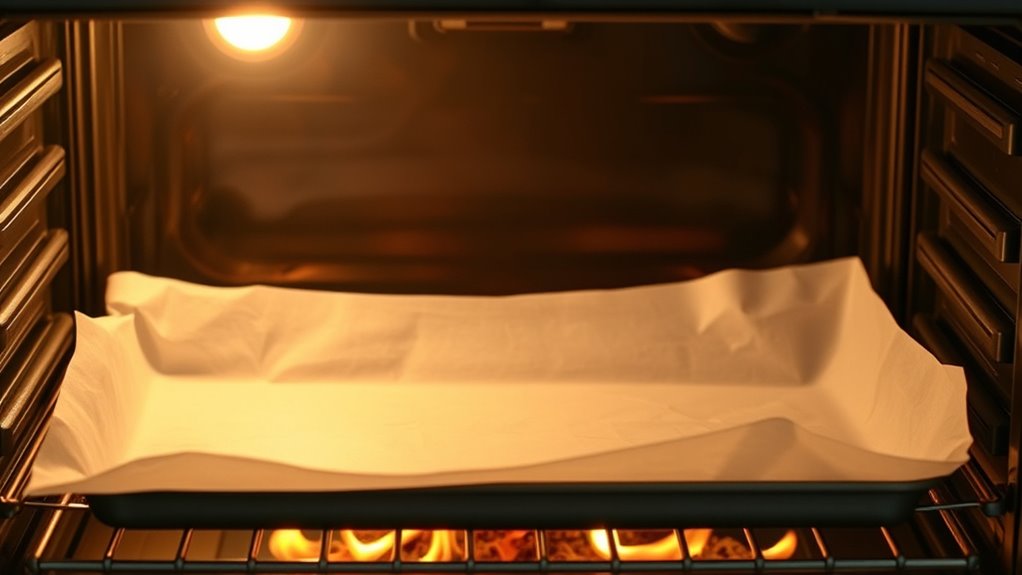
You should never exceed your oven’s recommended temperature when using parchment paper, usually around 420°F (215°C). Always place the paper on a baking sheet or pan, never directly on the oven rack.
These steps help prevent the paper from burning or catching fire. It’s a simple way to keep your baking safe and your kitchen accident-free.
Oven Temperature Limits
How hot can you safely heat parchment paper without risking a fire? Most parchment papers withstand temperatures up to 420°F (215°C). Exceeding this can cause scorching or even ignite the paper.
To keep your cooking safe and stress-free, always check the parchment paper’s temperature rating before use. It’s a quick step that can save a lot of trouble later.
Avoid direct contact with heating elements or open flames. And when you’re using parchment, try to keep your oven temperature below 420°F.
If you need to cook at higher temperatures, consider alternatives like silicone mats. They can handle the heat without any worries.
Also, never leave the oven unattended while baking with parchment paper. Safety first, right?
Proper Paper Placement
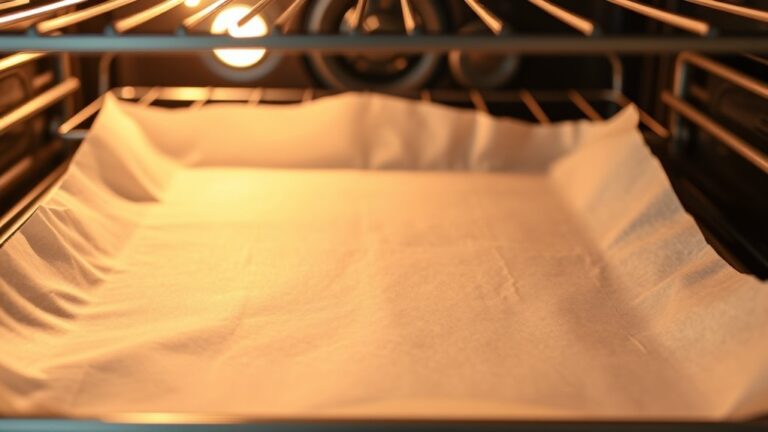
When placing parchment paper in your oven, make certain it lies flat and doesn’t touch the heating elements or oven walls. This prevents the paper from overheating or catching fire.
Always trim excess parchment so it fits neatly inside your baking tray without curling up. Avoid letting the paper extend beyond the edges, as that increases fire risk.
Use oven-safe trays and racks to keep the parchment stable and away from direct heat sources. This helps everything bake evenly and safely.
| Placement Tip | Why It Matters | Example |
|---|---|---|
| Lay flat | Prevents curling and burning | Smooth paper on baking sheet |
| Avoid heating elements | Stops direct flame contact | Keep paper centered on tray |
| Trim excess edges | Reduces fire hazards | Cut paper to tray size |
| Use oven racks | Improves air circulation | Place tray on middle rack |
| Check before baking | Ensures safety | Inspect paper position first |
Alternatives to Parchment Paper for High-Heat Cooking
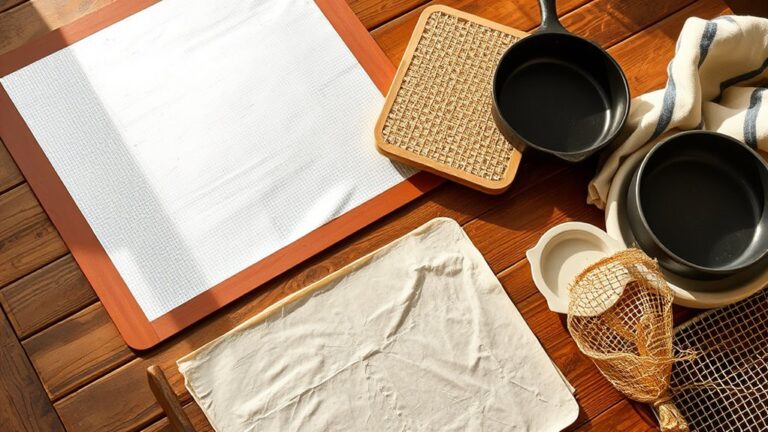
Although parchment paper is popular for many cooking tasks, it isn’t always suitable for high-heat applications due to its lower heat tolerance. When you need to cook or bake at temperatures above 420°F (215°C), consider these safer alternatives to avoid fire risks and guarantee your food cooks perfectly.
Parchment paper isn’t ideal for high heat—choose safer alternatives above 420°F to ensure safety and perfect cooking.
- Silicone baking mats: Reusable, heat-resistant, and non-stick—ideal for high-heat baking.
- Aluminum foil: Great for roasting and grilling but avoid acidic foods that react with foil.
- Oven-safe glass or ceramic dishes: Perfect for baking casseroles or roasting vegetables safely.
- Cast iron skillets: Excellent for high-heat searing and baking without sticking.
- Greased baking sheets: Simple and effective when you don’t have parchment paper on hand.
Choosing the right option keeps your kitchen safe and your meals delicious. It’s all about picking what works best for your recipe and heat level!
Tips for Storing and Handling Parchment Paper Safely
Using alternatives to parchment paper for high-heat cooking helps prevent fire hazards, but knowing how to store and handle parchment paper properly also plays a big role in kitchen safety.
Keep your parchment paper in a cool, dry place away from direct sunlight and heat sources to avoid premature deterioration or accidental ignition. Always store it in its original packaging or a sealed container to protect it from moisture and dust.
When handling, avoid tearing off large sheets that can catch fire easily if they touch hot surfaces. Use scissors to cut the exact size you need.
Never place parchment paper directly on open flames or heating elements, and always monitor it while in use. Following these tips ensures you use parchment paper safely and effectively.
Conclusion
Now that you know parchment paper can catch fire if pushed beyond its heat limits, you’ll want to keep it away from open flames and high oven temperatures.
Remember, it’s a helpful kitchen tool—when used right, it makes baking and cooking much easier. Stick to safe oven practices, and you’ll avoid any fiery mishaps.
Using parchment paper safely means keeping it within its recommended temperature range, usually up to about 420°F (215°C). Avoid letting it touch heating elements or flames directly.
By following these simple tips, you can enjoy all the benefits of parchment paper without worry. It’s perfect for baking, roasting, and even steaming—just keep safety in mind to prevent it from catching fire.
So, when you use parchment paper correctly, it’s like having your cake and eating it too—helping you bake smarter and safer every time.