Can You Put Butcher Paper in the Oven?
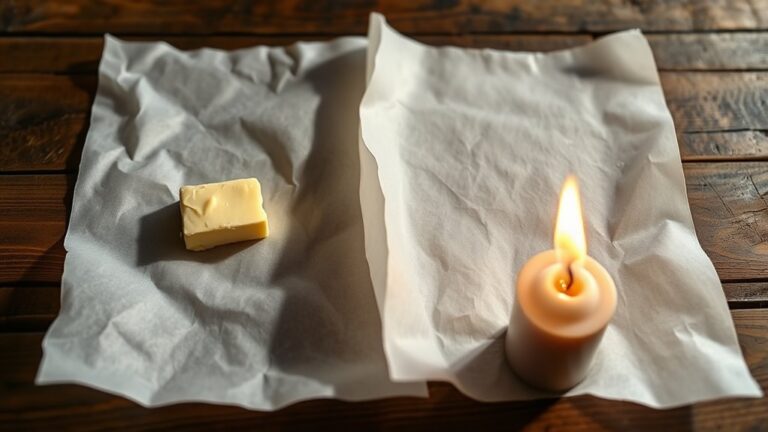
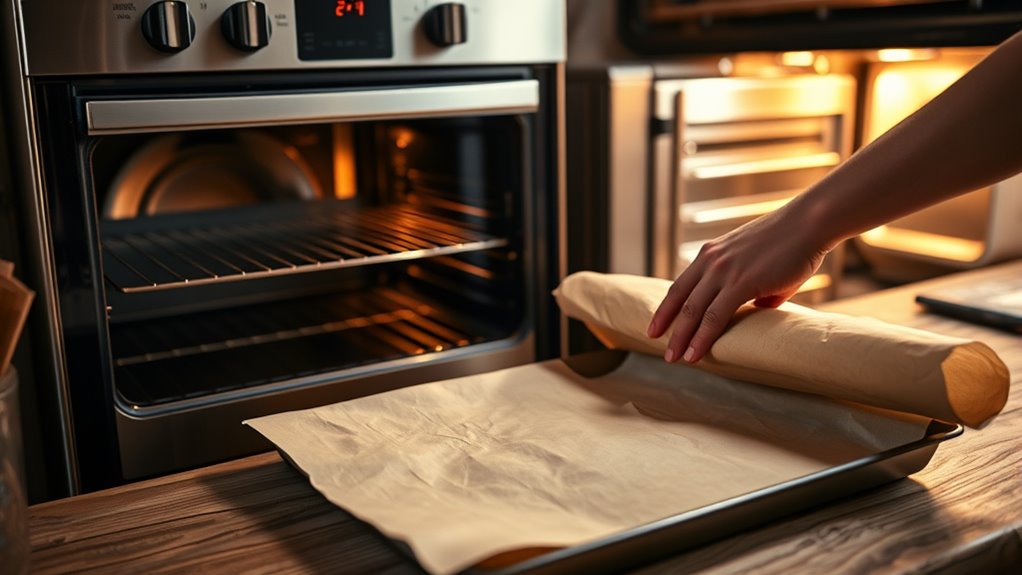
You can put butcher paper in the oven, but only at low temperatures up to about 220°F (104°C) to avoid burning or fire risks. It’s strong and moisture-resistant but not designed for high heat or direct flames.
So, if you’re thinking about using butcher paper for cooking, it’s important to keep the temperature low.
For higher temperatures or baking, it’s safer to use parchment paper or foil. These materials handle heat better and reduce hazards.
Want to know the best cooking uses and temperature limits for butcher paper? There’s more to explore ahead!
What Is Butcher Paper Made Of?
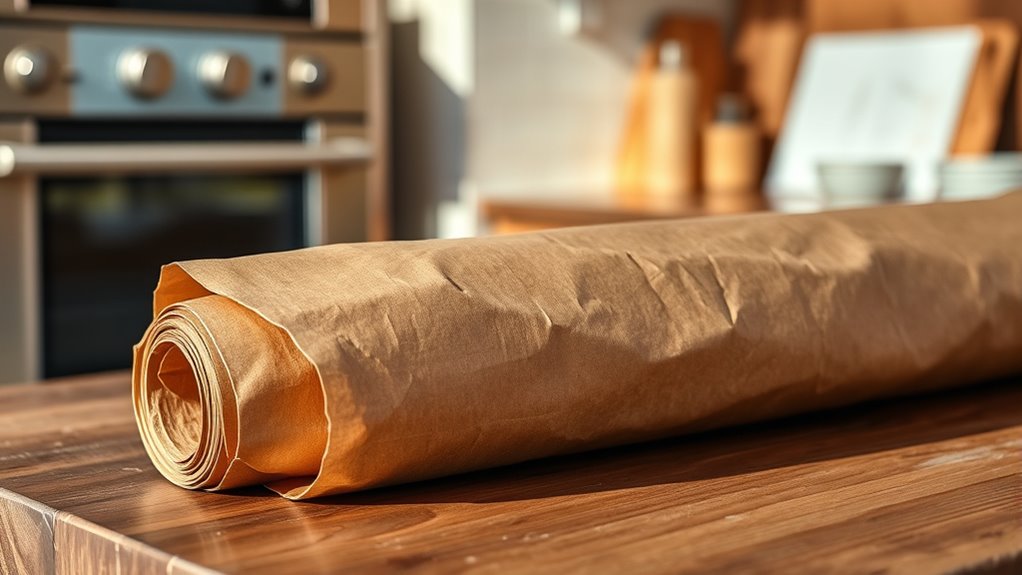
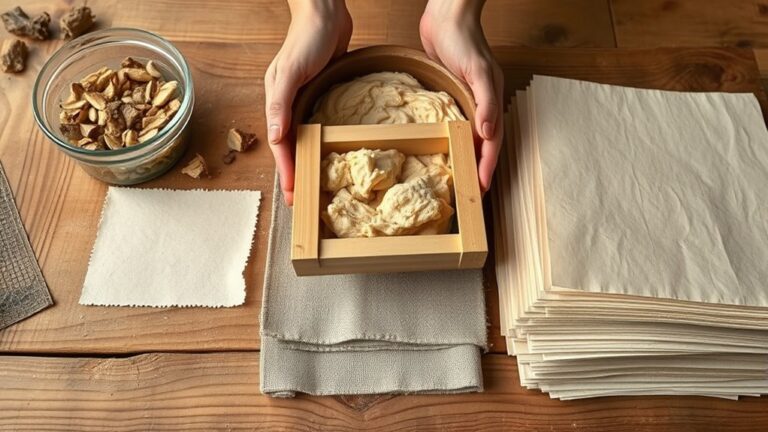
Butcher paper is made primarily from kraft pulp, which gives it strength and durability. When you handle butcher paper, you’ll notice it has a coarse texture compared to regular paper.
That’s because it’s designed to withstand moisture and grease without tearing easily. The kraft pulp undergoes a chemical process that removes impurities, making the paper tough and resistant.
Crafted to resist moisture and grease, butcher paper’s chemical refining ensures its toughness and durability.
Often, butcher paper is unbleached, giving it a natural brown color, but it can also come bleached white. You’ll find it’s thicker than standard paper, which helps when wrapping meat or other foods.
This composition ensures the paper can hold up during food prep and storage, but it’s not the same as parchment or wax paper, which have coatings to provide non-stick properties. So, it’s pretty durable but doesn’t have that slick surface you might expect.
Heat Resistance and Safety of Butcher Paper
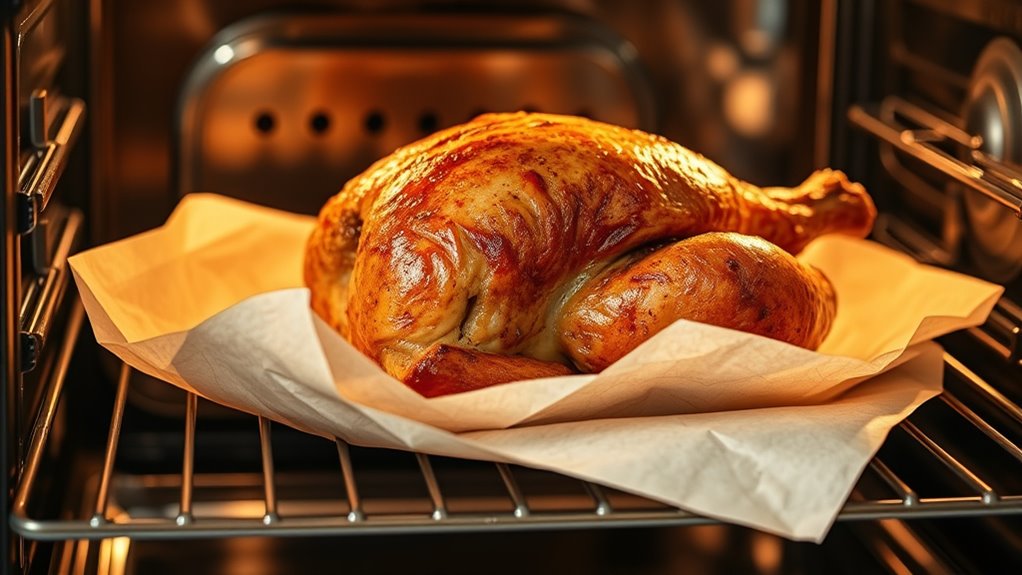
You need to know the heat limits of butcher paper before using it in the oven to avoid safety risks. Not all butcher paper is food-safe at high temperatures, so it’s important to evaluate its specifications.
If it’s not suitable, you might want to consider alternatives like parchment paper or foil for cooking. These options can handle heat better and keep your food safe.
Butcher Paper Heat Limits
Although butcher paper is designed to withstand moderate heat, it has clear limits that you should never surpass to ensure safety and maintain its integrity. Exceeding these limits can cause the paper to burn, release harmful fumes, or even start a fire.
Here’s what you need to know about butcher paper heat limits:
- Maximum temperature: Butcher paper generally tolerates up to 225°F (107°C). Going beyond this risks scorching or ignition.
- Direct flame: Never expose butcher paper to direct flames or broiler elements; it’s not flame-retardant.
- Oven time: Limit exposure time at high temperatures. Even if within limits, prolonged heat can weaken the paper.
Food Safety Considerations
When handling butcher paper in cooking, it’s important to ponder its heat resistance and how it affects food safety. Butcher paper is designed primarily for wrapping, not high-heat cooking, so it can char or ignite if exposed to temperatures above its limit.
This means you should never use it in ovens set hotter than about 220°F (104°C). Additionally, butcher paper isn’t coated with food-safe heat-resistant substances, so chemicals or inks may leach into your food when heated excessively.
To keep your meals safe, always check the packaging for oven use guidelines and avoid direct flame or broiler contact. By respecting these limits, you reduce the risk of contamination and fire hazards, ensuring your food stays safe and delicious.
Alternatives to Butcher Paper
How can you safely wrap or cook food without risking the hazards associated with butcher paper? Fortunately, there are several alternatives designed to handle heat better and keep your cooking safe:
- Parchment Paper – It’s coated to resist moisture and grease. It’s safe up to about 420°F, making it perfect for baking and roasting.
- Aluminum Foil – Extremely heat-resistant and versatile. Foil can wrap food tightly and withstand high oven temperatures without burning.
- Silicone Baking Mats – These mats are reusable and non-stick. They handle high heat well and eliminate the risk of paper catching fire.
Choosing these options helps you avoid the safety risks of butcher paper. Plus, it ensures your food cooks evenly and safely.
Comparing Butcher Paper to Parchment and Foil
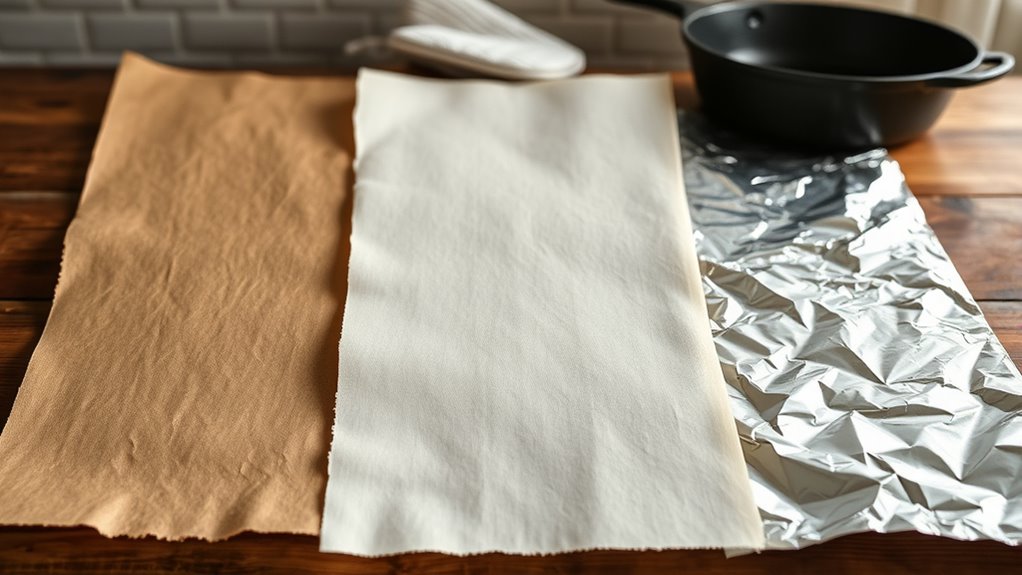
You might wonder how butcher paper stacks up against parchment and foil when it comes to heat resistance. Butcher paper can handle moderate heat but isn’t as durable as foil or as non-stick as parchment.
Understanding these differences helps you choose the right wrap for your cooking needs. It’s all about picking what works best for your dish and cooking style.
Butcher Paper Heat Resistance
Although butcher paper is popular for wrapping meats, it handles heat differently than parchment paper and aluminum foil. You should know that butcher paper is designed mainly for cold or room temperature use. It can tolerate moderate heat but not the high temperatures that ovens reach.
Here’s what you need to remember:
- Butcher paper can usually withstand temperatures up to around 220°F (104°C) without charring or catching fire.
- Parchment paper handles higher heat, typically safe up to 420°F (215°C), making it more oven-friendly.
- Aluminum foil can endure very high heat without burning, making it ideal for oven cooking and roasting.
Differences From Parchment Foil
Since butcher paper, parchment paper, and aluminum foil serve different purposes in the kitchen, understanding their key differences is essential for choosing the right material.
Butcher paper is porous and breathable, making it great for wrapping meats during smoking or resting. But it’s not designed to withstand high oven heat.
Parchment paper has a silicone coating that resists heat up to around 420°F, so you can safely use it for baking and roasting.
Aluminum foil, on the other hand, is completely heat-resistant and creates a tight seal. It’s perfect for wrapping food to retain moisture or for cooking at high temperatures.
Best Uses for Butcher Paper in Cooking
When cooking, butcher paper offers versatile benefits that go beyond simple wrapping. You can use it to enhance flavor, presentation, and even cleanup.
Here are three of the best ways to use butcher paper in your kitchen:
- Wrapping Meat for Smoking: Butcher paper allows your meat to breathe while retaining moisture. This produces tender, flavorful results without the sogginess that foil can cause.
- Serving and Presentation: Lay butcher paper on a tray or table for a rustic, easy-to-clean serving surface. It’s perfect for casual meals like BBQ or sandwiches.
- Resting Cooked Meats: Wrap your meats loosely in butcher paper during resting to keep them warm without trapping steam. This helps preserve texture and juiciness.
These uses make butcher paper a practical kitchen tool for various cooking tasks. Give it a try next time you’re in the kitchen!
Temperature Limits for Using Butcher Paper in the Oven
How hot can you safely heat butcher paper in your oven? Generally, butcher paper can withstand temperatures up to 220°F (105°C) without catching fire or breaking down.
Butcher paper is safe in the oven up to 220°F before it risks damage or ignition.
However, you shouldn’t push it beyond this limit because the paper may scorch, become brittle, or even ignite. If you’re cooking at higher temperatures, butcher paper won’t hold up well.
It’s designed more for wrapping and low-heat applications rather than direct exposure to intense heat. Always check the packaging or manufacturer’s guidelines, as some butcher papers might have coatings or treatments that slightly alter their heat tolerance.
To avoid ruining your food or risking a fire hazard, stick to oven temperatures below 220°F when using butcher paper.
Alternatives to Butcher Paper for Oven Cooking
Although butcher paper works well for low-temperature cooking, you’ll need other options for higher heat or different cooking methods.
When the temperature rises above butcher paper’s safe limit, or you want to lock in moisture more effectively, consider these alternatives:
- Parchment Paper – It’s oven-safe up to around 420°F (215°C) and great for baking or roasting without sticking.
- Aluminum Foil – Perfect for high heat and helps retain moisture, though it doesn’t breathe like butcher paper.
- Silicone Baking Mats – Reusable and heat-resistant, these mats offer a non-stick surface ideal for baking.
Each option serves a unique purpose, so picking the right one depends on your recipe and oven temperature. It’s all about finding what works best for your cooking style!
Conclusion
So, can you put butcher paper in the oven? You can, but only if you keep the temperature low and your timing right—think of it as a delicate dance with heat. Unlike parchment or foil, butcher paper isn’t built for high heat, so don’t push your luck.
When in doubt, choose safer alternatives to avoid a smoky surprise. Remember, cooking smart means knowing your paper’s limits and keeping your meal on track. Using butcher paper in the oven is possible, but only at low temperatures and for shorter durations. If you need to cook at higher temperatures, it’s better to use parchment paper or aluminum foil instead.
In summary, while butcher paper can go in the oven, it’s best reserved for low-heat cooking and careful timing. This ensures your food cooks well without the paper catching fire or producing smoke. Always consider the type of paper you use in the oven to keep your cooking safe and successful.