Are Parchment Paper and Butter Paper the Same?
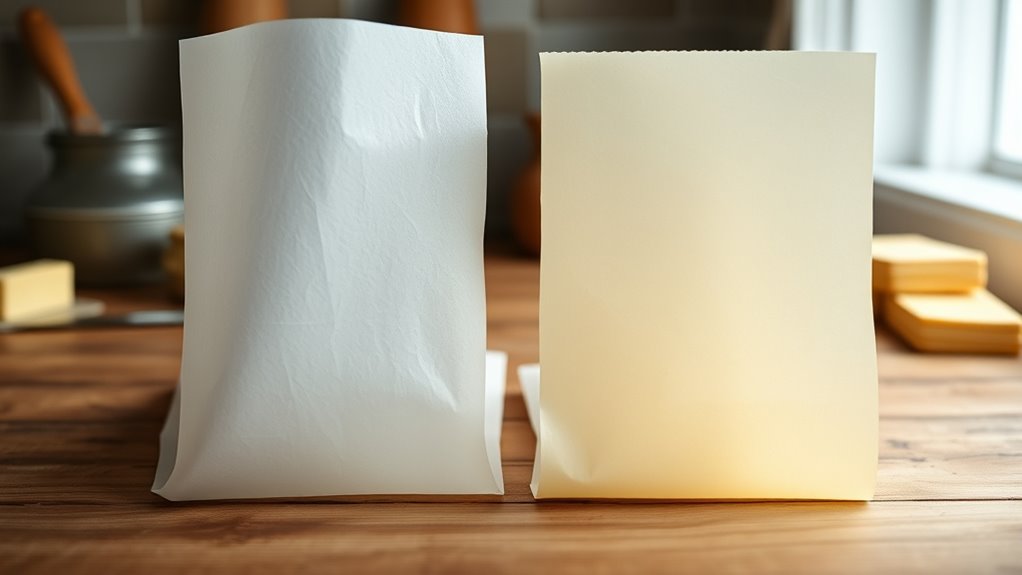
Parchment paper and butter paper aren’t the same, and using one instead of the other can really impact your cooking. When it comes to baking or roasting, parchment paper is your best friend. It’s heat-resistant and has a non-stick silicone coating, which makes it perfect for those high-temperature kitchen tasks.
On the other hand, butter paper is coated with wax and is mainly used for wrapping or cold storage. It’s not designed to handle high heat at all.
So, if you try to use butter paper in the oven, you risk it melting or even catching fire.
Keep this in mind, and you’ll see why choosing the right paper matters when preparing your food. It’s a small detail, but it can make a big difference in your cooking results!
What Is Parchment Paper?
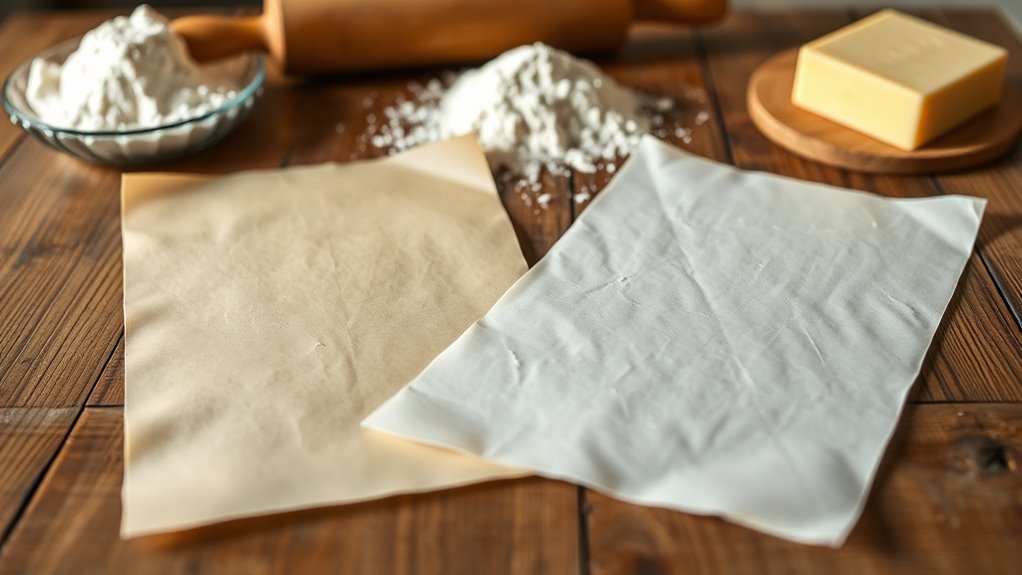
What exactly is parchment paper, and why do you need it in your kitchen? Parchment paper is a heat-resistant, non-stick paper designed for cooking and baking. When you line your baking sheets or pans with it, you prevent food from sticking, making cleanup much easier.
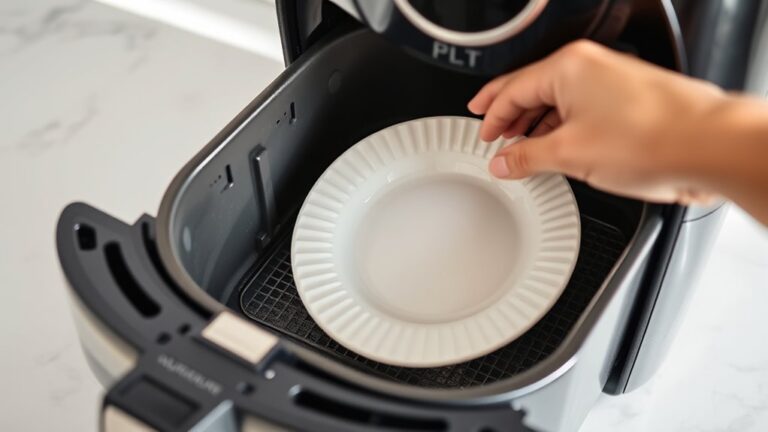
It’s coated with silicone, which gives it that non-stick quality and heat resistance up to around 420°F (215°C). You can use it for roasting vegetables, baking cookies, or even steaming fish.
Since it doesn’t burn easily, you can safely use it in the oven without worrying about smoke or fire. Unlike regular wax paper, parchment paper withstands heat, so it’s perfect for both cooking and baking tasks, making it a versatile kitchen essential.
What Is Butter Paper?
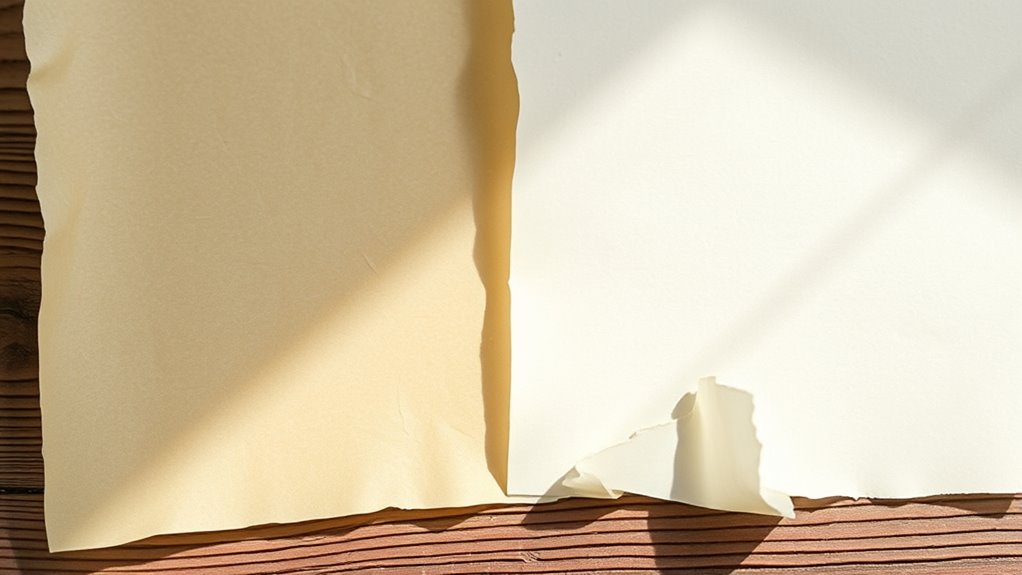
How does butter paper differ from parchment paper, and when should you use it? Butter paper is a thin, translucent sheet coated with a light layer of wax or grease, primarily designed to prevent sticking and moisture loss.
You’ll often find it used to wrap butter, cheese, or deli meats, as it keeps these items fresh without absorbing moisture. Unlike parchment paper, butter paper isn’t heat-resistant, so you shouldn’t use it for baking or cooking.
Instead, it works best for food storage, sandwich wrapping, or lining trays for cold, oily, or sticky foods. When you need a non-stick, moisture-proof barrier but won’t expose it to heat, butter paper is the practical choice to keep your food fresh and tidy.
Key Differences Between Parchment Paper and Butter Paper
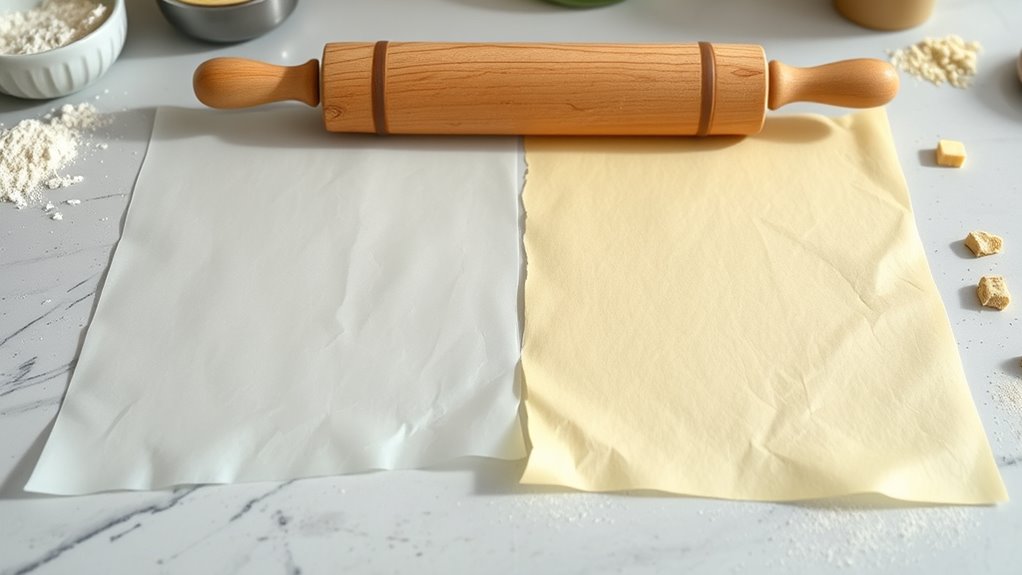
You’ll notice that parchment paper and butter paper differ mainly in their material makeup and heat resistance.
Understanding these differences helps you choose the right paper for cooking or wrapping.
Let’s explore how each one performs under heat and what they’re made of.
Material Composition Differences
Although parchment paper and butter paper may look similar, their material compositions set them apart markedly. When you choose between them, understanding these differences helps you pick the right one for your needs.
Parchment paper is made from cellulose fibers that undergo a coating process with silicone, making it non-stick and moisture-resistant. Butter paper is usually simpler, consisting of plain, untreated or lightly treated translucent paper without silicone.
The silicone coating on parchment paper gives it a smooth, slick surface perfect for baking and cooking. Butter paper, being more porous, is often used for wrapping food or separating items but not for high-heat applications.
Knowing these distinctions ensures you use each paper properly and avoid mishaps in the kitchen. So, it pays to know which one works best for what you’re doing!
Heat Resistance Properties
Because parchment paper features a silicone coating, it can withstand high temperatures, typically up to 420°F (215°C), without burning or curling. This makes it ideal for baking tasks like roasting vegetables or lining cake pans.
On the other hand, butter paper lacks this heat-resistant coating and is coated simply with wax. As a result, it can only handle low to moderate heat and will start melting or smoking if exposed to high oven temperatures.
If you use butter paper in the oven, it’s best limited to wrapping foods or storing items rather than direct baking. Understanding these heat resistance differences helps you choose the right paper, ensuring safe cooking and preventing unwanted messes or burning in your kitchen.
Heat Resistance and Cooking Uses
You’ll want to know how much heat each paper can handle before using it in cooking. Parchment paper tolerates higher oven temperatures, which makes it great for baking.
On the other hand, butter paper isn’t suited for direct heat or stovetop use. So, it’s best to avoid putting it in the oven or on a burner.
Understanding these limits helps you pick the right paper for baking, steaming, or wrapping food. That way, your cooking goes smoothly without any surprises!
Maximum Temperature Tolerance
When you cook or bake, knowing the maximum temperature tolerance of parchment paper and butter paper is essential to prevent burning or melting. Parchment paper can handle higher heat, making it ideal for various cooking tasks. Butter paper, however, has a lower heat tolerance and isn’t suitable for all cooking methods.
Here’s what you should know:
- Parchment paper withstands up to 420°F (215°C) without burning or sticking.
- Butter paper typically tolerates up to 220°F (104°C) before it risks melting or catching fire.
Use parchment paper for roasting, baking, and high-heat cooking. Reserve butter paper for wrapping food or low-heat applications like steaming or storage.
Understanding these limits helps you choose the right paper and avoid kitchen mishaps. So, always check before you cook!
Oven vs. Stovetop Suitability
Knowing the temperature limits of parchment and butter paper helps you decide which one suits your cooking method.
Parchment paper can withstand oven temperatures up to about 420°F (215°C), making it ideal for baking and roasting. You can confidently use it in the oven without worrying about burning or releasing harmful fumes.
Butter paper, however, isn’t designed for high heat. Its wax coating melts below typical oven temperatures, so it’s best reserved for cold or room-temperature uses, like wrapping food or lining trays.
Neither parchment nor butter paper should be used directly on stovetop burners. The direct, intense heat will quickly damage both.
Ideal Cooking Applications
Although parchment paper and butter paper may seem similar, their heat resistance determines their best cooking applications. Parchment paper is heat-resistant up to 420°F (215°C), making it perfect for baking and roasting. Butter paper, however, can’t handle high oven temperatures and is better for tasks that don’t involve direct heat.
Here’s how you can use each:
- Use parchment paper for lining baking sheets and cake pans.
- Wrap foods for oven cooking or steaming with parchment.
- Use butter paper for wrapping sandwiches or storing baked goods.
- Butter paper works well as a surface for rolling out dough or candy making.
Choosing the right paper guarantees your food cooks properly and prevents sticking or burning. So, picking the right one really makes a difference in your cooking!
Environmental Impact and Reusability
Since you care about reducing waste, it’s important to understand how parchment paper and butter paper differ in their environmental impact and reusability. Parchment paper is usually coated with silicone, making it heat-resistant and non-stick, but this coating means it isn’t easily recyclable or compostable.
Understanding the environmental impact and reusability differences between parchment and butter paper helps reduce waste effectively.
However, you can often reuse parchment paper a few times if it’s not heavily soiled.
Butter paper, on the other hand, is typically wax-coated, which can make it less suitable for high-heat cooking and harder to recycle. Wax coatings also limit composting options.
While both papers are single-use by design, reusing parchment paper when possible helps reduce waste. If you want an eco-friendlier option, consider unbleached or biodegradable alternatives, but remember, neither is truly zero-waste.
Choosing the Right Paper for Your Recipe
When you pick the right paper for your recipe, you guarantee better cooking results and easier cleanup. Knowing the difference between parchment and butter paper helps you decide which one to use.
For baking cookies or roasting vegetables, choose parchment paper. It’s heat-resistant and non-stick, preventing food from sticking and burning.
For wrapping sandwiches or storing food, butter paper works well due to its grease-resistant qualities but isn’t heat-safe.
Avoid using butter paper in the oven, as it can smoke or catch fire.
Use parchment paper when you need non-stick and heat resistance, like lining cake pans or steaming fish.
Picking the right paper saves you time and keeps your food tasting great.
Conclusion
Think of parchment paper and butter paper like two trusted friends in your kitchen—each with their own strengths. Just like you wouldn’t wear flip-flops in the snow, you shouldn’t use butter paper for baking.
Parchment paper withstands heat and prevents sticking, making it your go-to for roasting or baking. Butter paper, on the other hand, is better suited for wrapping and storing food, but it can’t handle high temperatures.
Remember, choosing the right paper is like picking the right tool—it can make your cooking experience smoother and your results tastier every time. So, when you’re baking or roasting, always reach for parchment paper to avoid any mishaps. Butter paper and parchment paper may seem similar, but they’re definitely not the same!