Which Paper Towels Can Be Composted?
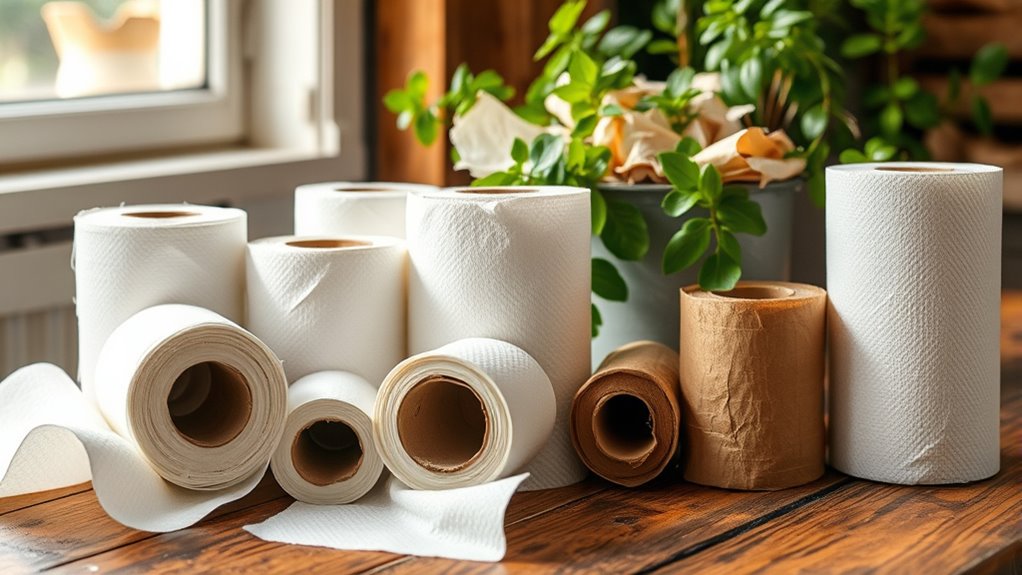
You can compost paper towels made from unbleached, natural fibers that don’t contain synthetic additives, dyes, or fragrances. These types of paper towels break down nicely and add valuable material to your compost pile.
Look for towels labeled chemical-free and avoid ones with plastic coatings, colorful prints, or antibacterial treatments.
Make sure any towels you compost haven’t been used with harsh chemicals or oils. Composting paper towels like these helps create healthy compost that’s great for your garden.
By choosing the right paper towels and preparing them properly, you’ll reduce waste and support a greener lifestyle.
Keep exploring to discover tips and alternatives for composting paper towels effectively. It’s easier than you might think, and every small step counts toward sustainability!
Understanding Compostable Paper Towels
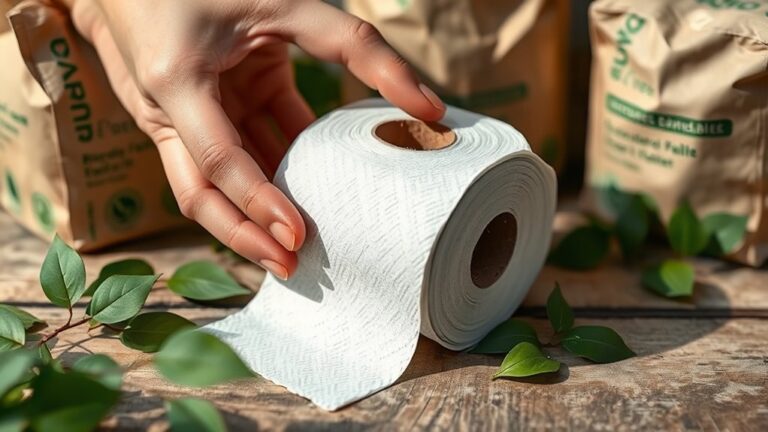
Although not all paper towels break down easily, compostable paper towels are designed to decompose quickly and safely in composting environments. When you choose these towels, you’re picking ones made from natural fibers like unbleached cellulose or recycled paper without synthetic additives.
Compostable paper towels break down quickly, made from natural fibers without synthetic additives for eco-friendly composting.
These materials break down efficiently, returning nutrients to your compost rather than lingering as waste. You’ll notice compostable towels often have certifications or labels indicating they meet specific compostability standards.
Using them means you can confidently toss used sheets into your compost bin without worrying about harmful residues or plastics. Just keep in mind, compostable paper towels work best when they’re free from chemical cleaners or non-organic substances.
Otherwise, they might disrupt the composting process. By selecting the right towels, you support a more sustainable waste cycle. It’s an easy way to make a positive impact!
Identifying Non-Compostable Paper Towels
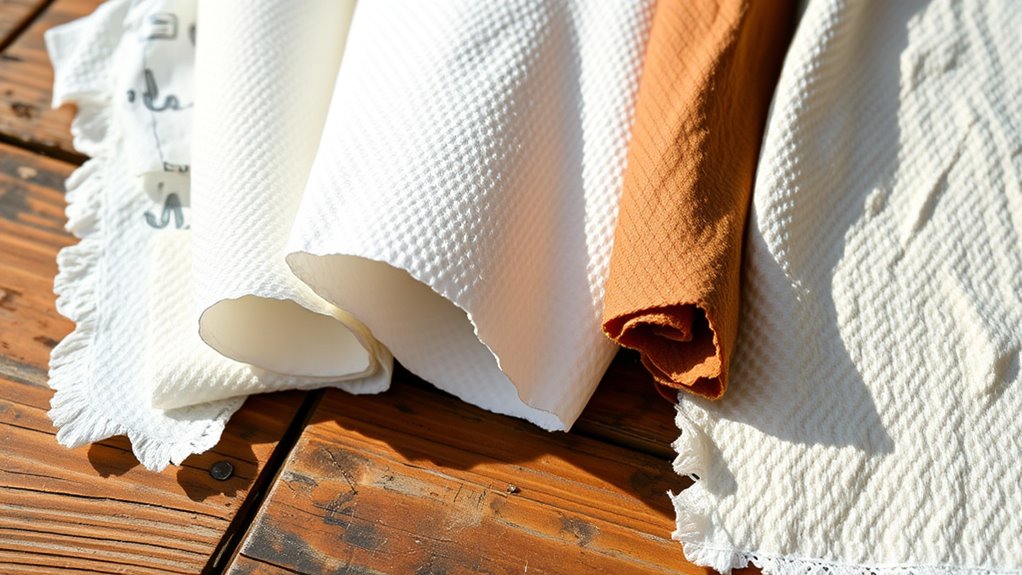
When you’re sorting through paper towels, it’s important to recognize which ones won’t break down in your compost bin. Avoid paper towels made with synthetic fibers like polyester or plastic, as they don’t decompose.
Also, steer clear of towels with shiny or colored prints, since these often contain inks or coatings that resist breakdown. If a paper towel feels unusually thick, plasticky, or coated, it’s likely non-compostable.
Towels designed for heavy-duty cleaning sometimes contain additives that prevent composting. Additionally, single-use towels labeled as “antibacterial” or treated with special finishes may not be suitable.
The Role of Chemicals and Additives
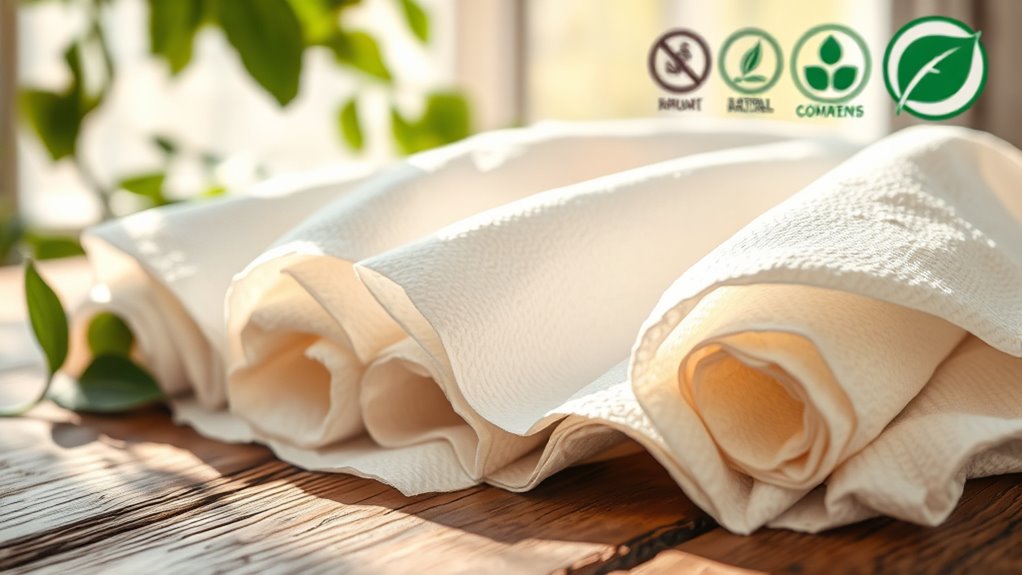
Because chemicals and additives in paper towels can hinder composting, you need to understand their impact before adding them to your bin. Many paper towels contain dyes, fragrances, and lotions that don’t break down easily and can introduce harmful substances to your compost.
Bleaching agents, especially chlorine-based ones, may also persist in the soil, affecting microbial activity and plant growth. When you choose paper towels, look for those labeled unbleached, fragrance-free, and chemical-free to guarantee they decompose safely.
Avoid towels treated with synthetic chemicals or those with colorful prints, as these additives can contaminate your compost and reduce its quality. By paying attention to these factors, you can keep your compost healthy and effective, turning your waste into nutrient-rich soil.
Tips for Composting Used Paper Towels
Understanding the impact of chemicals in paper towels helps you choose the right ones for composting. Start by selecting unbleached, chemical-free towels to avoid harming your compost.
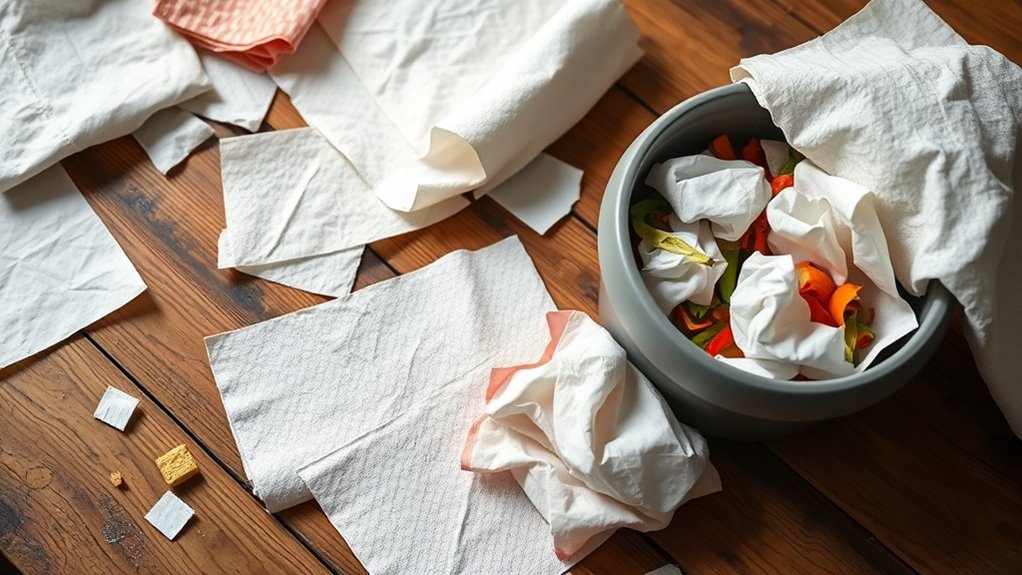
After use, tear the towels into smaller pieces to speed up decomposition. Keep your compost pile balanced by mixing paper towels with green waste like vegetable scraps.
Avoid composting towels used with harsh chemicals or oils, as they can disrupt the composting process.
| Step | Action | Tip |
|---|---|---|
| Choose | Chemical-free towels | Look for unbleached, natural options |
| Prepare | Tear into small pieces | Increases surface area for microbes |
| Balance | Mix with green waste | Maintains nitrogen-carbon balance |
| Avoid | Harsh chemicals or oils | Prevents compost contamination |
Alternatives to Traditional Paper Towels
You can cut down on waste by choosing biodegradable paper options that break down quickly in your compost. Reusable cloth alternatives are another smart choice, saving money and reducing trash.
Plus, making your own DIY compostable towels gives you control over materials and helps the environment even more. It’s a win-win!
Biodegradable Paper Options
Where can you find paper towels that won’t harm the environment? Look for biodegradable paper options made from 100% natural fibers like bamboo, sugarcane, or unbleached recycled paper.
These towels break down quickly in composting systems, unlike conventional ones that often contain synthetic chemicals or additives. When shopping, check labels for certifications like FSC or products labeled as compostable or biodegradable.
Avoid towels with dyes, fragrances, or plastic coatings, as these hinder decomposition. Using biodegradable paper towels helps reduce landfill waste and supports a healthier cycle of resource use.
Reusable Cloth Alternatives
Although disposable paper towels offer convenience, switching to reusable cloth alternatives can substantially cut down waste and save money over time.
You can use cloth towels made from cotton, bamboo, or microfiber that are durable and washable. Unlike single-use paper towels, these cloth options can be laundered and reused dozens, if not hundreds, of times.
You’ll reduce landfill contributions and avoid the chemicals found in some paper products. Plus, cloth towels often absorb moisture better, so you might use fewer overall.
Keep separate cloths for different tasks—like kitchen spills or cleaning surfaces—to maintain hygiene. By choosing reusable cloth towels, you’re not only helping the environment but also making a smart, cost-effective choice for your household.
DIY Compostable Towels
When you want the convenience of disposable towels without the environmental harm, DIY compostable towels offer a smart solution. You can make your own using natural, biodegradable materials that break down quickly in compost.
These towels reduce waste and keep your kitchen eco-friendly. Plus, they’re a great way to feel good about your daily choices.
Here’s a simple comparison to help you choose materials:
| Material | Compostability |
|---|---|
| Unbleached Cotton | Fully compostable |
| Bamboo Fiber | Compostable, fast breakdown |
| Linen | Compostable, durable |
| Hemp | Compostable, sturdy |
You can cut these fabrics into towel-sized pieces, sew edges if desired, and use them just like paper towels. After use, toss them in your compost bin where they’ll decompose naturally.
That way, you get the best of both worlds: convenience and sustainability. Easy, right?
Common Mistakes When Composting Paper Towels
Since paper towels are often seen as disposable waste, you might not realize how easy it is to make mistakes when composting them. One common error is composting towels soaked with chemicals, like cleaning products, which can harm your compost’s balance.
Avoid paper towels with synthetic additives, dyes, or lotions since these won’t break down properly. Another slip-up is adding too many paper towels at once, which can overwhelm your compost and slow decomposition.
Make sure to mix them evenly with green materials like food scraps to maintain a healthy carbon-to-nitrogen ratio. Also, don’t compost glossy or heavily printed paper towels—they often contain inks and coatings that aren’t compostable.
Conclusion
When composting paper towels, remember that about 60% of paper towels sold contain chemicals or additives that prevent them from breaking down properly. You can compost unbleached, chemical-free towels used for food or water spills, but avoid those with lotions or cleaning agents.
By choosing compostable options and being mindful of what you toss in your bin, you’ll reduce waste and help create rich soil. Small changes like these make a big environmental impact. Composting paper towels correctly supports a healthier planet by diverting waste from landfills and enriching your garden’s soil naturally. So next time you reach for a paper towel, think about choosing ones that are safe to compost and watch your efforts turn into something good for the earth.