
How Much Does a Ream of Paper Weigh?
A standard ream of paper, which holds 500 sheets, usually weighs about 5 pounds.
This weight makes it fairly easy to handle and transport, whether you’re carrying it to your office or storing it at home.
Keep in mind, though, that paper weight can vary depending on thickness, moisture, and type.
Bond paper, cardstock, or newsprint all differ quite a bit. These differences affect everything from shipping costs to storage needs.
If you want to understand how these factors impact the weight and handling of your paper, there’s more useful info ahead.
It’s worth knowing so you can make the best choices for your printing and storage needs.
Standard Weight of a Ream of Paper
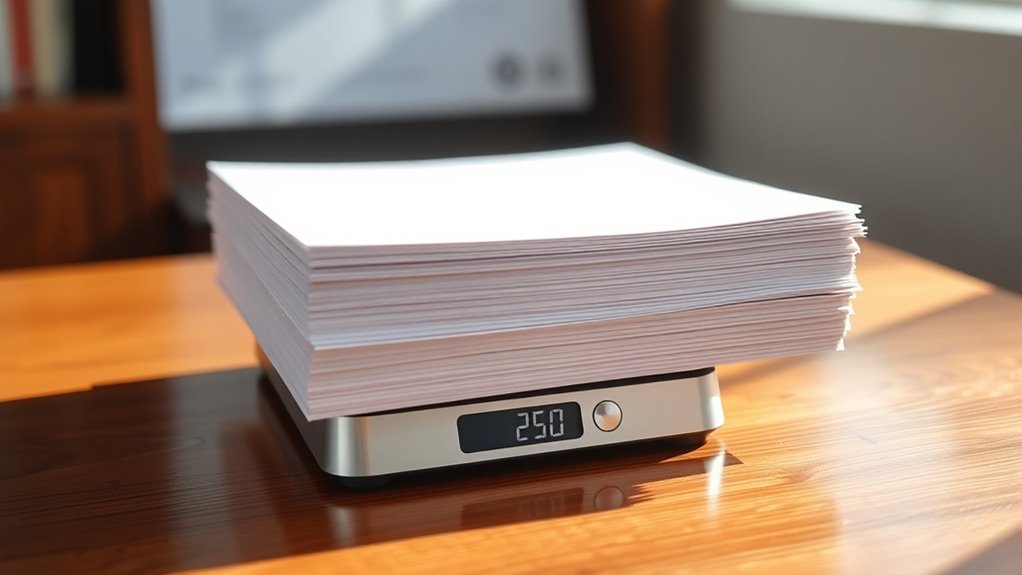
A standard ream of paper typically contains 500 sheets and weighs about 5 pounds. When you pick up a ream, you’re holding a precise, uniform amount of paper designed for everyday use.
This weight assumes you’re dealing with common copy or printer paper, which usually has a basis weight of 20 pounds per 500 sheets in the United States. That means each sheet weighs roughly 0.01 pounds.
You’ll find that this standard is practical for most office tasks, balancing durability and ease of handling. While the size and sheet count remain consistent, the 5-pound weight helps you estimate shipping costs, storage needs, and how much paper you’re using.
Factors Affecting the Weight of Paper
Although the standard ream weight offers a useful baseline, several factors can cause the weight of paper to vary considerably. You’ll find that the paper’s thickness, moisture content, and manufacturing process all play crucial roles.
For example, papers with higher moisture weigh more, and thicker sheets increase total weight. Even the size of the sheets matters, as larger dimensions add weight.
Understanding these factors helps you make better choices when buying paper.
| Factor | Impact on Weight |
|---|---|
| Thickness | Thicker paper weighs more |
| Moisture Content | Adds weight if humid |
| Sheet Size | Larger sheets increase weight |
| Manufacturing | Different fibers affect density |
Weight Differences by Paper Type
How much does the type of paper really affect its weight? Quite a bit, actually. When you pick different paper types, the weight varies because of the materials and manufacturing processes used.
Here’s a quick look:
- Bond Paper: Typically used for office printing, it’s lighter, averaging around 16-20 pounds per ream.
- Cardstock: Heavier and thicker, cardstock can weigh 80 pounds or more per ream, making it sturdier.
- Newsprint: This is the lightest type, often weighing about 12-15 pounds per ream due to its thin, low-quality fibers.
Knowing these differences helps you choose the right paper for your needs. That way, you can avoid surprises with weight when handling or shipping your paper.
How Paper Thickness Impacts Weight
You might not realize it, but paper thickness directly affects its weight because denser paper packs more fibers into the same space.
When you compare thickness and weight, thicker paper usually means a heavier ream, even if the sheet count stays the same.
Understanding this helps you pick the right paper for your needs without surprises.
Paper Density Explained
Since paper thickness varies widely, understanding its density helps you grasp why weight differs even among similar-sized sheets. Paper density measures how much mass a given volume of paper holds, usually expressed in grams per cubic centimeter (g/cm³).
When you know the density, you can predict how heavy a sheet will feel beyond just its size.
Here are three key points about paper density:
- Higher density means the fibers are packed tighter, making the paper heavier and sturdier.
- Lower density paper feels lighter and often more porous, affecting print quality and durability.
- Different paper types (like cardstock vs. newsprint) vary mainly due to their density, not just thickness.
Understanding density lets you better estimate the weight and suitability of paper for your specific needs.
Thickness vs. Weight
Understanding paper density gives you a foundation to see why thickness plays a significant role in weight. When paper is thicker, it generally contains more fibers per sheet, increasing its mass.
You’ll notice that thicker paper, like cardstock, weighs more than thinner options such as standard copy paper. Thickness directly affects the bulk, but the weight depends on both density and thickness combined.
For example, two papers of the same thickness can weigh differently if their densities vary. When buying paper, knowing the thickness helps you estimate its weight, which is essential for shipping or printing.
Calculating Shipping Costs Based on Paper Weight
When calculating shipping costs, knowing the weight of a ream of paper can make a significant difference in your budget. Shipping carriers charge based on weight, so precise measurements help avoid unexpected fees.
Here’s how you can use this information effectively:
- Weigh your paper: A standard ream (500 sheets) typically weighs around 5 pounds, but heavier paper increases costs.
- Calculate total weight: Multiply the number of reams by the weight per ream to get your shipment’s total weight.
- Compare shipping options: Use the total weight to get accurate quotes from carriers, considering both cost and delivery speed.
It’s pretty straightforward once you have the weight down. Just keep an eye on those numbers, and you’ll save some money in the process!
Tips for Handling and Storing Heavy Paper Loads
When you handle heavy paper loads, use proper lifting techniques to protect your back and avoid injury. It’s important to lift carefully to keep yourself safe.
Store paper in a cool, dry place to prevent moisture damage and maintain quality. This way, your paper stays in good shape for longer.
Taking these steps helps you manage paper safely and keep it in good condition. It really makes a difference!
Proper Lifting Techniques
Although a ream of paper may seem manageable, lifting multiple reams or large stacks can quickly strain your muscles and lead to injury. To protect yourself and handle heavy paper loads safely, follow these proper lifting techniques:
- Bend Your Knees, Not Your Back: Squat down to pick up the paper, keeping your back straight and using your leg muscles to lift.
- Hold the Load Close: Keep the reams close to your body to reduce strain on your arms and back.
- Avoid Twisting Movements: Turn your whole body instead of twisting your torso while carrying paper to prevent muscle strain.
Optimal Storage Conditions
Since heavy paper loads can be bulky and susceptible to damage, you should store them in a cool, dry place away from direct sunlight and moisture. Keep them on sturdy shelves or pallets to avoid contact with the floor, which can introduce dampness.
Also, make sure the storage area has good ventilation to prevent humidity buildup that can warp the paper. Avoid stacking reams too high to prevent crushing.
| Storage Tip | Reason | Action |
|---|---|---|
| Cool, dry place | Prevents moisture damage | Store away from windows |
| Elevated storage | Avoids floor dampness | Use pallets or shelving |
| Proper ventilation | Controls humidity | Use fans or dehumidifiers |
| Moderate stacking | Prevents crushing | Limit stack height |
| Avoid sunlight | Prevents fading | Use curtains or blinds |
Conclusion
Now that you know a ream of paper can feel like holding a small brick, you’ll better appreciate its weight in your hands and on your shipping scales. Whether it’s thick cardstock or light printer paper, each type carries its own heft, shaping how you handle and store it.
So, next time you lift that ream, imagine the silent strength it holds—ready to bring your ideas to life, one sheet at a time. Understanding how much a ream of paper weighs helps you manage storage, shipping, and even your printing needs more efficiently. It’s not just about weight; it’s about the potential packed into every bundle.