How to Make Reusable Paper Towels in 7 Easy Steps
To make reusable paper towels in seven easy steps, start by gathering materials like old cotton fabric, scissors, and sewing tools. Choosing absorbent fabrics is key because you want your towels to soak up spills effectively.
Next, measure and cut squares about 10×10 inches for a handy size that’s easy to use around the kitchen.
Now, sew or use fabric glue to secure the edges so they don’t fray after washing. You can add snaps or Velcro for easy folding and storage, which makes them super convenient to keep handy.
Before using, make sure to wash the towels to remove any residues and soften the fabric.
Finally, follow maintenance tips to keep your reusable paper towels durable and fresh. Keep going with these simple steps, and you’ll discover easy ways to make your towels last even longer while reducing waste in your home. It’s a great way to save money and help the environment!
Gather Your Materials
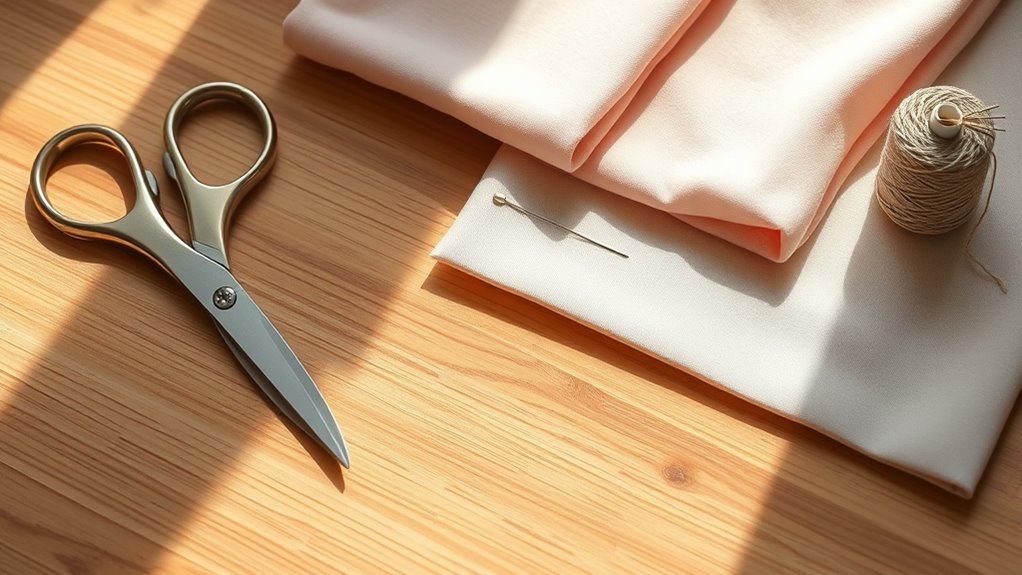
Before you begin, make sure you have all the necessary materials on hand. You’ll need fabric scissors, a ruler or measuring tape, and a sewing machine or needle and thread for stitching.
Grab some pins or clips to hold your fabric pieces together while you sew. Don’t forget to have a marking tool, like fabric chalk or a washable marker, to outline your towel sizes.
You’ll also want to prepare a stack of old cotton T-shirts or towels—these work best for absorbency. Finally, keep a laundry bag nearby for washing your reusable towels after use.
Having everything ready upfront will help you work smoothly and efficiently without unnecessary interruptions. Gather these items, and you’ll be all set to start crafting your reusable paper towels.
Choose the Right Fabric
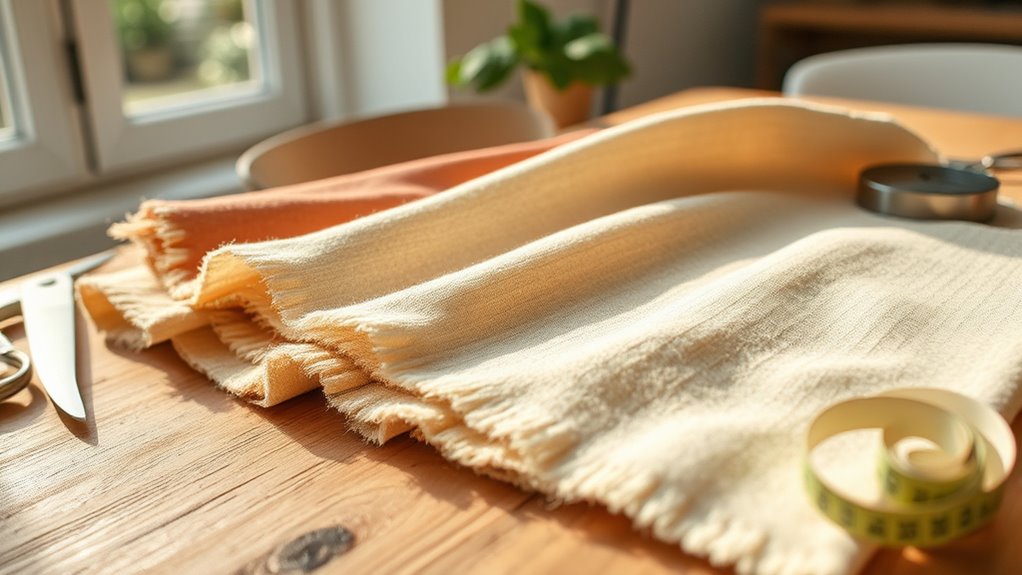
You’ll want to pick fabrics that are absorbent and durable for your reusable paper towels. Cotton and linen are great choices because they hold up well over time and handle repeated washing.
Keep in mind how fabric thickness and weave affect both durability and absorbency as you decide. It’s all about finding the right balance to make your towels last longer and work better.
Best Fabric Types
When selecting fabric for reusable paper towels, choosing the right material makes all the difference in durability and absorbency. Cotton is a top choice because it’s soft, highly absorbent, and easy to wash.
Linen works well too, offering natural antibacterial properties and quick drying. Bamboo fabric is another excellent option; it’s eco-friendly, absorbent, and gentle on surfaces.
You might also consider microfiber, which absorbs liquids efficiently and dries fast, though it’s synthetic. Avoid fabrics that shed lint or don’t hold up well after washing.
Blends combining cotton with linen or bamboo can balance softness and strength. When you pick your fabric, focus on how it feels, absorbs, and cleans.
This ensures your reusable towels perform well day after day.
Fabric Durability Factors
Choosing the right fabric goes beyond absorbency and feel; durability plays a big role in how long your reusable towels last. You want a fabric that can handle frequent washing and drying without breaking down or losing its texture.
Look for tightly woven materials like cotton terry cloth or flannel, which resist wear better than loosely woven fabrics. Also, consider the fiber strength—natural fibers like cotton are breathable and sturdy, but blends with polyester often boost durability.
Avoid delicate fabrics that may fray or pill quickly. Finally, check how the fabric responds to washing; some shrink or fade, affecting your towels’ longevity.
Measure and Cut Fabric Squares
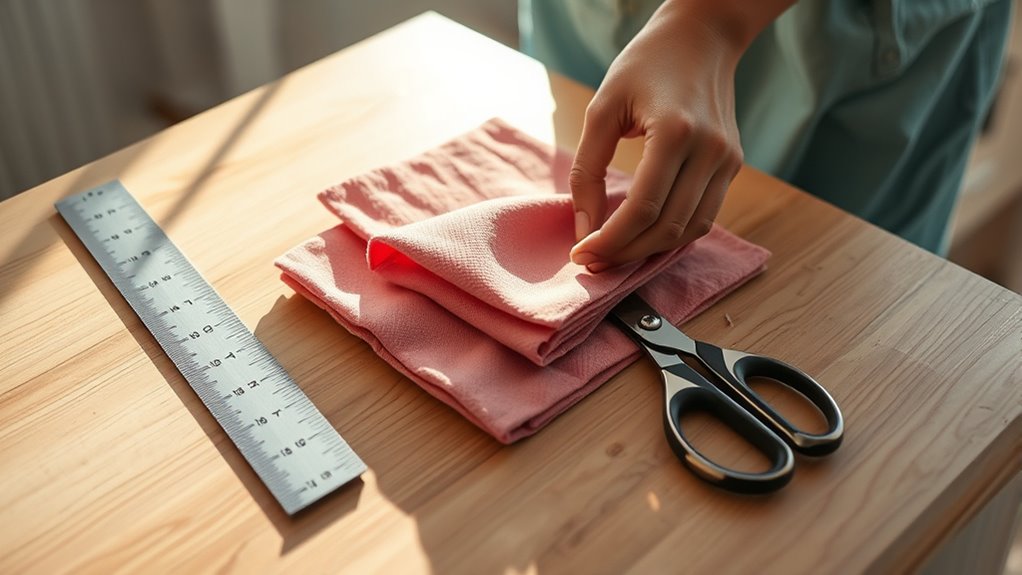
Before cutting, gather your fabric and make sure it’s clean and flat to get accurate measurements. Start by deciding on the size of your reusable paper towels—standard squares around 10×10 inches work well.
Use a ruler or measuring tape to mark your fabric with chalk or a fabric marker for clear, straight lines. Precision here guarantees your towels will be uniform and easy to stack or store.
Keep these tips in mind as you prepare to cut:
- Use sharp fabric scissors for clean edges.
- Cut on a flat, stable surface.
- Double-check measurements before cutting.
- Mark multiple squares at once to speed up the process.
Taking your time now sets you up for a smooth crafting experience ahead. It’s definitely worth the effort!
Sew or No-Sew Options
Although sewing your reusable paper towels adds durability, you don’t have to sew if you prefer a quicker method. If you’re short on time or lack sewing skills, you can simply stack two fabric squares and bind the edges with fabric glue or iron-on adhesive tape.
These no-sew options hold the layers together well enough for everyday use. Just press firmly and let the adhesive dry completely before using the towels. However, keep in mind no-sew towels might not last as long as sewn ones, especially after multiple washes.
If you choose to sew, a simple straight stitch around the edges secures the fabric and prevents fraying. Ultimately, pick the option that fits your comfort level and how often you plan to use and wash your reusable towels.
Add Snap Closures or Velcro
You’ll want to pick the right snap closures for durability and ease of use. When adding Velcro, make sure to sew or stick it firmly so it holds up through washes.
These small details make your reusable towels more practical and long-lasting. It’s all about making sure they stay secure and easy to handle every time you use them.
Choosing Snap Closure Types
When selecting closures for your reusable paper towels, you’ll want to contemplate both durability and ease of use. Snap closures come in various types, so picking the right one guarantees your towels stay secure during use and washing.
Consider these factors when choosing snap closures:
- Material: Plastic snaps are lightweight and rust-resistant, while metal snaps offer extra strength.
- Size: Smaller snaps are discreet but might be harder to fasten; larger ones provide a firmer grip.
- Style: Pry snaps are easy to install and remove, while cap snaps provide a smoother finish.
- Color: Choose colors that match or contrast your towels to add a personalized touch.
Attaching Velcro Securely
How do you guarantee your reusable paper towels stay firmly closed during use and washing? Attaching Velcro securely is key. Start by selecting high-quality, sew-on Velcro strips designed for fabric.
Cut them to the size you want, usually about an inch long. Place the hook side on one towel corner and the loop side on the corresponding spot of the other towel. Pin them in place to keep steady.
Use a sewing machine or needle and thread to stitch around each Velcro piece, reinforcing the edges with backstitches to prevent fraying or detachment. Just be careful not to sew too close to the Velcro’s hooks—that way, you keep their grip intact.
This method ensures your towels stay closed through multiple uses and washes, making them practical and durable. Pretty handy, right?
Wash and Prepare for Use
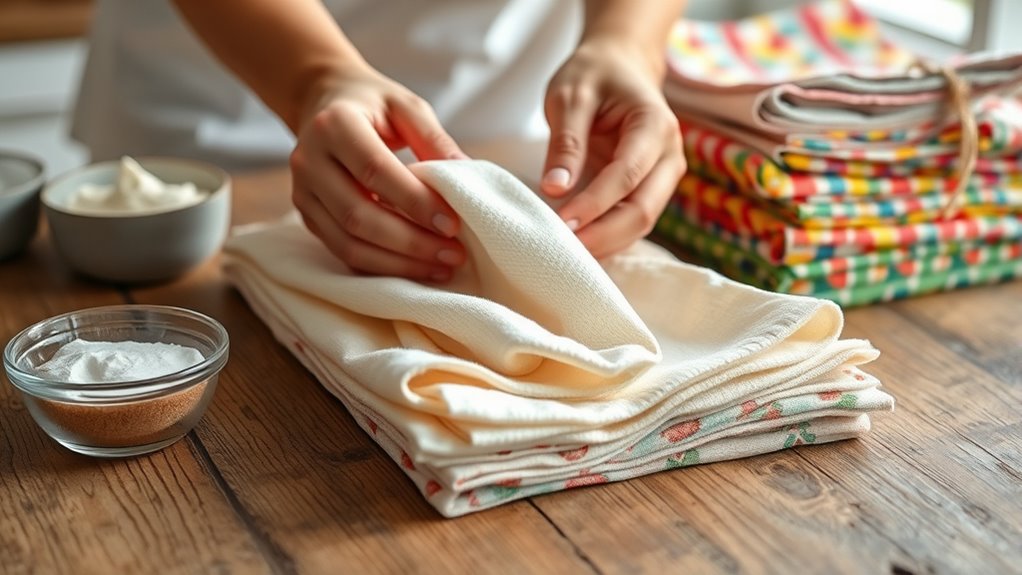
Before using your reusable paper towels, wash them thoroughly to remove any residues from the manufacturing process. This step guarantees your towels are clean, fresh, and ready for everyday use.
Start by sorting your towels by color to prevent bleeding. Use a gentle detergent free of additives to preserve fabric softness and durability. Wash them on a warm cycle to eliminate germs without damaging fibers.
- Separate dark and light colors
- Use mild, fragrance-free detergent
- Select a warm water setting
- Avoid fabric softeners and bleach
After washing, air dry or tumble dry on low heat to maintain their absorbency and longevity. That way, your reusable towels stay in great shape.
Now your reusable towels are clean, fresh, and ready to replace disposable paper towels efficiently. Easy, right?
Tips for Maintaining Your Reusable Towels
Keeping your reusable towels in top condition goes beyond just washing them properly. You’ll want to dry them thoroughly to prevent mildew and keep them smelling fresh.
Avoid fabric softeners, as they reduce absorbency. Store towels in a dry, ventilated area to maintain their quality.
| Tip | Why It Matters | How to Do It |
|---|---|---|
| Dry Completely | Prevents mildew and odors | Air dry or tumble dry low |
| Skip Fabric Softener | Maintains absorbency | Use vinegar in rinse cycle |
| Proper Storage | Keeps towels fresh and dry | Store in a breathable container |
Follow these tips consistently, and your reusable towels will stay effective and last longer. Trust me, it really makes a difference!
Conclusion
Making reusable paper towels is like planting a small garden—you start with simple steps, and soon you’re nurturing something that grows with you. Just like those towels save hundreds of disposable ones from the landfill, your effort sprouts sustainability.
Every time you reach for your handmade towel, remember: small changes add up. You’re not just cleaning up spills; you’re cleaning up your impact, one stitch at a time.
By choosing to make and use reusable paper towels, you’re embracing an eco-friendly lifestyle that reduces waste and promotes sustainability. These towels are easy to make, practical, and help save trees and resources in the long run. So, go ahead and start your journey with reusable paper towels today—because every small step counts in building a greener future.