Is There a Paper Shortage?
Yes, you’re likely facing delays and higher prices because there is a paper shortage caused by raw material shortages, limited logging, and shipping bottlenecks. These challenges have made it harder to keep up with demand.
Demand has shifted too, with e-commerce boosting packaging needs while office paper use declines.
Environmental rules also restrict timber supply, adding pressure on the industry.
Many businesses are adapting with recycled materials and digital alternatives. If you want to understand the full impact and how to manage paper use smartly, keep exploring this topic further.
Current State of Paper Supply Chains
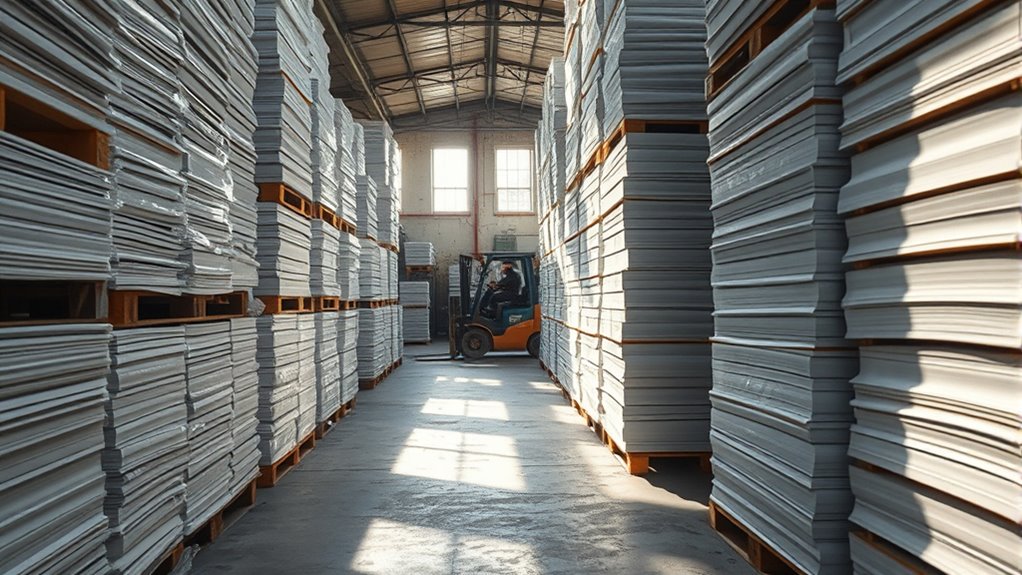
Although demand for paper has fluctuated recently, current supply chains are still struggling to keep up. You might not realize it, but paper production depends heavily on raw materials like wood pulp, which face delays due to limited logging and transportation issues.
Paper production relies on raw materials like wood pulp, facing delays from limited logging and transport challenges.
When factories can’t get these materials on time, your local store shelves might run low. Plus, manufacturing plants have faced labor shortages and equipment maintenance problems, causing further slowdowns.
Shipping bottlenecks add another layer of complexity. So even when paper is produced, it might not reach you quickly.
To navigate this, you should expect occasional shortages or delays when purchasing paper products. Understanding these supply chain challenges helps you anticipate issues and plan accordingly without being caught off guard.
Impact of E-Commerce and Remote Work on Paper Demand
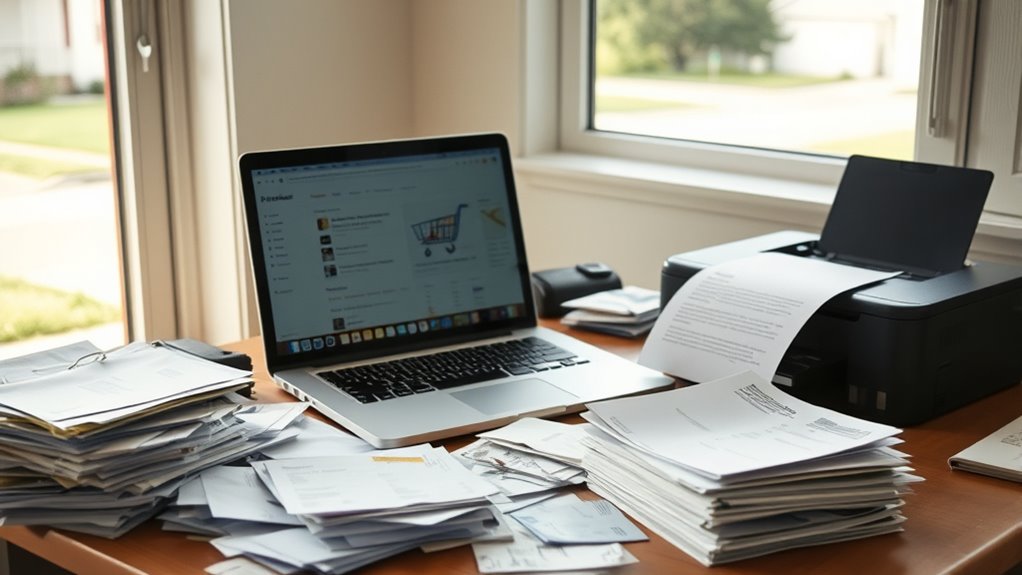
How has the rise of e-commerce and remote work changed the demand for paper? You’ve probably noticed more packages arriving at your door, each wrapped in layers of paper and cardboard.
As online shopping boomed, so did the need for packaging materials, driving up demand for paper products used in shipping. At the same time, working from home reduced office paper use—you’re likely printing less, favoring digital documents instead.
However, this shift doesn’t completely offset the increased packaging demand. In fact, the surge in e-commerce has created a new type of paper consumption, focusing more on corrugated boxes and protective wraps.
Challenges in Raw Material Availability
You’re facing tight pulp supplies that slow down paper production. Environmental regulations add another layer, limiting how much raw material companies can harvest.
Plus, global demand often outpaces what producers can provide, making shortages even more likely. It’s a tricky situation that keeps everyone on their toes.
Pulp Supply Constraints
Why has pulp supply become such a critical bottleneck in the paper industry? You rely on a steady stream of raw wood fibers to produce pulp, but disruptions in logging, transportation, and processing have tightened that supply.
When forests face harvesting limits or labor shortages hit mills, pulp availability drops. This forces you to compete for fewer resources.
Additionally, global demand spikes for pulp in packaging and hygiene products put extra pressure on supply chains.
Since pulp is the foundation of all paper products, any shortage directly restricts your production capacity. You can’t easily substitute pulp, so when supply tightens, prices rise and lead times lengthen.
Understanding these constraints helps you anticipate challenges and adjust your sourcing strategies accordingly.
Impact of Environmental Regulations
Although environmental regulations aim to protect forests and ecosystems, they often limit your access to raw wood fibers essential for pulp production. Stricter logging restrictions, reforestation requirements, and protected area designations reduce the volume of harvestable timber. This makes it harder for you to secure consistent fiber supplies.
Compliance with these rules may increase your operational costs and slow down harvesting schedules. You also face challenges sourcing wood from sustainable forests, as certification standards tighten. While these measures are vital for environmental preservation, they create a balancing act between sustainability and supply.
Ultimately, these regulations can contribute to the scarcity of raw materials. This impacts your ability to meet pulp demand efficiently and influences overall paper production capacity.
Global Demand vs. Production
As global demand for paper keeps rising, production just can’t seem to keep up. This is mainly because there’s only so much raw material available.
Forests, which are the main source of pulp, face a bunch of restrictions from environmental policies and natural depletion. So, mills often have to run below capacity, which creates gaps in supply.
At the same time, demand is surging, especially from packaging, printing, and hygiene products. This just makes the imbalance worse.
When you understand these factors, it’s easier to see why shortages keep happening.
| Factor | Impact on Paper Production |
|---|---|
| Forest Resource Limits | Reduces pulp supply |
| Environmental Policies | Restricts raw material harvesting |
| Increased Packaging Use | Raises demand considerably |
| Production Capacity Caps | Limits output despite demand |
Effects on Printing and Packaging Industries
When you look closely at the printing and packaging industries, you’ll see they’re feeling the crunch from the paper shortage. You might notice delays in print runs and increased costs impacting everything from books and magazines to product packaging.
This shortage forces you to rethink how you manage materials, as less paper means tighter schedules and higher prices. You’re likely facing challenges such as:
- Limited availability of specialty papers, affecting product quality and design options
- Rising costs that squeeze profit margins and push prices up for consumers
- Production delays causing supply chain disruptions and extended delivery times
These pressures highlight how deeply the paper shortage disrupts essential business operations. It’s making it harder for you to meet customer expectations reliably.
Strategies Businesses Are Adopting to Cope
Because the paper shortage continues to strain resources, businesses are adopting innovative strategies to stay afloat. You can see companies shifting to digital documents, reducing paper use, and sourcing recycled materials.
Many also renegotiate contracts to secure better supply terms. Here’s a quick look at common approaches:
| Strategy | Benefit | Example |
|---|---|---|
| Digital Transition | Cuts paper demand | E-invoices, online forms |
| Paper Reduction | Saves costs and resources | Minimalist packaging |
| Recycled Materials | Eco-friendly alternative | Recycled cardboard boxes |
| Supplier Negotiation | More stable supply | Long-term contracts |
| Inventory Control | Avoids overstocking | Just-in-time ordering |
Consumer Tips for Managing Paper Usage
You can cut down on paper waste by choosing digital options whenever possible and reusing scraps for notes or crafts.
Look for alternatives like recycled paper or electronic billing to reduce your impact. Small changes in how you use paper can make a big difference during this shortage.
Reducing Paper Waste
Although paper is essential in daily life, cutting down on its use can make a big difference in easing the shortage. You can reduce paper waste by being mindful of when and how you use paper.
Start by printing only what’s necessary and double-checking documents before printing to avoid mistakes. Use both sides of the paper whenever possible, and keep scrap paper handy for notes or drafts.
Here are three simple ways to reduce paper waste:
- Opt for digital notes and documents instead of paper copies.
- Set your printer to double-sided printing by default.
- Reuse envelopes, folders, and scrap paper for other tasks.
Alternatives to Traditional Paper
When traditional paper is in short supply, exploring alternatives can help you manage your usage more effectively. You can switch to digital note-taking apps or cloud-based document storage to reduce your reliance on physical paper.
Consider using recycled paper products, which often require less energy and resources to produce. If you need to print, try printing on both sides or using scrap paper for drafts.
You might also explore specialty papers made from materials like hemp, bamboo, or agricultural waste; these options tend to be more sustainable. By choosing these alternatives, you not only conserve traditional paper but also support environmentally friendly practices.
Making these small changes can considerably reduce your paper consumption and ease the impact of any shortage. It’s easier than you might think to make a difference!
Conclusion
You might feel like you’re stuck in a paper drought, but remember this: just like a garden needs time and care to bloom after a dry spell, the paper industry is slowly recovering from supply challenges.
With raw materials tight and demand shifting, businesses are adapting—using less paper or finding alternatives.
By managing your usage wisely, you’re helping this “garden” grow again. This ensures paper’s place in your daily life doesn’t wither away.
So, while there may be a temporary paper shortage, thoughtful consumption and industry adjustments are paving the way for recovery. Keep using paper smartly, and together we can help the paper supply stabilize and thrive once more.