How to Use Parchment Paper Without It Catching Fire
To use parchment paper without it catching fire, start by choosing oven-safe parchment paper rated for at least 420°F. Avoid using wax-coated types since they can ignite or melt at high temperatures.
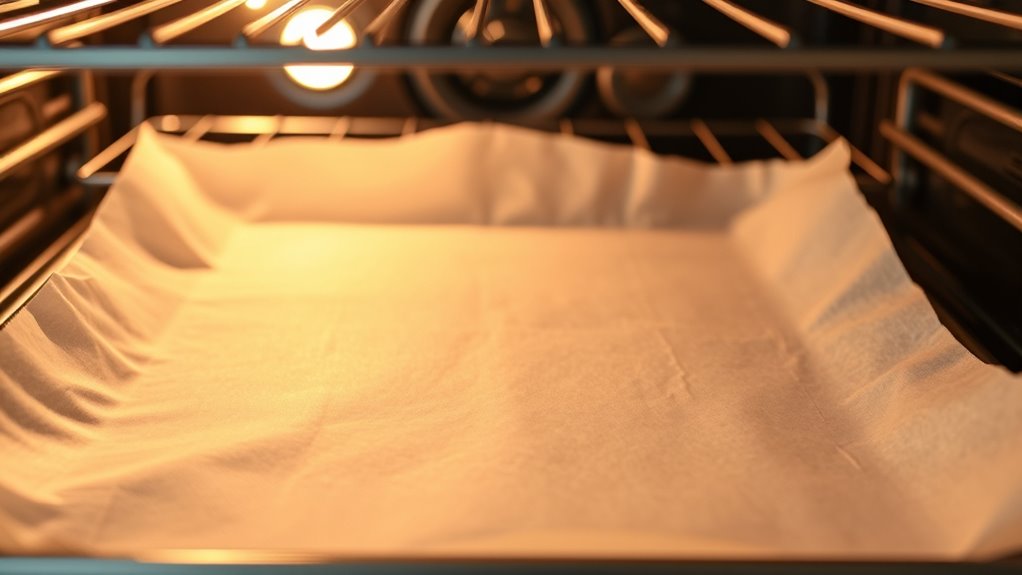
Lay the parchment flat on your baking sheet, making sure there are no overhanging edges that might touch the oven walls or heating elements. Never let the paper come into direct contact with the oven’s heating elements or racks, as this can cause it to catch fire.
Trim any excess parchment paper to prevent it from hanging over the sides. Also, avoid using parchment paper under the broiler unless you have heavy-duty, heat-resistant parchment designed for such high heat.
Keep an eye out for any signs like browning or smoke, which means it’s time to remove the parchment quickly.
Follow these simple tips, and you’ll be able to bake safely without worrying about your parchment paper catching fire.
There’s plenty more helpful advice waiting to make your baking experience even better!
Understanding the Heat Resistance of Parchment Paper
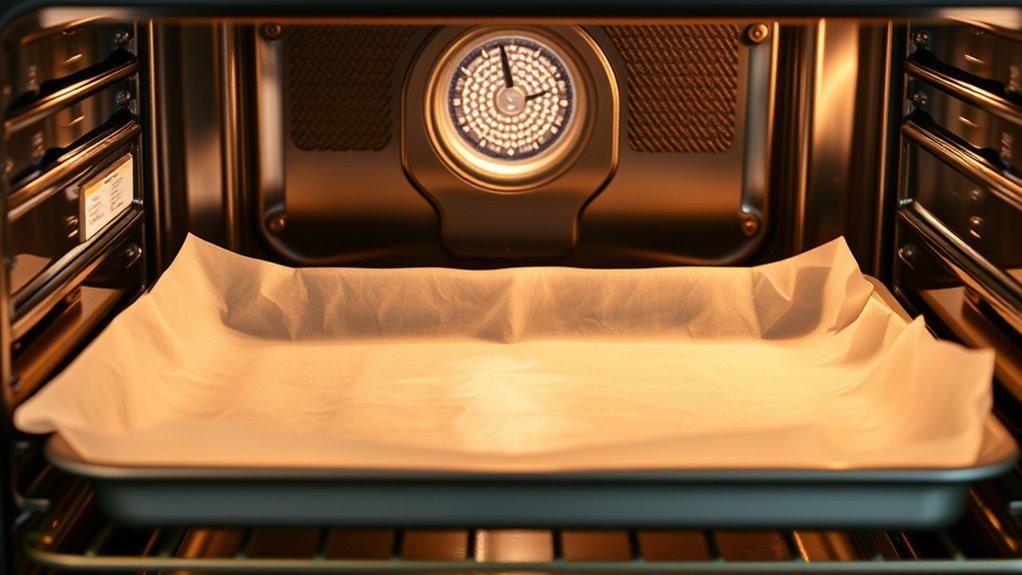
Although parchment paper looks delicate, it can withstand surprisingly high temperatures without burning or sticking. You’ll find that most parchment papers are heat resistant up to around 420 to 450 degrees Fahrenheit.
This means you can safely use it for baking cookies, roasting vegetables, or lining cake pans without worrying about it catching fire. However, you should avoid exposing parchment paper to direct flames or broiler heat, as temperatures can exceed its tolerance and ignite it.
Remember to keep the parchment paper flat on your baking sheet or pan to prevent edges from curling near heating elements. By understanding these heat limitations, you’ll use parchment paper confidently and avoid any kitchen mishaps related to overheating or burning.
Choosing the Right Type of Parchment Paper for Your Oven
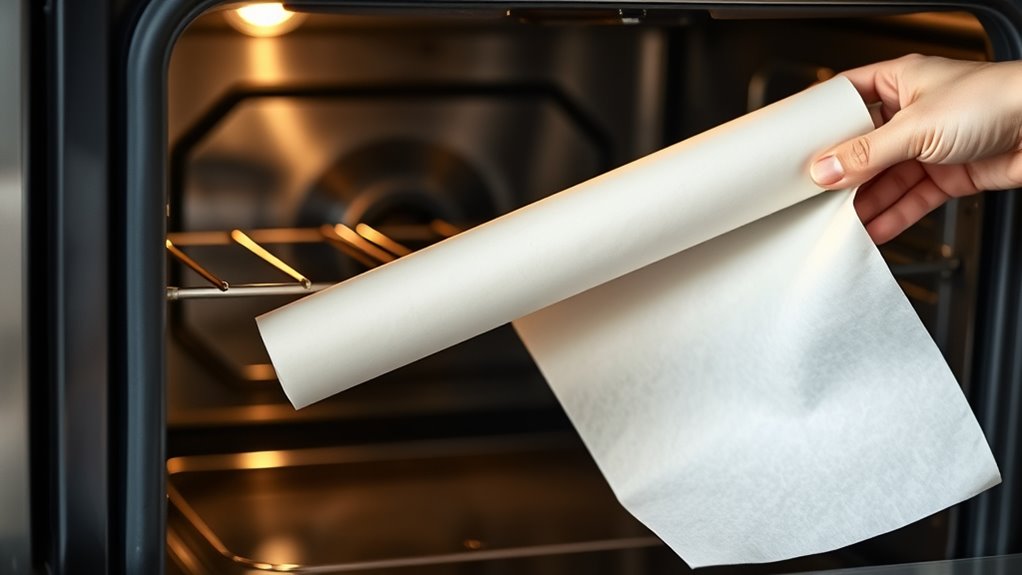
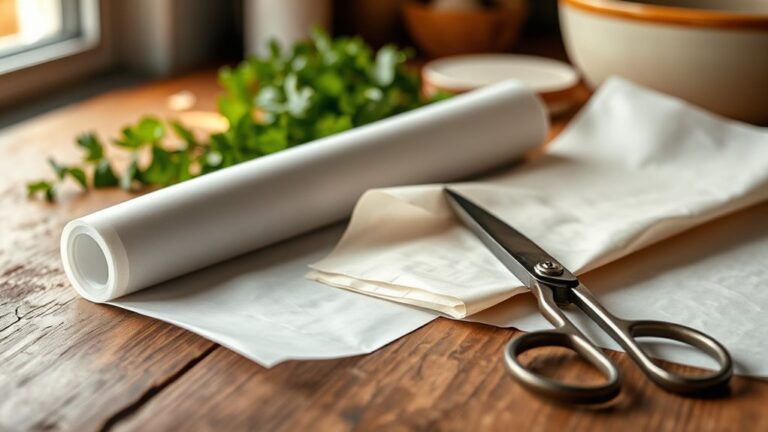
When choosing parchment paper for your oven, you need to take into account its heat resistance and coating quality to guarantee it performs well during cooking. Look for parchment paper labeled as oven-safe up to at least 420°F (215°C). This covers most baking needs without risking burning or smoking.
Non-stick silicone-coated parchment is a smart choice because it resists heat better and prevents sticking. Avoid wax-coated parchment since the wax can melt or catch fire at high temperatures.
Also, check for heavy-duty options if you plan to bake denser or heavier foods. They’re thicker and less likely to tear.
Proper Placement of Parchment Paper in the Oven
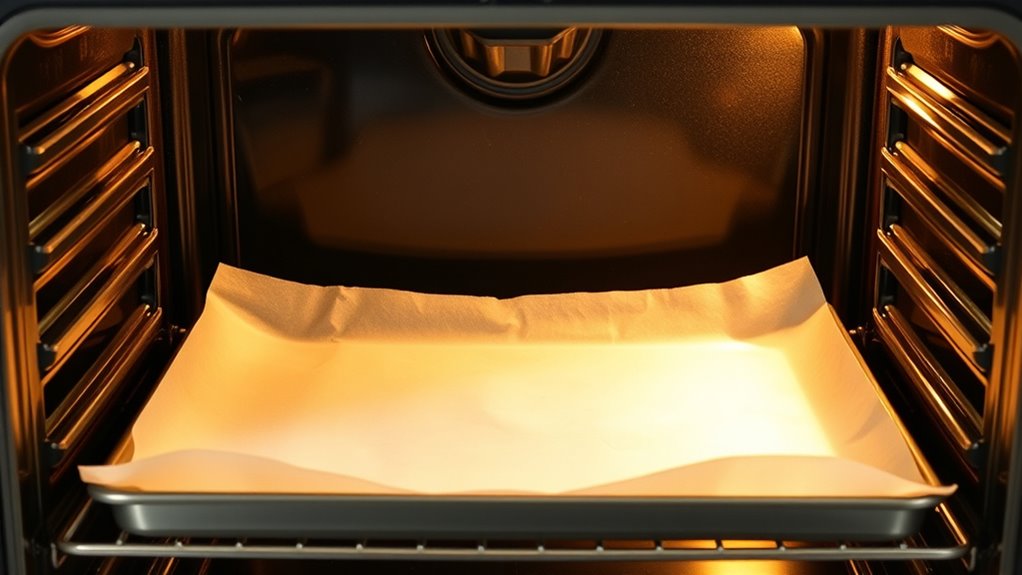
Choosing the right parchment paper sets the stage for safe and effective baking, but placing it correctly in the oven guarantees those benefits aren’t wasted.
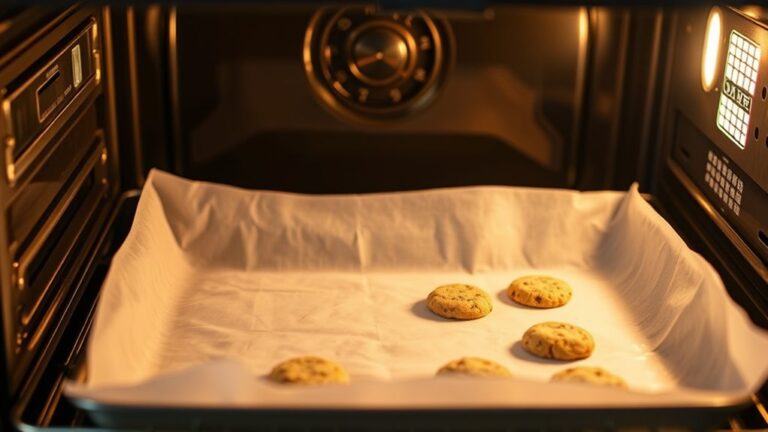
You want to lay the parchment flat on the baking sheet or pan to prevent it from curling or touching oven surfaces. Avoid overhanging edges, which may burn or ignite.
Always ensure the parchment fits snugly within the pan’s borders.
| Correct Placement | Avoid Overhang | Keep Flat |
|---|---|---|
| Parchment inside pan | Edges hanging outside | No curls or folds |
| Smooth, even layer | Risk of burning | Prevents fire hazard |
| Supports even baking | Blocks airflow | Keeps food clean |
Proper placement helps you bake safely and get great results every time.
Avoiding Direct Contact With Heating Elements
Since parchment paper is designed to withstand oven temperatures, you still need to keep it away from direct contact with heating elements to prevent scorching or fires. Always place parchment paper on a baking sheet or inside a pan rather than directly on the oven rack, where it could touch the heating coils.
Avoid letting the edges curl up, as they might brush against the elements and ignite. If you’re using a broiler, be extra cautious because the intense, direct heat can quickly damage the paper.
Keep your eye on your baking, and if you notice any browning or smoke, remove the parchment immediately. By ensuring the paper stays flat and properly positioned, you reduce fire risks while still enjoying the convenience parchment paper offers.
Tips for Using Parchment Paper With High-Temperature Cooking
Although parchment paper can handle moderate oven temperatures, you should take extra care during high-temperature cooking to prevent burning or smoke. When your recipe calls for heat above 425°F (220°C), follow these tips to keep parchment paper safe and effective:
- Choose high-quality, heat-resistant parchment paper. Look for brands rated for higher temperatures to reduce the risk of scorching.
- Trim excess parchment paper. Avoid letting paper extend beyond your baking pan or sheet to prevent it from touching hot oven walls or heating elements.
- Use foil as a shield. If you’re broiling or cooking close to the heating element, place a layer of aluminum foil above the parchment paper to protect it from direct heat.
Signs Your Parchment Paper Is Overheating and How to Respond
If you notice your parchment paper turning brown or curling at the edges, it’s a clear sign it’s overheating. You should immediately lower the oven temperature or remove the paper to prevent burning.
Acting quickly will keep your food safe and your kitchen smoke-free. Don’t wait too long—smoke and burnt paper can ruin your dish and make a mess. Just a little attention can save the day!
Warning Signs of Overheating
When parchment paper starts to darken unevenly or emits a faint burning smell, it’s a clear sign you’re pushing it past its heat limit. Recognizing these warning signs early can prevent a fire hazard in your kitchen.
Keep an eye out for:
- Curling Edges: If the paper’s edges begin to curl or crisp, it’s overheating and drying out.
- Discoloration: Dark brown or black spots show the paper is scorching and close to igniting.
- Smoke or Smell: A faint burning odor or wisps of smoke means immediate attention is needed to avoid a fire.
Noticing any of these signs means you should adjust your oven temperature or check your baking method to keep things safe. It’s better to be cautious than to risk an accident!
Immediate Actions to Take
Noticing any signs of overheating on your parchment paper means you need to act quickly to keep your kitchen safe. If you see browning edges or smell a burning scent, immediately turn off your oven or stovetop.
Don’t open the oven door right away; wait a few moments to prevent a sudden rush of oxygen that might intensify any smoldering. Once it’s safe, carefully remove the baking tray.
If you spot smoke or small flames, use a fire extinguisher or baking soda to put out the fire—never use water. After handling the situation, inspect your parchment paper for damage and discard it.
To avoid future risks, always use parchment paper within the recommended temperature limits and keep it away from direct heat sources. It’s a simple step that can save you a lot of trouble later.
Conclusion
Now that you know how to keep parchment paper from catching fire, you can bake like a pro without fear! Just remember to choose the right type and place it carefully.
Never let it touch heating elements directly—that’s a big no-no. High temps? No problem! Just follow the tips and watch for signs of overheating.
With these simple steps, you’ll avoid a kitchen disaster that could rival a volcano eruption. Using parchment paper safely means a smooth baking experience every time.
Happy baking, and keep that parchment safe and sound! By picking the right parchment paper and handling it properly, you’ll prevent fires and make your cooking safer and easier.