How to Use Parchment Paper in the Oven Without Burning
To use parchment paper in your oven without burning it, start by choosing one that’s rated for your baking temperature—usually up to 420°F (215°C). This is super important because using paper not designed for high heat can lead to burning.
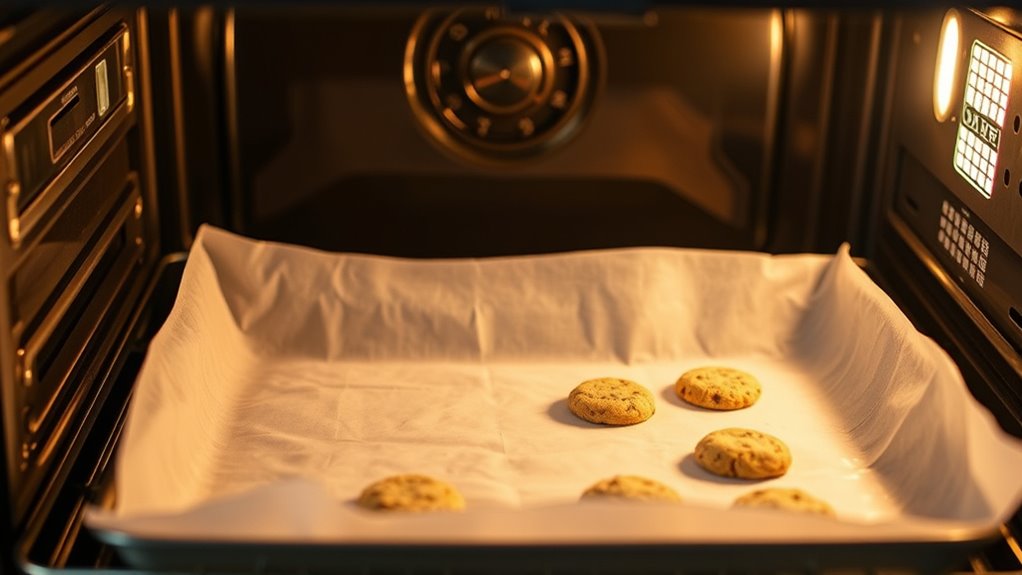
Cut the parchment paper to fit your baking sheet snugly. Make sure there are no wrinkles or edges hanging over the pan, as these can catch fire or burn more easily.
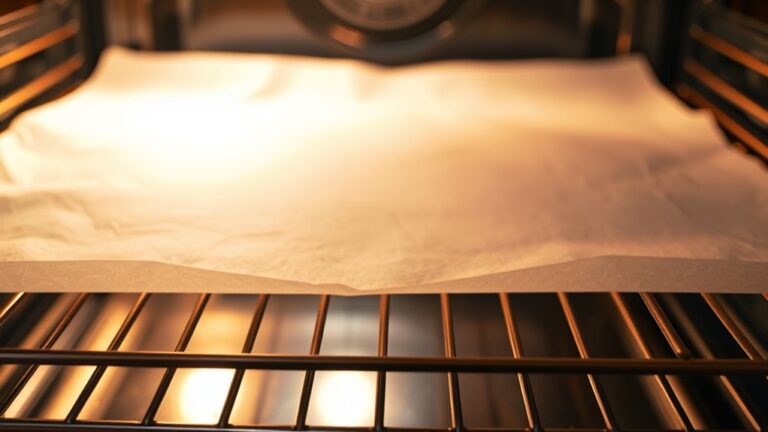
Place the paper flat and centered in the pan, keeping it away from heating elements. And a big no-no: never use parchment paper under a broiler since the intense heat will quickly burn it.
If your recipe needs higher temperatures, think about using silicone baking mats or aluminum foil instead. Always keep an eye out for any signs of burning while baking to stay safe and efficient.
There’s actually a lot more to learn about handling parchment paper perfectly, so don’t hesitate to explore more tips and tricks!
Understanding the Heat Limits of Parchment Paper
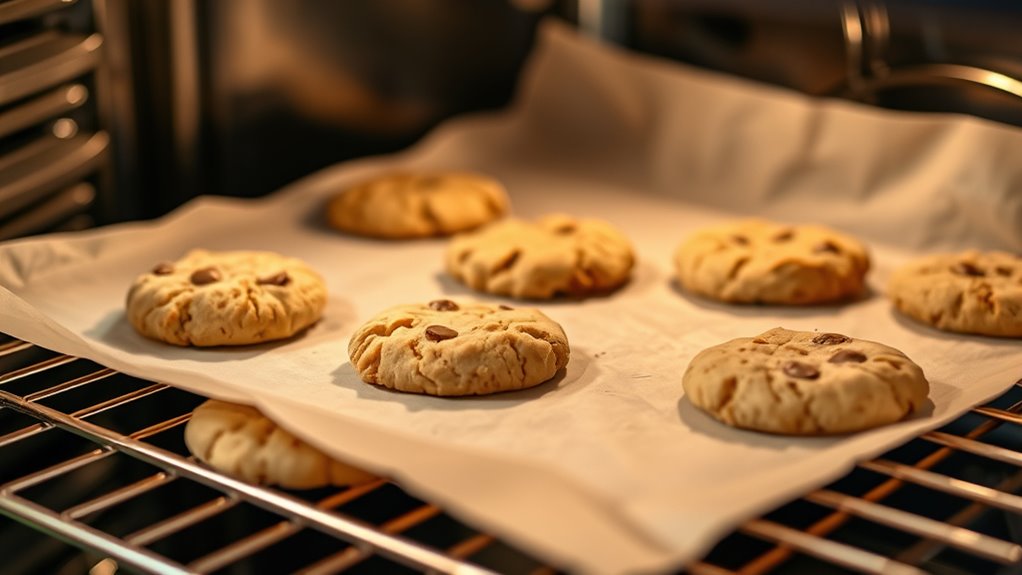
Although parchment paper is a handy tool for baking, you need to know its heat limits to use it safely. Most parchment paper is designed to withstand oven temperatures up to around 420°F (215°C).
If you exceed this limit, the paper can scorch, turn brittle, or even catch fire. When placing parchment paper in the oven, make sure it doesn’t touch heating elements or open flames, which can cause it to ignite regardless of its temperature rating.
Also, avoid using parchment paper for broiling, as broilers operate at much higher temperatures. By staying within these heat guidelines, you’ll prevent accidents and keep your baked goods safe.
Always check the manufacturer’s instructions since heat tolerance can vary slightly between brands. It’s a simple step that can save you from unexpected mishaps!
Choosing the Right Parchment Paper for High-Temperature Baking
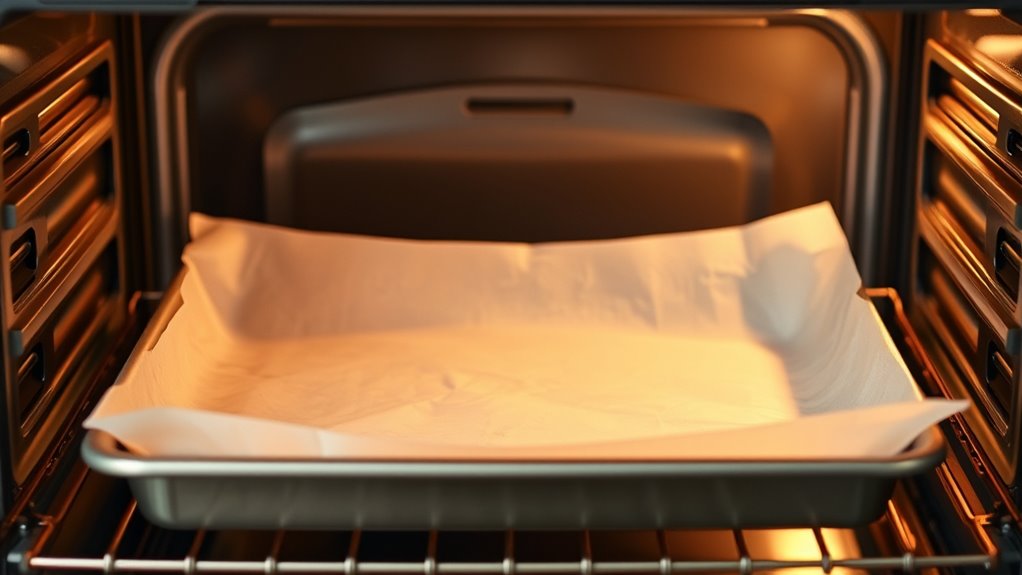
When baking at high temperatures, you’ll want to pick parchment paper that can handle the heat without burning or sticking. Check the temperature resistance levels and look for materials with silicone coatings, as they tend to perform better under intense heat.
Choosing the right type guarantees your baking goes smoothly and your food turns out perfectly. It’s a small step that makes a big difference!
Temperature Resistance Levels
Since different parchment papers can withstand varying temperatures, you need to choose one that matches your baking requirements. Most standard parchment papers handle heat up to about 420°F (215°C).
If your recipe calls for higher temperatures, look for parchment labeled as “high heat” or “oven-safe” that can withstand up to 450°F (230°C) or more. Using paper that can’t tolerate the heat risks burning or smoking, affecting your food and oven.
Always check the packaging for the maximum temperature rating before use. If you’re baking at extremely high temperatures, consider alternatives like silicone baking mats or uncoated aluminum foil.
Being mindful of temperature resistance ensures your parchment paper performs safely and effectively, preventing unwanted flare-ups or damage during baking.
Material and Coating Types
Choosing the right parchment paper involves more than just checking its temperature rating. You need to take into account the material and coating types to ensure it withstands high-heat baking without burning or sticking.
Most parchment papers are made from cellulose fibers, but some have silicone coatings that provide superior non-stick properties and higher heat resistance. If you want to bake at temperatures above 420°F, opt for silicone-coated parchment paper, as it’s less likely to char or smoke.
Avoid wax-coated parchment paper in the oven since it can melt or ignite under high heat. Also, look for unbleached, chlorine-free options if you prefer a more natural choice.
Understanding these differences helps you pick parchment paper that performs reliably during your baking sessions. It’s all about knowing what works best for your baking needs!
Properly Preparing Your Baking Sheet With Parchment Paper
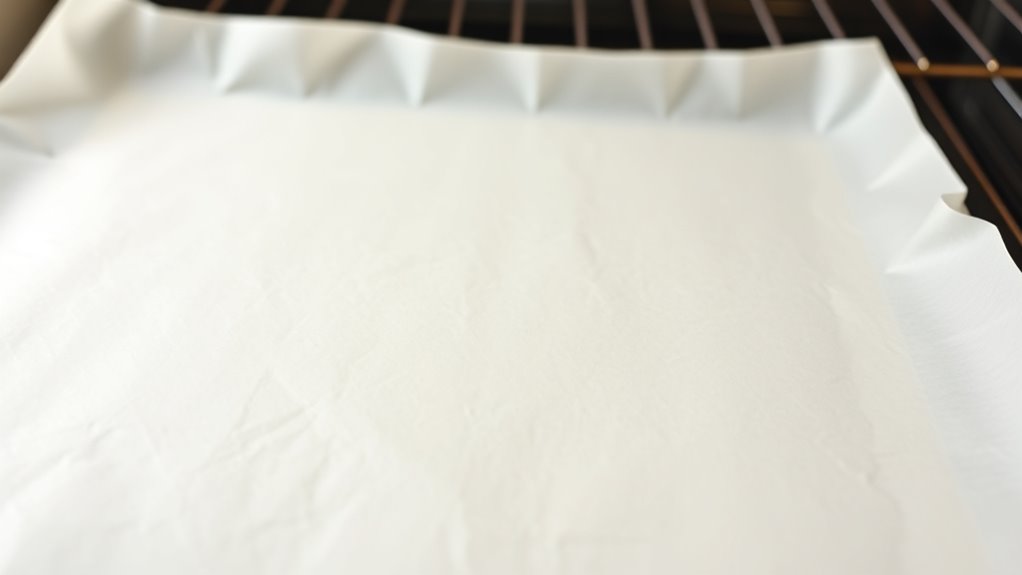
Although it might seem simple, properly lining your baking sheet with parchment paper can make a big difference in your baking results. Start by cutting the parchment paper slightly larger than your baking sheet, so it covers the entire surface and edges.
Press it down firmly to avoid wrinkles, which can cause uneven baking. Avoid folding or crumpling the paper, as this may lead to burning spots.
If your baking sheet has high sides, trim the parchment to fit without hanging over to prevent direct contact with oven walls.
| Step | Tip |
|---|---|
| Cut to size | Slightly larger than sheet |
| Smooth out wrinkles | Prevents uneven baking |
| Fit edges snugly | Avoids paper shifting |
| Trim excess edges | Prevents burning |
| Use quality paper | Supports high temperatures |
Tips for Avoiding Direct Contact With Oven Heating Elements
When you use parchment paper in the oven, you need to keep it away from direct contact with heating elements to prevent it from catching fire. Always place your parchment paper flat on a baking sheet or inside a pan, never letting it hang over the edges.
Make sure your oven rack is centered so the paper won’t brush against the top or bottom heating elements. Avoid using parchment paper under a broiler or on an exposed heating coil, as the intense heat can ignite the paper instantly.
If you notice the paper curling up during baking, gently press it down or switch to a heavier baking surface. These simple steps help you use parchment paper safely and avoid any risk of burning or fire.
Alternatives to Parchment Paper for Extreme Heat
When you’re working with extreme oven temperatures, parchment paper might not cut it. You can try silicone baking mats, which handle high heat without burning.
Aluminum foil and oven-safe cooking sheets also make reliable alternatives for tough baking jobs. They can take the heat when parchment paper just can’t. So, next time you’re baking at super high temps, give these options a shot!
Silicone Baking Mats
Since parchment paper can only handle moderate oven temperatures, silicone baking mats offer a great alternative if you need to bake at extreme heat. These mats are made from food-grade silicone and fiberglass, allowing them to withstand temperatures up to 480°F (250°C) or higher without burning or melting.
When you use them, you don’t have to worry about replacing parchment paper frequently—they’re reusable and easy to clean. Simply place the mat on your baking sheet, and it provides a non-stick surface that promotes even cooking and browning.
Plus, silicone mats are flexible, so you can easily store them rolled or flat. Just avoid using sharp knives on them, and you’ll get plenty of use out of your silicone baking mats as a reliable, heat-resistant alternative.
Aluminum Foil Options
If silicone baking mats don’t fit your needs or you’re looking for another option that handles extreme heat, aluminum foil can be a practical choice. It withstands temperatures well above parchment paper’s limit, making it ideal for broiling or roasting.
Just keep in mind, foil’s reflective surface can affect cooking times and browning, so you might need to adjust accordingly.
Here’s how to use aluminum foil effectively:
- Use heavy-duty foil for extra durability and less tearing.
- Avoid direct contact with acidic foods to prevent a metallic taste.
- Crumple it loosely to create a makeshift rack for airflow.
That way, you get the best results without any fuss!
Oven-Safe Cooking Sheets
Although parchment paper is great for many baking tasks, it can’t handle very high temperatures. So, you’ll want to turn to oven-safe cooking sheets designed for extreme heat.
These sheets withstand temperatures above 450°F without burning or releasing harmful chemicals. That makes them perfect for roasting or broiling.
Silicone baking mats and reusable Teflon sheets are popular choices. They provide non-stick surfaces and make cleanup super easy.
Here’s a quick comparison:
| Cooking Sheet Type | Max Temperature |
|---|---|
| Silicone Baking Mat | 480°F (250°C) |
| Teflon Sheet | 500°F (260°C) |
| Glass Baking Sheet | 600°F (315°C) |
| Cast Iron Sheet | 700°F (370°C) |
Choose based on your cooking needs and your oven’s heat limits. That way, you’ll get safe, effective baking every time!
Recognizing and Handling Burnt or Overheated Parchment Paper
When parchment paper gets too hot, it can darken, curl, or even catch fire. That’s a clear sign it’s been overheated. You need to recognize these signs quickly to keep your kitchen safe.
If you notice your parchment paper is browning unevenly or curling at the edges, it’s time to check your oven temperature and cooking time. Don’t ignore it!
In case of burning, here’s what you should do: carefully remove the tray from the oven to stop further burning. Then, dispose of the burnt parchment paper safely to avoid any fire risk.
Next, inspect your oven settings and reduce the temperature to prevent it from happening again. It’s a good idea to keep parchment paper below its recommended heat limit, usually 420°F (215°C).
Also, avoid letting the paper touch heating elements directly. That way, your baking stays safe and smooth.
Conclusion
Don’t let your parchment paper turn into a crispy, smoking mess that screams “fire hazard!” By knowing its heat limits and keeping it away from oven flames, you’ll avoid a kitchen disaster worthy of a wildfire.
Choose the right paper, prep your baking sheet carefully, and watch your baked goods come out perfect—not charred relics.
With these simple steps, your parchment will behave like a loyal, heat-resistant sidekick, not a ticking time bomb in your oven! Using parchment paper in the oven without burning it is all about understanding its temperature limits—usually around 420°F (215°C). Always place the paper on a baking sheet and avoid direct contact with heating elements or open flames. This way, your parchment paper can help you bake delicious treats safely and efficiently, making it an essential tool in your kitchen arsenal.