How You Can Safely Cook Chicken on Parchment Paper
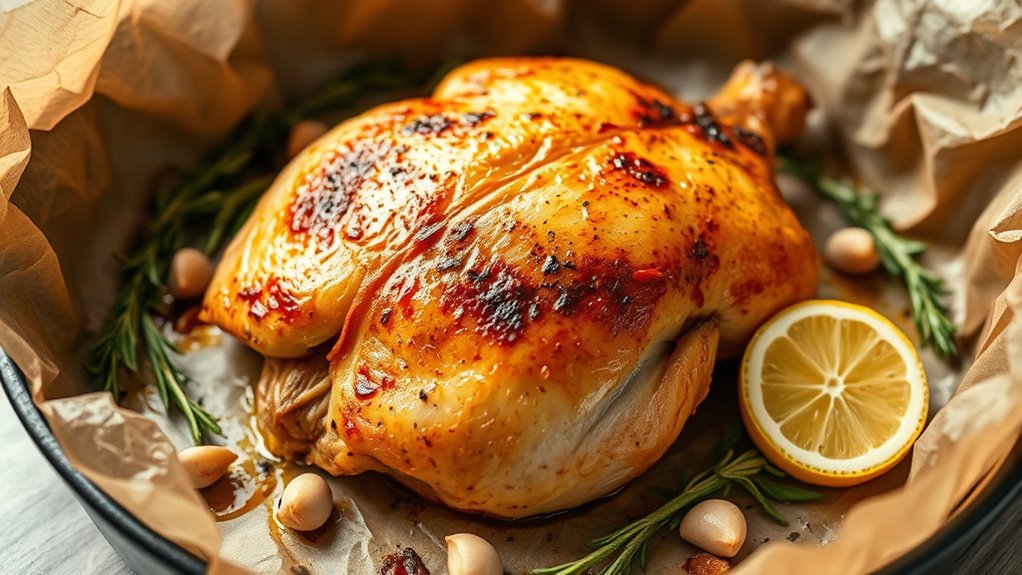
To safely cook chicken on parchment paper, start by choosing food-grade, oven-safe parchment rated up to 420°F. This ensures it won’t burn or release harmful chemicals while cooking.
Season your fresh chicken well, then place it flat on a parchment-lined baking sheet to prevent sticking. Preheat your oven to 375°F for the perfect cooking temperature.
Next, seal the parchment tightly around the chicken to lock in moisture and juices. This method helps keep the chicken tender and flavorful.
Be careful not to overcrowd the baking sheet, and always stay within the parchment’s temperature limits. This guarantees even, safe cooking every time.
Want to learn more about perfect wrapping, timing, and easy cleanup? Keep exploring these simple cooking steps for delicious results.
Choosing the Right Parchment Paper for Cooking Chicken
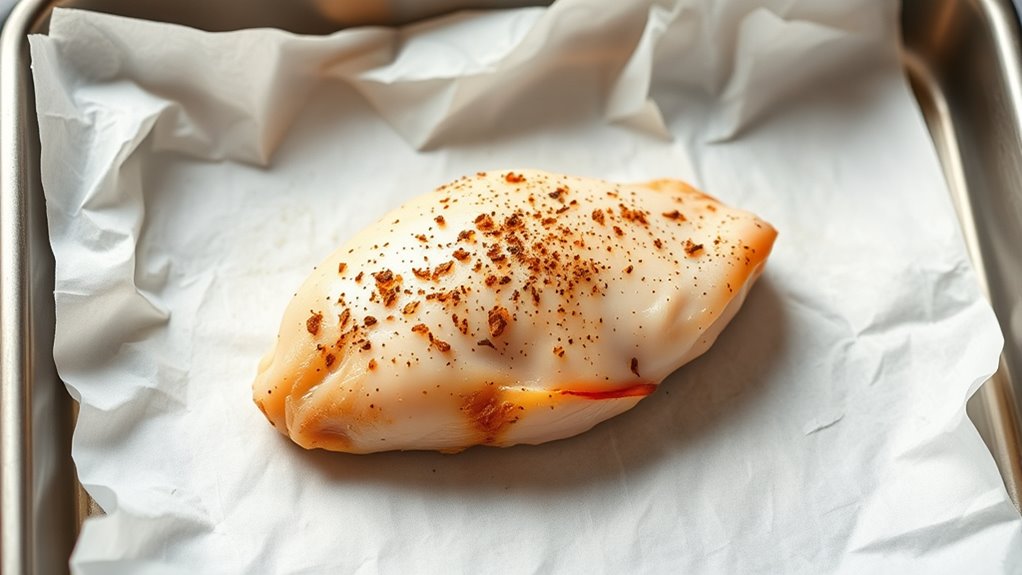
When cooking chicken on parchment paper, choosing the right type can make a big difference in your results. You want parchment paper that’s labeled as food-grade and oven-safe up to at least 420°F (215°C).
This guarantees it won’t burn or release harmful chemicals during cooking. Avoid wax paper, since it’s not heat-resistant and can melt, ruining your meal.
Look for parchment paper that’s non-stick to prevent the chicken from sticking and tearing when you remove it. If you plan to cook at higher temperatures, check the manufacturer’s guidelines to confirm maximum heat tolerance.
Using the right parchment paper keeps your chicken moist, cooks evenly, and makes cleanup easier. Picking quality parchment paper sets you up for success every time you cook chicken.
Preparing Chicken for Cooking on Parchment Paper
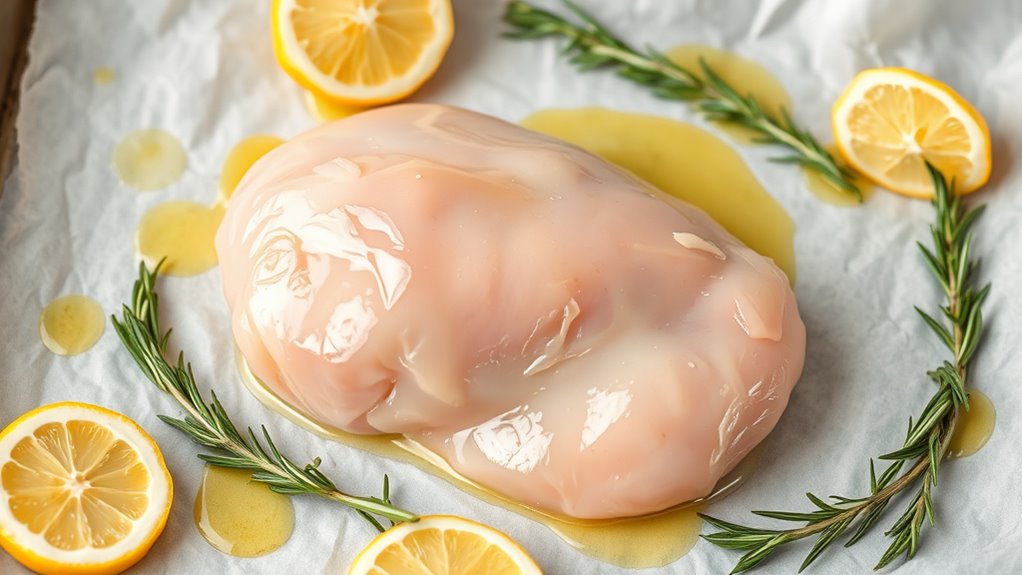
You’ll want to start with fresh chicken to guarantee the best flavor and texture. Next, season or marinate your chicken to enhance its taste and keep it juicy while cooking.
Proper preparation sets the foundation for a delicious meal cooked on parchment paper. It really makes a difference when you take these simple steps!
Choosing Fresh Chicken
Because the quality of your dish depends heavily on the ingredients, choosing fresh chicken is essential before cooking on parchment paper. When selecting chicken, look for firm, moist flesh without any discoloration or unpleasant odor.
Avoid packages with excessive liquid, as this can indicate older meat. Check the sell-by date to ensure freshness, and if possible, buy chicken from a trusted source or butcher.
Fresh chicken should have a pale pink color and smooth texture. When you bring it home, store it in the coldest part of your refrigerator and use it within one to two days.
Taking these steps guarantees your chicken will cook evenly and safely on parchment paper, giving you a flavorful and tender result every time.
Seasoning and Marinating Tips
Although cooking chicken on parchment paper locks in moisture, properly seasoning and marinating it beforehand really boosts flavor and tenderness. Start by seasoning your chicken with salt and pepper for a simple base.
Then, think about a marinade with olive oil, lemon juice, garlic, and herbs like rosemary or thyme. Let the chicken soak in this mixture for at least 30 minutes, or up to 4 hours in the fridge. This helps it absorb the flavors without messing up the parchment’s integrity.
Just a heads up—avoid overly acidic or sugary marinades since they can break down the paper or burn during cooking. When you’re ready, place the marinated chicken on the parchment, fold it securely, and bake.
This method makes sure your chicken comes out juicy and flavorful every time.
Proper Oven Temperature and Cooking Time Guidelines
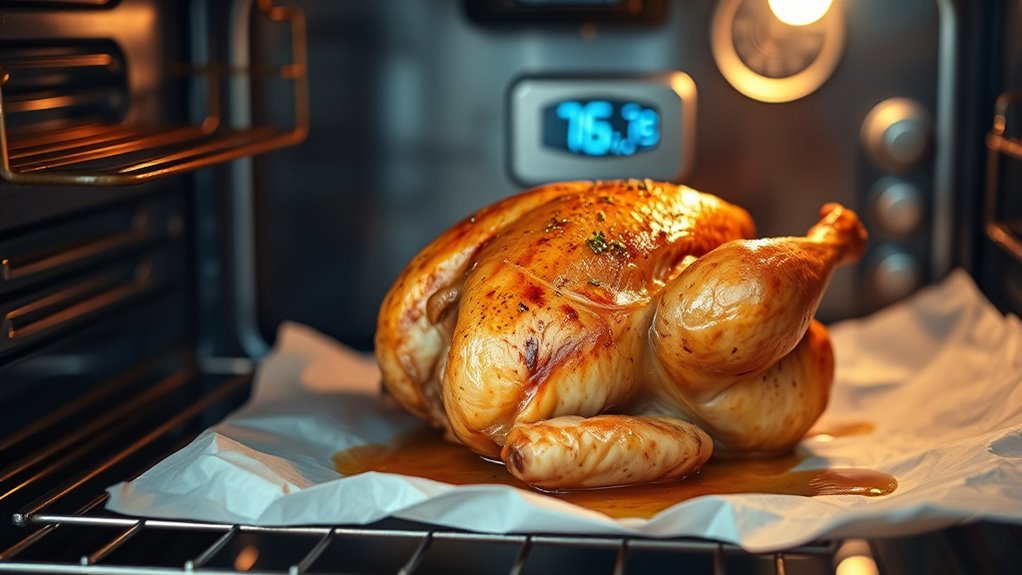
When cooking chicken on parchment paper, setting the right oven temperature and timing is essential to achieve juicy, evenly cooked meat. Preheat your oven to 375°F (190°C), a temperature that balances thorough cooking without drying out the chicken.
Depending on the cut, boneless breasts typically take about 20-25 minutes, while bone-in pieces may require 30-40 minutes. Use a meat thermometer to check for doneness; the internal temperature should reach 165°F (74°C).
Keep the parchment paper flat on the baking sheet to ensure even heat distribution. Avoid opening the oven frequently, as it lowers the temperature and prolongs cooking time.
Wrapping Techniques to Ensure Safety and Moisture Retention
When wrapping chicken in parchment paper, make sure you fold it tightly to create a secure seal that locks in moisture. Proper sealing not only keeps the chicken juicy but also guarantees it cooks safely by trapping heat evenly.
Remember to pair your wrapping technique with the right oven temperature to achieve the best results. It’s all about balancing the heat and the seal to get that perfect, tender chicken every time.
Proper Wrapping Methods
Since retaining moisture and ensuring safety are essential when cooking chicken, mastering proper wrapping methods with parchment paper is crucial. You want to create a secure package that traps juices without risking leaks or contamination.
Follow these steps:
- Lay a large sheet of parchment paper flat on your workspace—big enough to wrap the chicken completely.
- Place the chicken in the center, then fold the paper over one side, covering the meat entirely.
- Fold the edges inward tightly, making crisp pleats to hold the shape and prevent steam from escaping.
- Tuck the ends under the packet firmly, ensuring no gaps for juices to leak.
This method keeps your chicken safe and juicy, perfect for oven cooking without extra mess. It’s simple but makes a big difference!
Sealing for Moisture
How do you guarantee your chicken stays juicy and safe during cooking? The key lies in sealing your parchment paper tightly.
Start by folding the edges of the paper over the chicken, then use a simple pleating technique to create a secure closure. Press the folds firmly to prevent any steam from escaping.
This traps moisture inside, effectively steaming the chicken and locking in its natural juices. Avoid leaving gaps or loose ends, as they can let moisture escape and dry out the meat.
When properly sealed, the parchment pouch acts like a mini oven, ensuring even cooking and food safety by keeping contaminants out. Mastering this wrapping technique helps you enjoy tender, flavorful chicken every time you cook on parchment paper.
Oven Temperature Guidelines
Although sealing your chicken in parchment paper locks in moisture, you still need to set the oven at the right temperature to cook it safely and evenly. Here’s how to get it right:
- Preheat your oven to 375°F (190°C). This temperature strikes a good balance between thorough cooking and keeping the chicken juicy.
- Use a meat thermometer to check the internal temperature. Make sure it hits 165°F (74°C), which is the safe minimum for poultry.
- Try to avoid temperatures above 400°F (204°C). High heat can burn the parchment and dry out your chicken.
- Bake for about 25-30 minutes, depending on how thick your chicken is. This gives the heat enough time to cook everything evenly inside the sealed packet.
Common Mistakes to Avoid When Using Parchment Paper
When cooking chicken on parchment paper, you’ll want to steer clear of a few common mistakes that can affect your dish’s outcome. First, don’t use parchment paper at temperatures above its limit—usually around 420°F—as it can burn or release harmful fumes.
Avoid cooking chicken on parchment paper above 420°F to prevent burning and harmful fumes.
Also, avoid overcrowding the chicken on the paper; this prevents even cooking and crisping. And don’t reuse parchment paper—once it’s been exposed to moisture and heat, its non-stick properties decline.
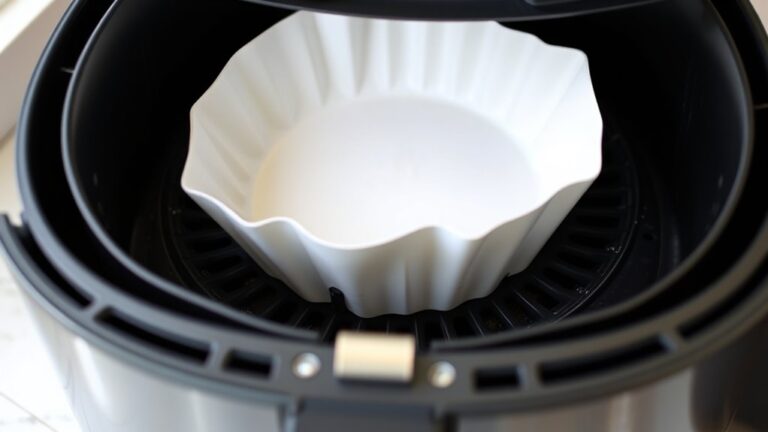
Make sure not to use wax paper instead of parchment; wax paper can melt and ruin your meal. Finally, be sure the parchment paper fits your baking tray properly—if it curls or folds, it can cause uneven cooking or burning.
Following these tips ensures your chicken cooks safely and tastes great. Easy, right?
Tips for Cleaning Up After Cooking Chicken on Parchment Paper
Because parchment paper minimizes food sticking, cleaning up after cooking chicken becomes much easier. Here are some tips to keep your kitchen tidy:
- Remove the paper carefully: Once the chicken is done, lift the parchment paper by the edges. This helps avoid any drips or residue falling onto your baking sheet.
- Dispose of parchment properly: Toss the used parchment paper in the trash. It’s usually single-use and not recyclable.
- Wipe down the baking sheet: Use a damp cloth or sponge to clean any leftover grease or small bits after removing the parchment.
- Wash utensils promptly: Clean knives, tongs, and cutting boards right after use. This prevents cross-contamination and keeps your workspace hygienic.
Following these steps saves you time and keeps your kitchen clean after cooking chicken on parchment paper. Easy, right?
Conclusion
By choosing the right parchment paper and wrapping your chicken carefully, you not only lock in moisture but also keep your cooking space clean—talk about efficiency meeting deliciousness.
As you follow proper temperatures and avoid common mistakes, you’ll find that cooking chicken on parchment paper is both safe and surprisingly simple.
So next time you’re in the kitchen, remember: a little extra care with parchment can turn a basic meal into a perfectly cooked coincidence of flavor and ease. Cooking chicken on parchment paper helps retain juiciness while making cleanup a breeze, proving that safety and convenience go hand in hand.