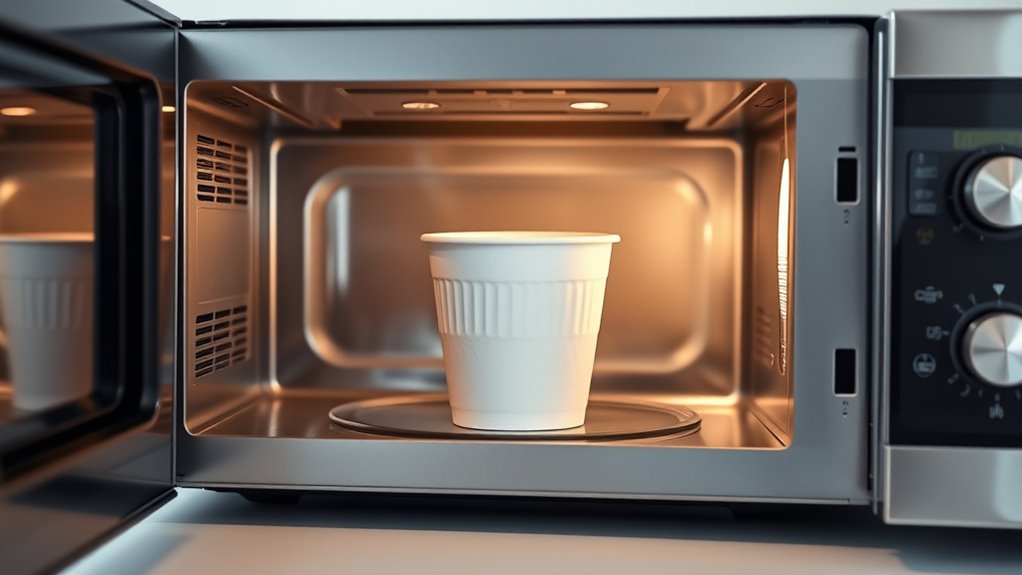
Can You Put a Paper Cup in the Microwave?
You can put some paper cups in the microwave, but only if they’re clearly labeled microwave-safe. Make sure they don’t have metallic coatings or unsafe plastic linings. Otherwise, the cup might weaken, melt, or even catch fire.
Plus, harmful chemicals could leach into your drink if the cup isn’t designed for microwave use. To stay safe, heat in short bursts and stir your beverage regularly.
Always check the temperature before drinking to avoid burns.
If you want to avoid risks and learn proper heating methods, there’s more useful advice ahead. Microwaving paper cups can be convenient, but it’s important to know which ones are safe and how to use them properly.
Understanding the Composition of Paper Cups
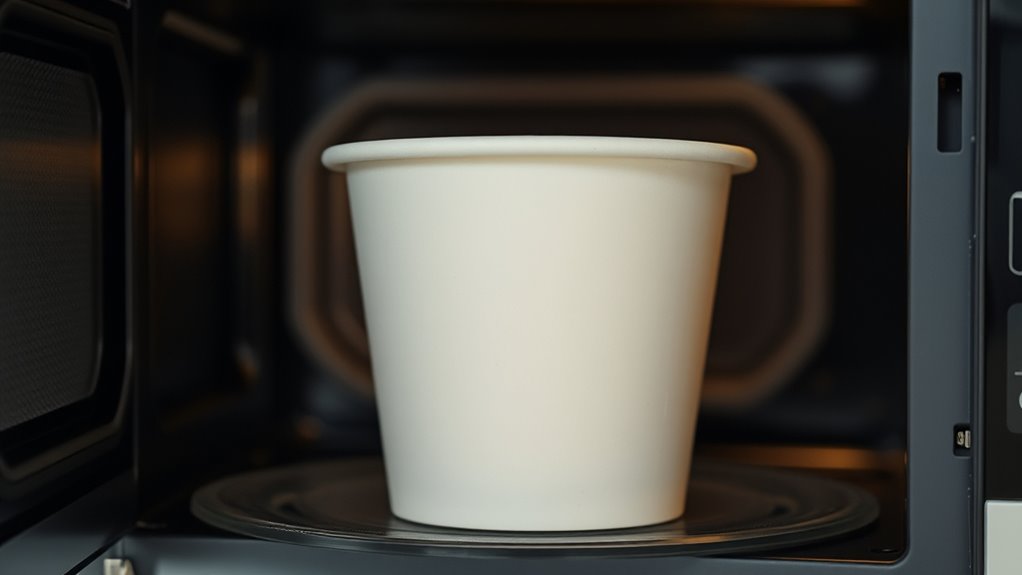
Although paper cups seem simple, their composition is quite complex. When you pick up a paper cup, you’re holding more than just paper.
Most paper cups have a thin plastic lining inside, usually polyethylene, to keep liquids from soaking through. This lining acts as a barrier, preventing leaks and adding sturdiness.
You’ll also notice the paper itself is often made from wood pulp, which is renewable but not waterproof on its own. Some cups might include a wax coating instead of plastic.
These layers work together to make the cup functional but also affect how it reacts to heat. Understanding these materials helps you realize why not all paper cups behave the same, especially when heat is involved.
Risks of Microwaving Paper Cups
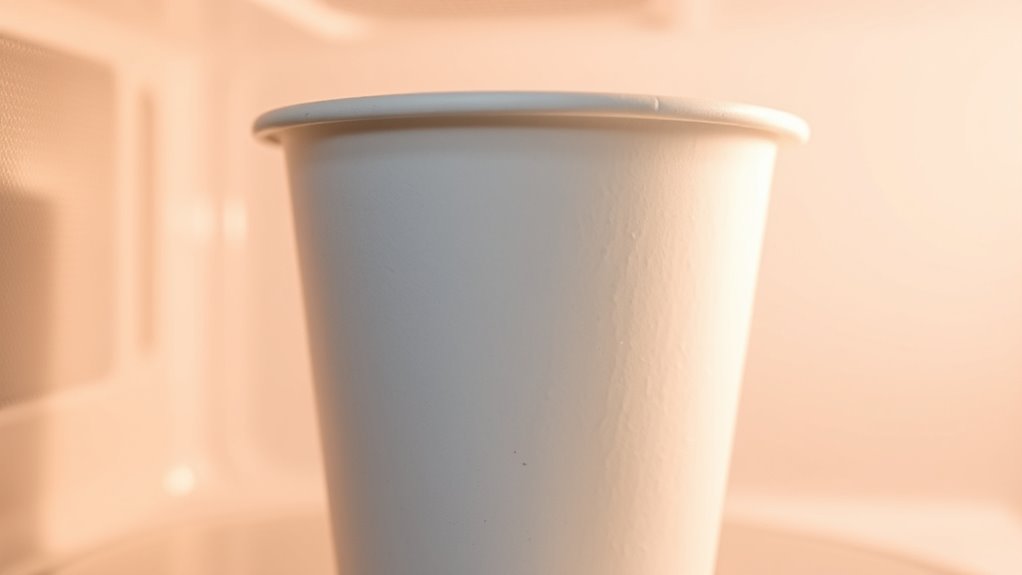
You should be cautious when microwaving paper cups because their materials might not be heat-safe. There’s a risk they could catch fire or release harmful chemicals into your drink.
Understanding these dangers can help you avoid potential hazards. So, it’s better to be safe and maybe use a microwave-safe container instead.
Paper Cup Material Concerns
When you microwave a paper cup, the materials it’s made from can pose significant risks. Most paper cups are coated with a thin layer of plastic or wax to prevent leaks. This coating can melt or release harmful chemicals when heated.
Also, the paper itself might not withstand high microwave temperatures, leading to structural breakdown. You should consider the inks and dyes used on the cup’s exterior, too. They may contain substances that aren’t microwave-safe.
Here’s what you need to watch out for:
- Plastic linings that can melt or leach chemicals
- Wax coatings that may degrade or catch heat unevenly
- Inks and dyes that might release toxins
- Paper fibers that can weaken and collapse
Knowing these things helps you decide if microwaving your paper cup is actually safe. Always better to be careful!
Potential Fire Hazards
Because paper cups often contain materials that aren’t designed for high heat, microwaving them can quickly lead to fire hazards. When exposed to microwave radiation, the cup’s coating or structural components might ignite or smolder, posing a danger in your kitchen.
Here’s a quick overview to help you recognize risky situations:
| Risk Factor | Cause | Fire Hazard Level |
|---|---|---|
| Coating type | Plastic or wax lining | High |
| Cup thickness | Thin paper layers | Medium |
| Microwave time | Excessive heating | High |
| Food content | No liquid, dry contents | High |
| Reuse of cup | Structural weakening | Medium |
Always check your paper cup’s label and avoid microwaving if any risk factors apply to stay safe. Better safe than sorry, right?
Chemical Leaching Risks
Beyond the risk of fire, microwaving paper cups can also cause harmful chemicals to leach into your drink. Many paper cups have a thin plastic lining or are treated with chemicals to prevent leaks. When heated, these substances can break down and transfer into your beverage, posing health concerns.
You might not notice any immediate effects, but repeated exposure could be risky. So, it’s something to keep in mind if you often use paper cups in the microwave.
Be cautious of these chemical leaching risks:
- Plastic liners releasing BPA or phthalates into hot liquids
- Ink and dyes from cup designs contaminating your drink
- Breakdown of adhesives used in cup construction
- Unknown additives in recycled paper cups reacting to heat
To stay safe, avoid microwaving paper cups whenever possible. Instead, opt for microwave-safe containers — it’s a simple swap that helps keep your drinks safer.
How to Identify Microwave-Safe Paper Cups
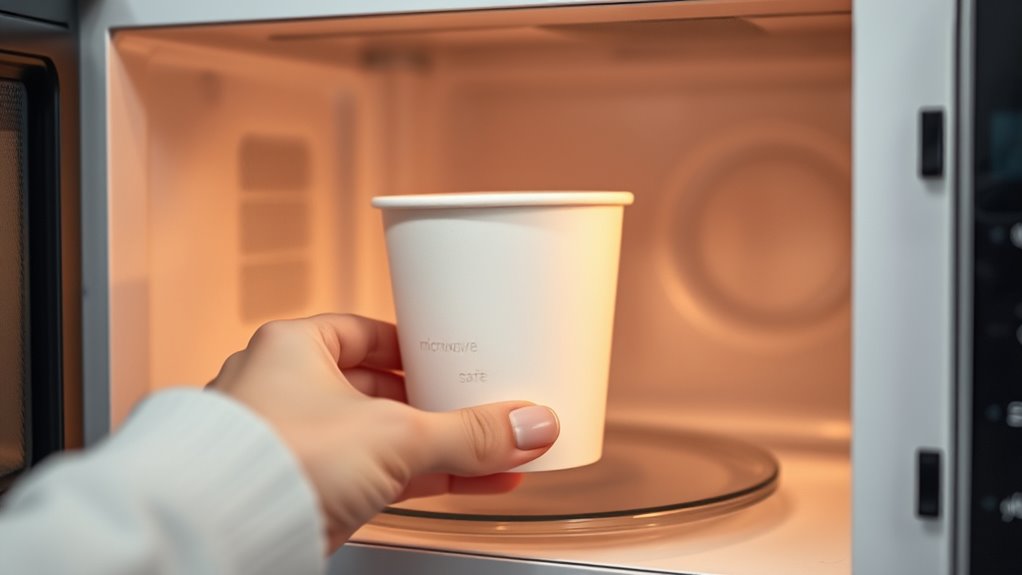
You’ll want to look for a clear microwave-safe label on the paper cup before heating it. Pay attention to the material—some cups are designed to handle heat better than others.
Also, avoid any cups with metallic coatings, as they can cause sparks and damage your microwave. It’s always better to be safe and choose cups specifically marked for microwave use.
Check for Microwave Label
How can you tell if a paper cup is safe to use in the microwave? The easiest way is to look for a microwave-safe label on the cup. Manufacturers often include this symbol or text to let you know the cup can handle microwave heat without melting or releasing harmful chemicals.
When checking the label, keep these points in mind: Look for words like “microwave-safe” or “microwavable.” Spot a microwave icon, usually a small wave or oven symbol.
Also, check the bottom or side of the cup for any warnings. Avoid cups without clear microwave guidance to prevent accidents. It’s always better to be safe than sorry!
Material Composition Matters
Since paper cups come in various materials and coatings, knowing their composition helps you decide if they’re microwave-safe. Most basic paper cups are made from paperboard lined with a thin layer of polyethylene. This lining generally withstands short microwave heating.
However, if the cup contains wax coatings or special plastic linings, it might warp or melt under heat. You can usually identify these by checking the texture inside the cup—wax feels slick and plastic linings look glossy.
Also, cups made entirely from recycled paper might not handle microwave heat well due to mixed materials. If you’re unsure, it’s best to avoid microwaving to prevent leaks or chemical leaching.
Understanding these material differences ensures you use your paper cup safely in the microwave without damage or health risks. It’s always better to be safe than sorry!
Avoid Metallic Coatings
Although paper cups often seem harmless, metallic coatings inside them can spark or catch fire in the microwave. You want to avoid any cup with shiny or reflective surfaces because those metallic finishes interfere with microwave radiation, creating dangerous sparks.
To spot microwave-safe cups, keep these tips in mind:
- Check for labels like “Microwave Safe” or “No Metal” on the packaging.
- Avoid cups with gold, silver, or any reflective trim or logos.
- Look closely inside the cup for any foil linings or coatings.
- When in doubt, use plain paper cups designed specifically for microwaving.
Alternatives to Using Paper Cups in the Microwave
If you want to heat your beverage or food safely, you’ll need to choose alternatives to paper cups that can withstand microwave temperatures. Opt for microwave-safe ceramic mugs or glass containers, as they won’t release harmful chemicals or melt.
Microwave-safe plastic cups labeled accordingly are another option, but avoid those not marked for microwave use. Silicone cups or containers also handle heat well and are reusable.
Using these alternatives helps you avoid spills or cup damage caused by microwaving paper cups. Remember, selecting the right container guarantees your food heats evenly and safely without compromising flavor or safety.
Tips for Safely Heating Beverages in the Microwave
Choosing the right container is just one part of heating beverages safely in the microwave. You also need to follow a few simple tips to avoid spills, overheating, or burns.
Selecting the right container is essential, but following safety tips ensures your beverage heats without spills or burns.
First, don’t overfill your cup—leave space for the liquid to bubble without spilling. Second, heat your drink in short intervals, stirring in between to distribute the heat evenly.
Third, use a microwave-safe cover or paper towel to prevent splatters but avoid sealing the container tightly. Finally, always check the temperature before drinking because microwaves can create hot spots that might burn your mouth.
Following these steps will help you enjoy your beverage safely every time.
- Leave space to prevent spills
- Heat in short intervals and stir
- Cover loosely to avoid splatters
- Test temperature before drinking
What to Do If Your Paper Cup Catches Fire or Melts
When your paper cup catches fire or starts to melt in the microwave, act quickly to prevent injury or damage. First, stop the microwave immediately by pressing the cancel button or opening the door.
If flames are visible, keep the door closed to suffocate the fire. Don’t open it—that just feeds oxygen and can make the fire worse. Unplug the microwave if it’s safe to do so.
After the fire dies down or if there’s no flame but melting, carefully remove the cup using oven mitts to avoid burns. Dispose of the damaged cup properly, and clean the microwave to remove any residue or odors.
Never use the microwave again until you’re sure it’s safe and undamaged. Safety always comes first.
Conclusion
You can heat your drink, but don’t assume every paper cup is safe. You can check the label, but don’t ignore warning signs.
You can choose alternatives, but don’t risk melting or fire. You can stay cautious, but don’t let convenience compromise safety.
By knowing what to look for and how to handle your cup, you can enjoy your beverage without worry, without damage, and without danger. Always remember to check if your paper cup is microwave-safe before heating it. This helps prevent accidents like fires or the cup melting.
Taking a moment to read labels and choose the right cup keeps your drink warm and you safe. So, next time you want to microwave a paper cup, be smart and cautious—it’s worth it for your safety and peace of mind.