How Long Does Paper Take to Biodegrade?
Paper usually takes a few weeks to several months to biodegrade, depending on the type of paper and the environment it’s in. Thin or recycled paper tends to break down faster, while thicker or coated papers, like cardboard, take more time.
Moisture, warmth, and microbes all play a big role in speeding up the decomposition process.
On the other hand, dry or cold conditions can slow things down quite a bit.
If you’re curious about how different environmental factors and various types of paper affect how quickly they decompose, keep reading for more insights. It’s pretty interesting to see how nature handles paper waste differently based on these conditions.
Factors Influencing Paper Decomposition Time
Although paper is generally biodegradable, the time it takes to break down depends on several key factors. You’ll find that moisture plays a major role—damp conditions speed up decomposition, while dry environments slow it down.
Temperature matters too; warmer temperatures boost the activity of microbes that break down paper fibers. Oxygen availability is another factor; in well-aerated areas, paper decomposes faster because aerobic bacteria thrive there.
The thickness and density of the paper also influence how quickly it breaks down—thicker paper takes longer. Finally, the presence of coatings, inks, or additives can delay decomposition by acting as barriers or introducing chemicals that resist microbial action.
Understanding these variables helps you grasp why paper’s biodegradation time can vary widely. It’s pretty interesting once you think about all the things that affect how fast paper disappears!
Types of Paper and Their Biodegradability
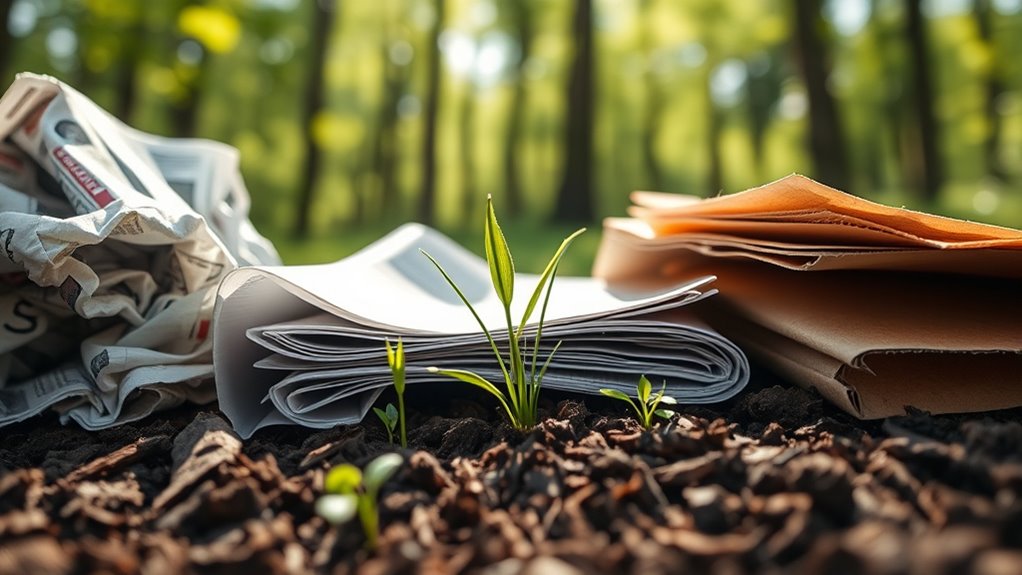
You’ll find that common paper types like newspaper and cardboard break down faster than glossy or coated papers, which often resist biodegradation.
Coatings and additives can slow the process considerably, so it’s important to know what’s in your paper.
Also, recycled paper usually decomposes quicker than virgin paper because it’s been processed before.
Common Paper Varieties
Since different types of paper vary in composition and treatment, their biodegradability can differ considerably. When you handle various paper kinds, knowing their breakdown times helps you manage waste better.
Here are four common varieties:
- Newspaper – Made from low-quality pulp, it breaks down quickly, often within 2-6 weeks.
- Cardboard – Thicker and denser, cardboard takes longer, generally around 2 months to decompose.
- Office Paper – Usually treated with bleach or dyes, it biodegrades in about 2-6 weeks but varies based on additives.
- Tissue Paper – Thin and loosely woven, tissue paper decomposes fast, often within a few days to two weeks.
Understanding these differences helps you choose paper products with environmental impact in mind. It’s pretty handy to keep this in mind next time you’re tossing something in the bin!
Impact of Coatings
Different coatings on paper can considerably affect how quickly it breaks down in the environment. When paper is coated with plastic or wax, you’ll notice it resists water and stains, but these coatings slow biodegradation substantially.
They create a barrier that microbes struggle to penetrate, so coated papers can take months or even years longer to decompose than uncoated paper. On the other hand, biodegradable coatings, like certain plant-based or clay coatings, allow the paper to break down more naturally and faster.
If you’re trying to reduce environmental impact, choosing uncoated or responsibly coated paper is key. Understanding the type of coating helps you predict how long the paper will persist in nature and informs better disposal or recycling decisions.
Recycled vs. Virgin
Although both recycled and virgin paper serve similar purposes, their biodegradability varies due to differences in processing and fiber quality. When you choose between the two, keep these points in mind:
Virgin paper uses fresh fibers, making it denser and slower to break down. On the other hand, recycled paper contains shorter fibers, which decompose faster in natural environments.
Processing recycled paper often involves fewer chemicals, which can make it break down more easily. Virgin paper’s strength can actually delay decomposition, especially if it includes additives or coatings.
The Biodegradation Process Explained
You’ll find that microbes play a huge role in breaking down paper by feeding on its fibers. How fast this happens depends a lot on the environment—things like moisture, temperature, and oxygen levels all make a difference.
Understanding these factors helps you see why some paper decomposes quicker than others. It’s pretty interesting once you get into it!
Microbial Role in Breakdown
When paper ends up in the environment, microbes quickly get to work breaking it down. These tiny organisms play a vital role in biodegradation by decomposing the cellulose fibers in paper.
Here’s how they do it:
- Secretion of Enzymes: Microbes release enzymes that break cellulose into simpler sugars.
- Absorption: They absorb these sugars to fuel their growth and reproduction.
- Metabolic Breakdown: Through metabolism, microbes convert the sugars into carbon dioxide, water, and biomass.
- Continuous Cycle: As microbes multiply, they accelerate the decomposition process until the paper fully breaks down.
Pretty cool, right? These little guys keep nature’s recycling going strong!
Environmental Factors Impacting Decomposition
Microbes break down paper efficiently, but their work depends heavily on the surrounding environment. When you place paper in warm, moist conditions, microbes thrive, speeding up decomposition.
Conversely, in cold or dry environments, microbial activity slows, and paper takes much longer to break down. Oxygen levels also matter—you’ll find paper decomposes faster when exposed to air because aerobic microbes are more active.
If paper is buried deep or submerged, decomposition slows due to limited oxygen. Additionally, the presence of other organic materials can influence microbial communities, affecting how quickly paper decays.
Environmental Conditions Affecting Paper Breakdown
Although paper is biodegradable, its breakdown rate depends heavily on the surrounding environmental conditions. You’ll notice that paper decomposes faster or slower based on a few key factors.
Here are four main conditions affecting paper breakdown:
- Moisture – Damp environments speed up decomposition by supporting microbial activity.
- Temperature – Warmer temperatures accelerate the chemical and biological processes needed for decay.
- Oxygen Levels – Adequate oxygen promotes aerobic bacteria that break down paper efficiently.
- Microbial Presence – The abundance of fungi and bacteria directly influences how quickly paper decomposes.
Impact of Paper Waste on Landfills and Ecosystems
Because paper waste often ends up in landfills, it can substantially impact both the environment and local ecosystems. When you toss paper into the trash, it contributes to landfill mass, taking months or even years to break down fully.
During this time, paper can release methane, a potent greenhouse gas that worsens climate change. You might not realize it, but overflowing landfills also disrupt nearby wildlife habitats by reducing available land and polluting soil and water through leachate.
Additionally, excessive paper waste strains landfill capacity, pushing for new landfill sites that can destroy natural areas. By understanding these impacts, you see how even everyday paper waste affects broader ecological balance.
That’s why managing it responsibly really matters for protecting the environment around you.
Tips for Reducing Paper Waste and Promoting Recycling
Reducing paper waste and promoting recycling can considerably lessen the strain on landfills and protect ecosystems. You can make a real difference by adopting simple habits that cut down on paper use and boost recycling efforts.
- Go digital whenever possible: Use electronic documents and billing to minimize printed paper. It’s a great way to keep things efficient and eco-friendly.
- Print smart: Only print when necessary and use double-sided printing to save paper. This small change really adds up over time.
- Reuse scrap paper: Use the blank side of printed sheets for notes or drafts. It’s an easy way to get more use out of what you already have.
- Set up a recycling system: Keep a dedicated bin for paper recycling at home or work to guarantee proper disposal. Having a spot just for paper makes recycling a no-brainer.
Conclusion
Understanding how paper gracefully returns to nature helps you appreciate its journey beyond use. While some types take a leisurely pace to break down, others make a swift exit, influenced by their makeup and surroundings.
By being mindful of your paper habits and embracing recycling, you gently ease the burden on our environment, turning waste into opportunity. So, next time you handle paper, remember you’re part of a delicate dance with nature’s timeline.
Knowing how long paper takes to biodegrade can really change the way you think about everyday waste. Paper biodegradation varies depending on factors like thickness, coatings, and local conditions. The more you understand this process, the better you can make eco-friendly choices.
Recycling paper not only saves trees but also reduces landfill waste and pollution. So, whether it’s newspapers, cardboard, or office paper, recycling helps speed up the journey back to nature. Keep these points in mind to respect the environment and promote sustainable living.