
How You Can Recycle Tissue Paper Properly
You can recycle tissue paper properly by making sure it’s clean, dry, and free from food, grease, or bodily fluids. These simple steps ensure the paper is suitable for recycling and helps reduce waste effectively.
Avoid using tissues with glitter, foil, or heavy dyes, as they can contaminate the recycling process.
Also, make sure to remove any stickers or tape before recycling. Flatten and bundle the paper loosely to help with processing—this makes it easier for recycling facilities to handle the material.
Don’t forget to check your local recycling rules, since some places may not accept certain types of tissue paper.
Stick with these steps, and you’ll also uncover useful tips for environmental benefits and alternatives to recycling. It’s a small effort that can lead to a big positive impact on the planet!
Understanding Which Tissue Papers Are Recyclable
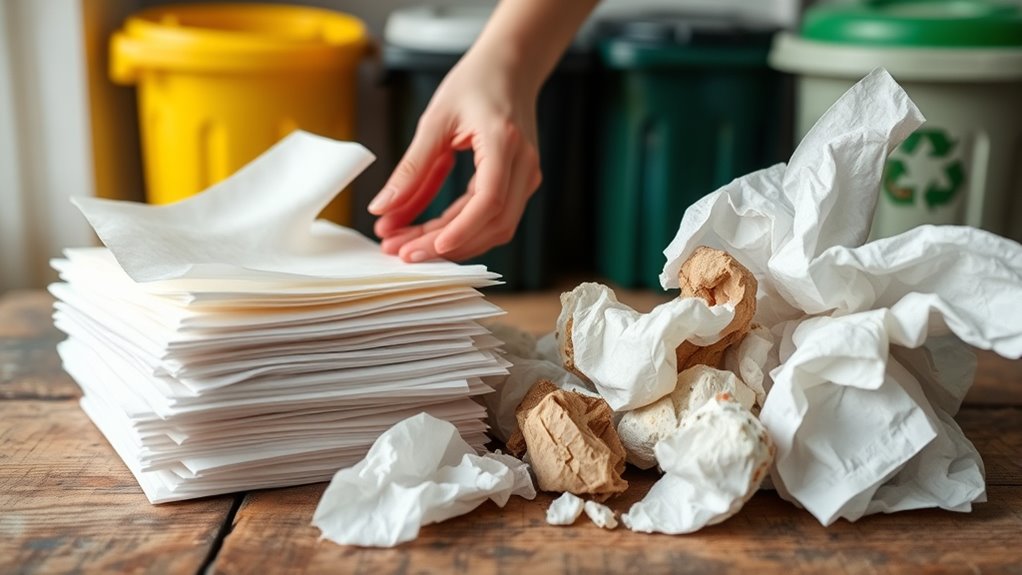
How can you tell which tissue papers are recyclable? First, check if the tissue paper is clean and free from contaminants like food, grease, or bodily fluids—that’s a key factor. Most plain, dry tissue papers, like those used for crafts or wrapping gifts, are recyclable.
However, tissues used for personal hygiene or those soaked with substances usually aren’t accepted because they can’t be properly processed. Also, avoid recycling tissue papers with added elements like glitter, foil, or heavy dyes. These materials complicate recycling and often end up in landfills.
You can usually find recycling symbols or guidelines on packaging, so keep an eye out. By knowing these simple distinctions, you’ll avoid contaminating recycling batches and help ensure the tissue paper you recycle actually gets reused.
Preparing Tissue Paper for Recycling
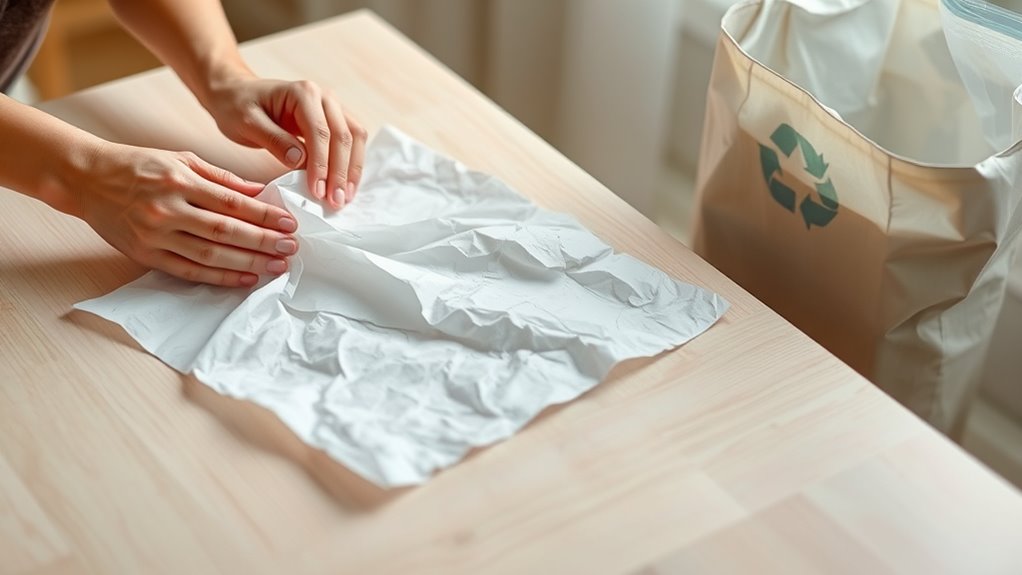
Once you’ve identified which tissue papers qualify for recycling, the next step is getting them ready for the process. First, make sure the tissue paper is clean and dry; wet or soiled paper can contaminate the recycling batch.
Remove any stickers, tape, or decorations attached to the tissue paper, as these materials aren’t recyclable. Flatten the tissue paper to save space and make handling easier for recycling facilities.
If you have large amounts, bundle them loosely to avoid clumping. Also, avoid mixing tissue paper with other recycling materials that might not be accepted together.
Common Mistakes to Avoid When Recycling Tissue Paper
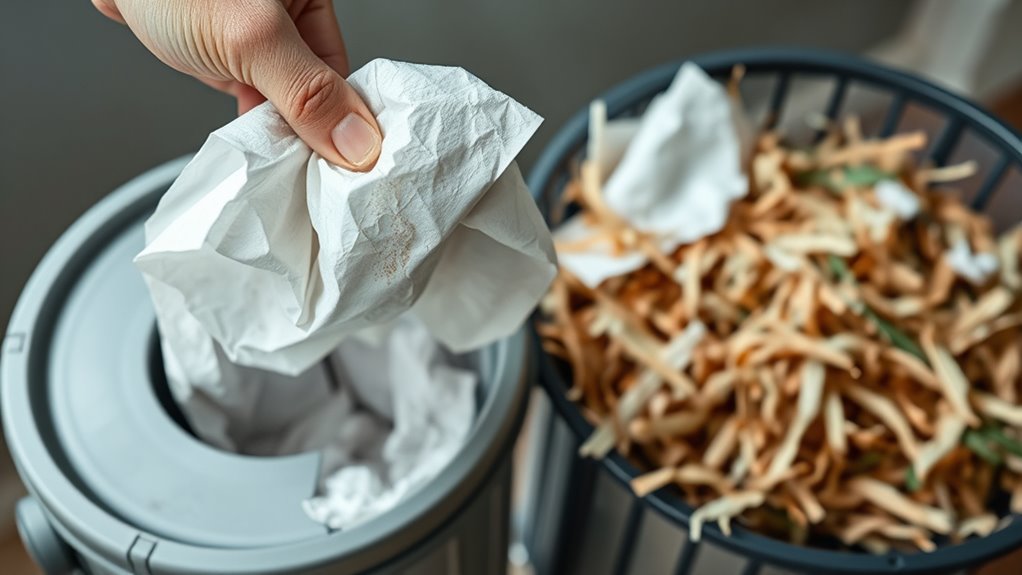
Although recycling tissue paper seems straightforward, many people make avoidable errors that reduce its effectiveness. To recycle tissue paper properly, you need to steer clear of these common mistakes:
- Recycling Wet or Soiled Tissue: Moisture or food stains contaminate the paper, making it unsuitable for recycling.
- Mixing with Non-Recyclable Waste: Avoid tossing tissue paper with plastics or metals, as this complicates the recycling process.
- Using Bleached or Heavily Dyed Tissue: These can disrupt recycling machinery and lower paper quality.
- Ignoring Local Guidelines: Different areas have specific rules; not following them might mean your tissue paper won’t be recycled at all.
The Environmental Benefits of Recycling Tissue Paper
Because tissue paper breaks down quickly, recycling it can considerably reduce waste in landfills and conserve natural resources. When you recycle tissue paper, you help lower the demand for virgin pulp, which means fewer trees are cut down.
Recycling tissue paper reduces landfill waste and conserves forests by lowering the need for virgin pulp.
This not only preserves forests but also protects wildlife habitats. Recycling tissue paper also saves energy and water compared to producing new paper from raw materials.
By doing your part, you reduce greenhouse gas emissions linked to paper production and decomposition in landfills. Plus, recycling tissue paper reduces pollution by minimizing the need for harsh chemicals used in paper manufacturing.
When you recycle properly, you contribute to a healthier planet and support sustainable resource use. It’s a small action with a significant environmental impact.
Alternatives to Recycling Tissue Paper
If recycling tissue paper isn’t always an option, you can explore other eco-friendly alternatives to reduce waste. Instead of tossing used tissue paper, try these options:
- Composting: Add clean, unbleached tissue paper to your compost bin. It breaks down naturally and enriches soil.
- Reuse: Use tissue paper for crafts, gift wrapping, or cushioning fragile items when packing. It’s a great way to give it a second life.
- Donate: Offer gently used tissue paper to schools or community centers for art projects. They’ll appreciate the materials for creative activities.
- Switch to reusable cloths: Replace disposable tissue paper with washable cloth handkerchiefs or napkins. This simple change can really cut down on waste.
How to Find Local Tissue Paper Recycling Programs
Wondering where you can recycle tissue paper in your area? Start by checking your city or county’s official website for waste management services.
You can also call local recycling centers directly to ask if they accept tissue paper. Some community centers or eco-friendly stores might have drop-off points.
Additionally, use online tools like Earth911 or RecycleNation to find nearby programs tailored to your needs.
| Resource Type | How to Access | Notes |
|---|---|---|
| City Waste Website | Search “[Your city] recycling” | Lists accepted materials |
| Local Recycling Center | Call or visit | Confirm tissue paper policy |
| Community Centers | Visit or inquire | May offer special drop-offs |
| Online Tools | Earth911, RecycleNation websites | Search by ZIP code |
Conclusion
Recycling tissue paper is like giving old leaves a chance to nourish new roots. By knowing what’s recyclable and preparing it right, you help the cycle of renewal continue smoothly.
Avoid common mistakes, and you’ll turn something small into a powerful act for the planet. Even if recycling isn’t always an option, exploring alternatives keeps the spirit of care alive.
So, take a moment—your efforts are seeds for a greener tomorrow. Proper recycling of tissue paper not only reduces waste but also supports environmental sustainability. By following simple steps, you contribute to a cleaner, healthier planet. Remember, every small action counts in promoting eco-friendly habits and protecting natural resources.