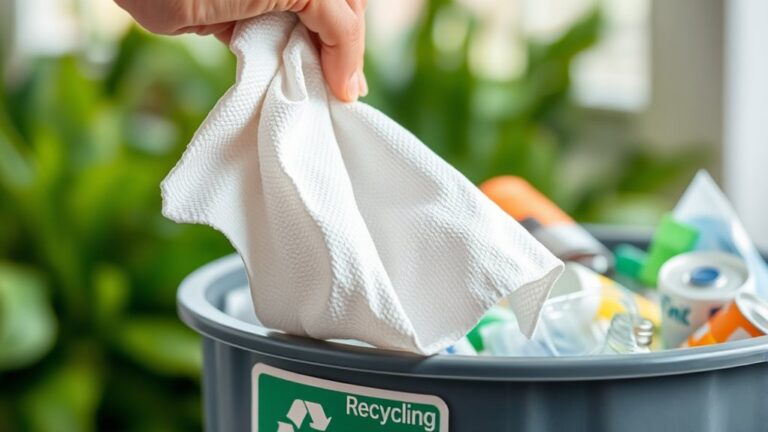
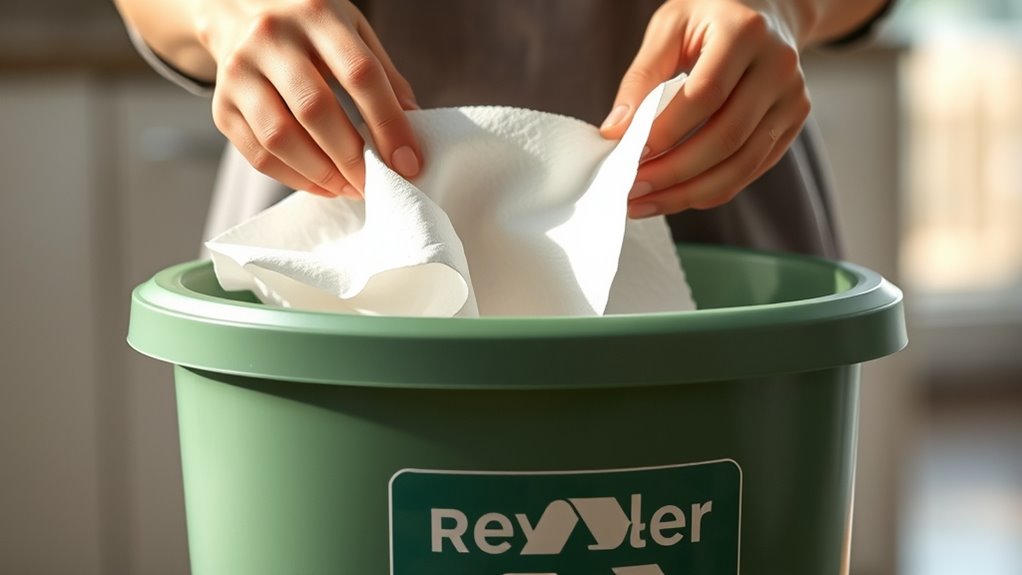
How to Do You Recycle Paper Towels Properly
You can recycle paper towels only if they’re clean and unused. Since most used ones carry contaminants like food, oils, or chemicals that ruin recycling batches, it’s important to check their condition.
If your paper towels are dirty or dampened with anything other than water, it’s best to compost them—provided they’re made of natural fibers without synthetic additives—or dispose of them in the trash.
Properly sorting them helps reduce waste and protect the environment. Keep exploring to discover smarter ways to handle and reduce paper towel waste.
Understanding the Composition of Paper Towels
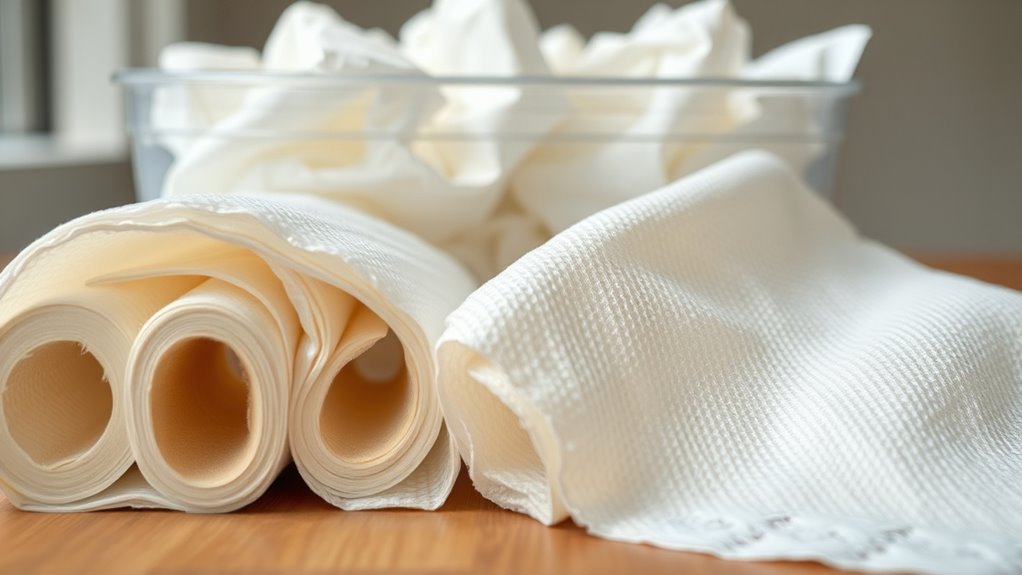
Before you recycle paper towels, it’s important to understand what they’re made of. Most paper towels are crafted from wood pulp, a natural fiber that’s biodegradable.
However, manufacturers often add chemicals, dyes, and binders to improve strength and absorbency. These additives can affect how the towels break down during recycling.
You’ll find that many paper towels also contain small amounts of synthetic fibers, which aren’t biodegradable and complicate recycling processes. Because of this mix, the composition of paper towels varies widely depending on the brand and type.
Many paper towels contain synthetic fibers that hinder biodegradability and complicate recycling efforts.
Knowing this helps you recognize why recycling paper towels isn’t as straightforward as recycling other paper products. Understanding their makeup ensures you handle them properly and avoid contaminating recycling streams.
Why Most Used Paper Towels Can’t Be Recycled
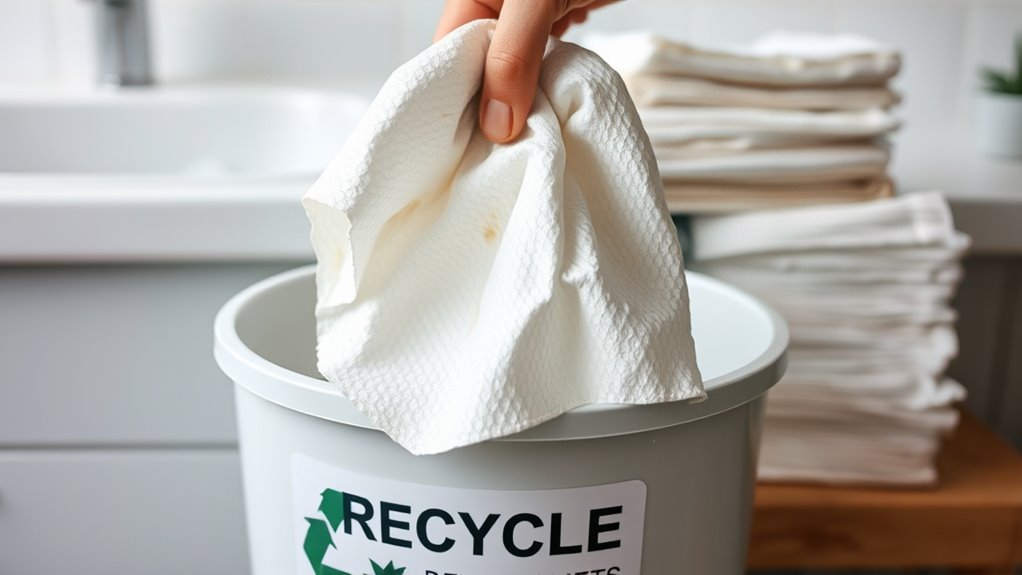
Why can’t you just toss your used paper towels into the recycling bin? The main issue is contamination. Used paper towels often carry food residue, oils, cleaning chemicals, or bodily fluids, which interfere with the recycling process.
These substances break down the fibers and contaminate the recycling stream, making it difficult or impossible to produce clean recycled paper. Additionally, paper towels are designed to be highly absorbent and have shorter fibers, which degrade quickly and don’t hold up well during recycling.
When mixed with clean paper products, they reduce the overall quality of the recycled material. Because of these factors, most recycling facilities don’t accept used paper towels, so tossing them in the recycling bin can cause more harm than good.
Identifying Recyclable Paper Towels
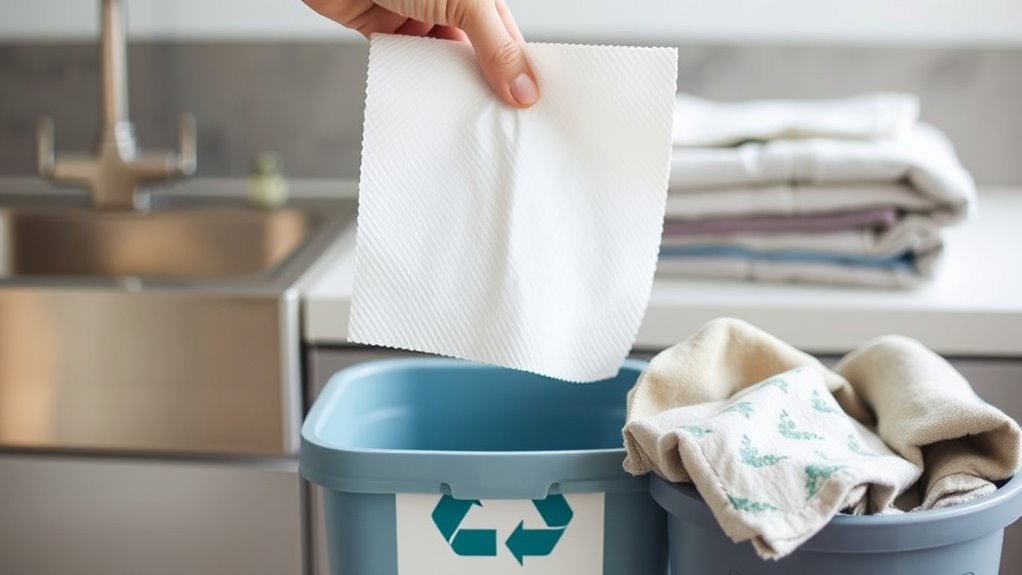
You’ll want to separate clean paper towels from those soaked with food or chemicals,
as only the clean ones have a chance at recycling.
Contaminated towels usually aren’t accepted in recycling bins but can often be composted instead.
Knowing this difference helps you choose the right disposal method every time.
Clean vs. Contaminated Towels
Although paper towels seem similar, not all of them can be recycled. You need to distinguish between clean and contaminated towels before recycling.
Clean paper towels, like those unused or lightly soiled with water, are usually acceptable for recycling in some programs. However, most recycling facilities don’t accept paper towels stained with food, grease, chemicals, or bodily fluids because these contaminants interfere with the recycling process.
If your towel is soaked with cleaning products or food waste, it’s best to avoid placing it in the recycling bin. Instead, dispose of it properly through trash or composting options where available.
Composting Alternatives Available
When you come across paper towels that can’t go into the recycling bin due to contamination, composting often offers a better alternative. You can turn soiled towels into nutrient-rich compost, reducing waste and enriching your garden.
Not all paper towels are compostable—avoid those with synthetic fibers or chemical treatments. It’s a simple way to make a positive impact!
Here’s a quick guide to help you decide:
| Paper Towel Type | Compostable? | Emotion to Feel |
|---|---|---|
| Food spills | Yes | Relief |
| Chemical cleaners | No | Caution |
| Biodegradable fibers | Yes | Empowerment |
| Plastic or synthetic | No | Disappointment |
Proper Disposal Methods for Contaminated Paper Towels
When paper towels get contaminated with things like grease, chemicals, or bodily fluids, you have to handle them a bit differently. It’s important to know what type of contamination you’re dealing with so you can pick the safest way to toss them out.
Let’s dive into the best methods for disposing of these paper towels without putting your health or the environment at risk. You’ll find it’s easier than you might think once you know the basics!
Identifying Contamination Types
Since paper towels often come into contact with various substances, you need to identify the type of contamination before deciding how to dispose of them properly.
If your paper towels are soaked with water or food spills, they’re generally considered clean and can sometimes be composted. However, if they contain hazardous materials like chemicals, oils, or bodily fluids, you must treat them as contaminated waste.
Also, towels used to clean surfaces with disinfectants may hold residues that prevent recycling.
Greasy or oily towels from kitchens require special handling, as oils can interfere with composting and recycling processes.
Safe Disposal Techniques
Although it’s tempting to toss contaminated paper towels in the regular trash, you should follow specific disposal methods to prevent environmental harm and health risks. First, segregate paper towels contaminated with hazardous substances like chemicals or bodily fluids.
Place these in sealed, leak-proof bags to avoid cross-contamination. Then, dispose of them according to your local hazardous waste guidelines, which often include designated drop-off points or special collection days.
For paper towels soiled with food or non-toxic substances, you can compost them if your facility accepts them. Otherwise, just toss them in your organic waste bin.
And one more thing—avoid flushing paper towels down the toilet. They can clog plumbing and wastewater systems.
Following these steps helps you handle contaminated paper towels safely and responsibly, protecting both your community and the environment.
Composting as an Eco-Friendly Alternative
If you want to reduce waste and benefit your garden, composting paper towels offers an eco-friendly alternative to traditional recycling. You can compost used paper towels made from 100% natural fibers, especially if they’re free from harsh chemicals, synthetic dyes, or non-compostable substances.
Just make sure the towels haven’t been contaminated with grease, oils, or cleaning products containing bleach or antibacterial agents. These can harm your compost.
Tear the towels into smaller pieces to speed up decomposition, and mix them with green materials like fruit scraps or grass clippings for balanced compost.
Tips to Reduce Paper Towel Waste Effectively
When you make a habit of using fewer paper towels, you not only save money but also reduce environmental impact. Start by opting for reusable cloth towels whenever possible.
Keep a stash of microfiber cloths in your kitchen or bathroom for quick cleanups. Use paper towels only when absolutely necessary, like for soaking up spills that cloths can’t handle.
Keep microfiber cloths handy for quick messes and reserve paper towels for tough spills only.
Cut paper towels in half or fold them to use less per task. Try not to grab multiple sheets out of habit—it adds up more than you think.
For drying hands, consider installing air dryers or using cloth hand towels. And don’t forget to educate everyone in your household or workplace about mindful paper towel use.
These simple changes help you minimize waste and contribute to a greener environment without sacrificing convenience. It’s easier than you might expect!
Conclusion
You might think all paper towels belong in the trash, but that’s not entirely true. While most used ones can’t be recycled due to contamination, you can compost clean or lightly used towels instead.
This simple step helps reduce landfill waste and supports a healthier planet. By choosing composting and cutting down on paper towel use, you’re making a real difference.
Recycling paper towels properly means knowing when to compost and when to toss. Remember, clean or lightly used paper towels can go into your compost bin, which helps turn waste into valuable soil.
So next time you’re about to throw out a paper towel, think twice. Recycling paper towels and composting where possible are easy habits that contribute to a greener environment. Small changes like these add up and make a big impact on reducing waste and protecting our planet.