How Long Does Toilet Paper Take to Dissolve?
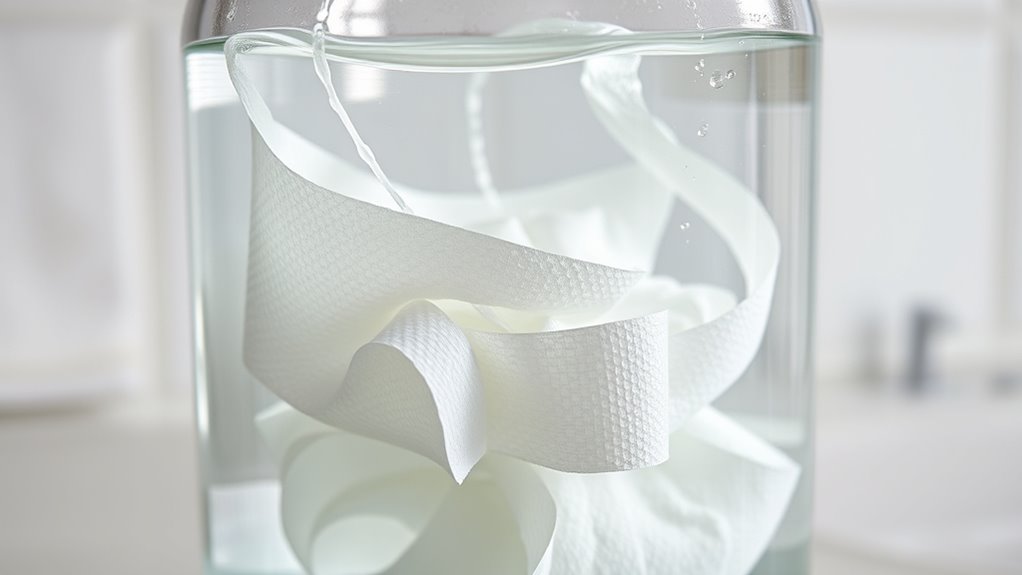
Toilet paper usually dissolves within 1 to 7 minutes after you flush, depending on its thickness and composition.
Single-ply or thinner sheets break down faster, while multi-ply or thicker types take longer and may increase clog risks.
Warm water and good water flow help speed up the process.
If you use septic-safe paper and flush in moderation, you’ll avoid plumbing issues.
Keep going to find out how different plumbing systems and toilet paper types affect dissolution times.
Factors Affecting Toilet Paper Dissolution Time
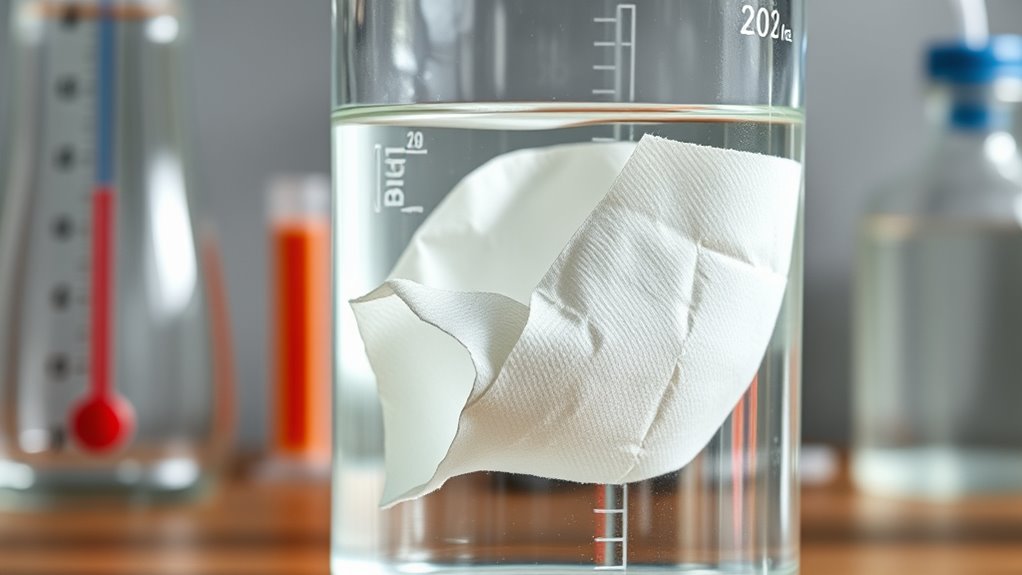
Although toilet paper might seem simple, several factors influence how quickly it dissolves. You’ll notice that the material’s thickness plays a big role—thicker, multi-ply papers take longer to break down than single-ply options.
The paper’s composition matters too; some have added lotions or coatings that slow dissolution. Water temperature also affects this process—warmer water helps break down fibers faster.
When you flush, the paper’s exposure to water and agitation impacts how quickly it disintegrates. Ultimately, the quality of the toilet paper matters; cheaper brands often dissolve quicker, while premium brands prioritize strength and comfort, extending their breakdown time.
Understanding these factors helps you choose the right toilet paper, especially if you want to avoid clogs or protect septic systems. It’s pretty handy to keep this in mind next time you’re shopping!
Typical Dissolution Time in Household Plumbing
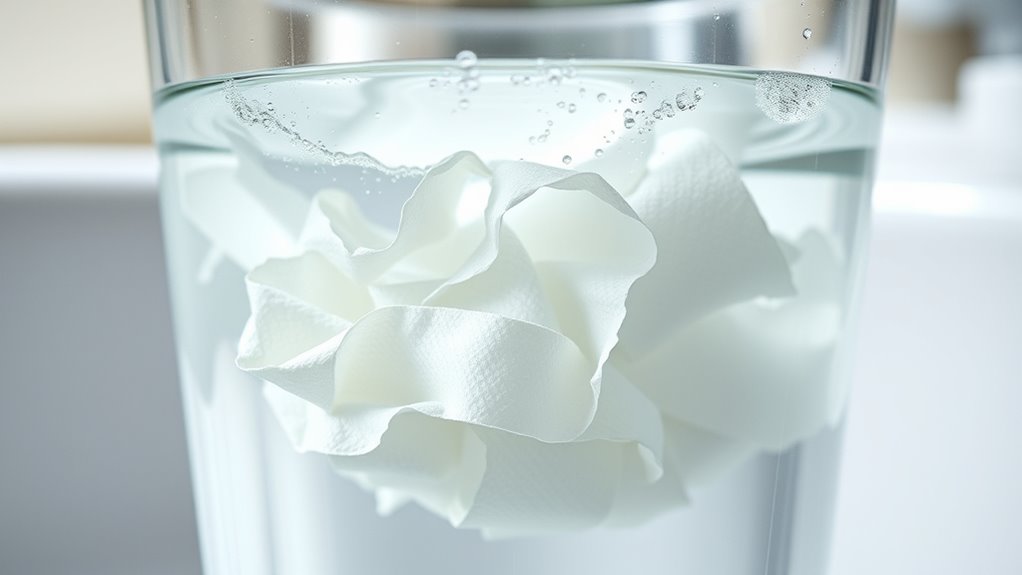
When you flush toilet paper down your home’s plumbing, it typically takes anywhere from a few seconds to several minutes to fully dissolve, depending on the type you use. Standard toilet paper designed for septic systems disintegrates quickly, often within a minute or two, ensuring smooth passage through your pipes.
However, if the paper is thicker or less biodegradable, it may linger longer, increasing the risk of clogs. Your plumbing system’s water flow and pipe diameter also influence dissolution time. Faster-moving water helps break down and carry away the paper more efficiently.
To keep your plumbing running smoothly, choose toilet paper that’s labeled safe for septic systems and avoid flushing non-dissolvable materials. This way, you prevent blockages and maintain ideal household plumbing function.
Impact of Toilet Paper Thickness and Ply
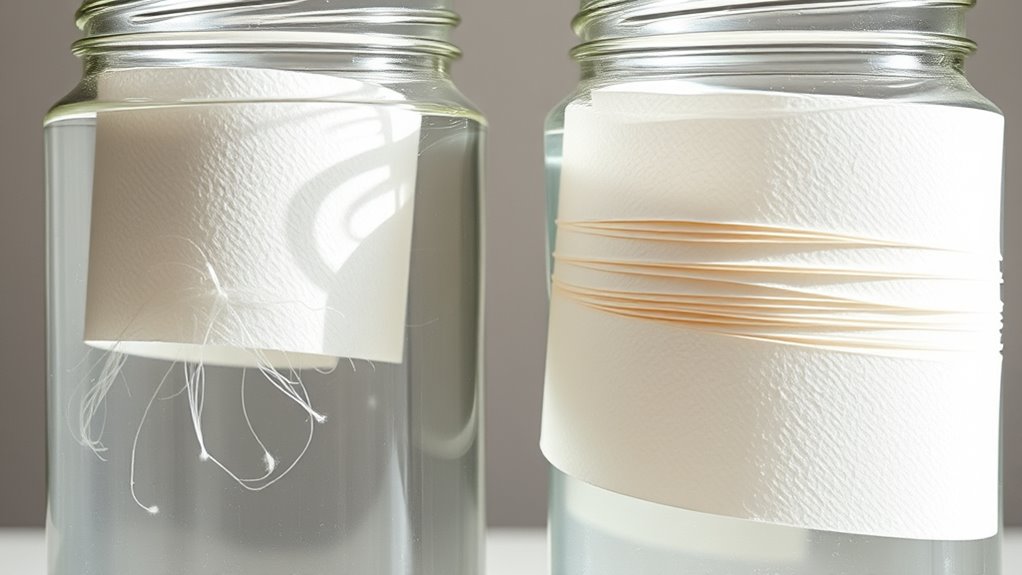
You’ll notice that thicker toilet paper tends to take longer to break down. Single-ply sheets usually dissolve faster than multi-ply options because there’s less material to break apart.
Understanding how ply affects clogging can help you choose the right paper for your plumbing. It’s all about finding that balance between comfort and practicality.
Thickness and Dissolution Rate
Because thicker toilet paper contains more material per square inch, it naturally takes longer to dissolve than thinner varieties. When you pick a thicker sheet, expect it to persist longer in water. This can affect plumbing or septic systems if flushed indiscriminately.
Understanding this helps you choose toilet paper that balances comfort and environmental impact.
| Thickness Level | Approximate Dissolution Time |
|---|---|
| Very Thin | 1-2 minutes |
| Thin | 2-4 minutes |
| Medium | 4-7 minutes |
| Thick | 7-10 minutes |
This table shows how thickness affects dissolution. So, if you want faster breakdown, go for thinner options.
Single vs. Multi-Ply
Choosing between single-ply and multi-ply toilet paper substantially affects how quickly it dissolves. Single-ply sheets are thinner and break down faster in water, making them ideal if you want quick dissolution.
They’re less dense, so they separate easily when wet, reducing the risk of residue buildup. On the other hand, multi-ply toilet paper is thicker because it layers multiple sheets together for extra strength and comfort.
This thickness means it takes longer to dissolve, as the layers hold together more stubbornly. If you prioritize softness and durability, multi-ply might be your choice, but it dissolves slower.
Understanding this difference helps you pick the right toilet paper based on your plumbing needs and environmental concerns.
Ply Impact on Clogging
While single-ply toilet paper breaks down more quickly, its thinner nature means it usually passes through plumbing without causing issues.
In contrast, multi-ply toilet paper, being thicker and more durable, takes longer to dissolve and can increase the risk of clogs if flushed excessively. You should consider your plumbing system’s tolerance when choosing toilet paper ply, especially in older or sensitive pipes.
| Ply Type | Thickness | Clogging Risk |
|---|---|---|
| Single-ply | Thin | Low |
| 2-ply | Moderate | Moderate |
| 3-ply | Thick | High |
| Ultra-soft | Thick but soft | Moderate-High |
| Eco-friendly | Variable | Low-Moderate |
Choosing the right ply can really help prevent plumbing problems.
Differences Between Septic Systems and Municipal Sewers
When you flush toilet paper, it travels differently depending on whether your home uses a septic system or connects to a municipal sewer.
If you have a septic system, the toilet paper ends up in a private tank where bacteria break it down over time. This process needs balance—too much or thick toilet paper can slow decomposition and cause clogs.
Septic tanks rely on bacteria to break down toilet paper, so excessive or thick paper can cause clogs and slow decomposition.
On the other hand, municipal sewers carry waste to a large treatment plant. Here, toilet paper dissolves and breaks down faster due to higher water flow and advanced machinery.
However, even in municipal systems, excessive or non-dissolvable paper can lead to blockages. So, understanding this difference helps you manage your flushing habits to keep your plumbing running smoothly, no matter your setup.
Tips to Prevent Clogs From Toilet Paper
Understanding how toilet paper behaves in septic and municipal systems can help you avoid common plumbing issues. To prevent clogs, you need to be mindful of how much and what type of toilet paper you use.
Here are three key tips:
- Use only what’s necessary: Avoid using excessive amounts of toilet paper in one flush to reduce buildup.
- Choose quick-dissolving paper: Select toilet paper designed to break down faster, especially if you have a septic system.
- Flush multiple times: For larger amounts, flush in stages rather than all at once to allow paper to dissolve gradually.
Following these tips helps maintain smooth plumbing and reduces costly repairs. Being proactive with your toilet paper habits keeps your system running efficiently.
Environmentally Friendly Toilet Paper Options
If you want to reduce your environmental impact, choosing eco-friendly toilet paper is a smart step. Look for options made from recycled paper or bamboo, as they use fewer resources and break down faster in water.
Choosing recycled or bamboo toilet paper reduces resource use and breaks down faster, cutting environmental impact.
Bamboo toilet paper is especially sustainable because bamboo grows quickly without pesticides. Avoid products with added dyes, fragrances, or plastics, since they’re less biodegradable and can harm septic systems.
You can also find toilet paper certified by organizations like the Forest Stewardship Council (FSC), ensuring responsible forest management. By switching to these greener choices, you help reduce deforestation and water pollution.
Plus, many eco-friendly brands focus on softness and strength, so you don’t have to compromise comfort while being kind to the planet. It’s a win-win!
Conclusion
Understanding how long toilet paper takes to dissolve helps you avoid plumbing problems. For example, if you use thick, multi-ply toilet paper in a septic system, it might take much longer to break down. This increases the risk of clogs.
By choosing thinner, septic-safe paper and flushing responsibly, you can keep your pipes clear and protect your system. Remember, small changes in your toilet paper choice can make a big difference.
When it comes to how long toilet paper takes to dissolve, it varies based on the type you use. Thinner, single-ply papers dissolve quickly, which is better for plumbing and septic tanks. On the other hand, thick or multi-ply toilet papers take longer, potentially causing blockages.
So, if you want to avoid costly plumbing issues, opt for toilet paper that dissolves fast and is septic-safe. Being mindful about toilet paper can save you from headaches and expensive repairs down the line.