Are Paper Towels Recyclable?
You can’t recycle most paper towels because they’re made from short, weak fibers. Plus, they usually get contaminated with food, oils, or chemicals that clog recycling machines. These contaminants also damage equipment and reduce the quality of recycled materials.
So, instead of tossing them in the recycling bin, you should dispose of used paper towels in the trash. Or better yet, compost them if they’re free of harmful substances.
Composting is a great way to handle paper towel waste responsibly and keep it out of landfills.
If you want to find out about better alternatives and how to handle paper towel waste responsibly, keep exploring further. There are plenty of eco-friendly options and tips to help reduce waste and protect the environment.
Composition of Paper Towels
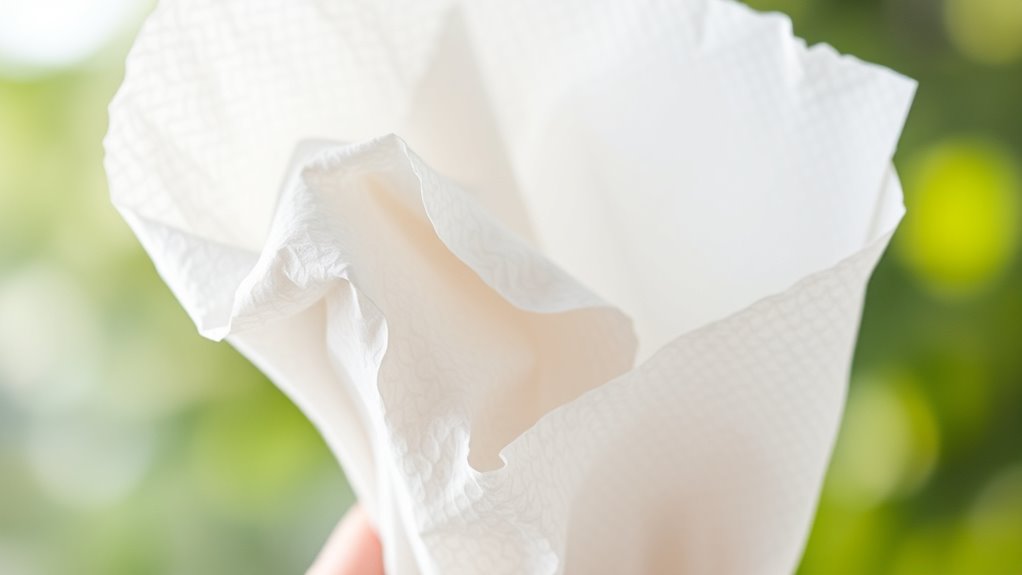
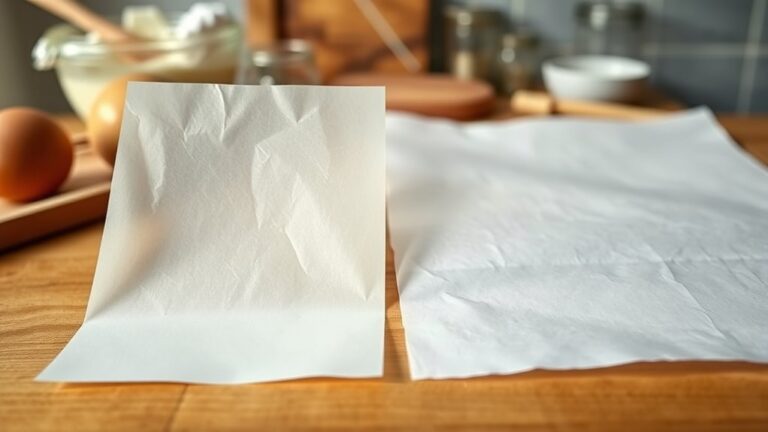
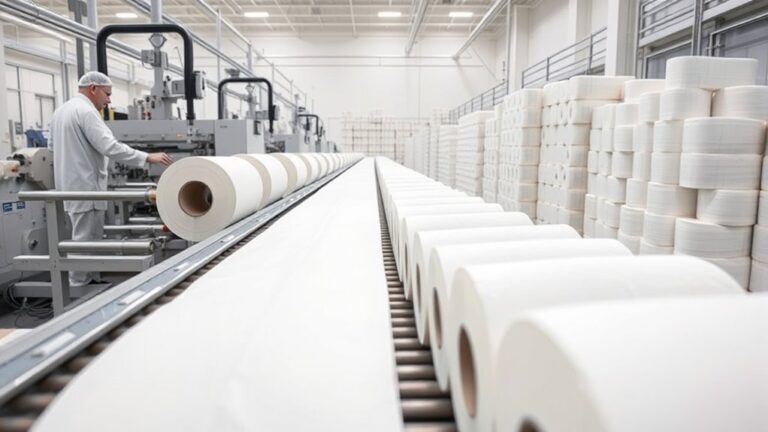
Although paper towels look simple, their composition is carefully designed to balance strength, absorbency, and softness. You’ll find they’re made from a blend of wood pulp fibers, often combined with recycled paper fibers.
These fibers are tightly interwoven to provide durability when wet, unlike regular paper. You’ll also notice additives like binders and wet strength resins that help maintain their structure during use.
Some paper towels include embossing patterns to increase surface area, boosting absorbency. The materials assure you can efficiently clean spills without tearing or leaving residue.
Understanding this composition helps you see why paper towels perform so well but also hints at the challenges involved if you want to recycle them later.
Why Paper Towels Are Generally Not Recyclable
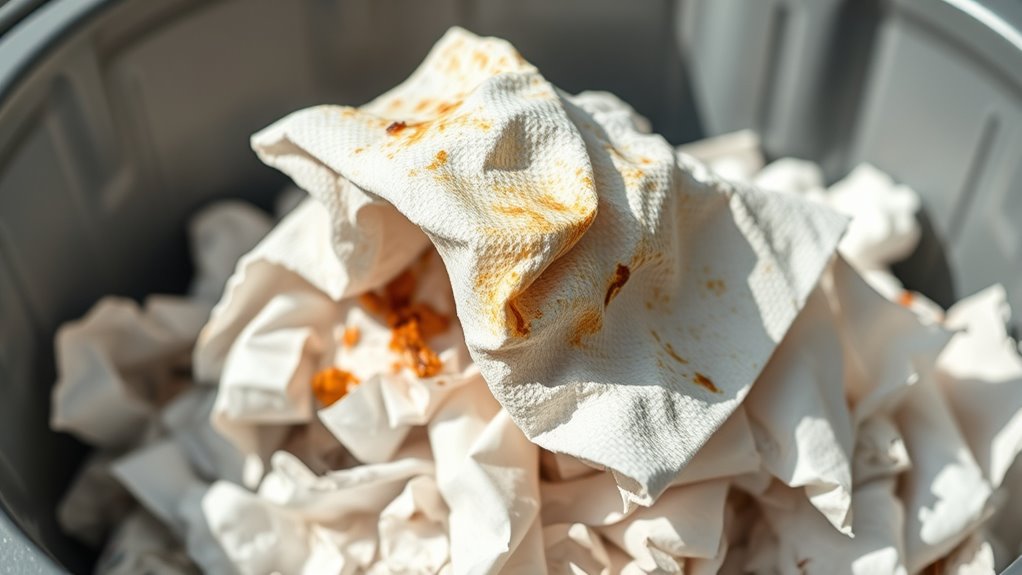
You might not realize that paper towels often carry contaminants like food or cleaning chemicals, making them hard to recycle. Their fibers are also short and weak, which limits how well they can be processed again.
Plus, the recycling machines aren’t designed to handle the challenges paper towels present, so they usually end up in the trash instead. It’s kind of a bummer, but that’s why they generally don’t make it into the recycling bin.
Contamination Issues
Because paper towels often absorb food, grease, and cleaning chemicals, they become contaminated and unsuitable for recycling. When you toss used paper towels into your recycling bin, you actually introduce substances that interfere with the recycling process.
These contaminants can damage recycling equipment and reduce the quality of recycled materials. Unlike clean paper products, contaminated paper towels can’t be effectively cleaned or processed.
This means recycling facilities often reject them to avoid complications. Instead, you should dispose of used paper towels in the trash or compost them if they haven’t been exposed to harmful chemicals.
Understanding contamination issues helps you make better choices and supports efficient recycling systems by keeping recyclable materials clean and free from pollutants. It’s all about keeping things simple and clean for recycling to work!
Fiber Quality Limitations
Contamination isn’t the only challenge keeping paper towels out of recycling bins. The fiber quality in paper towels plays a big role, too. When you use paper towels, their fibers break down quickly because they’re short and weak compared to the fibers in regular paper products.
These fibers can’t be reused effectively in recycling. Plus, paper towels often contain additives like lotions or chemicals that further degrade their fiber quality. When recycling facilities receive paper towels, they find it tough to process them into new paper products because the fibers won’t hold together well.
Recycling Process Challenges
Although paper towels may seem like an easy item to recycle, they pose significant challenges during the recycling process that make them generally unsuitable. When you toss used paper towels into recycling bins, you introduce contaminants like food residue, oils, and chemicals that disrupt the recycling machinery and lower the quality of recycled pulp.
The moisture and dirt absorbed by paper towels also weaken fibers, making it tough to produce sturdy recycled paper. Recycling facilities often reject paper towels to avoid expensive equipment damage and inefficiencies.
Plus, sorting systems struggle to separate paper towels from other paper products, increasing contamination risks. So, while it might feel like the right choice, recycling paper towels isn’t practical or effective.
It’s better to dispose of them as waste or compost them if possible. That way, you avoid causing problems in the recycling process and help keep things running smoothly.
Impact of Contamination on Recycling Paper Products
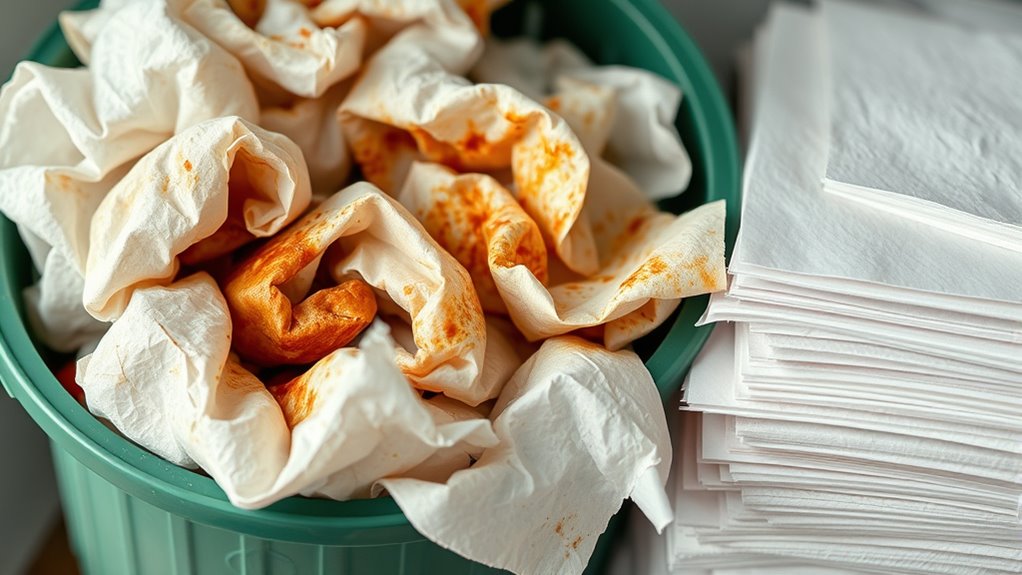
When you recycle paper products, even small amounts of food residue or grease can cause major problems. Contaminants like these weaken the paper fibers and interfere with the pulping process. This makes it harder to produce quality recycled paper.
If contaminated paper enters the recycling stream, it may lead to entire batches being rejected or downgraded. That means more waste and higher costs.
You should avoid recycling paper towels that have been used to clean up food, oils, or chemicals. These contaminants are difficult to remove during recycling.
Keeping recyclables clean and dry helps guarantee they get properly processed and turned into new products. So, by being mindful of contamination, you play an essential role in maintaining the efficiency and effectiveness of paper recycling programs.
Alternatives to Recycling Paper Towels
If you want to reduce waste, consider composting your used paper towels instead of recycling them.
You can also switch to reusable cloth alternatives that cut down on single-use paper products.
These options help you manage waste more sustainably and save resources.
Composting Paper Towels
Since paper towels often contain food residue and other organic matter, composting offers a practical alternative to traditional recycling. You can toss used paper towels into your compost bin, turning waste into nutrient-rich soil instead of landfill trash. Just make sure they’re free from chemicals or synthetic additives.
Composting breaks down organic fibers faster, helping reduce environmental impact.
| Composting Benefit | Paper Towel Suitability | Tips for Composting |
|---|---|---|
| Reduces landfill waste | Great with food residue | Avoid towels with chemicals |
| Enriches soil | Biodegradable fibers | Shred for faster breakdown |
| Lowers greenhouse gases | Absorbs moisture well | Balance green and brown materials |
Composting your paper towels is easy and eco-friendly—give it a try!
Reusable Cloth Alternatives
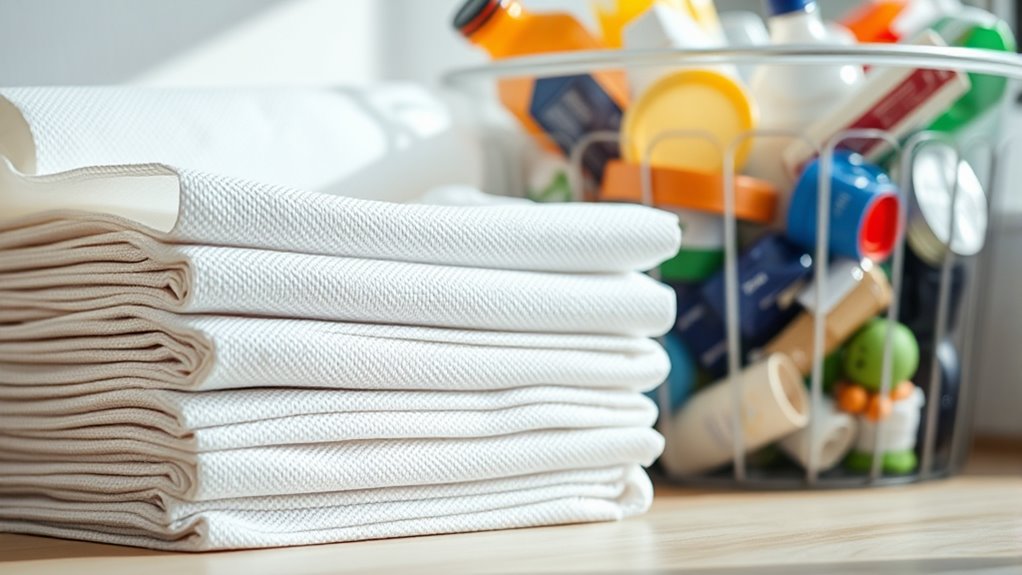
A reusable cloth alternative can considerably cut down your paper towel waste while saving money over time. Instead of reaching for disposable towels, try using washable cloths made from cotton, microfiber, or bamboo.
These materials are highly absorbent and durable, making them perfect for cleaning spills, wiping surfaces, or drying hands. You can easily toss them in the laundry after use, reducing landfill waste and your environmental footprint.
Plus, reusable cloths offer better performance since they don’t fall apart or leave lint behind. By switching to cloth alternatives, you’re not only cutting down on waste but also investing in a more sustainable and cost-effective cleaning routine.
Give it a try—you’ll notice the difference in both your budget and your impact on the planet.
Composting Paper Towels: What You Need to Know
While paper towels are often seen as disposable waste, you can compost many types of them to reduce your environmental impact. If your paper towels haven’t been used with harsh chemicals or oils, they break down well in compost.
Just avoid composting towels soiled with grease, bleach, or cleaning products since these can harm soil health.
Here’s what you should know:
| Paper Towel Type | Compostable? |
|---|---|
| Plain, unused | Yes |
| Used with water/food | Yes |
| Used with chemicals | No |
| Used with oils/grease | No |
Eco-Friendly Practices for Reducing Paper Towel Waste
Composting paper towels can help reduce waste, but cutting down on paper towel use altogether makes an even bigger impact. You can start by switching to reusable cloth towels or microfiber cloths for cleaning tasks. These options are washable, durable, and markedly reduce your waste footprint.
When paper towels are necessary, try using smaller sheets or only what you need to avoid excess waste. Installing touchless dispensers or controlled roll dispensers can also limit usage in public or office spaces.
Additionally, consider using air dryers or handkerchiefs instead of paper towels when possible. By adopting these eco-friendly practices, you not only decrease landfill contributions but also conserve resources used in producing disposable paper towels.
Small changes in your daily habits can lead to meaningful environmental benefits. It’s easier than you might think to make a real difference!
Conclusion
You might think paper towels are recyclable like regular paper, but their fibers are too short and often contaminated with food or chemicals. This makes recycling nearly impossible.
Instead, try composting them if they’re free of synthetic cleaners. Or better yet, switch to reusable cloth towels to cut waste.
By choosing these eco-friendly options, you’ll reduce landfill trash and help the environment more effectively than tossing paper towels in the recycling bin. Remember, when it comes to paper towels, recycling isn’t usually an option. Composting or using reusable towels are your best bets for being green and cutting down on waste.