How Toilet Paper Is Produced Step by Step
You start by selecting and preparing wood fibers, including recycled ones, ensuring they’re clean and ready. This step is crucial because the quality of the fibers directly affects the softness and strength of the toilet paper.
Next, the fibers are pulped and bleached for softness and brightness. This process helps make the paper gentle on your skin and visually appealing.
You then form a thin slurry on a mesh screen, draining water to create a wet sheet.
Pressing and drying remove moisture, strengthening the paper.
Finally, the paper is rolled, rewound into rolls, cut, and packaged. Keep exploring, and you’ll uncover each step’s important details and choices.
Raw Material Selection and Preparation
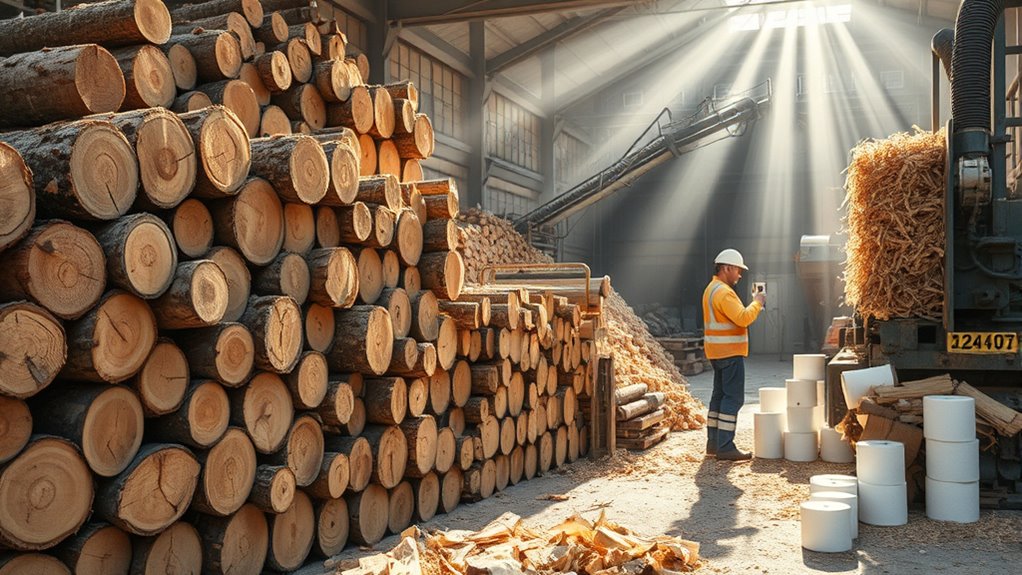
Before the production of toilet paper begins, you need to carefully select and prepare the raw materials. You’ll primarily work with wood fibers from softwood and hardwood trees, balancing strength and softness.
Sometimes, recycled paper fibers are included to boost sustainability. Once you’ve sourced the fibers, you remove contaminants like inks, adhesives, and plastics from recycled materials to guarantee quality.
Then, you shred and sort the fibers to make them uniform in size. Moisture content is adjusted to optimize processing, preventing clumping or damage.
You also inspect the fibers for consistency, as uneven quality can affect the final product. Proper preparation sets the foundation for smooth manufacturing and a soft, strong toilet paper that meets consumer expectations.
Pulping and Bleaching Process
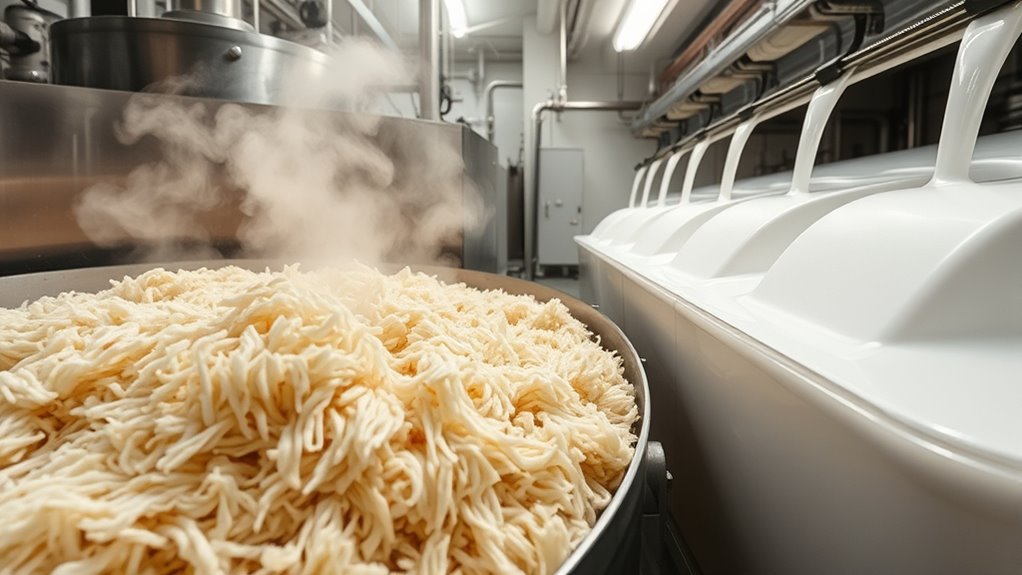
Once the raw fibers are prepped and consistent, you move on to pulping, where the fibers break down into a slurry. This step guarantees the fibers are separated and cleaned for a smooth paper texture.
Next, you bleach the pulp to achieve the bright, white look toilet paper needs, removing impurities and color.
Here’s a quick overview of pulping and bleaching stages:
| Stage | Purpose | Outcome |
|---|---|---|
| Mechanical | Fiber separation | Coarse pulp |
| Chemical | Fiber breakdown | Pure pulp |
| Washing | Remove contaminants | Cleaner pulp |
| Bleaching | Whiten the pulp | Bright white pulp |
| Refining | Improve fiber bonding | Soft, strong pulp |
This process prepares your pulp perfectly for the next step.
Forming the Paper Sheet
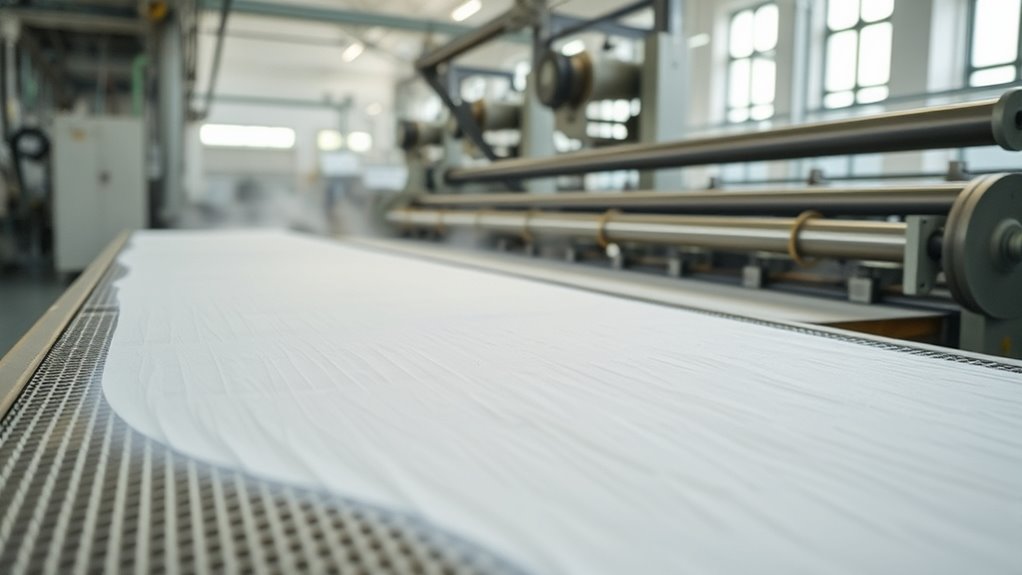
Although the pulp is prepared, you need to transform it into a continuous paper sheet before it can become toilet paper. You start by diluting the pulp with water to create a thin slurry.
The pulp is diluted with water to form a thin slurry, beginning the transformation into a continuous paper sheet.
This slurry flows onto a moving mesh screen called the wire section of the paper machine. As the water drains through the mesh, the fibers begin to interlock, forming a wet, flexible sheet.
You carefully control the speed and consistency to guarantee the sheet is even and smooth. The newly formed sheet then travels along the wire, where excess water continues to drain away.
At this stage, the sheet is still fragile and wet, but it holds together enough to move forward in the production line for further processing.
Pressing and Drying the Paper
After the wet paper sheet forms on the wire, you need to remove more water to strengthen it. This step is vital for creating a durable yet soft toilet paper. Here’s how you do it:
- Pressing: You pass the sheet through heavy rollers that squeeze out excess water. This makes the sheet denser and stronger.
- Drying: Next, the sheet moves over heated drying cylinders that evaporate remaining moisture quickly.
- Monitoring: You constantly check the moisture level to guarantee the paper isn’t too wet or brittle.
- Adjusting: Based on feedback, you adjust roller pressure and drying temperature for ideal texture and strength.
This pressing and drying process sets the foundation before the paper is ready for the next production phase.
Rolling and Rewinding
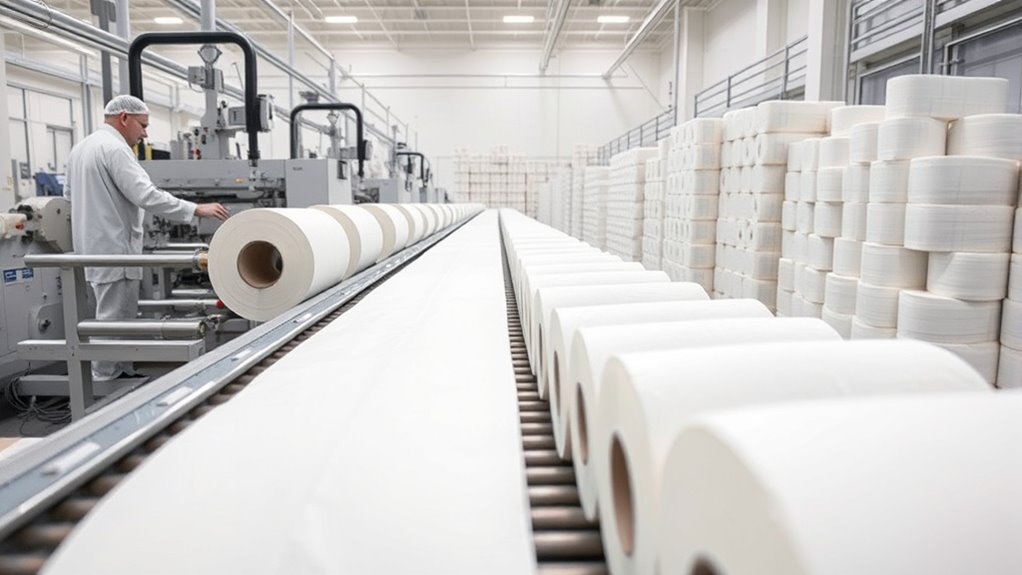
As the paper dries and strengthens, you guide it onto large rollers that wind it into manageable rolls. This step is essential because the paper must be tightly wound to maintain its integrity and prevent damage during handling.
You monitor the tension carefully, making sure the roll forms evenly without wrinkles or tears. Once the jumbo roll reaches the desired diameter, you stop the winding process.
Next, you transfer these large rolls to the rewinding machines. Here, the jumbo rolls are unwound and rewound onto smaller cores, creating the familiar toilet paper rolls.
This rewinding lets you control the sheet length and apply perforations for easy tearing later. Throughout, you keep a close eye on alignment and tension to produce smooth, uniform rolls ready for the next stage.
Cutting, Packaging, and Quality Control
Once the rolls have been rewound and perforated, you move on to cutting them into the standard sizes consumers expect. This step guarantees each roll fits perfectly in homes and businesses.
Next, you package the rolls efficiently to protect them during transport and storage. Throughout the process, quality control is essential to maintain consistency and customer satisfaction.
Here’s how you typically handle these steps:
- Cut rolls to precise lengths using automated cutters.
- Inspect rolls visually and mechanically for defects.
- Wrap rolls in protective packaging, often plastic or paper.
- Conduct final checks to ensure packaging integrity and correct labeling.
Conclusion
So, next time you reach for that soft, fluffy roll, remember the epic journey it took—starting from raw wood to the throne-worthy paper in your hands.
It’s almost heroic how many steps you never think about, just so you can wipe away your troubles. Who knew something so simple involved such drama?
Now, go ahead and appreciate your toilet paper like the unsung hero it is—because life’s messes deserve nothing less.
From the initial processing of wood pulp to the careful manufacturing and quality checks, every step is designed to create the perfect balance of softness and strength. Understanding how toilet paper is produced gives you a whole new appreciation for this everyday essential. So next time you pull a sheet, remember the craftsmanship behind it—it’s more than just paper; it’s a small marvel of modern production.